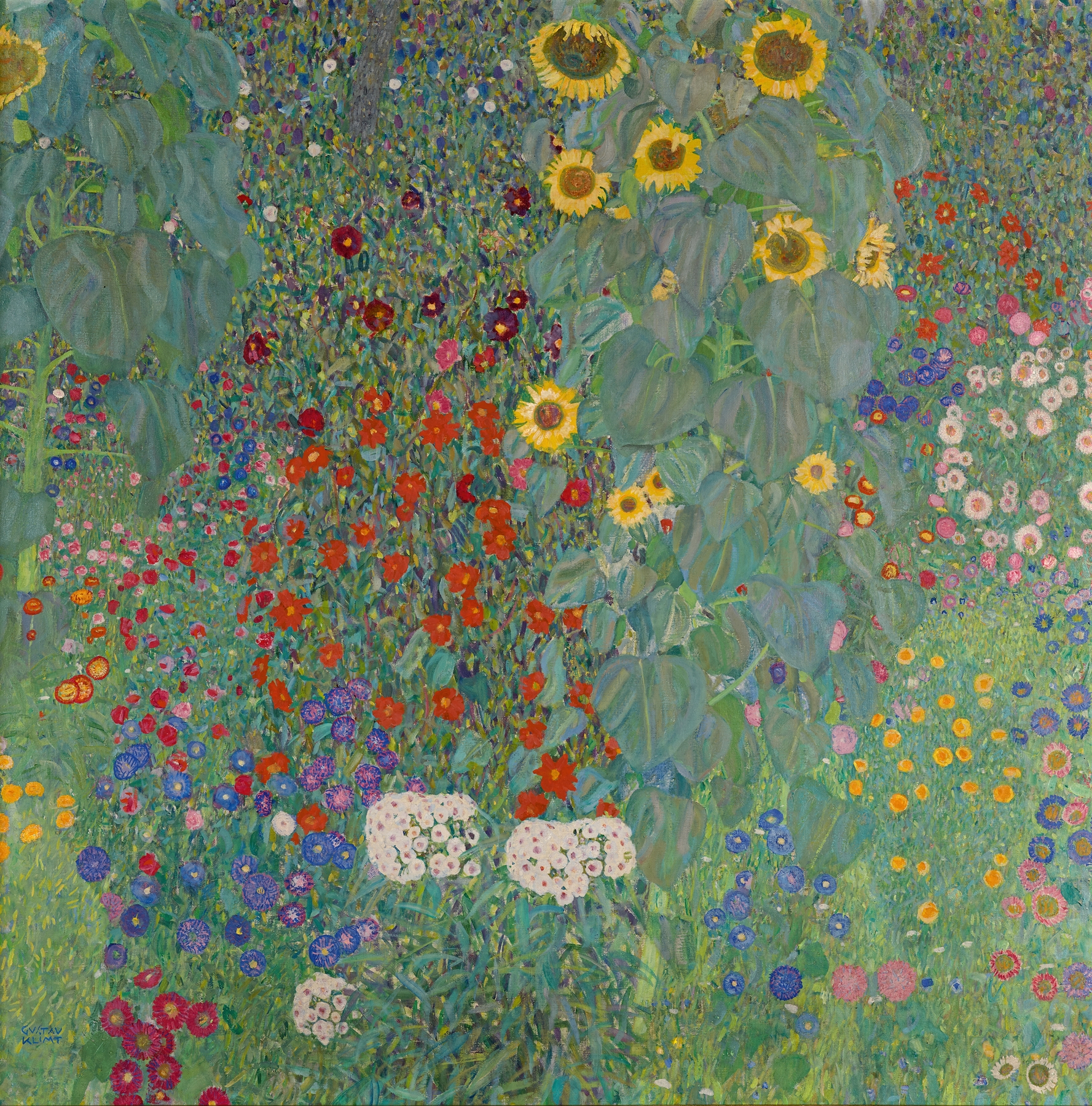

“To paint is to remember what time wants us to forget.” In *Bauerngarten mit Sonnenblumen*, Gustav Klimt captures a moment that defies the fleeting nature of light and life, a vibrant testament to the enduring beauty of nature. Look to the left at the cascade of golden sunflowers, their bright yellow petals radiating warmth as they stretch towards an unseen sun. The lush greens of the garden envelop them, contrasting sharply with the bold ochres and earthy browns. The meticulous patterns that adorn the flowers reflect Klimt’s signature style, inviting the viewer to explore the delicate interplay between organic forms and ornamentation. Each brushstroke seems to vibrate with life, creating a sense of movement that pulls you into the heart of this flourishing garden. Hidden within this explosion of color is a duality of emotion — exuberance tempered by an underlying nostalgia. Notice how the flowers, full of vivacity, are poised in a moment of bloom, yet they remind us of the inevitable passage of time; they will wither, just as all beauty must. The sunlight dapples through the foliage, creating a dance of light and shadow that evokes a sense of transience, inviting contemplation on life's fleeting moments amid nature's abundance. In 1906, Klimt created this piece during a vibrant phase of his career in Vienna, where he was at the forefront of the Art Nouveau movement. This period was marked by a shift towards bold decorative styles, and the artist sought to unify beauty and emotion in his works. The world was experiencing profound transformations, with artistic spheres becoming more experimental — a backdrop that undoubtedly influenced his approach in this garden tableau.