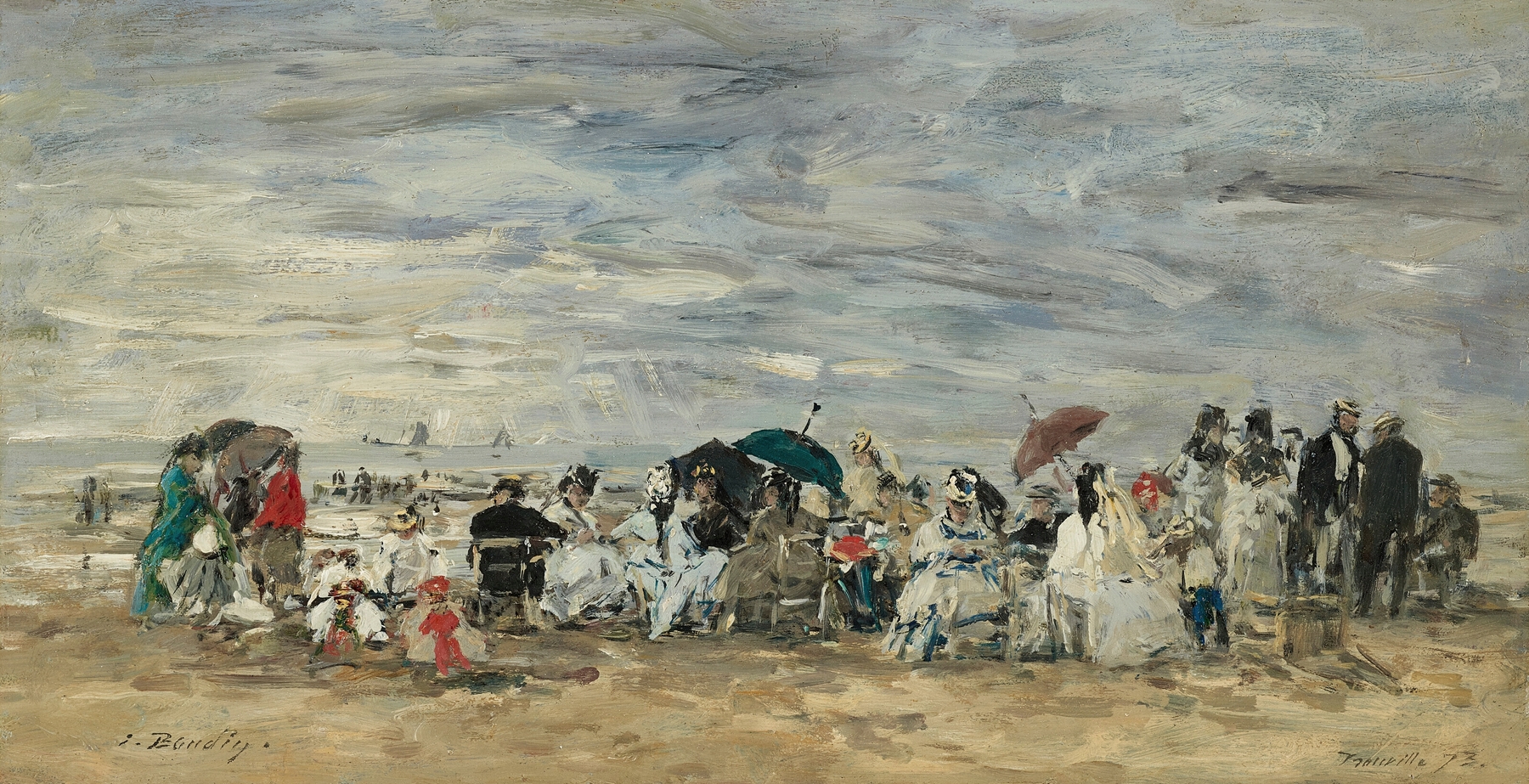
Beach Scene at Trouville — History & Analysis
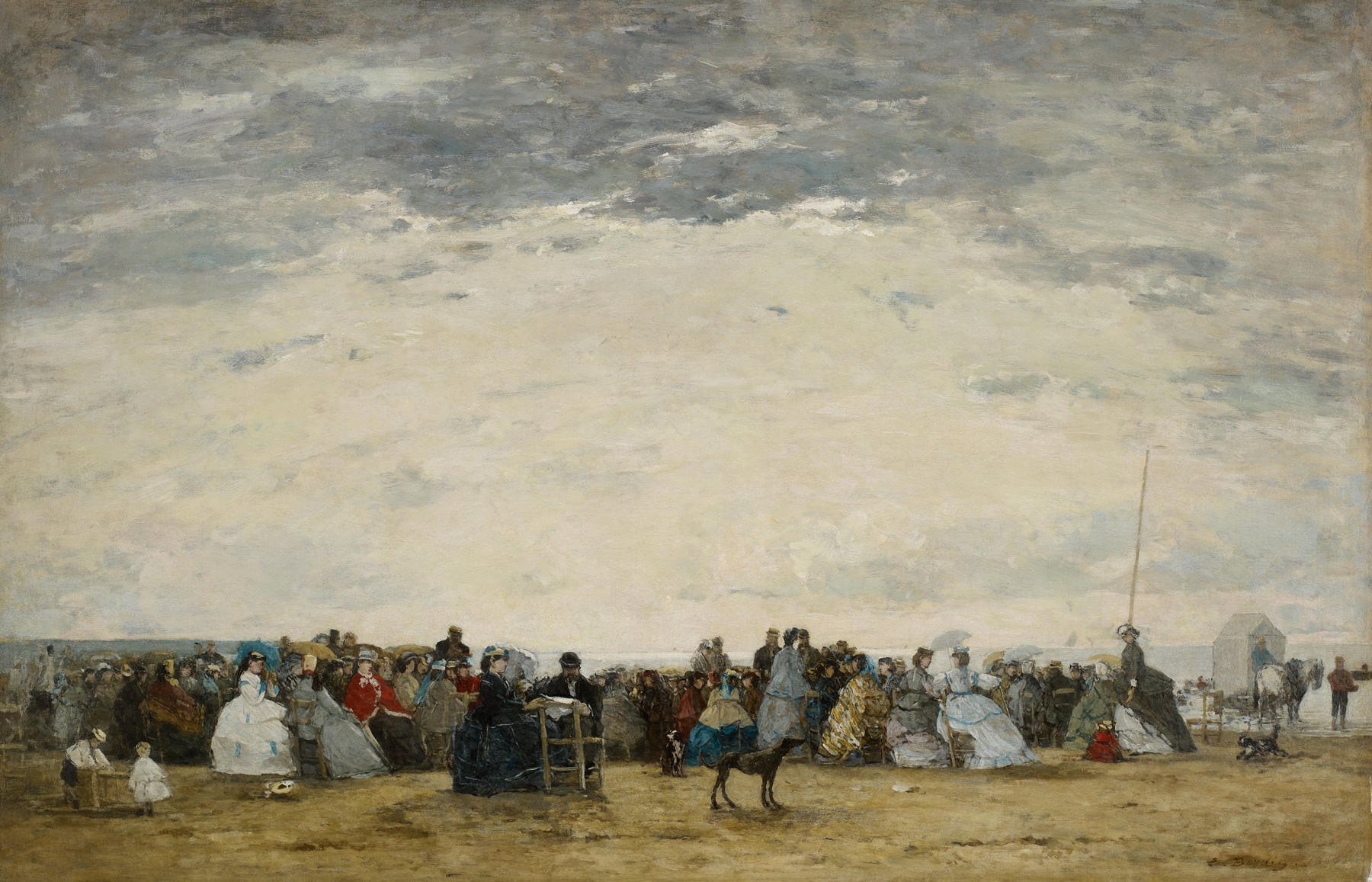
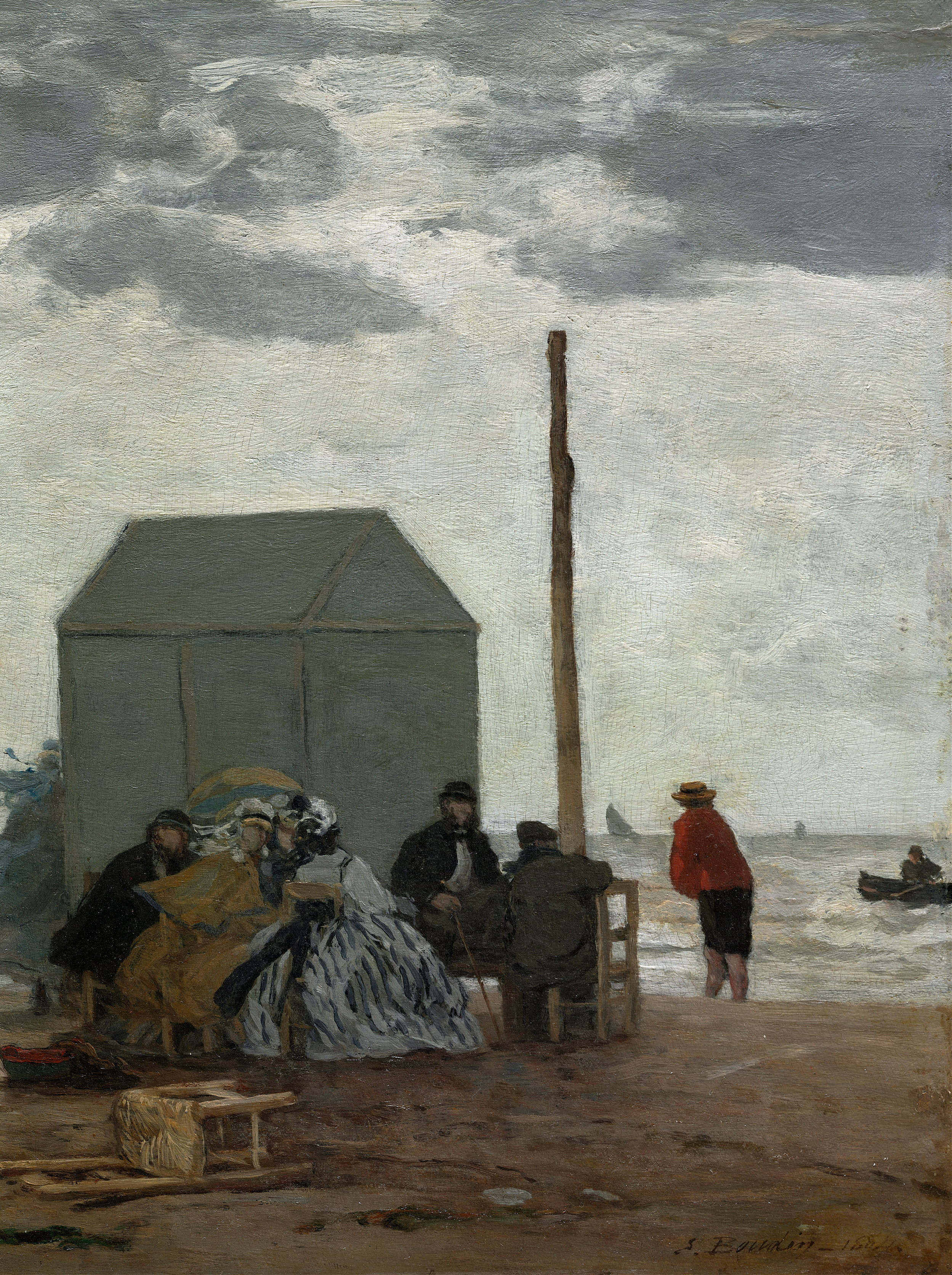
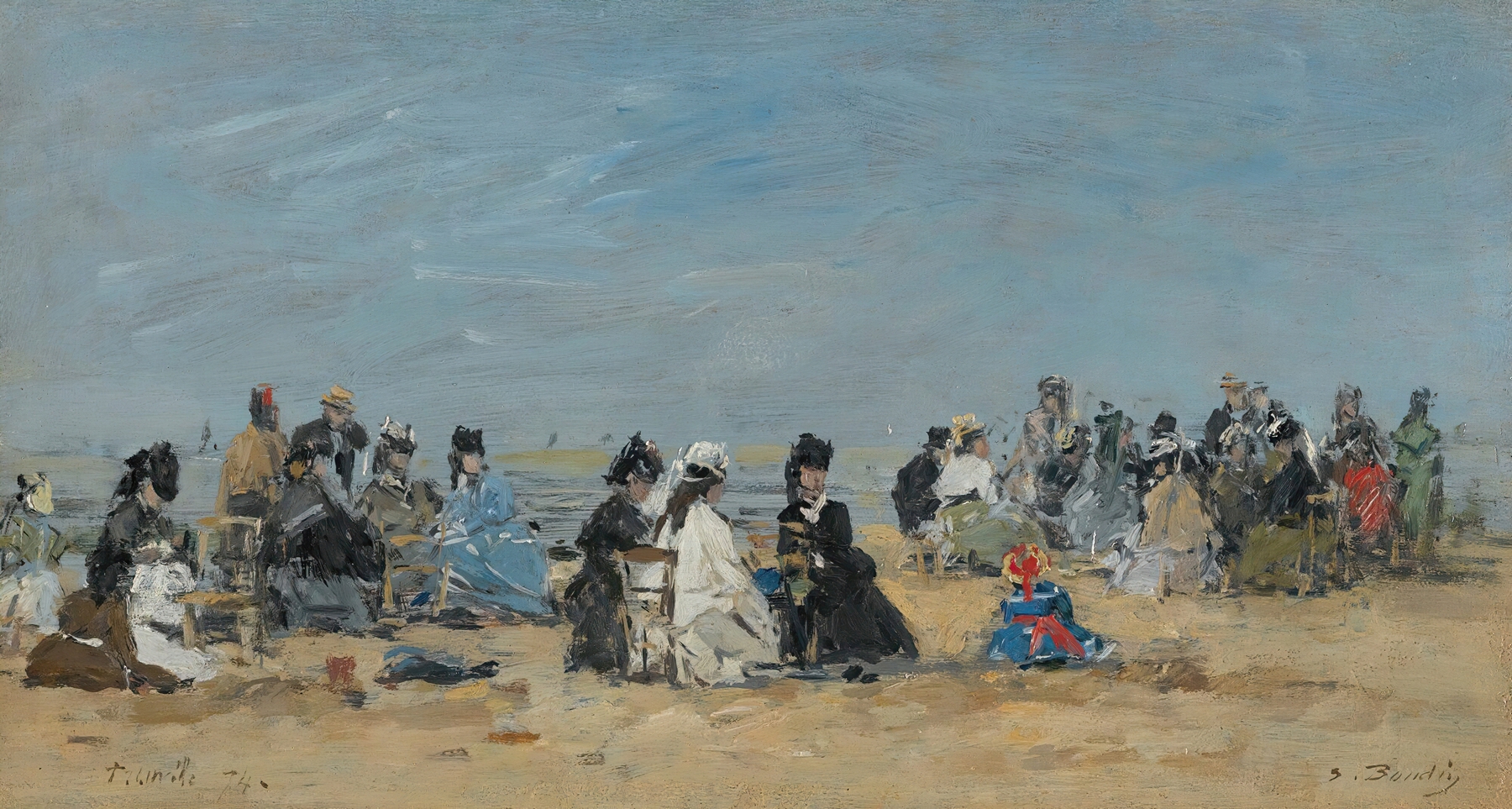
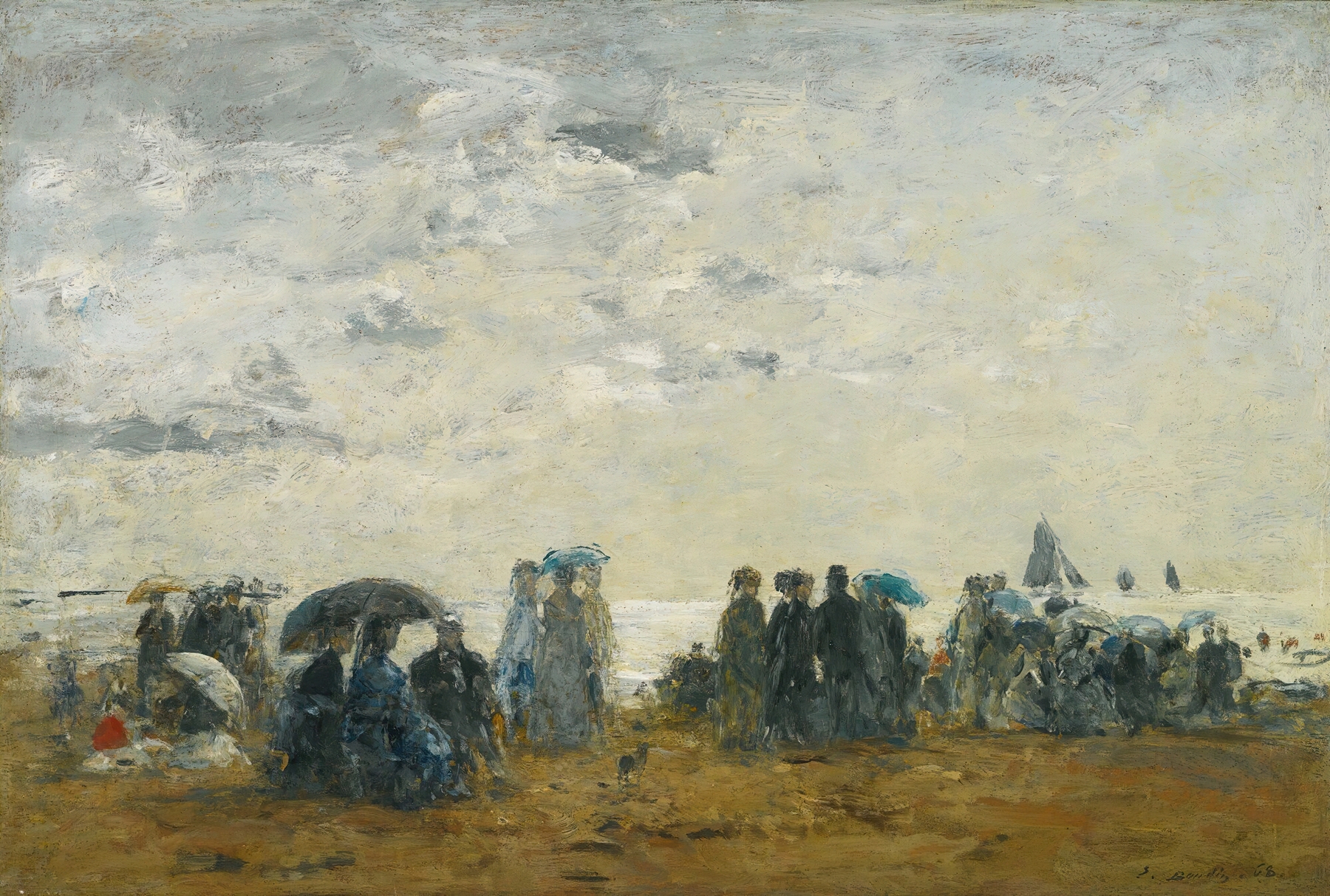
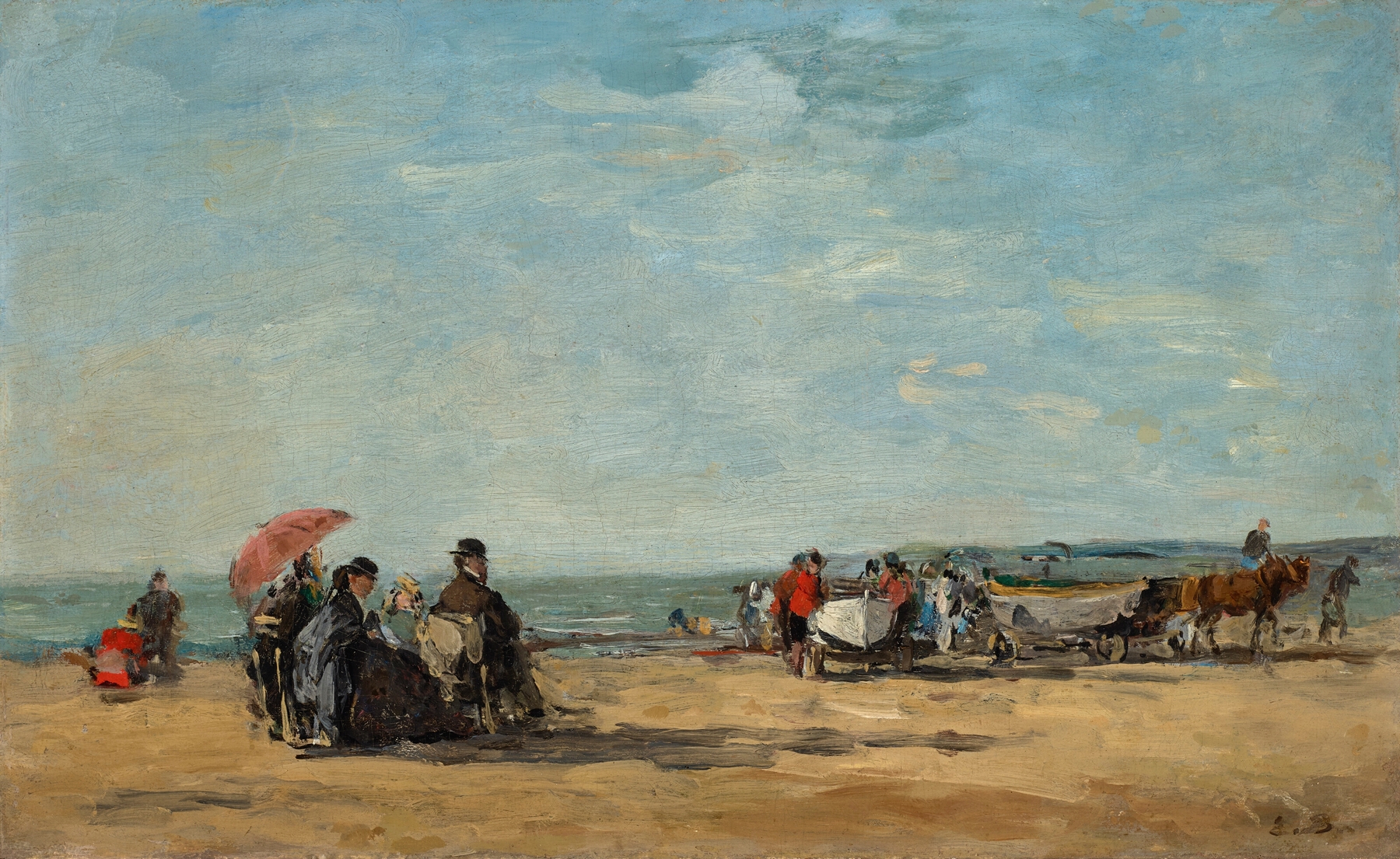
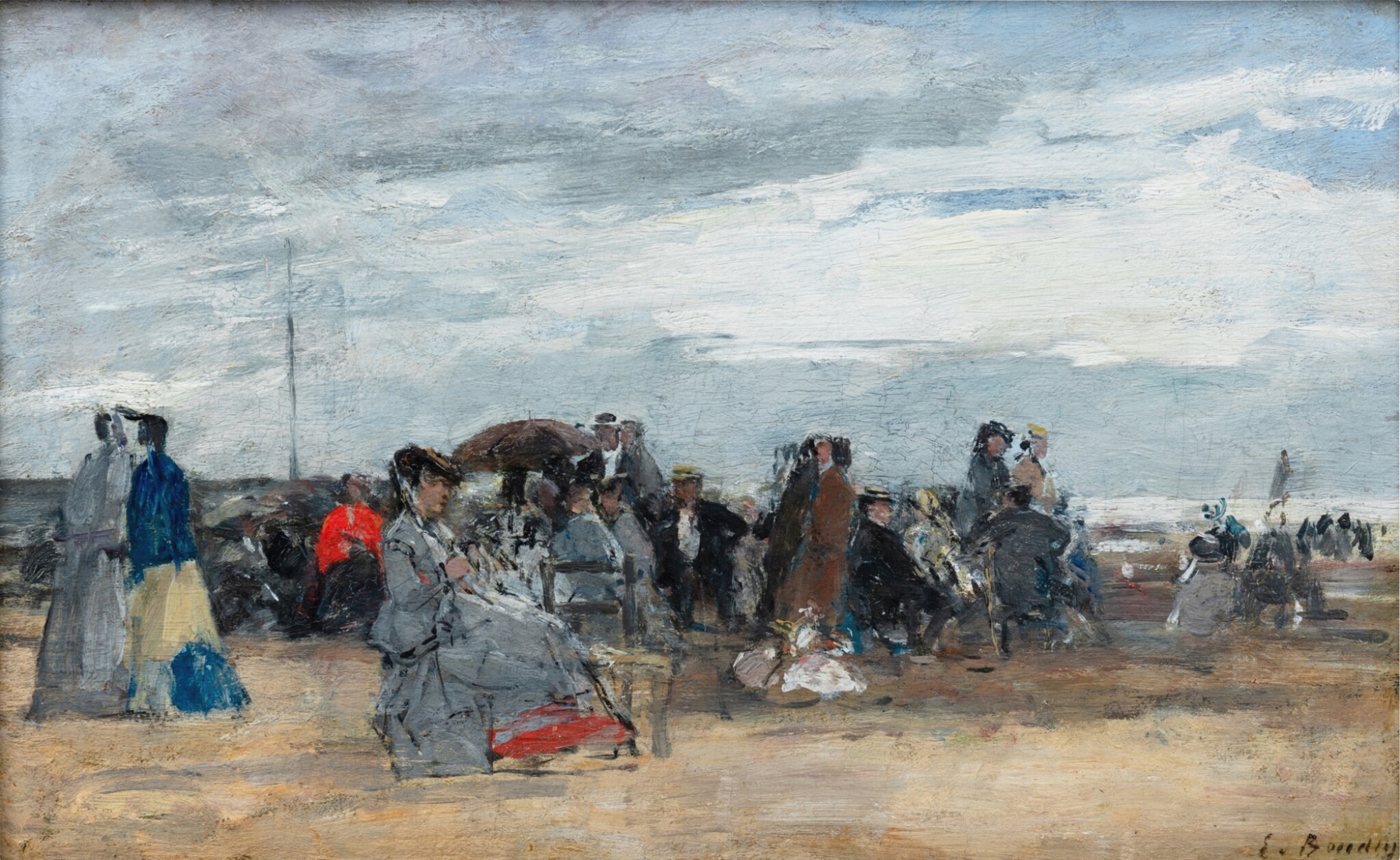
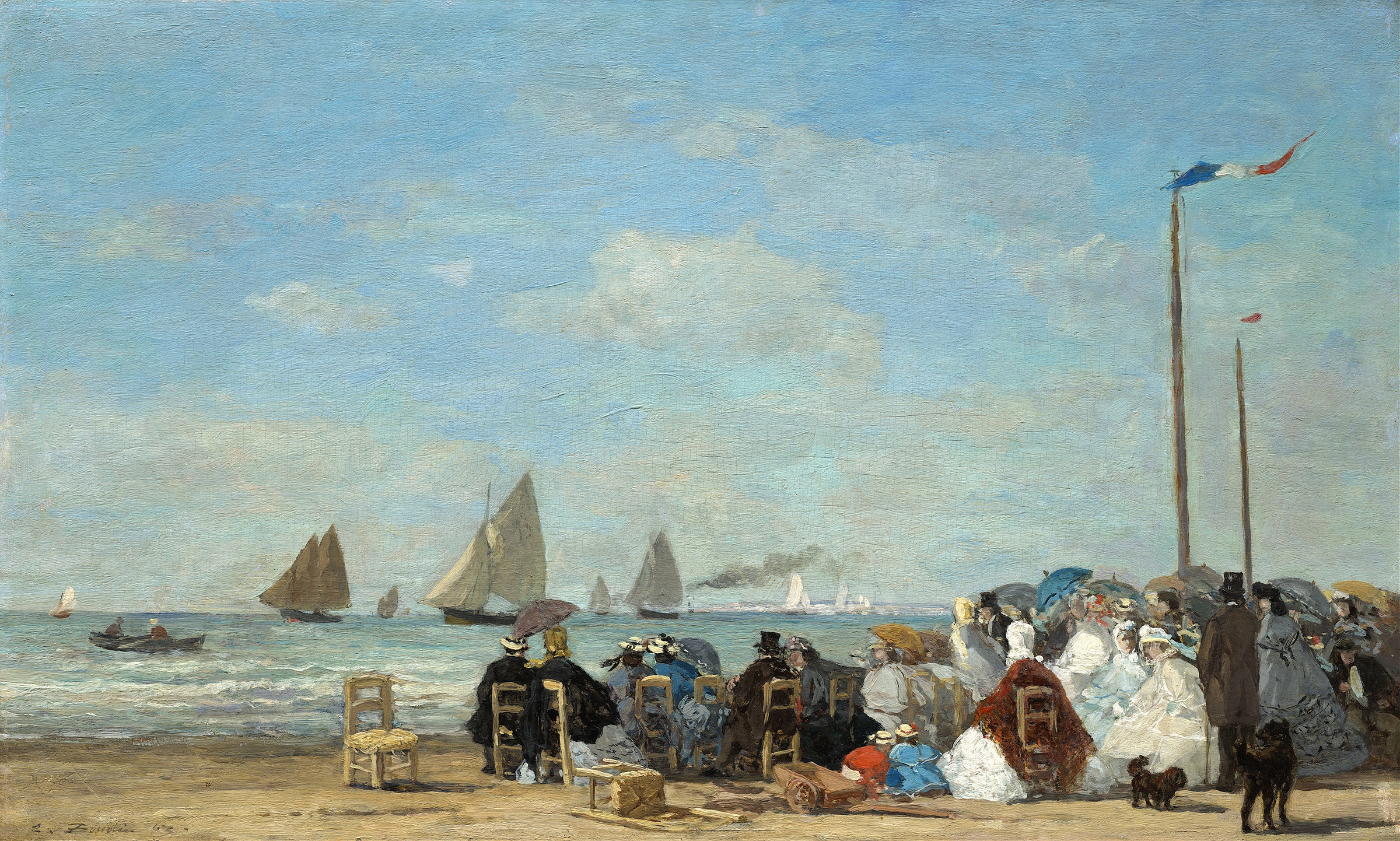
When did color learn to lie? In the vibrant hues of a sunlit beach, divinity dances at the edge of reality, revealing the ethereal quality of everyday life. Look to the lower right corner, where a cascade of warm sandy tones meets the glimmering blue of the sea. Observe how the artist’s delicate brushstrokes create an almost palpable texture, inviting the viewer to feel the warmth of the sun on their skin. The figures dotting the shoreline are rendered with a lightness that seems to defy gravity, their silhouettes echoing the carefree spirit of a day spent by the water.
The interplay of light and shadow enhances the scene’s vivacity, pulling one’s gaze from the gentle waves to the distant horizon. Within this idyllic portrayal lies a subtle tension, as the carefree beachgoers hint at transience and the fleeting nature of joy. The rippling waves, though inviting, carry a hint of chaos beneath their surface. Each figure, engaged in their own moment, reflects not only leisure but also the ephemeral connections we forge with nature and one another.
In this scene, color becomes an actor—shifting, lying, and revealing the divine drama of existence. Created in 1863, this piece emerged during a pivotal time for the artist, who was establishing himself as an important figure in the impressionist movement. Working in Trouville, a popular seaside resort, he captured the essence of leisure and modern life. The burgeoning interest in plein air painting allowed Boudin to explore the effects of light and color in nature, marking a significant evolution in his artistic journey that would influence many future artists.