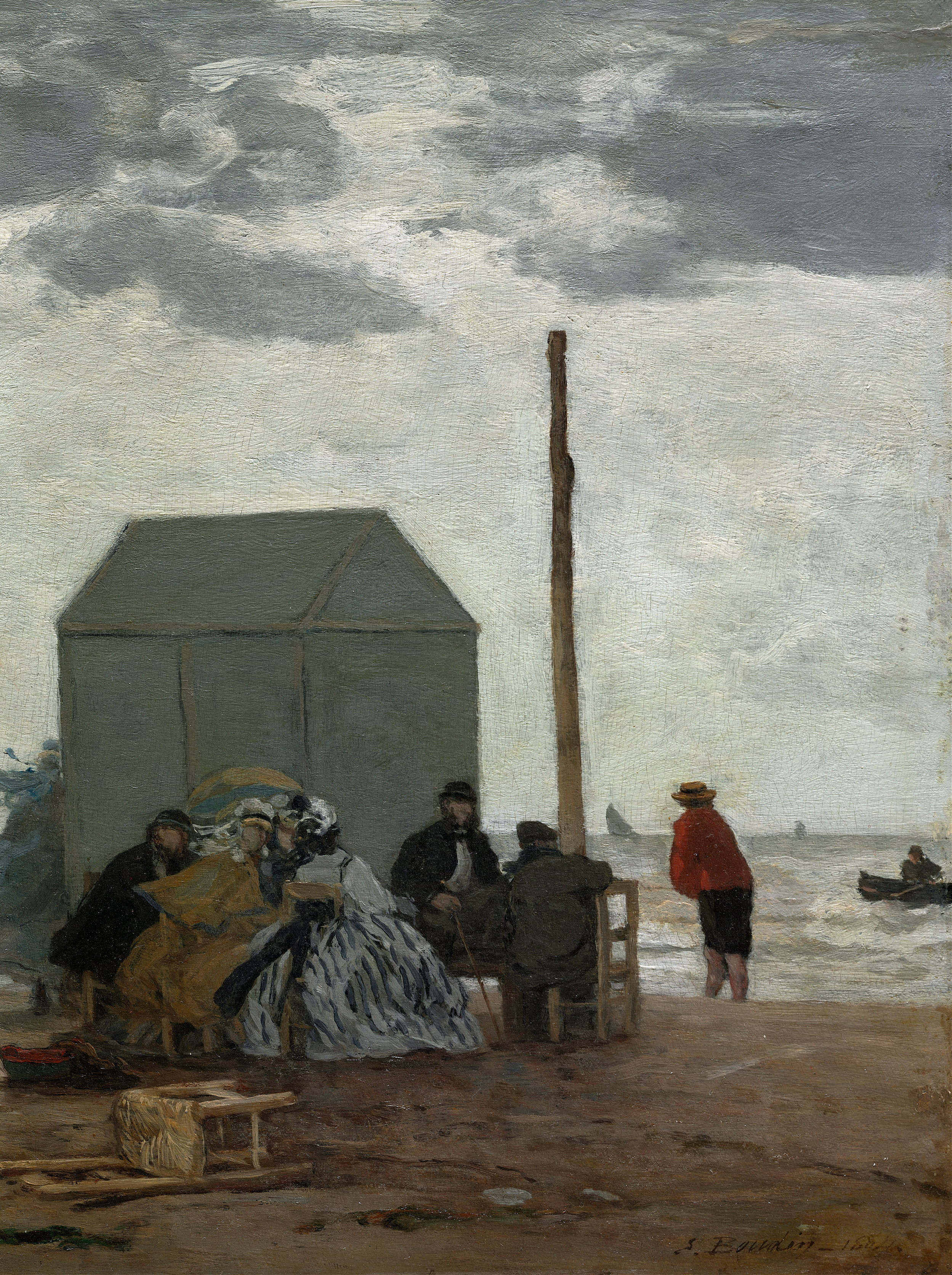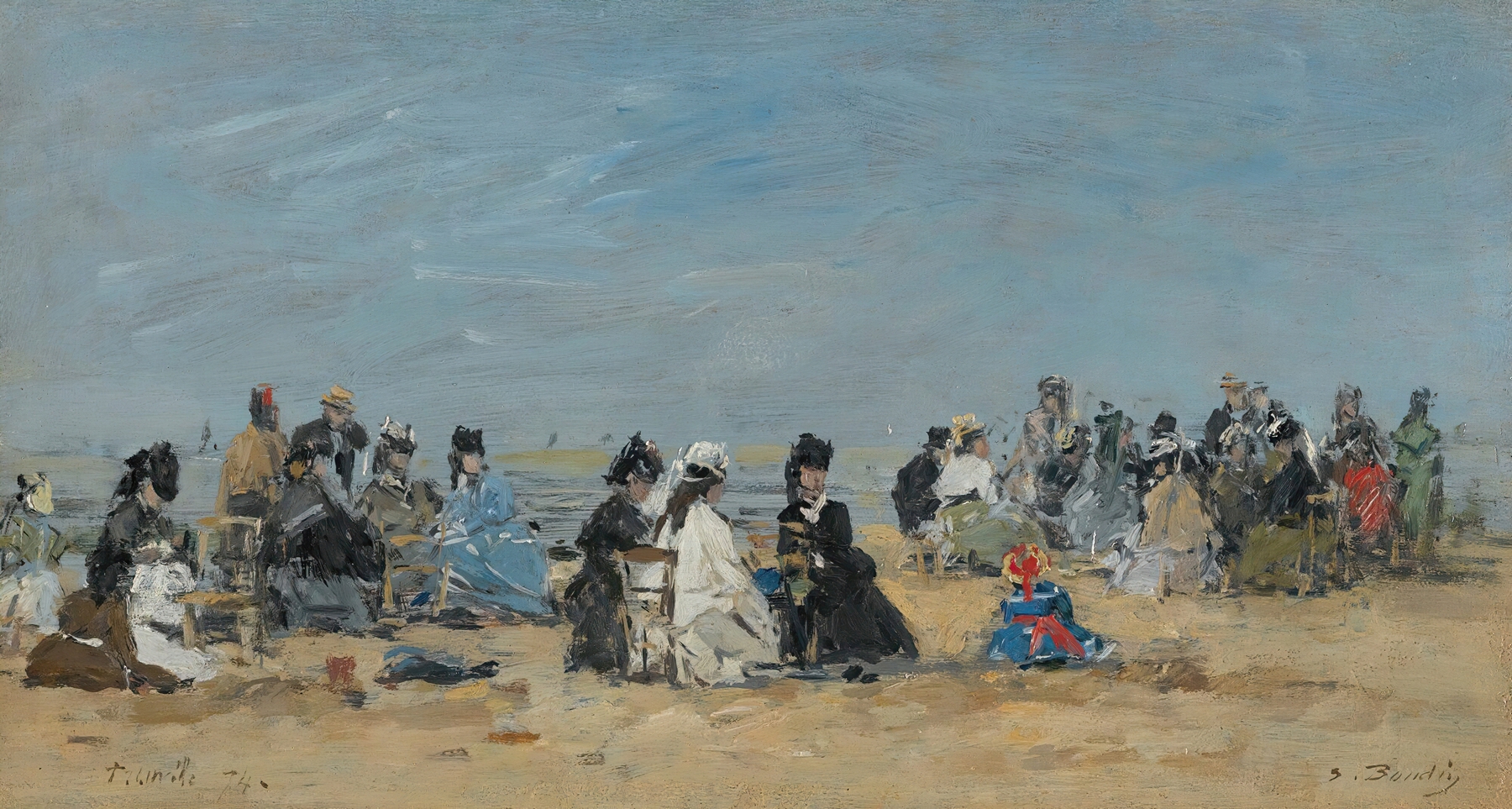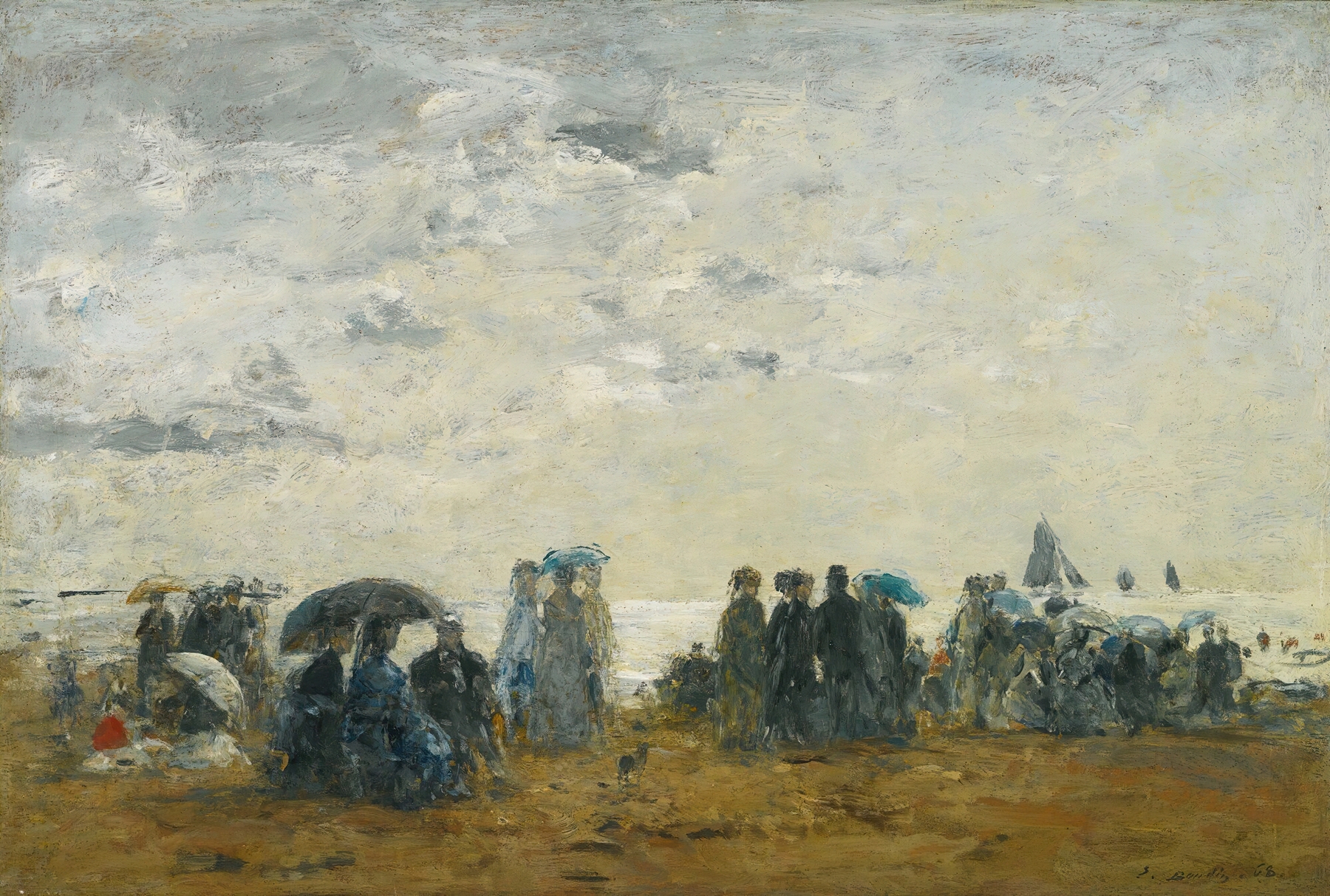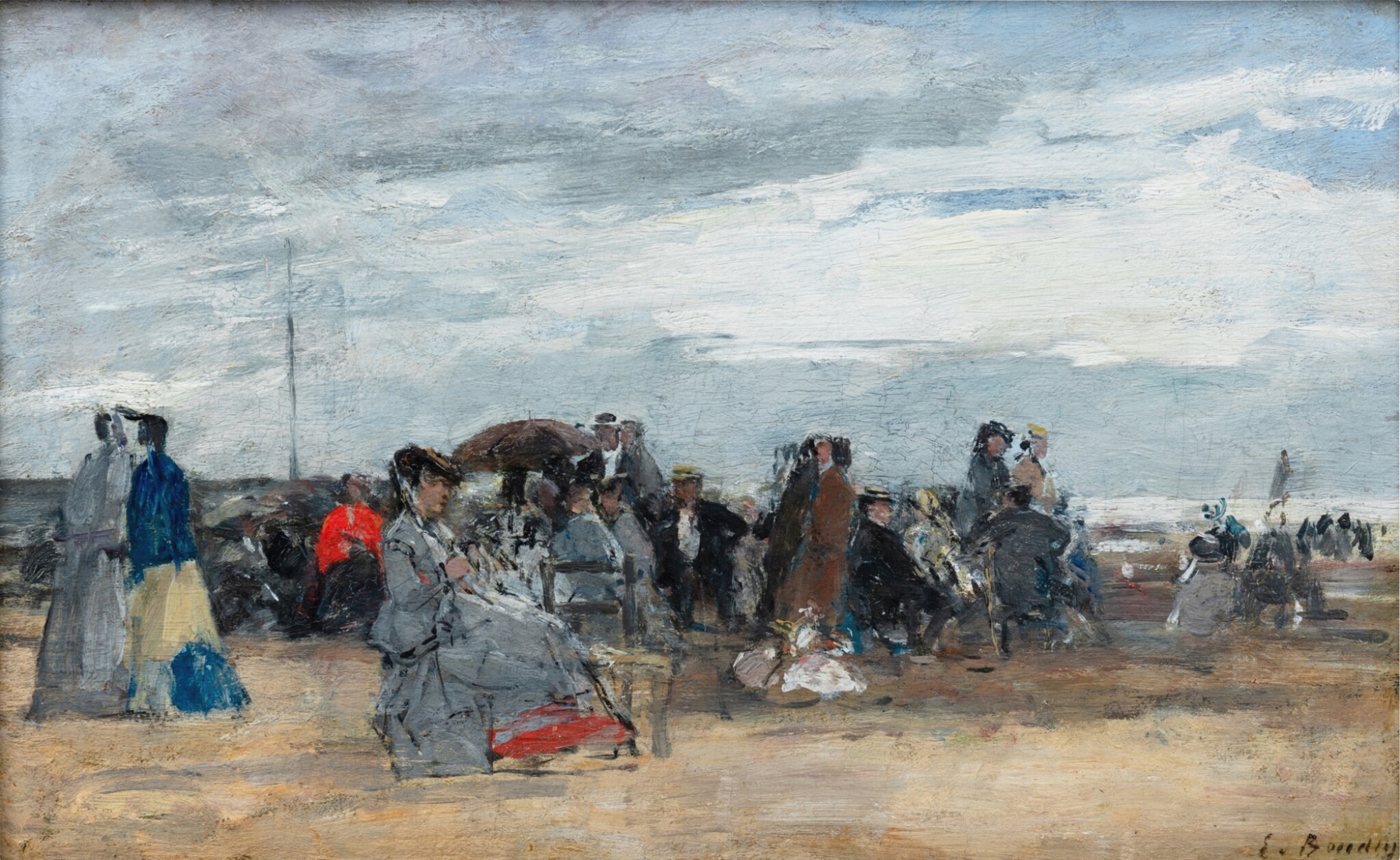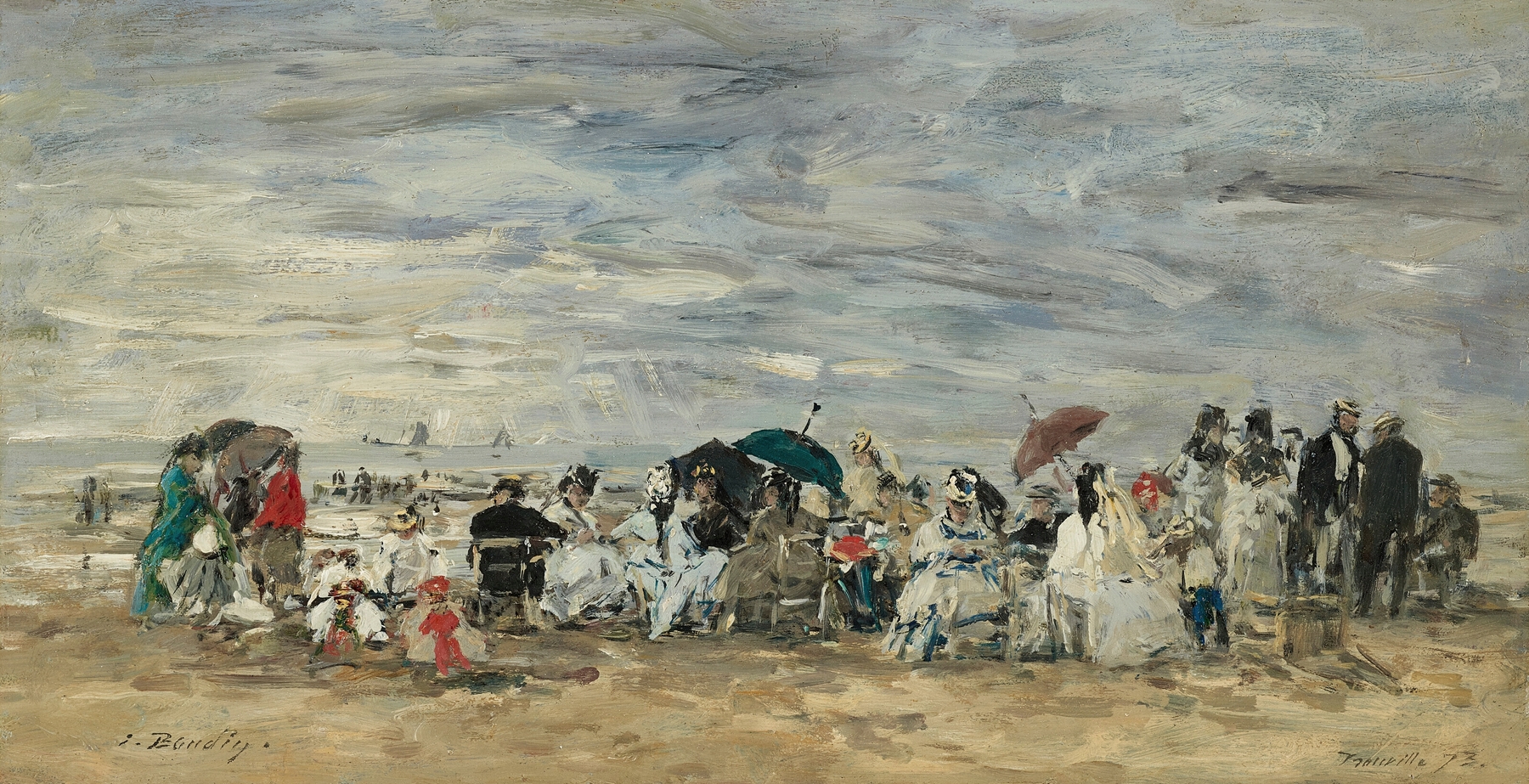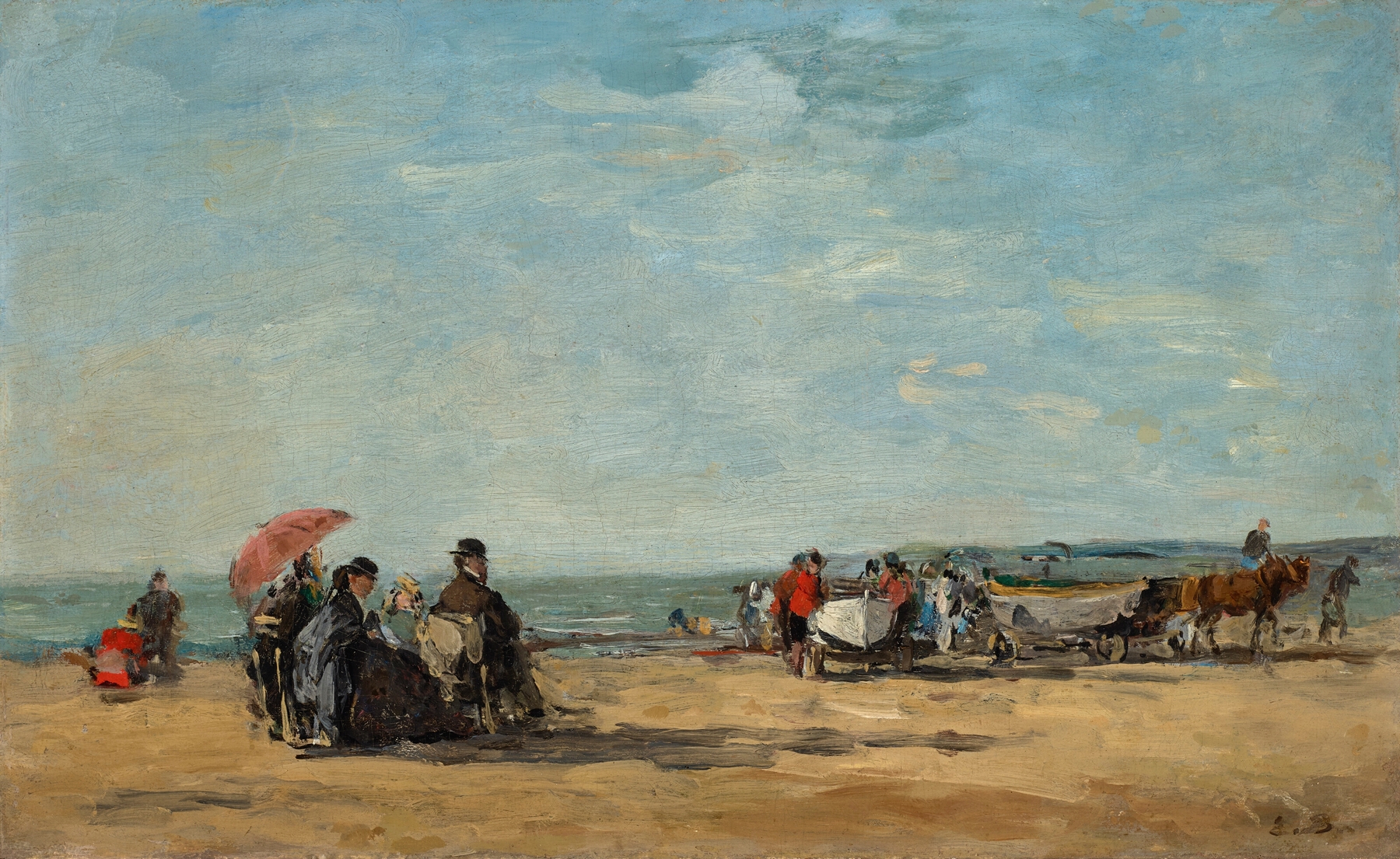
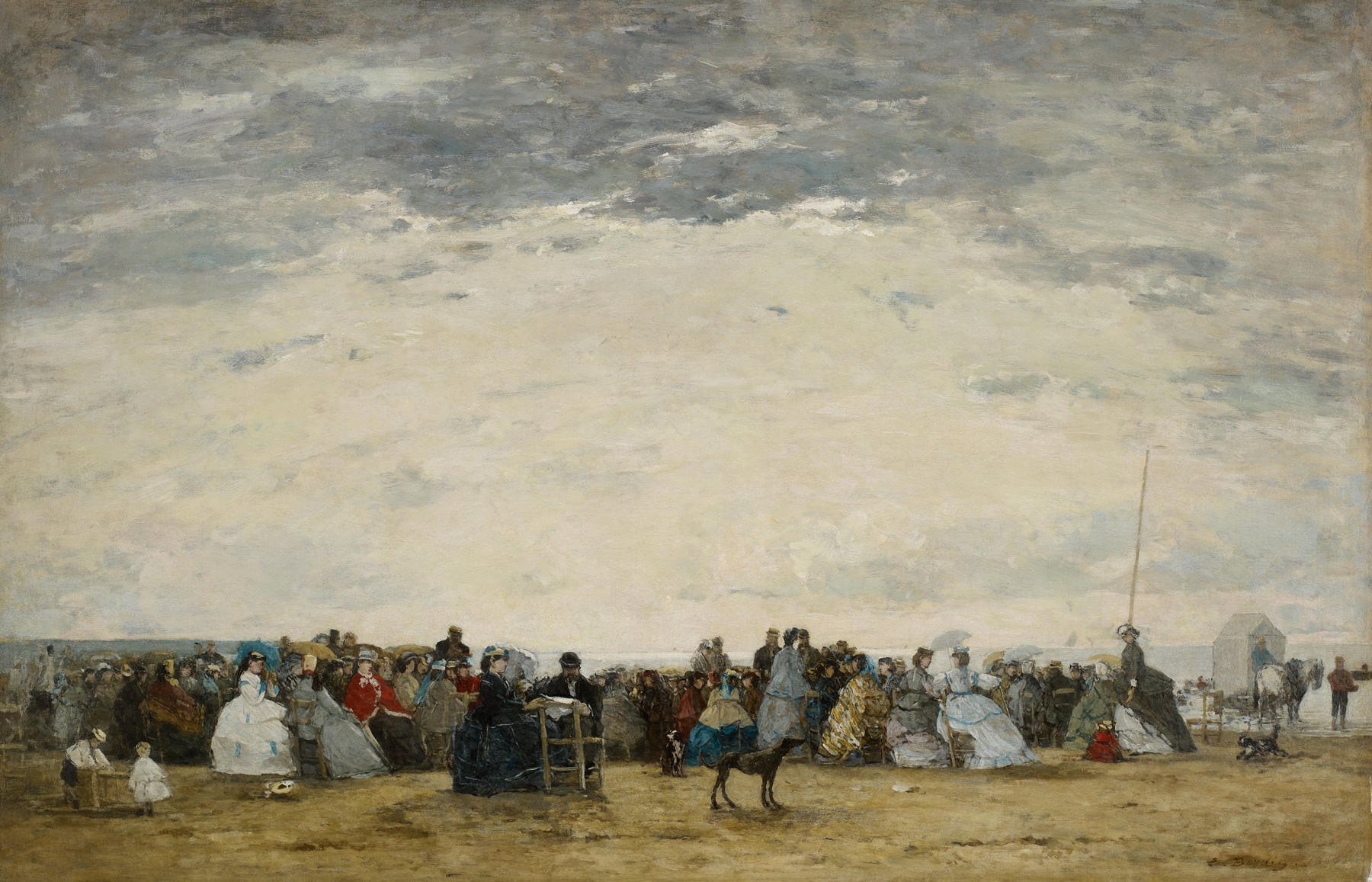
What secret hides in the quiet of the canvas? In the stillness of *Scène de plage*, a gentle longing invites the viewer to step closer and explore the depths of human emotion captured in paint. Look to the right at the soft, wind-tousled figures on the shoreline, their bodies illuminated by the pale light of the sun. Notice how the artist’s brushstrokes suggest movement—each wave gently lapping at the sand, the delicate play of light dancing upon the water. The palette of muted blues and earth tones creates a serene backdrop, yet hints of brighter hues punctuate the scene, drawing your eye to the vibrant beach umbrellas that stand like distant beacons of joy. Yet beneath this picturesque scene, a deeper narrative unfolds. The interplay between the leisure of the beachgoers and the vast, indifferent ocean evokes a poignant sense of solitude. Look closely at the distant horizon; it seems to whisper of unattainable desires and the fleeting nature of summer days. The layered textures of sandy beach and shimmering sea reflect an emotional dichotomy—contentment intertwined with an underlying yearning for something just beyond reach. Eugène Boudin painted this work between 1865 and 1867 in the coastal town of Trouville, a location that inspired many of his seaside scenes. During this period, he was carving a niche for himself in the burgeoning Impressionist movement, focusing on capturing the ephemeral beauty of nature and leisure. The world around him was shifting, with urbanization on the rise and a growing fascination with capturing moments of modern life; *Scène de plage* stands as a testament to that profound transition.