Trouville, Scène de plage — History & Analysis
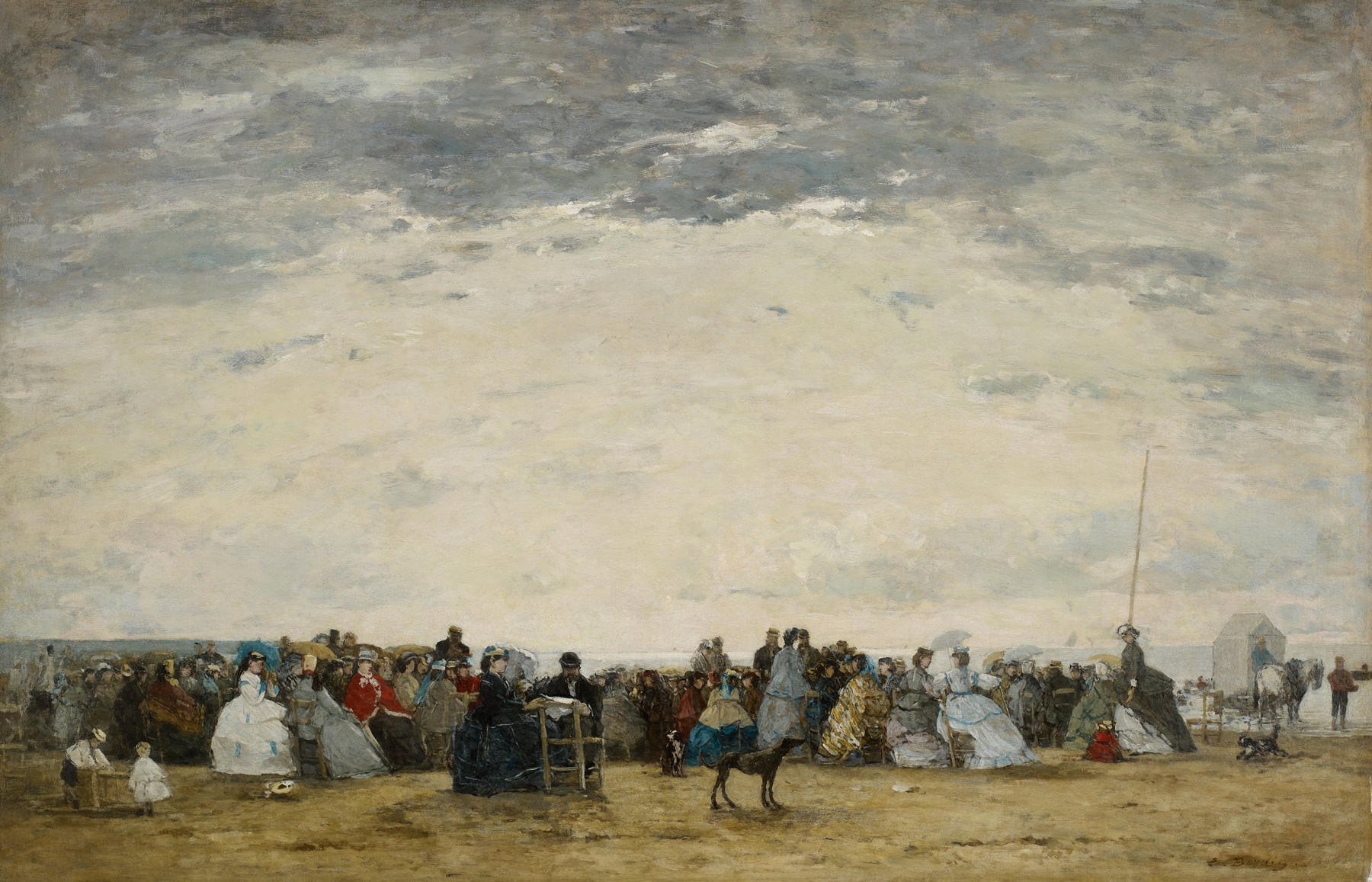
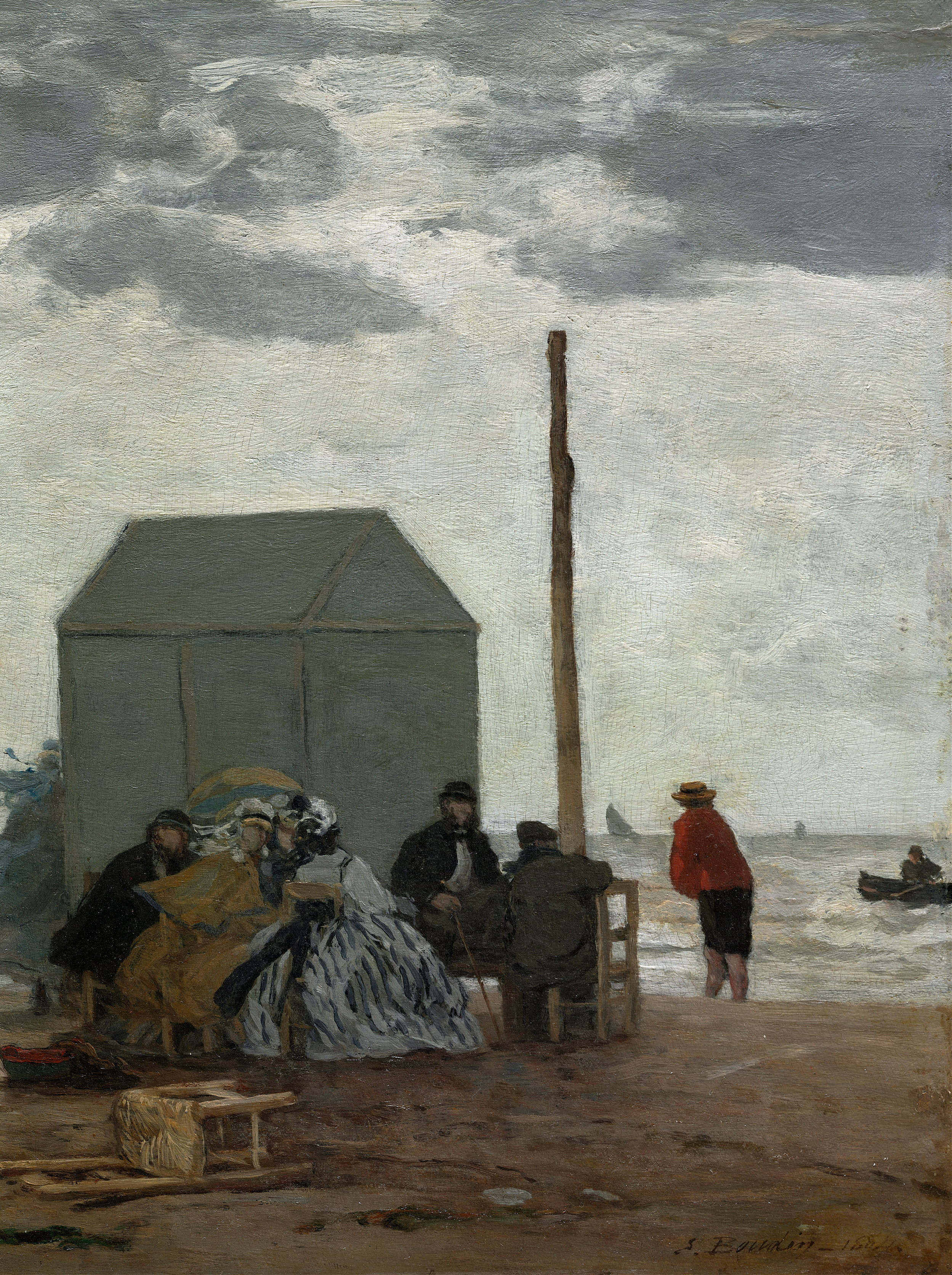
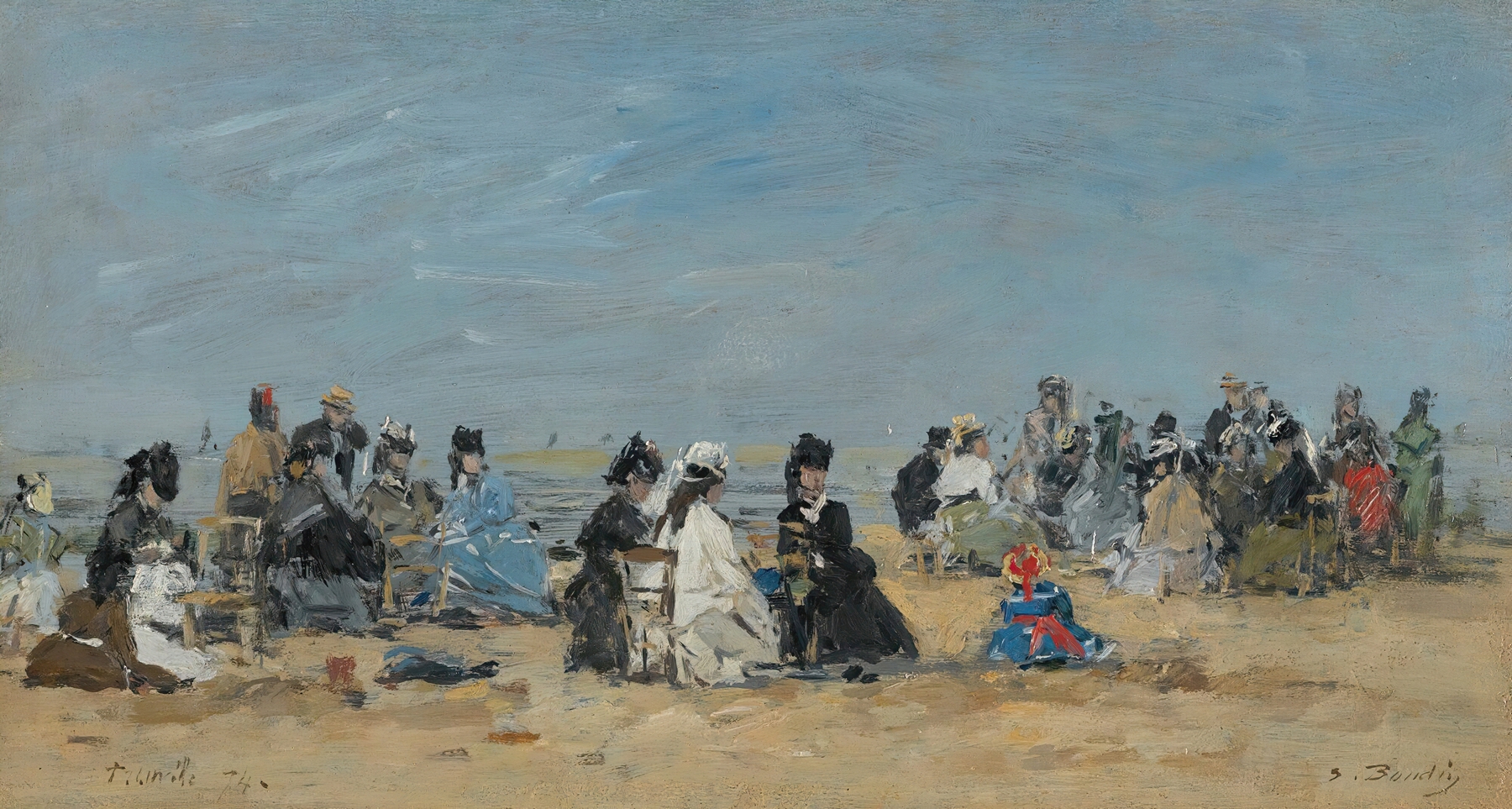
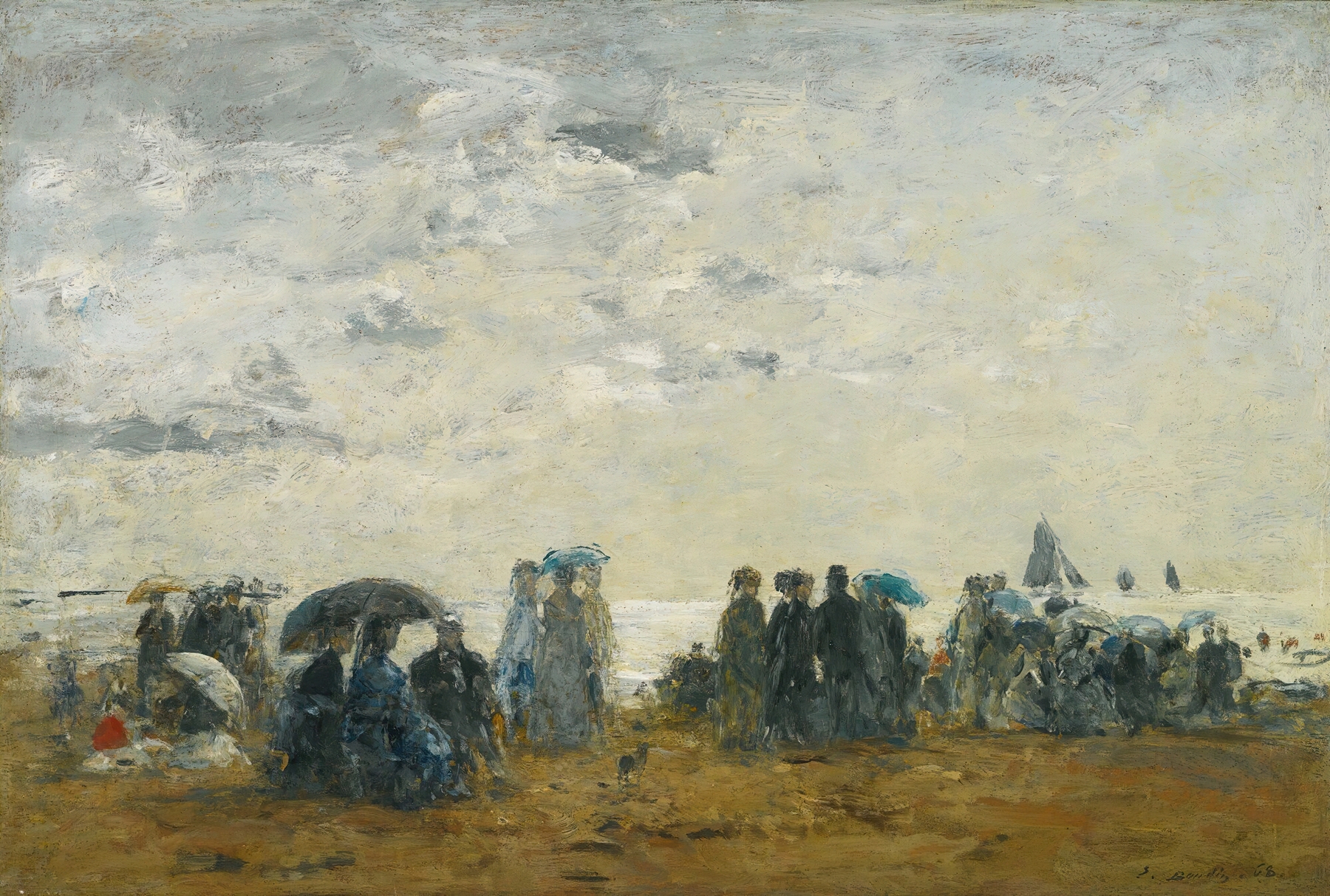
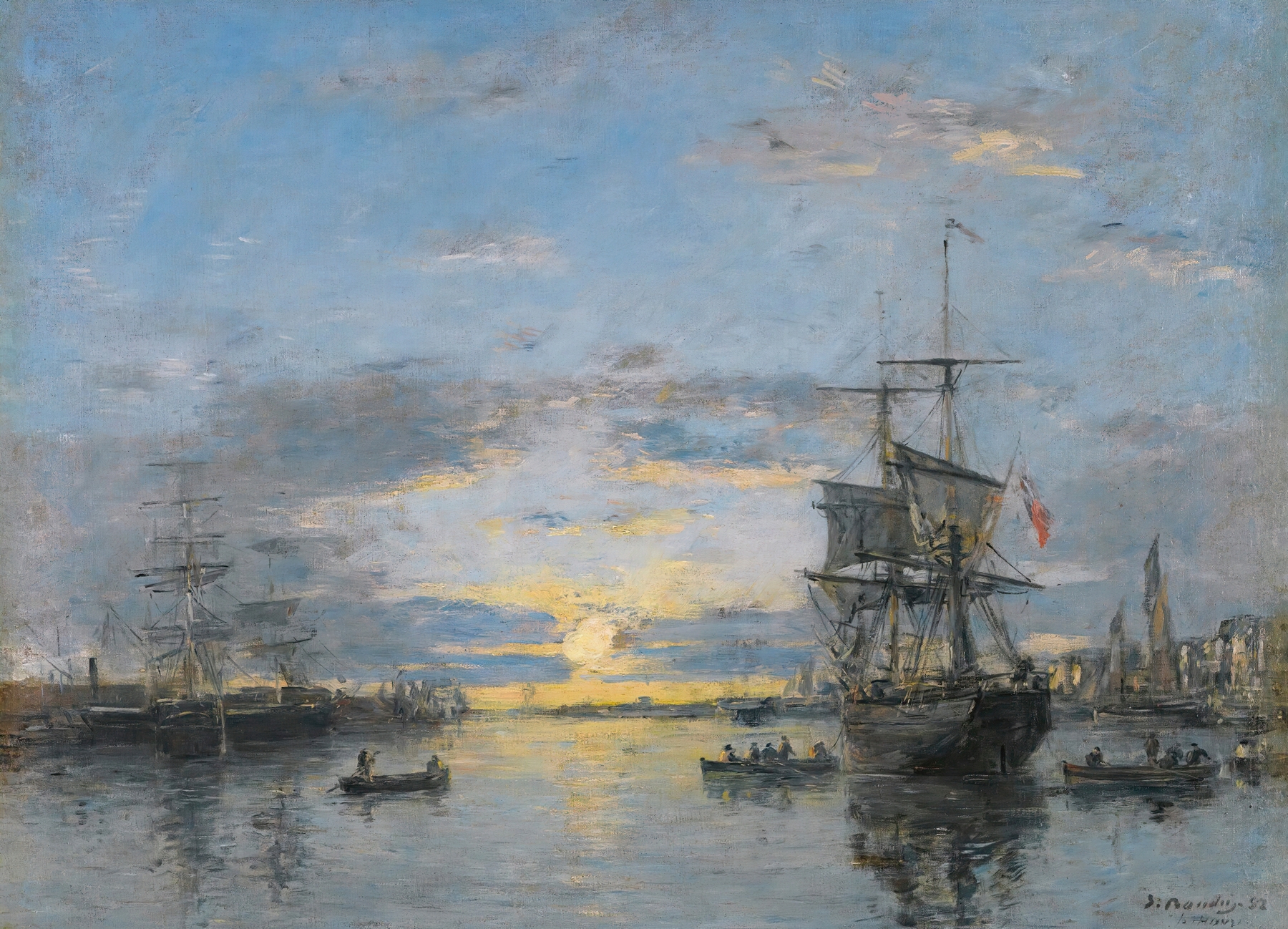
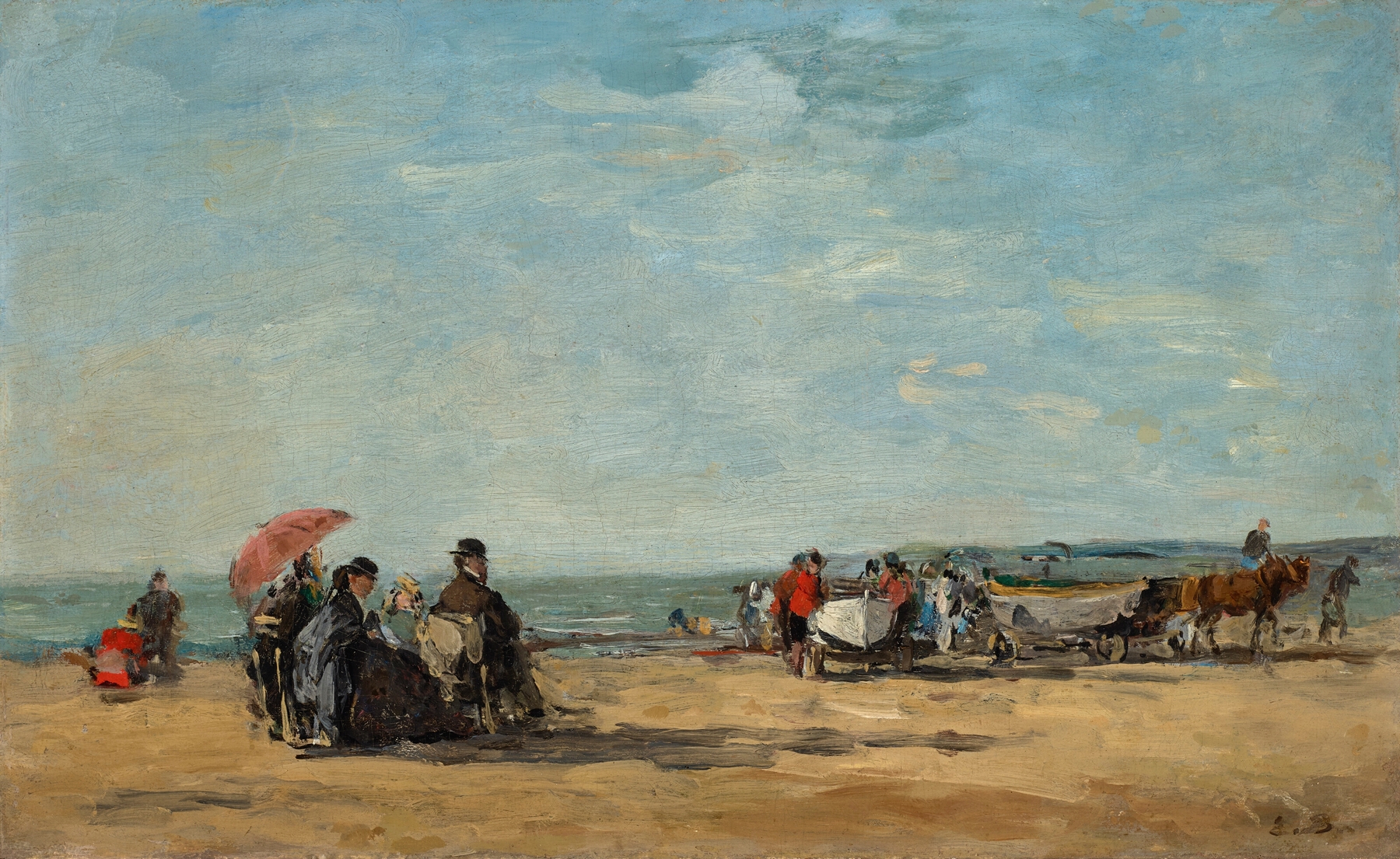
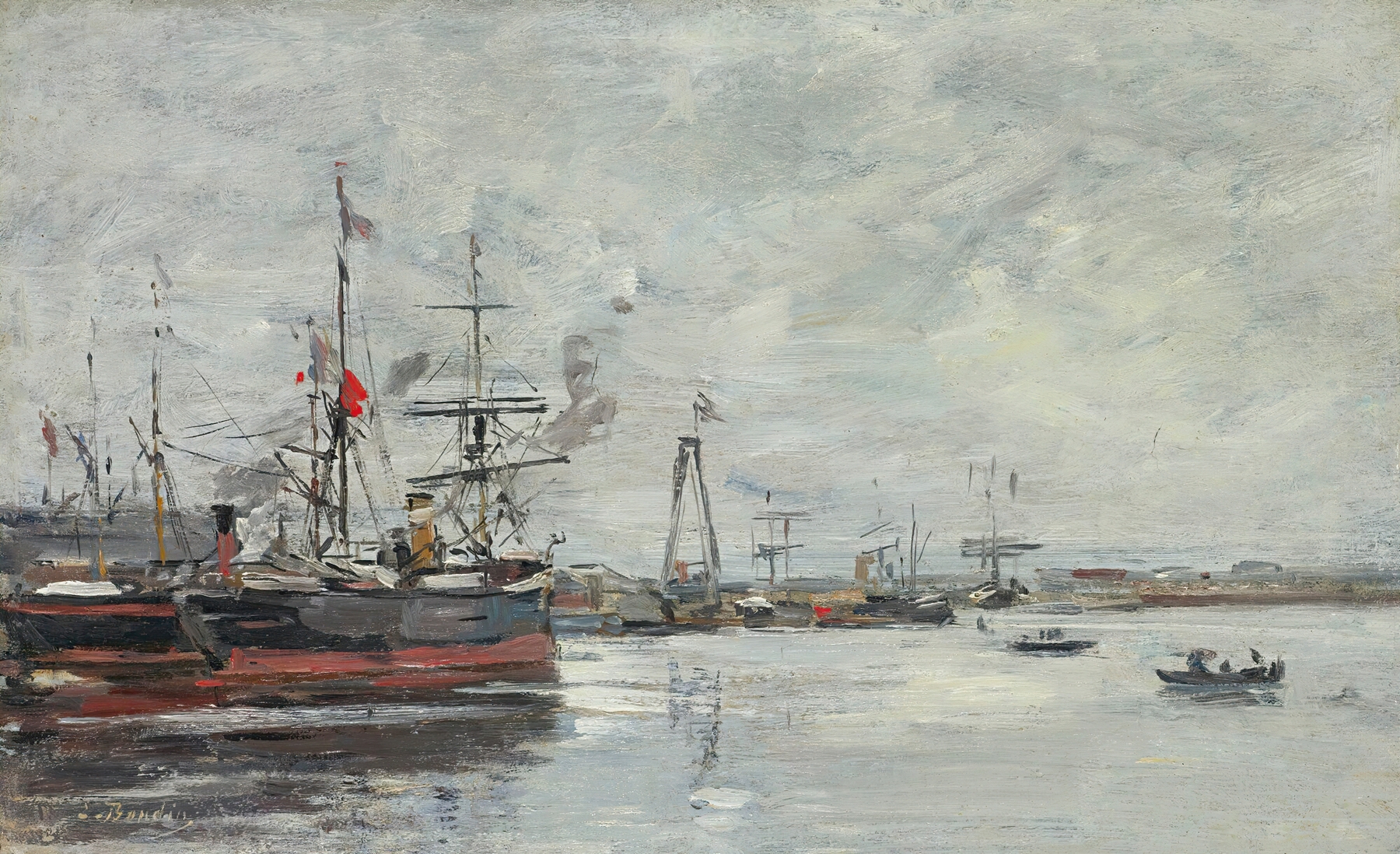
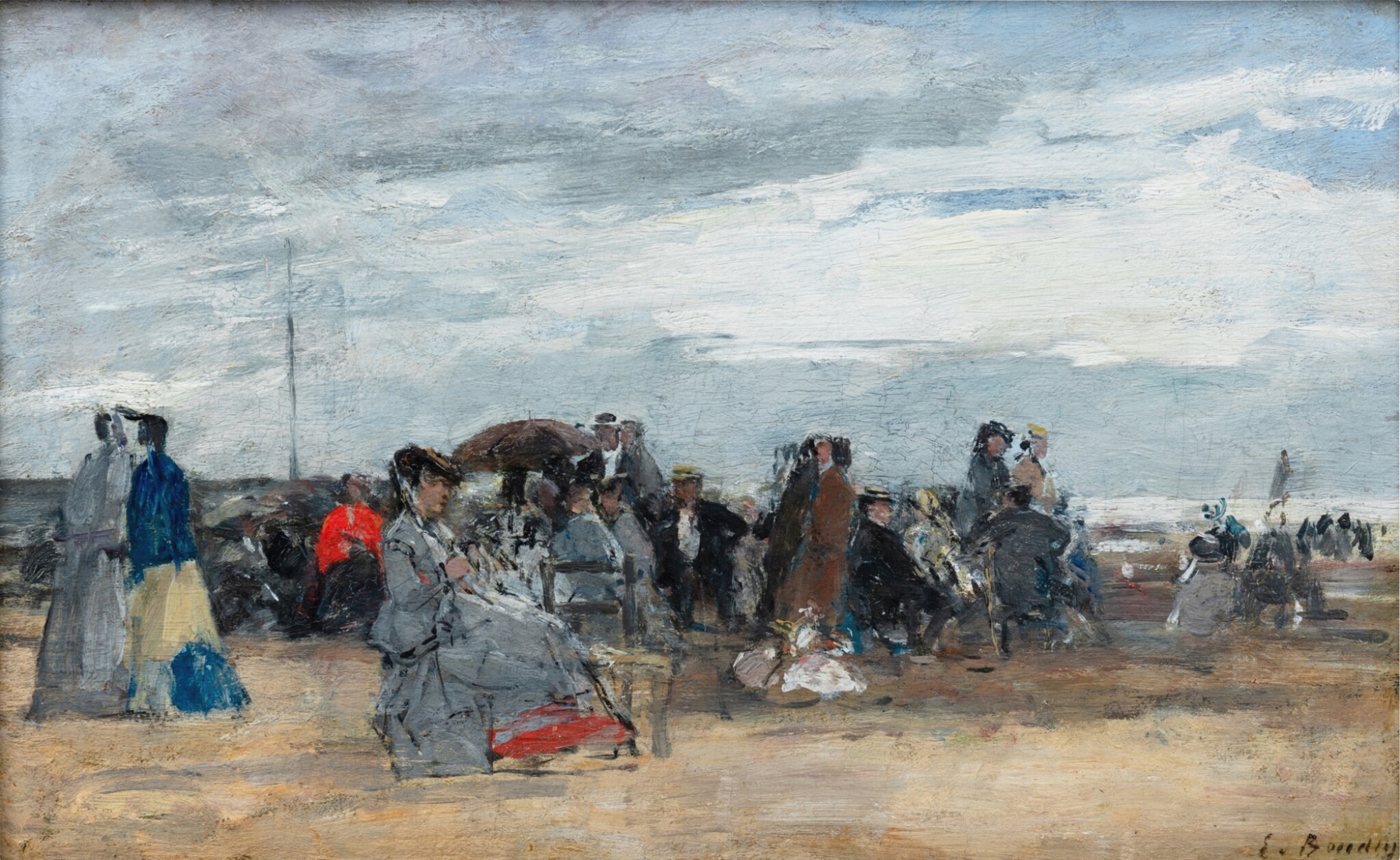
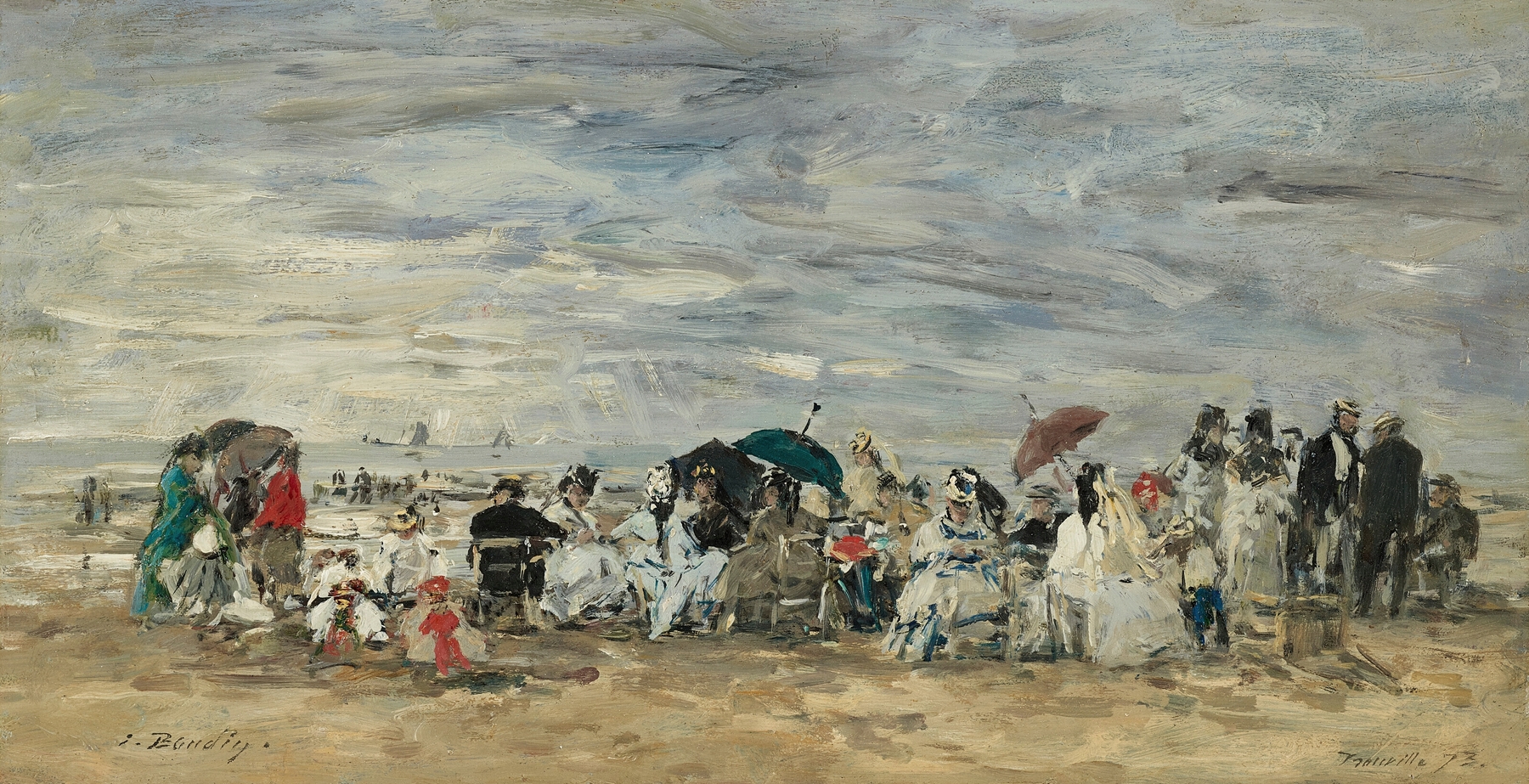
Can beauty exist without sorrow? In the gentle embrace of a coastal scene, where rhythm and chaos converge, the answer may lie within the whispers of the waves. Look to the horizon, where soft pastel hues of lavender and gold collide with the deep blue of the sea. The viewer's gaze is effortlessly drawn to the sunlit figures dotting the sandy beach, their colorful garments offering a joyous contrast to the muted tones of the sky. Notice how the light dances on the water’s surface, creating a shimmering path that seems to lead toward both hope and the unknown. Each brushstroke conveys movement, capturing the fleeting essence of leisure and the relentless passage of time. Yet, beneath this idyllic facade lies a tension between joy and transience. The figures, seemingly caught in moments of laughter and leisure, are mere specks against nature’s vastness—a reminder of humanity’s fragility. The scattered umbrellas and bathing costumes suggest a carefree day, but the looming clouds hint at the inevitable arrival of change. Here, destiny plays a silent role, balancing the carefree spirit of the beachgoers with the reality of life’s uncertainties. In 1873, Eugène Boudin painted this work in Trouville, a popular seaside resort in France. At the time, he was exploring plein air painting, capturing the ephemeral qualities of light and atmosphere. The art world was shifting, embracing new movements like Impressionism, which would later influence Boudin’s own work. This piece reflected not only his mastery of capturing the moment but also the societal changes of a post-industrial era, where leisure began to take on new meanings in the modern world.