Scène De Plage À Trouville — History & Analysis
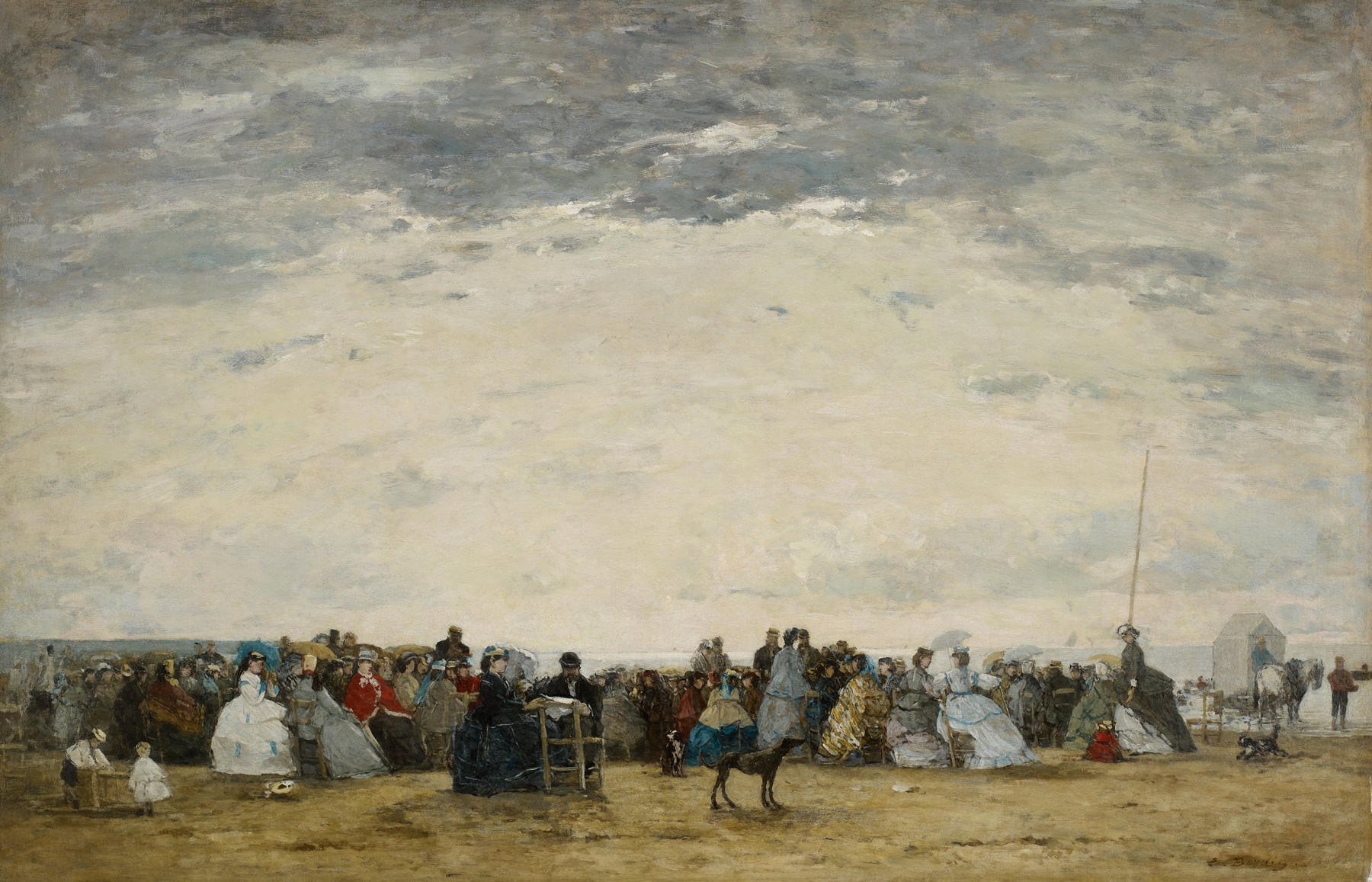
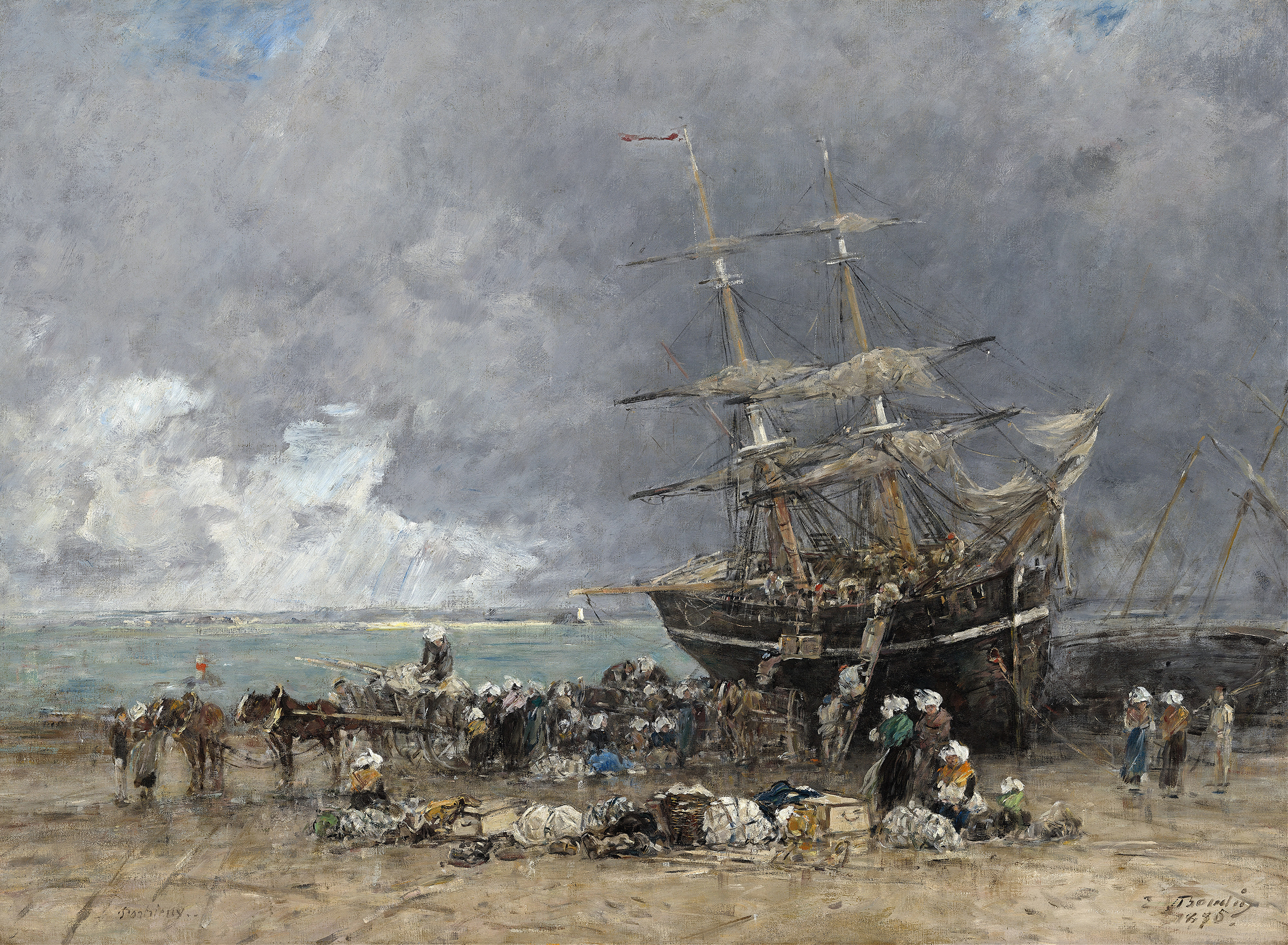
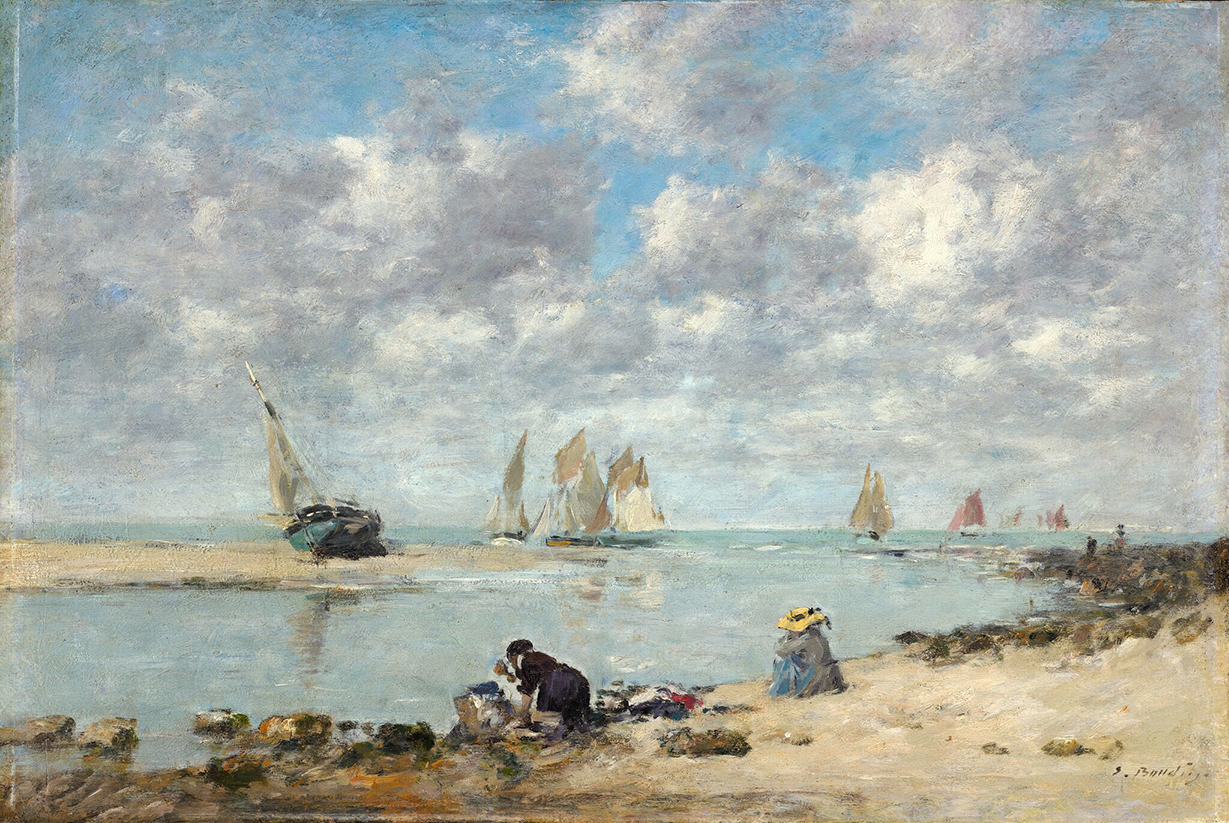
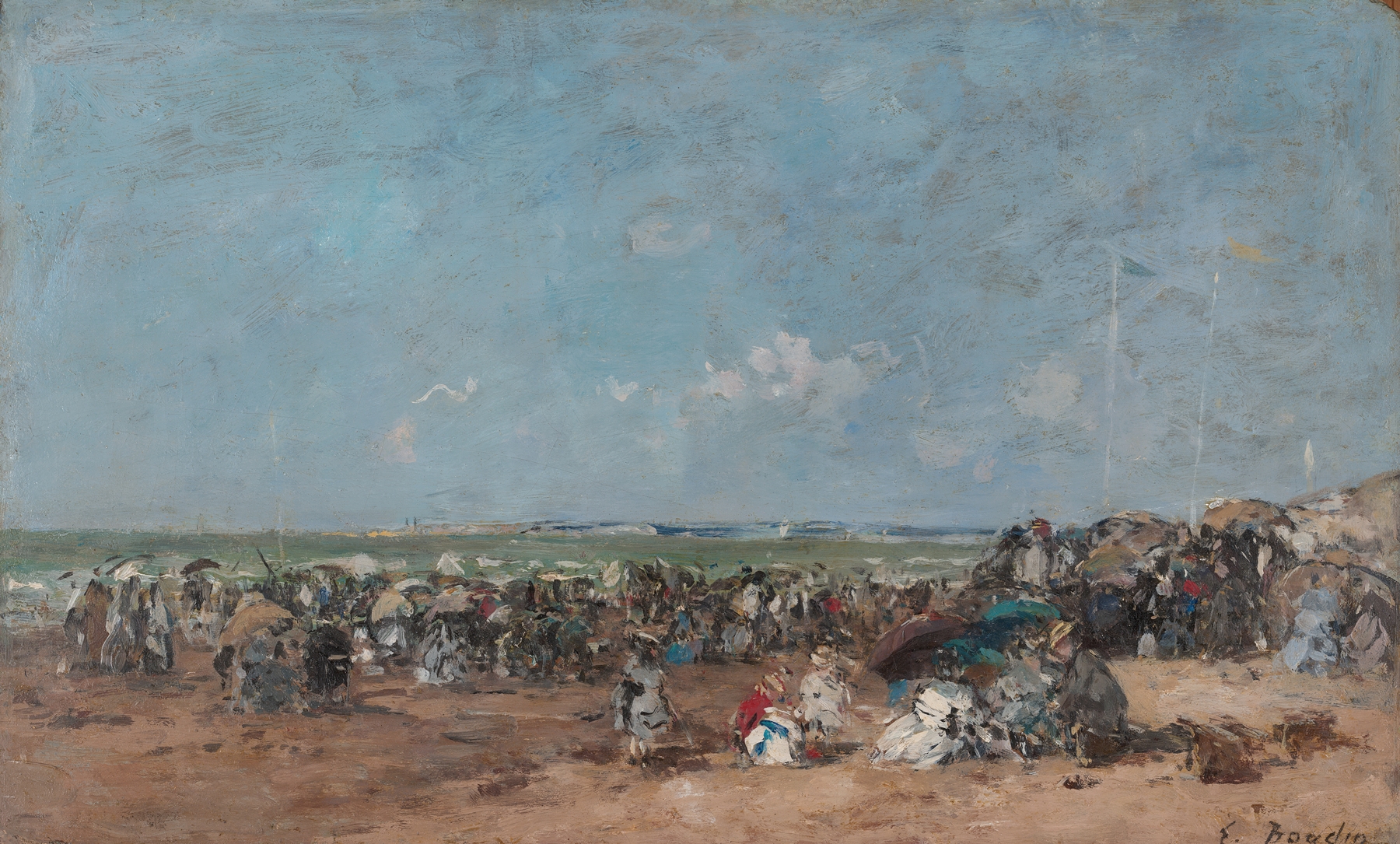
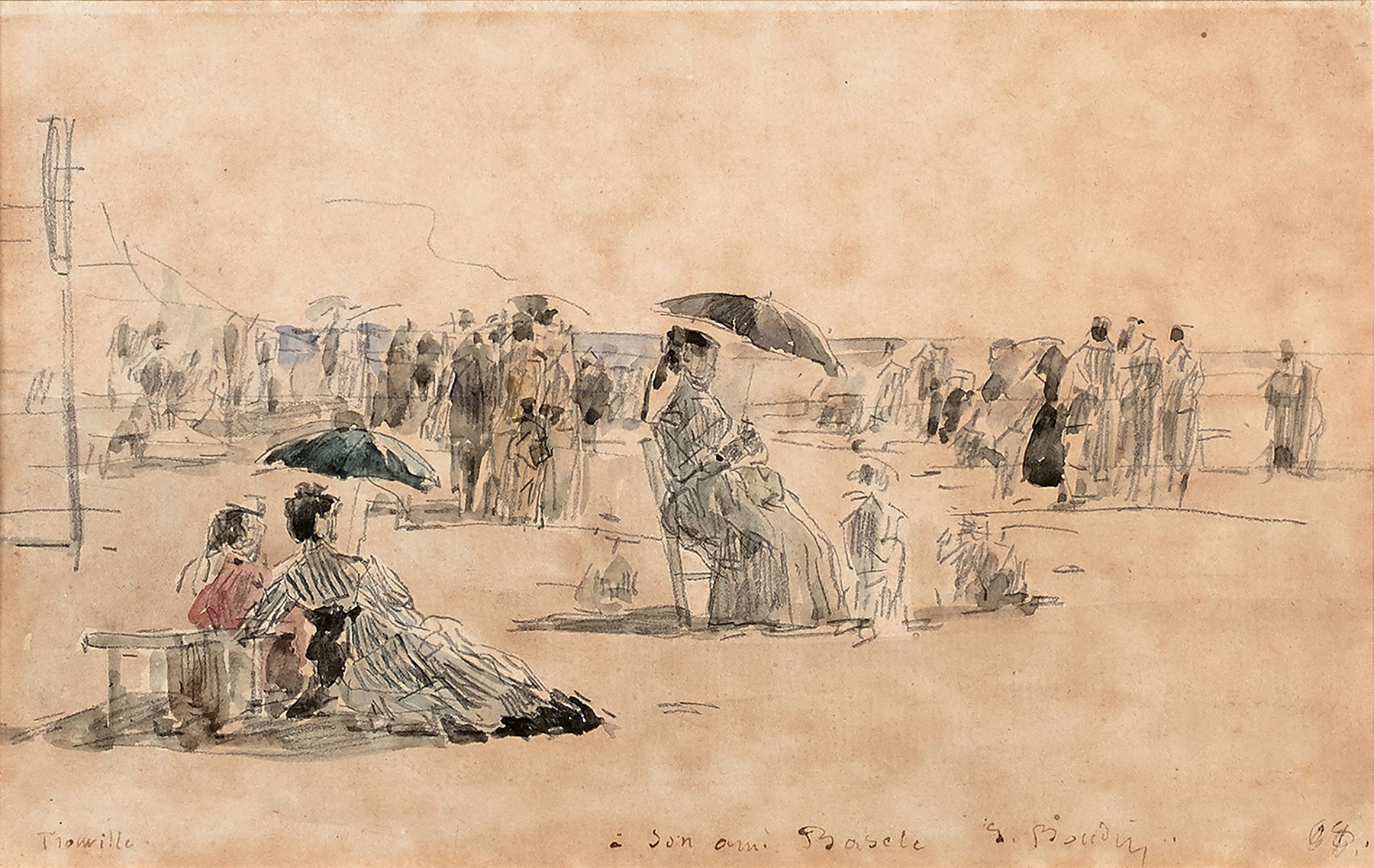
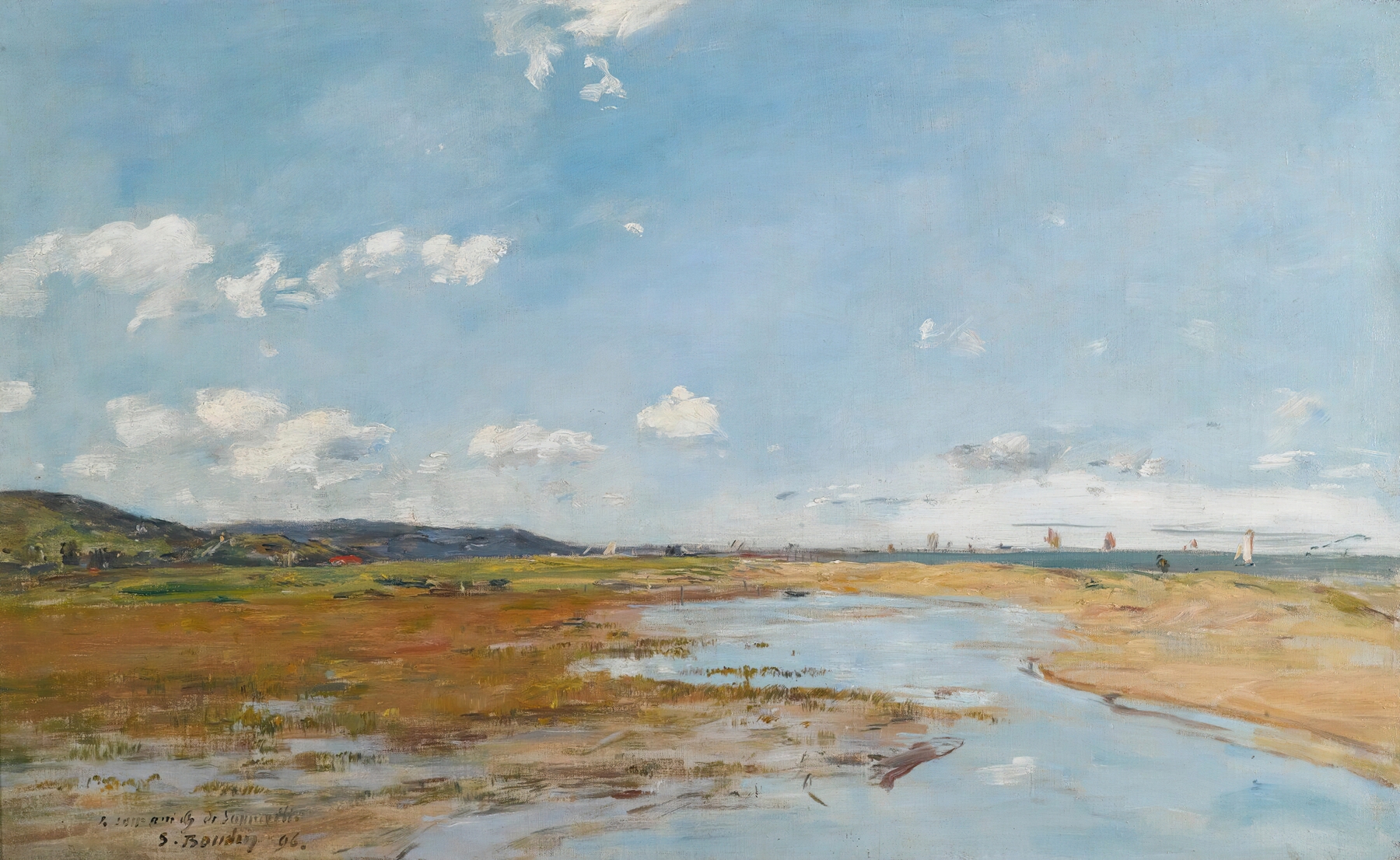
Could beauty survive in a century of chaos? In Scène De Plage À Trouville, Boudin captures a fleeting moment where tranquility meets the vibrant chaos of life by the sea. Look to the foreground where figures clad in sunlit hues playfully meander along the shore, their silhouettes etched against the soft gold of sand. Notice how the gentle waves, brushed with white foam, ripple in harmony with the pastel sky above, blending blues and pinks that evoke a sense of serenity.
The brushwork is loose yet intentional, inviting a sense of movement that dances across the canvas, leading the viewer's eye from the textured sand to the expansive horizon. Delve deeper into the scene, and a contrast emerges between the joyful leisure of the beachgoers and the looming presence of the sea, ever unpredictable. Each figure, distinct yet united in their shared experience, embodies a moment of respite amidst the relentless march of time.
The vibrancy of the colors suggests hope, even as the canvas hints at fleeting peace in a world teetering on the brink of transformation. In 1868, while painting this piece, Boudin was establishing his reputation as a pioneer of plein air painting, embracing the effects of natural light and atmosphere. Set against the backdrop of an evolving art world and France's social turmoil, he sought to capture the ephemeral beauty of everyday moments, reflecting a desire for solace in an era increasingly defined by uncertainty.