View of Bordeaux, from the Quai des Chartrons — History & Analysis
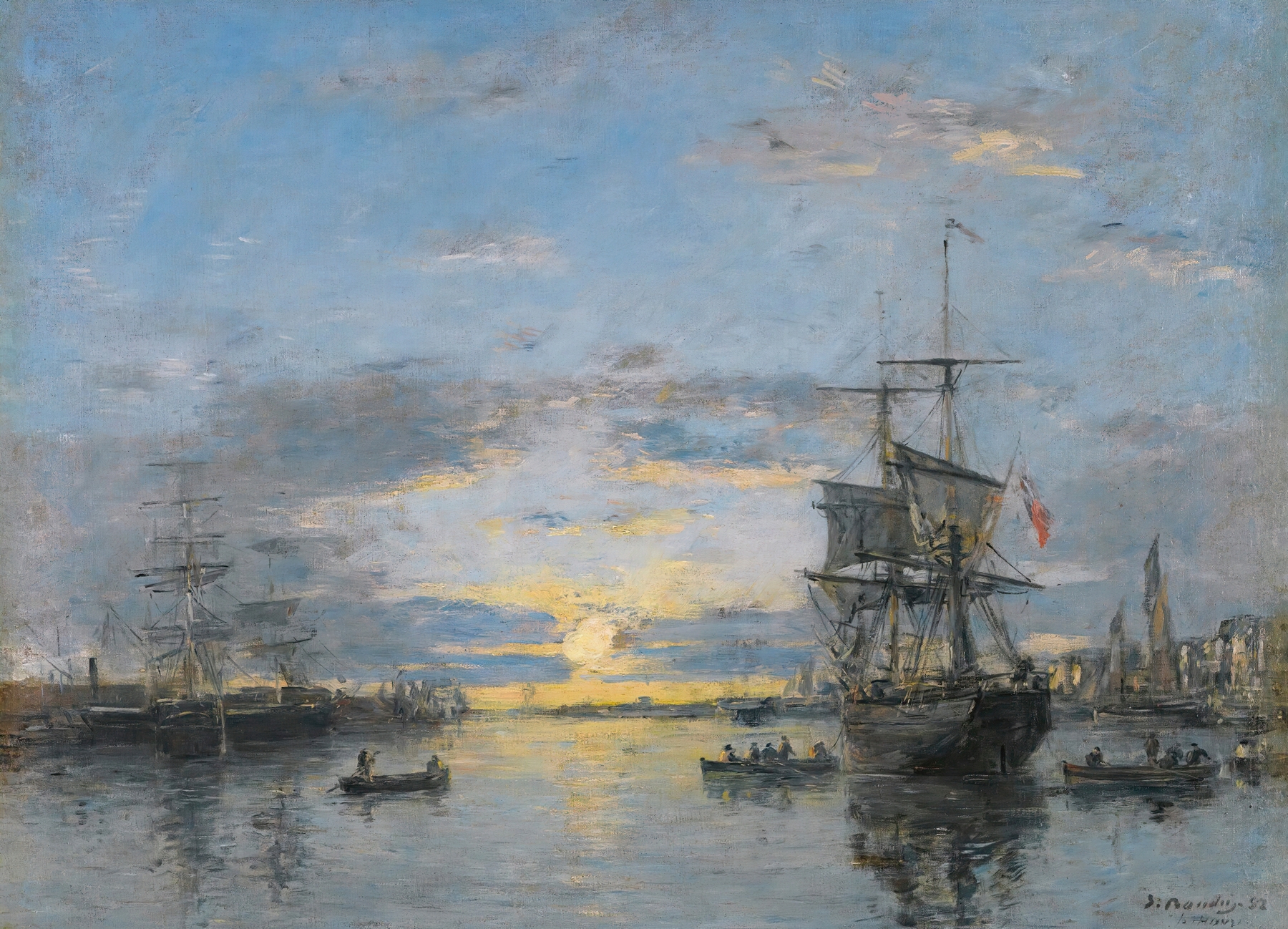
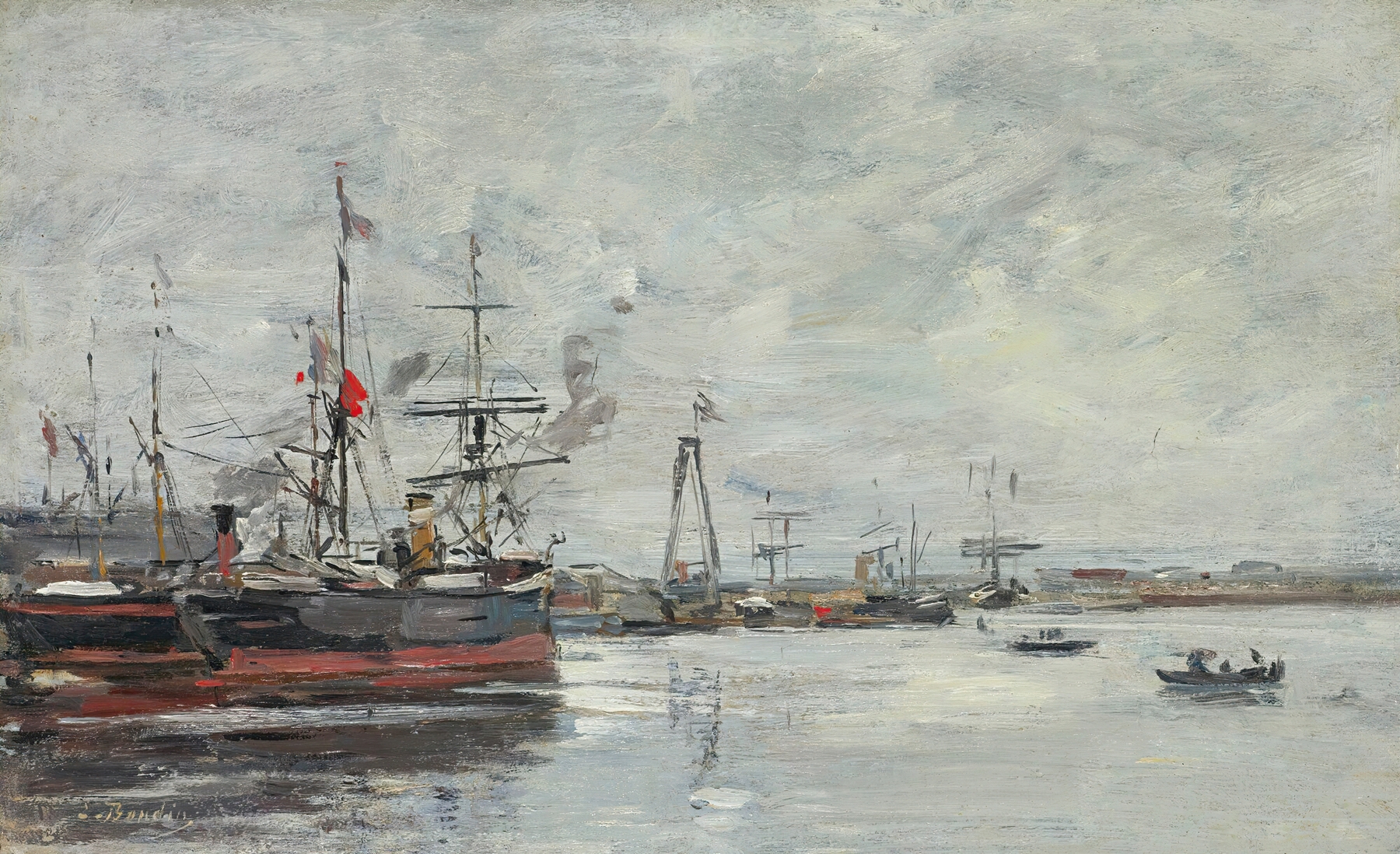
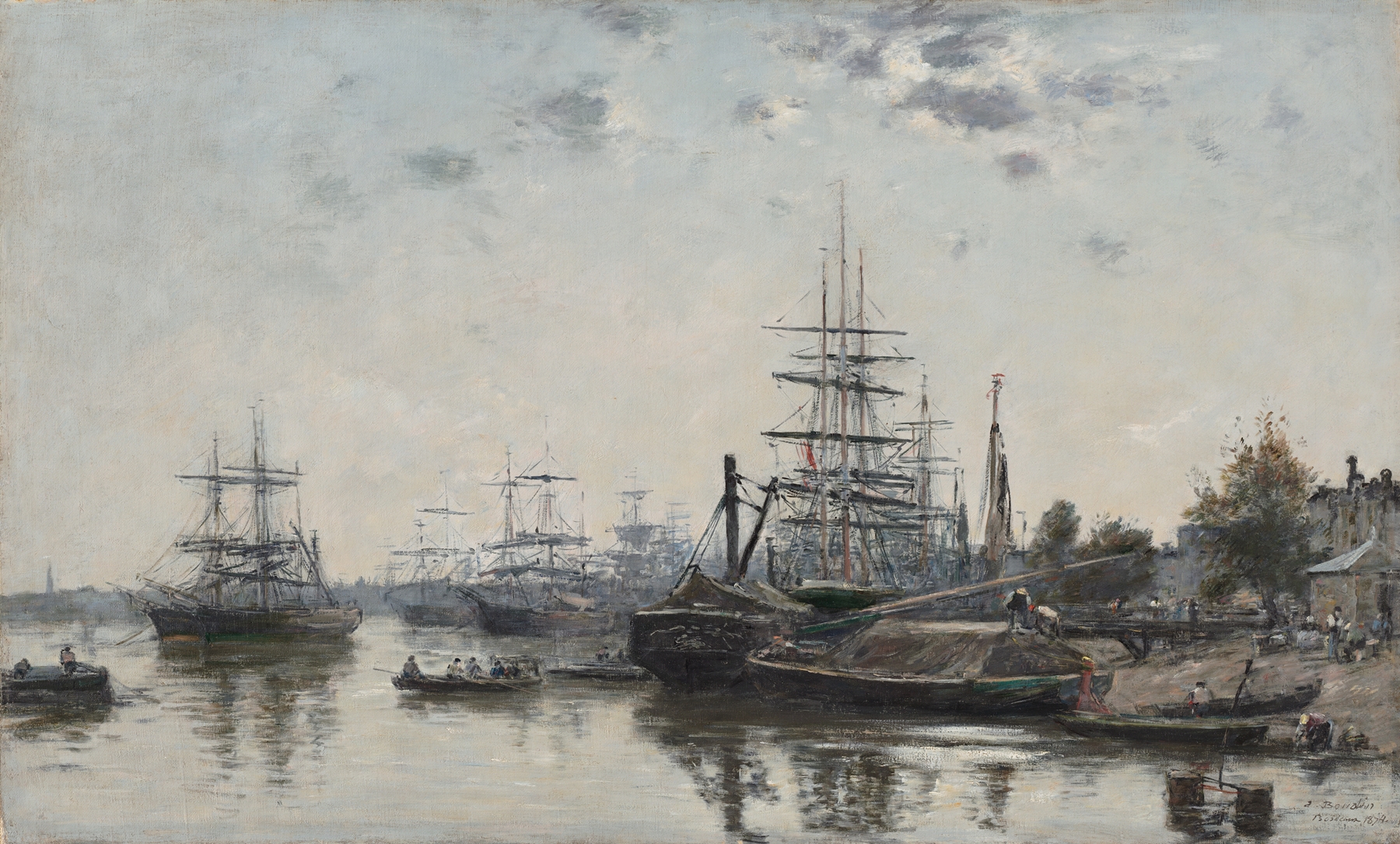
Could beauty survive in a century of chaos? In *View of Bordeaux, from the Quai des Chartrons*, the artist captures a moment where tranquility reigns over the tumult of time, inviting the viewer to ponder the passage of days against the backdrop of an evolving world. Look to the horizon, where the shimmering waters reflect the soft hues of dawn—a delicate interplay of blues and golds. Notice how the vibrant strokes depict the busy quay, dotted with boats gently rocking in the tide, each stroke conveying the liveliness of daily life. Boudin’s masterful use of light, particularly in the reflections on the water, evokes a sense of warmth and serenity, contrasting with the industrious scene unfolding on the land. Yet, within this serene landscape lies a poignant duality. The bustling activity suggests a thriving port, yet the subtle presence of clouds in the distance hints at impending change, possibly alluding to the socio-economic shifts of the late 19th century. These elements create an emotional tension, as the viewer is left to question whether such beauty can endure amid the inevitable transformations of society. The juxtaposition of calm waters and the busy quay underscores the fleeting nature of both beauty and time. Eugène Boudin painted this piece in 1874 while living in France, a period marked by rapid industrialization and urban growth. As one of the precursors to Impressionism, he was deeply influenced by the changing landscapes around him. This work reflects his fascination with light and atmosphere, as well as his desire to capture moments of beauty in a world that was rapidly evolving.