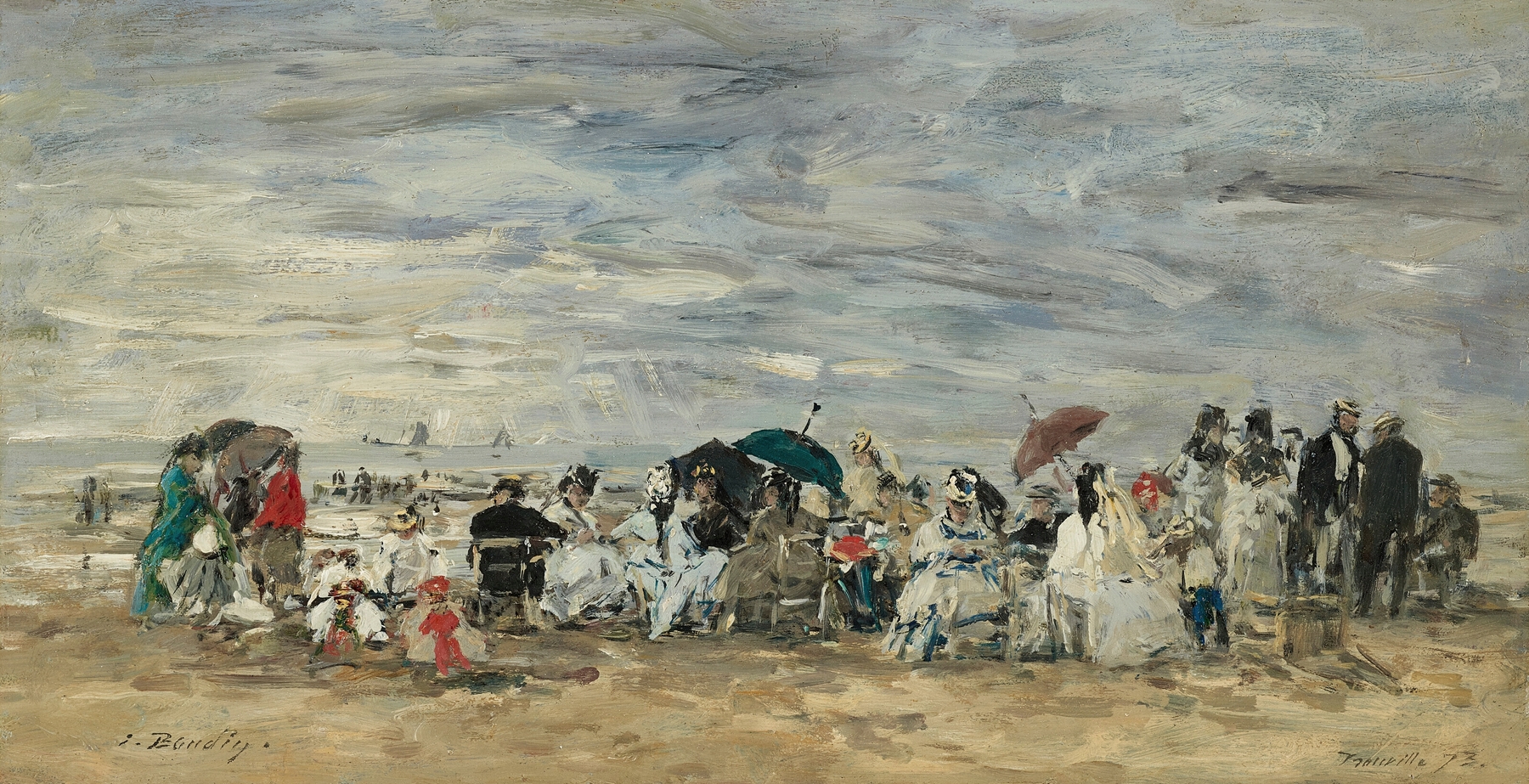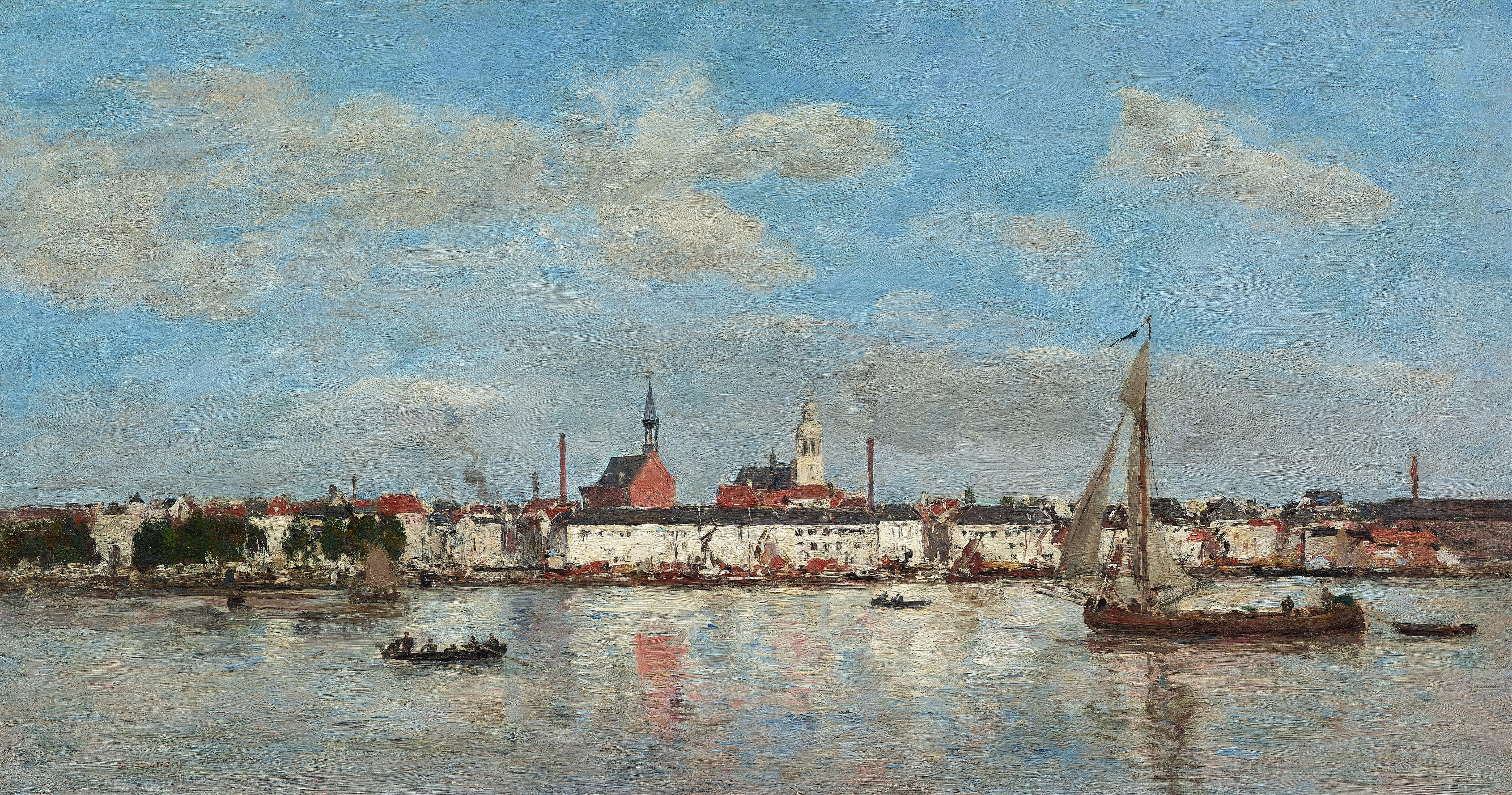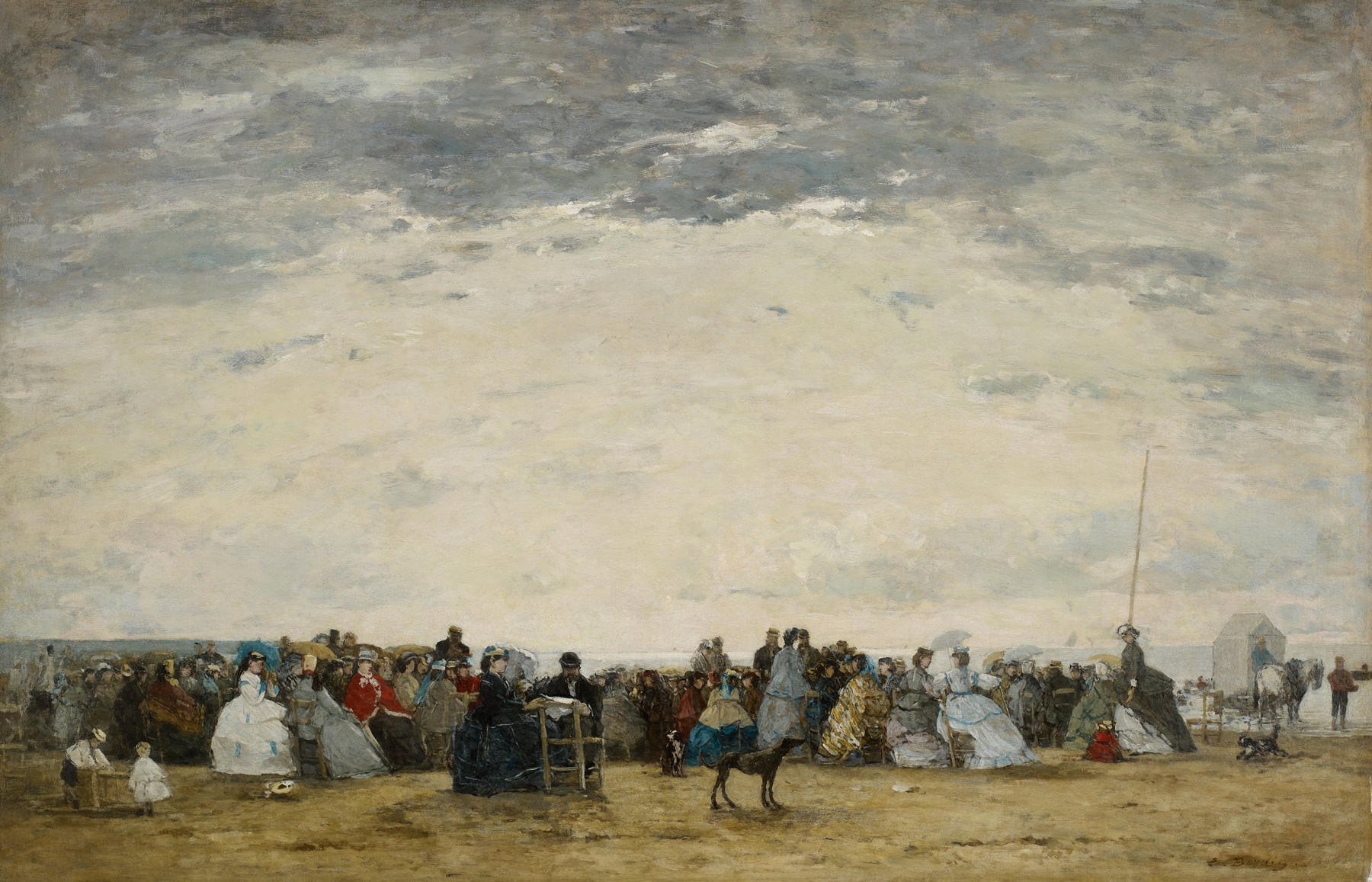
Vacationers on the Beach at Trouville — History & Analysis
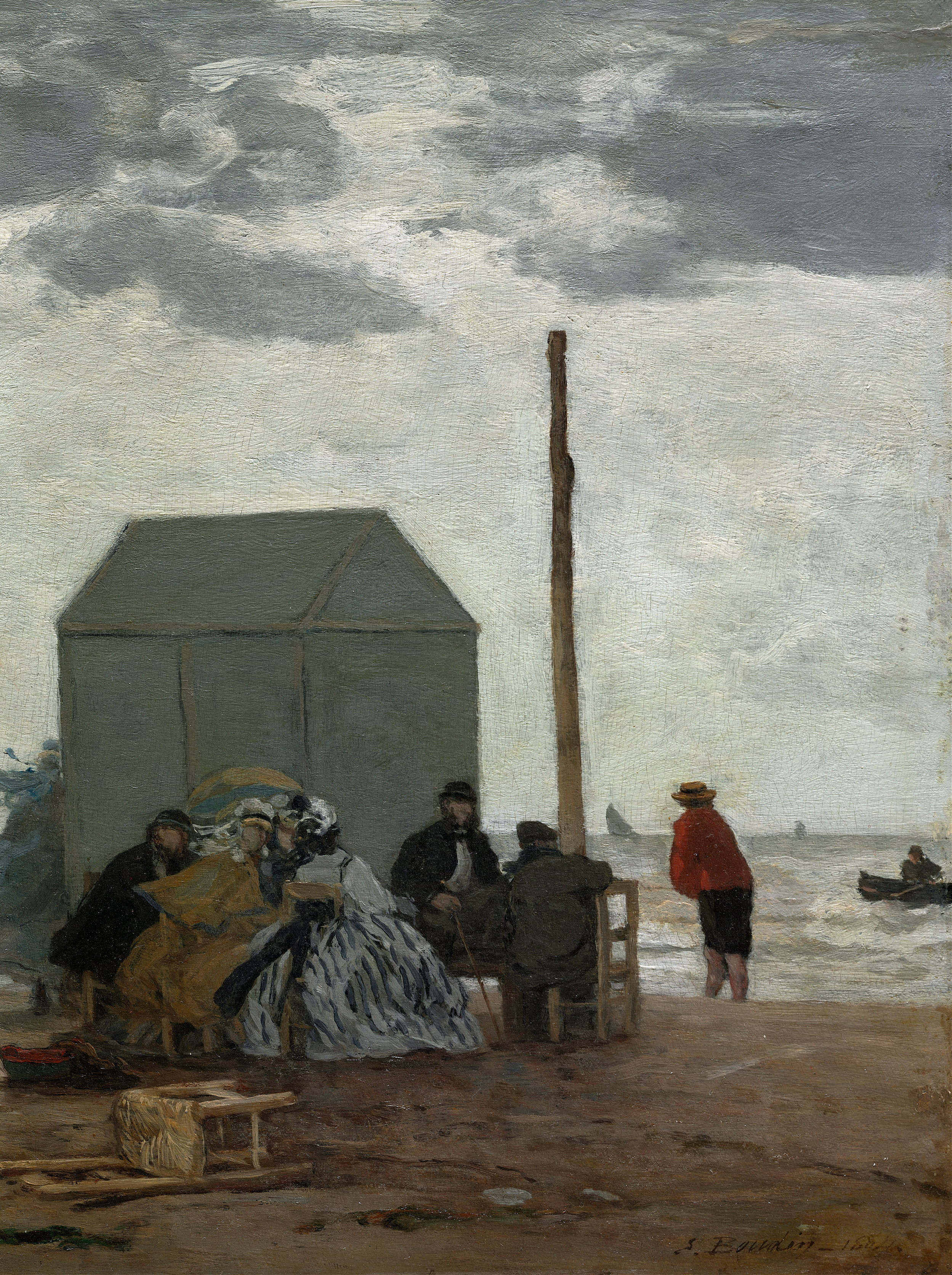
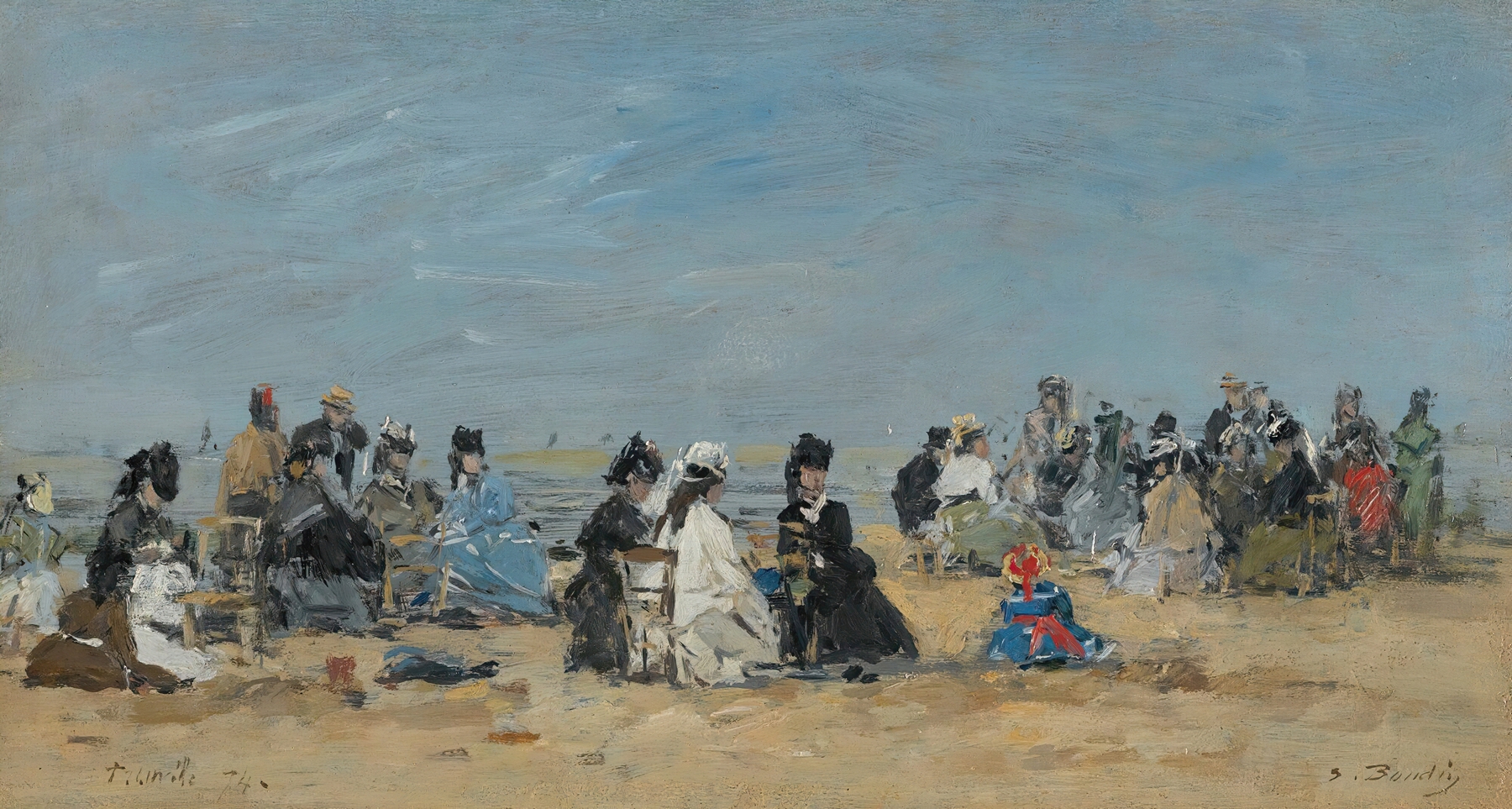
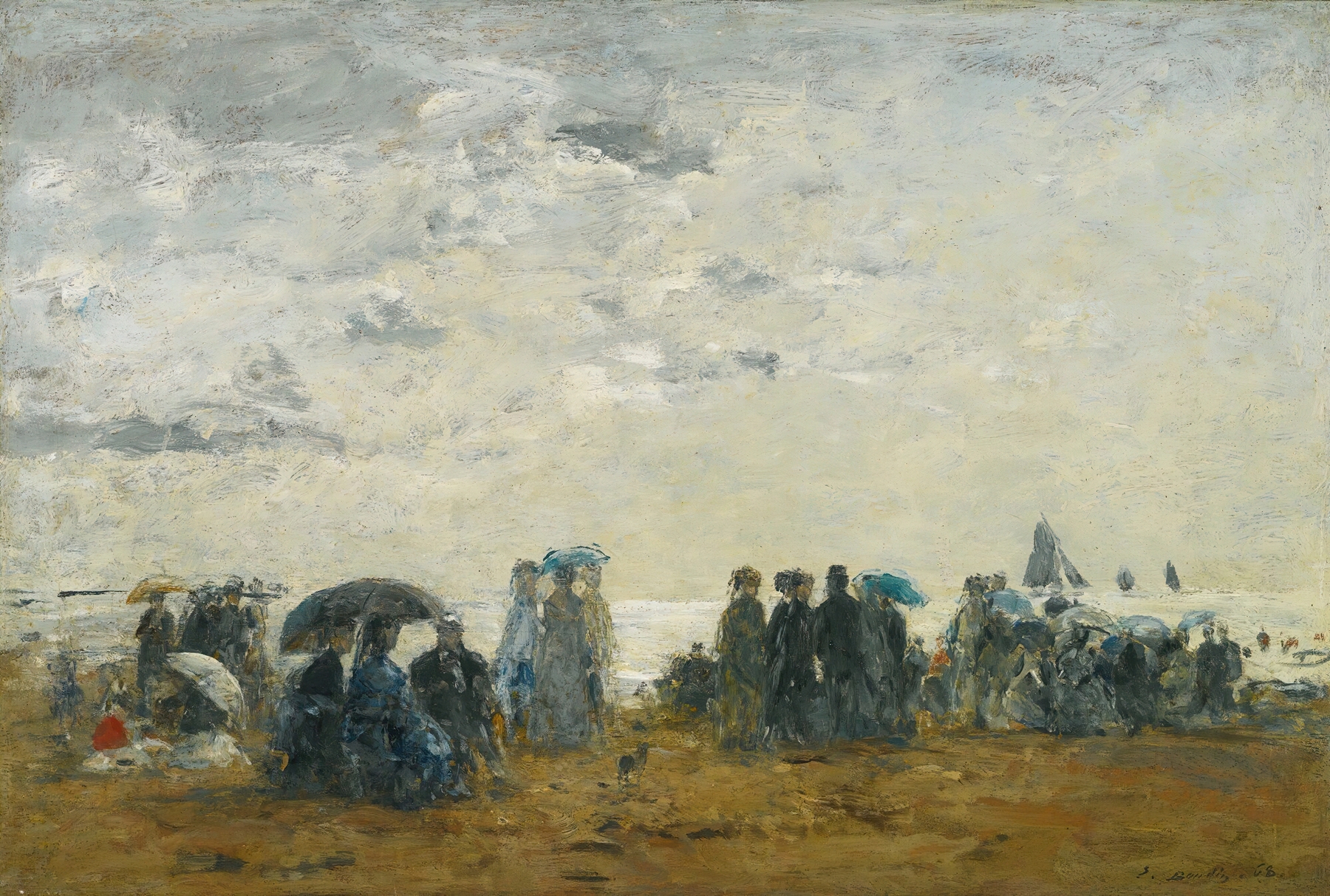
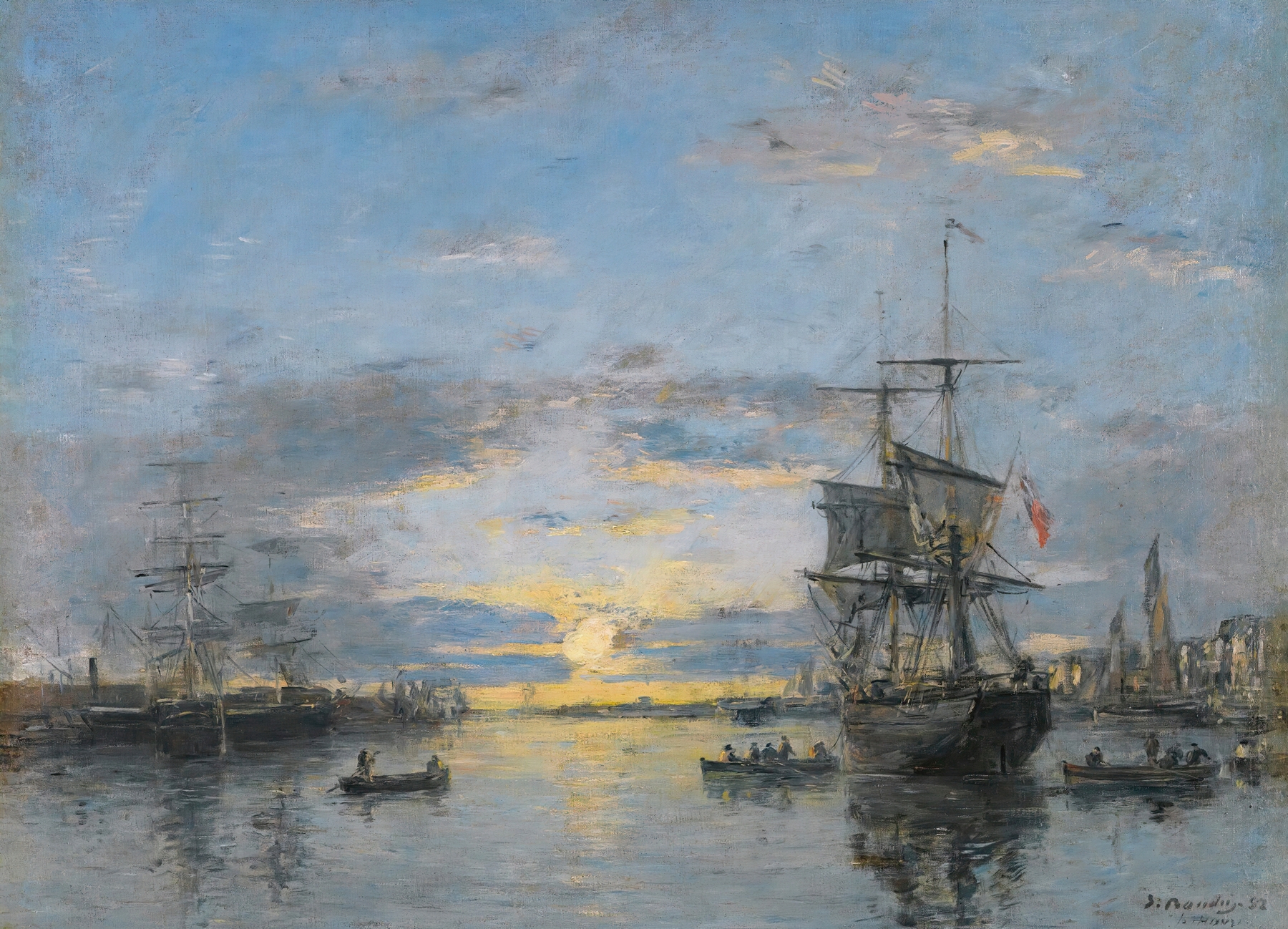
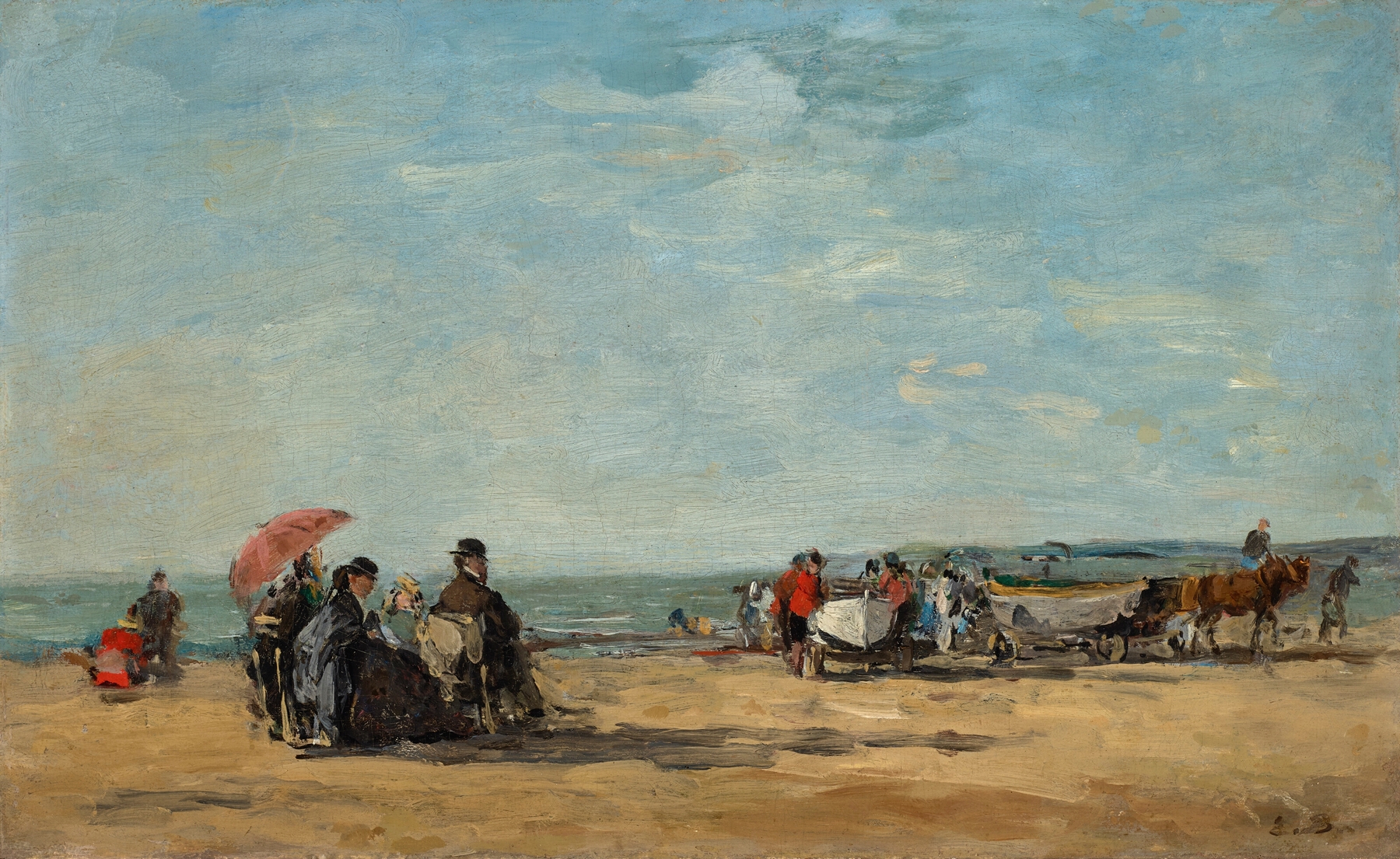
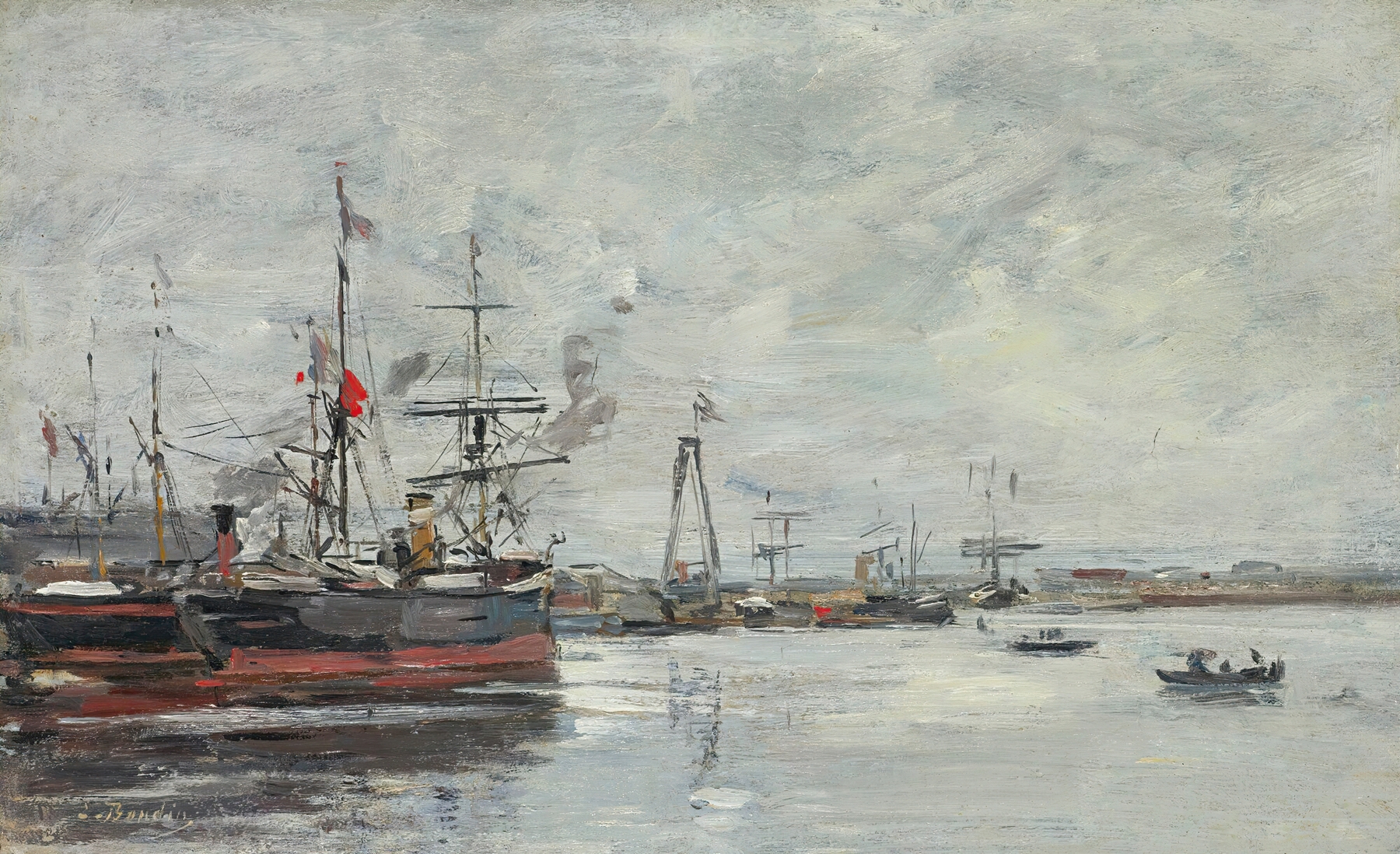
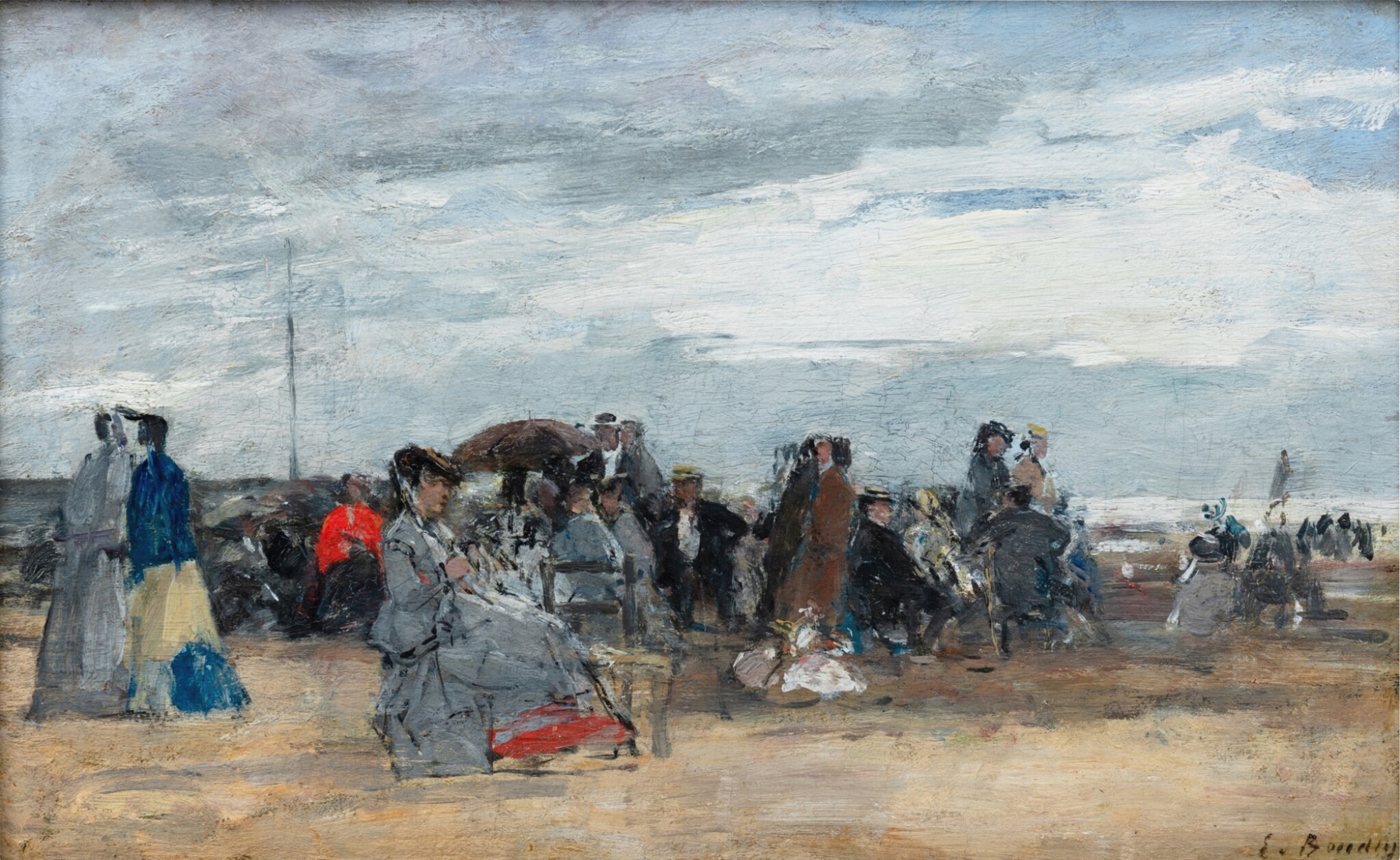
Did the painter know this moment would outlive them? A fleeting glimpse of sun-drenched leisure, captured on canvas, forever preserved as a timeless dream. Look to the foreground where sunhats and colorful parasols create a lively tapestry against the golden sand. Boudin's deft brushwork reveals the texture of the beach, while strokes of blue and white in the sky seem to dance above the tranquil sea. The figures, both distant and close, engage in various leisurely pursuits; their joyous movements evoke a sense of carefree summer days that beckon the viewer to step into the scene. Delve deeper, and you’ll notice the juxtaposition of light and shadow. The sun casts long, playful shadows that stretch across the sand, hinting at the passage of time and the impermanence of such moments. Each figure tells a story, a unique slice of life—some bask in the sun, while others engage in spirited conversation, revealing the shared human experience of seeking joy and respite. In this idyllic setting, one can sense the undercurrent of longing inherent in dreams, a reminder of the transient nature of happiness. In 1864, Boudin was actively painting along the Normandy coast, a burgeoning epicenter of French seaside culture. The art world was shifting, moving away from formal academic standards toward impressionism. During this period, he was influenced by his surroundings and the use of natural light, often painting en plein air, a technique that profoundly shaped the movement.