Beggar with a Duffle Coat (Philosopher) — History & Analysis
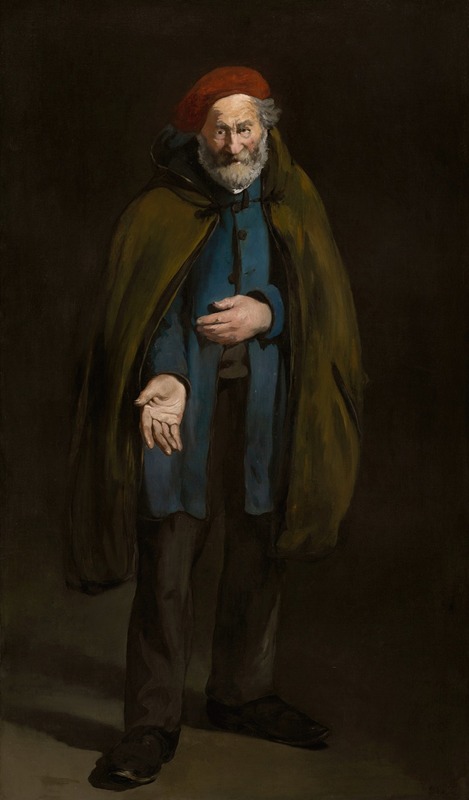
Can beauty exist without sorrow? In Beggar with a Duffle Coat (Philosopher), light dances across the canvas, illuminating the complexity of a man lost in thought, suggesting that brilliance often resides within shadows. Look to the left at the warm glow that bathes the figure's face, juxtaposed against the deep, muted tones of his coat. The soft highlights on his skin draw your attention, revealing a weary yet dignified expression, while the surrounding darkness envelops him in a sense of solitude.
Notice how the brushstrokes vary from smooth to rough textures, mirroring the tension between his quiet contemplation and the chaotic world outside his frame. Delve deeper, and you'll find layers of meaning woven through the fabric of his coat and the expression in his eyes. The contrasting light and darkness embody the duality of his existence—a life marked by suffering yet imbued with an undeniable dignity. This tension invites contemplation on the nature of humanity, suggesting that sorrow can illuminate beauty rather than overshadow it.
The thoughtful positioning of his hands reinforces this idea; they rest gently, as if cradling the weight of unspoken wisdom. Manet painted this piece in the years between 1865 and 1867, a time when he was exploring the boundaries of realism and impressionism. Living in Paris, he was heavily influenced by the changing art scene, seeking to capture the essence of modern life amidst social upheaval. This painting reflects his deep engagement with both the human condition and the evolving identity of art itself, making it a poignant moment in his career as he continued to challenge artistic conventions.