A Bar at the Folies-Bergère — History & Analysis
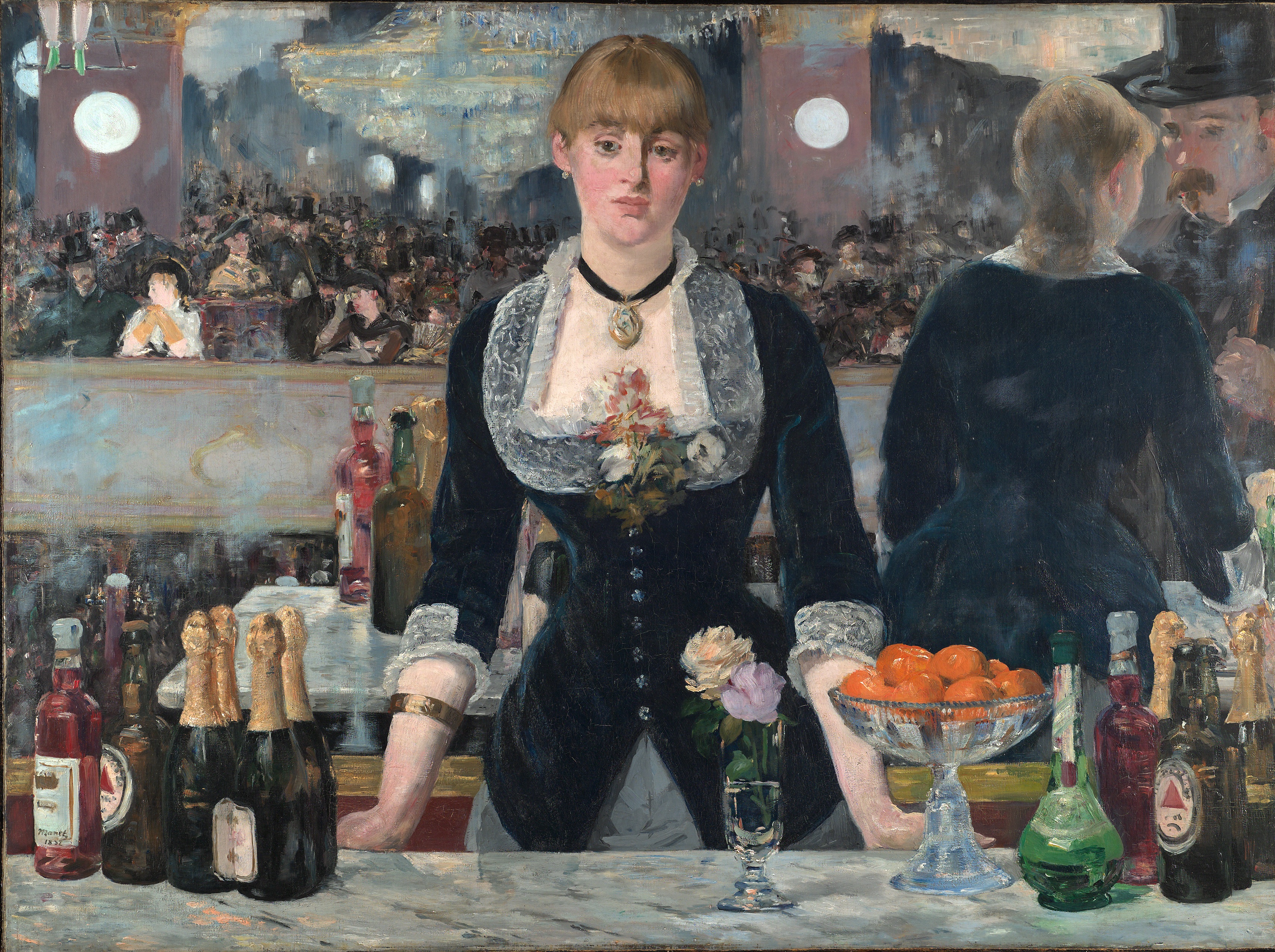
A Bar at the Folies-Bergère (1882) by Édouard Manet shows a barmaid standing behind a counter filled with bottles, facing the viewer, while a large mirror behind her reflects the busy interior of the famous Paris music hall. In the reflection, we see a man who appears to be standing in front of her, even though he is not visible directly in the foreground. The setting is based on a real place in Paris, the Folies-Bergère, known for its nightlife and entertainment.
Manet paints the scene with a direct and simple style, but the mirror creates a complex visual effect. The reflection does not fully match the position of the barmaid, which has led to many interpretations, but it also shows how Manet was experimenting with perspective and composition. The contrast between the still, neutral expression of the barmaid and the lively crowd behind her highlights the difference between her role and the environment around her.
The composition is centered on the barmaid, with the counter forming a strong horizontal line across the painting. Objects like bottles, fruit, and glasses are carefully arranged to add detail and balance. Instead of showing action, Manet captures a moment at the bar, using reflection, positioning, and contrast to create a scene that feels both real and slightly unusual.