Beim Eichelhof in Nußdorf — History & Analysis
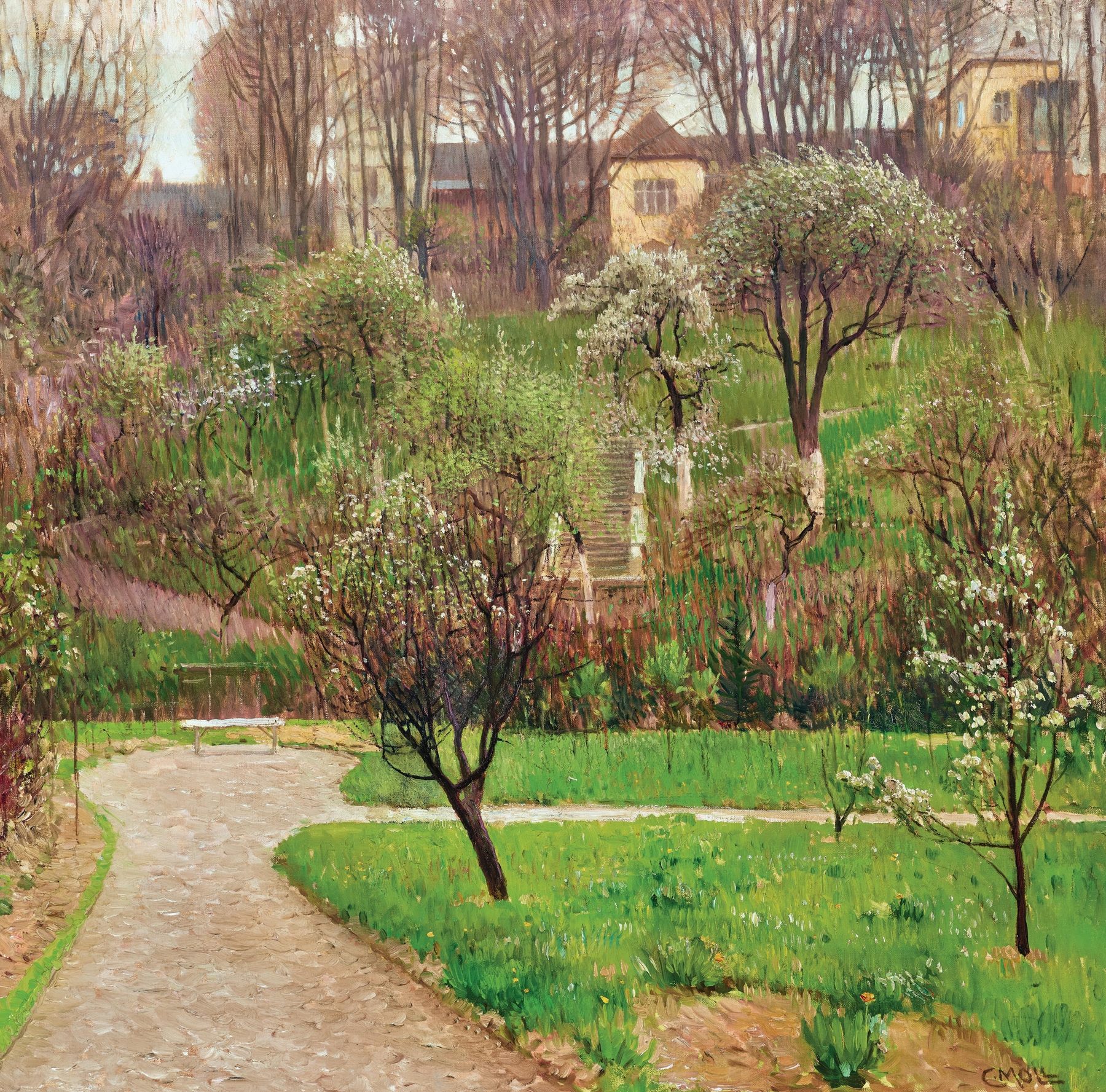
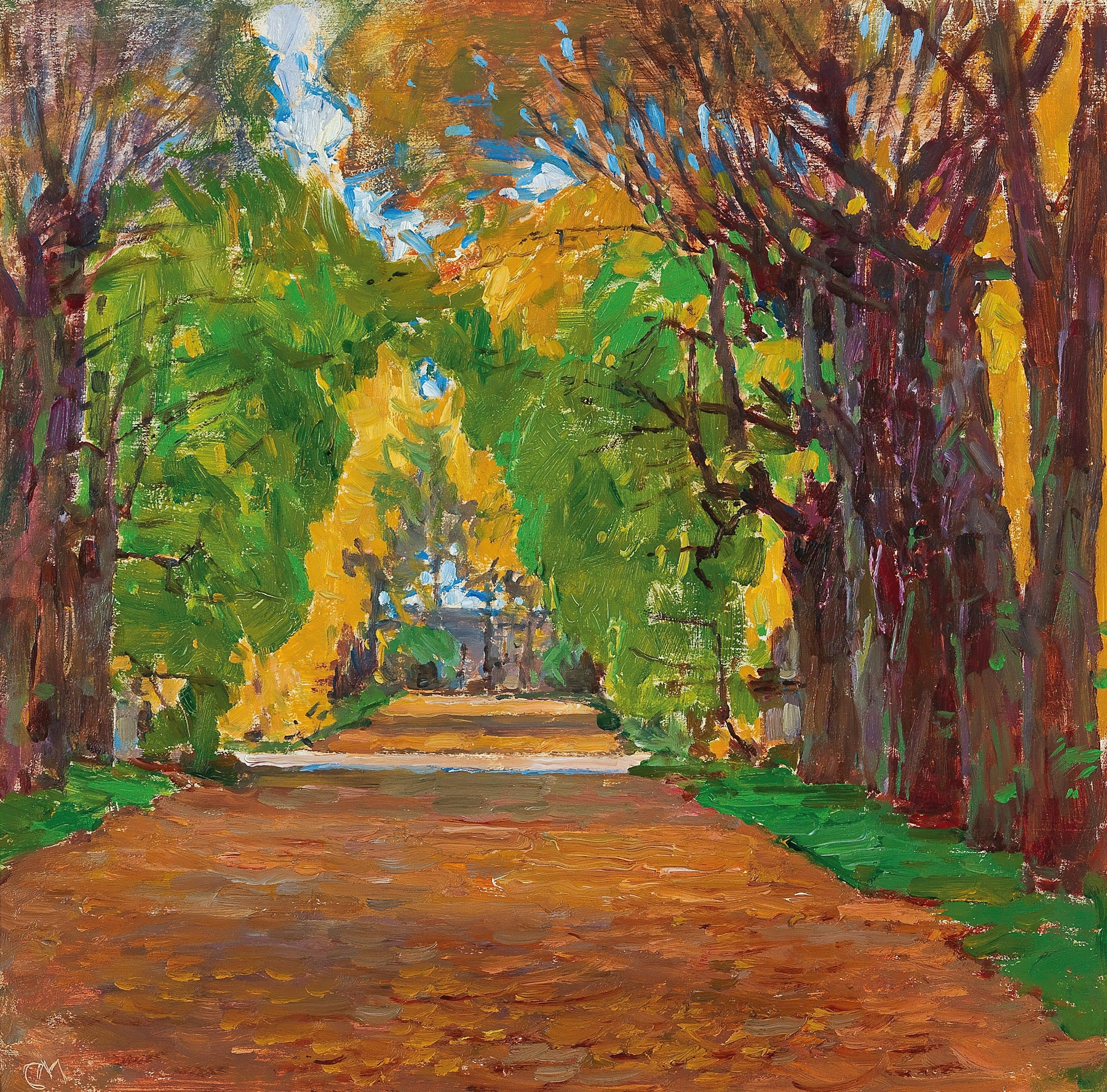
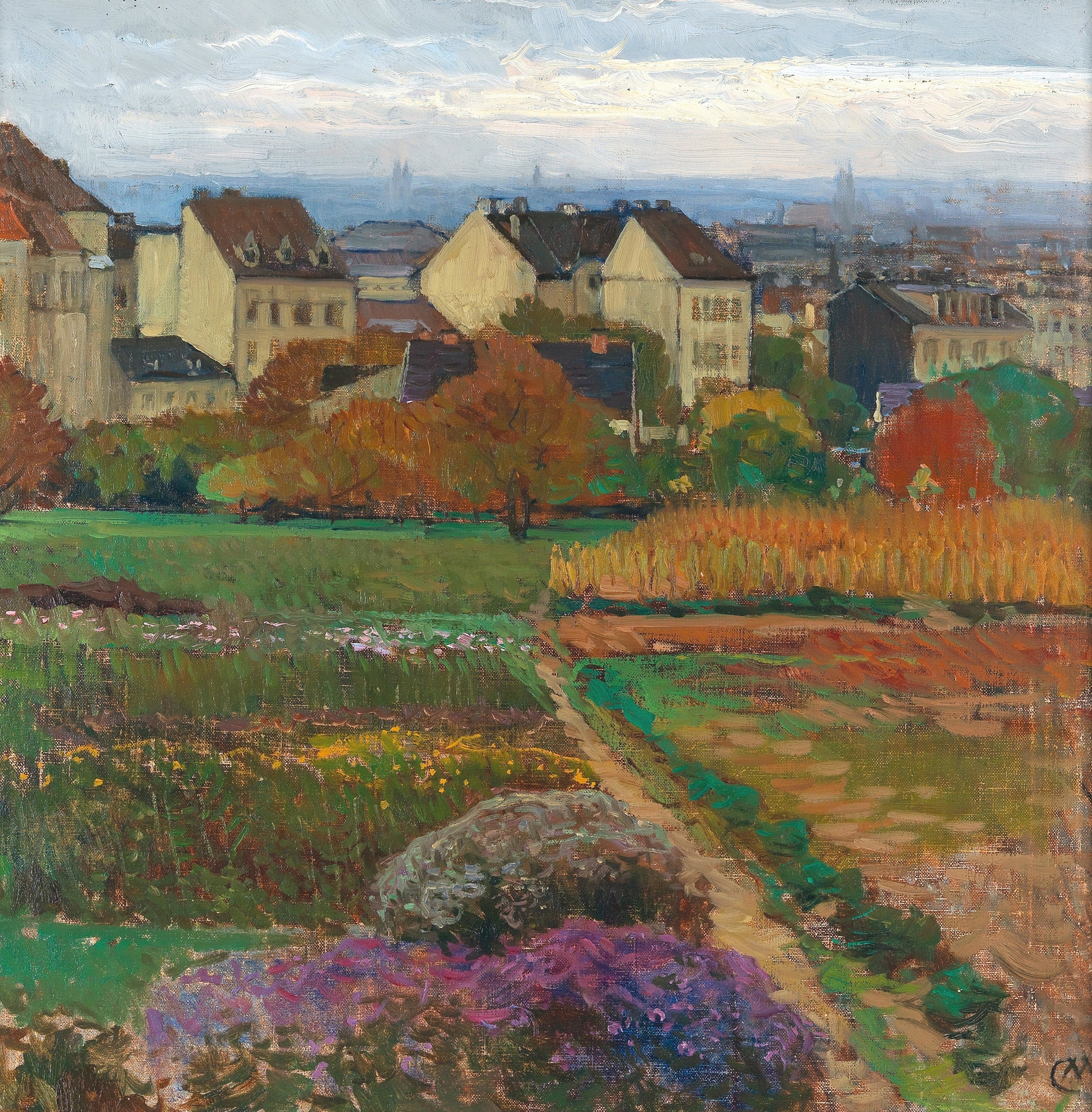
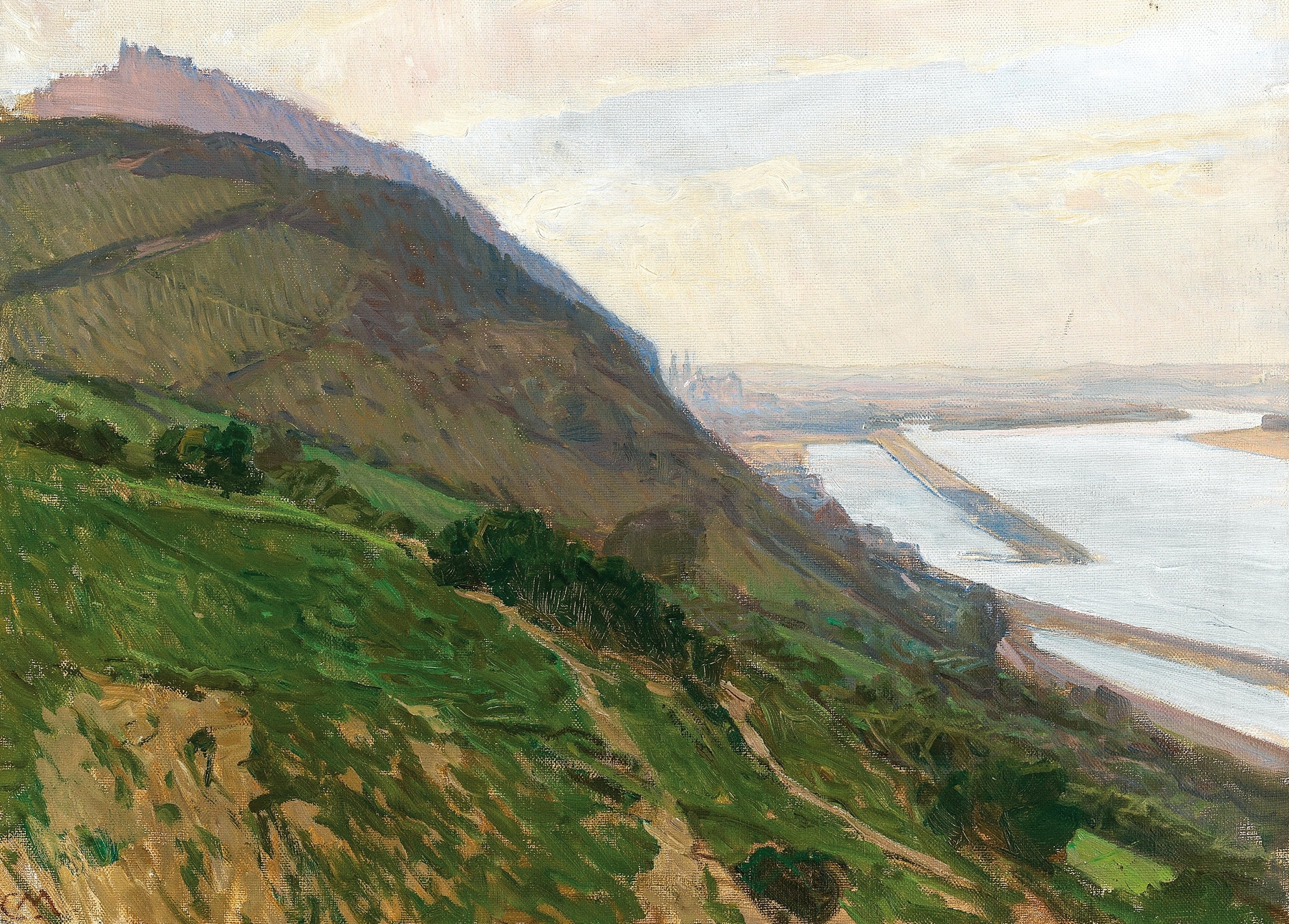
“Art reveals the soul when the world turns away.” In the stillness of a quiet landscape, divine beauty unfurls, inviting contemplation and reverence. It is in this sacred space where nature and humanity intertwine that we discover our deepest connections to the world around us. Look to the left at the gracefully arching trees, their leaves a verdant celebration of life, casting dappled sunlight on the ground below. The horizon, painted in gentle blues and soft greens, stretches far into the distance, drawing your gaze to the serene, meandering path that beckons exploration.
Notice how the light dances across the canvas, creating a luminous quality that breathes life into every brushstroke and captures a moment suspended in time. As you delve deeper, consider the contrast between the lush foreground and the encroaching shadows at the edges. This duality reveals a world teetering between tranquility and the chaos of the unknown. The interplay of light and dark serves as a metaphor for existence, where moments of peace are often shadowed by uncertainty, yet divinity is found in embracing both.
Each detail—be it the intricate textures of the foliage or the soft contours of the path—whispers of life’s fleeting nature and the beauty that emerges from it. Created in 1933, this piece emerged during a tumultuous period in Europe, as political upheaval began to ripple across the continent. Carl Moll, a pivotal figure within the Vienna Secession movement, sought to capture moments of serenity amidst the chaos of his time. His work reflects a yearning for connection, both to nature and the human experience, as he painted from his home in Austria, where he endeavored to find solace in the depths of his art.