Überschwemmung an der Wümme — History & Analysis
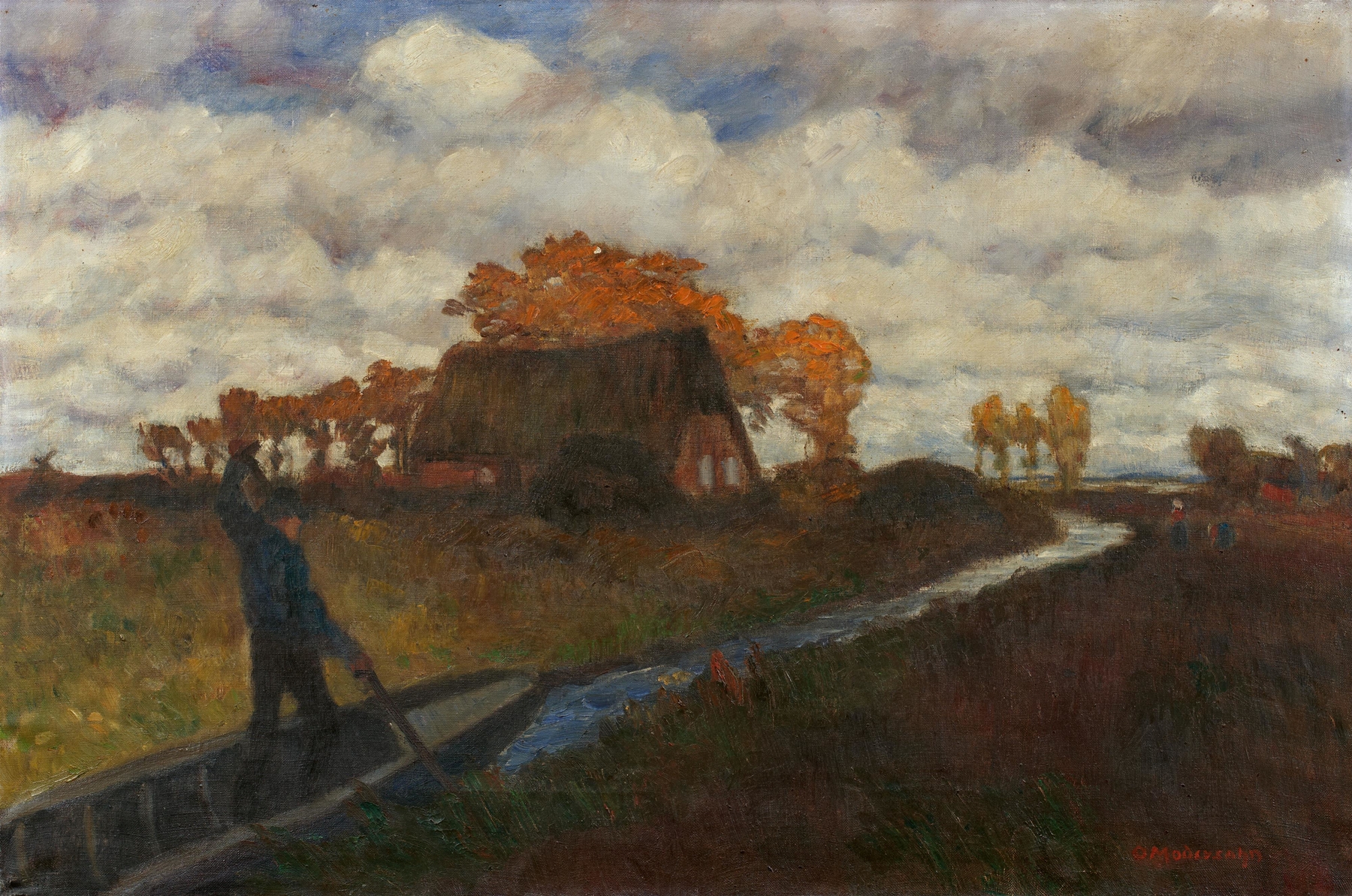
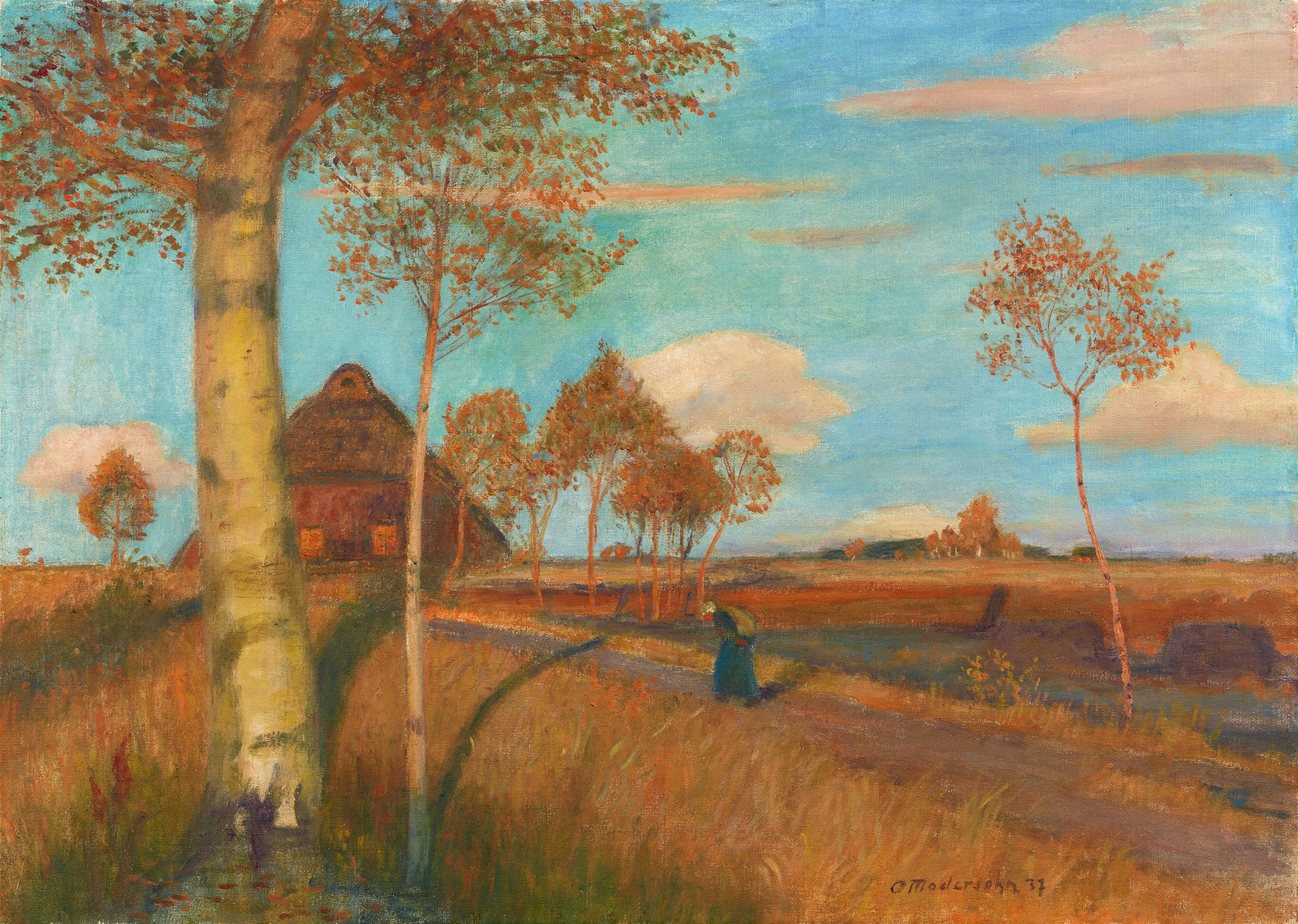
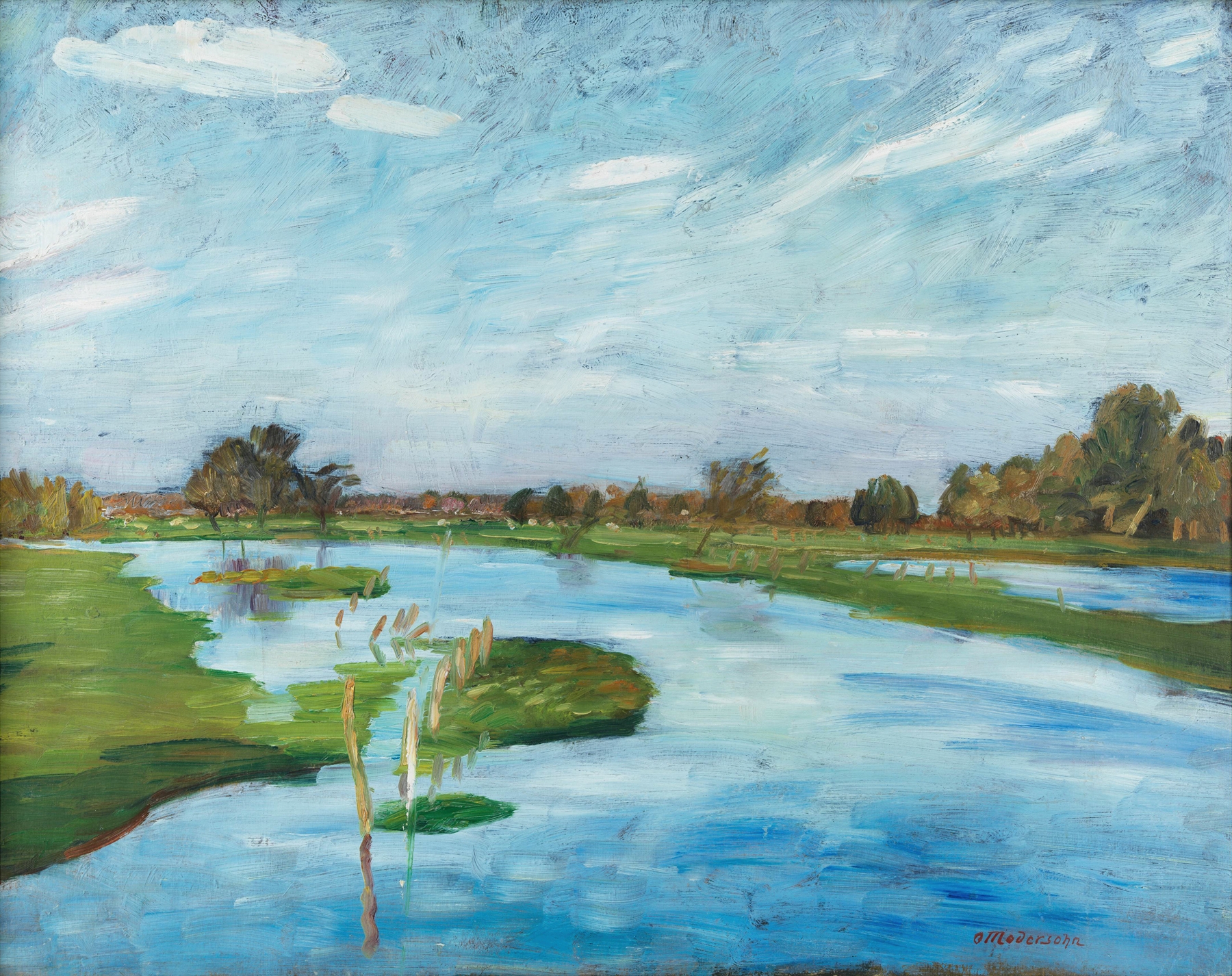
Who listens when art speaks of silence? In Überschwemmung an der Wümme, the tranquil embrace of nature unfolds, awakening a conversation between the viewer and the stillness that envelops the landscape. Look to the foreground where the muted greens of the marshland emerge, gently juxtaposed against the soft blues of the flooded river. Notice how the brushstrokes harmonize, creating a sense of fluidity that mirrors the water’s movement. The gentle interplay of light and shadow envelops the scene, revealing layers of texture that invite you deeper into this serene yet haunting moment.
As the horizon stretches wide, the soft, diffused light evokes a sense of melancholic beauty, hinting at the aftermath of a hidden tumult. Here, the contrasts become significant. The stillness of the water, capturing the whispers of the trees above, contrasts sharply with the implied chaos of flooding, suggesting a deeper narrative of nature's power and fragility. The palette speaks to a delicate balance between tranquility and turmoil, awakening reflections on our relationship with the environment.
Each stroke seems to echo the quiet after a storm, a moment frozen in time that invites contemplation and introspection. Created in 1938, this work emerged during a turbulent period for Otto Modersohn, who was grappling with the evolving trends of modernism while remaining firmly rooted in the natural world. Living in Germany, he was influenced by his surroundings and the changing societal landscape, reflecting both personal and broader cultural shifts. His mastery of capturing emotion through nature remains a testament to his dedication to embodying the essence of life and change in his art.