Überschwemmung bei Hyères mit Baumgestrüpp und Schilfgras am Ufer — History & Analysis
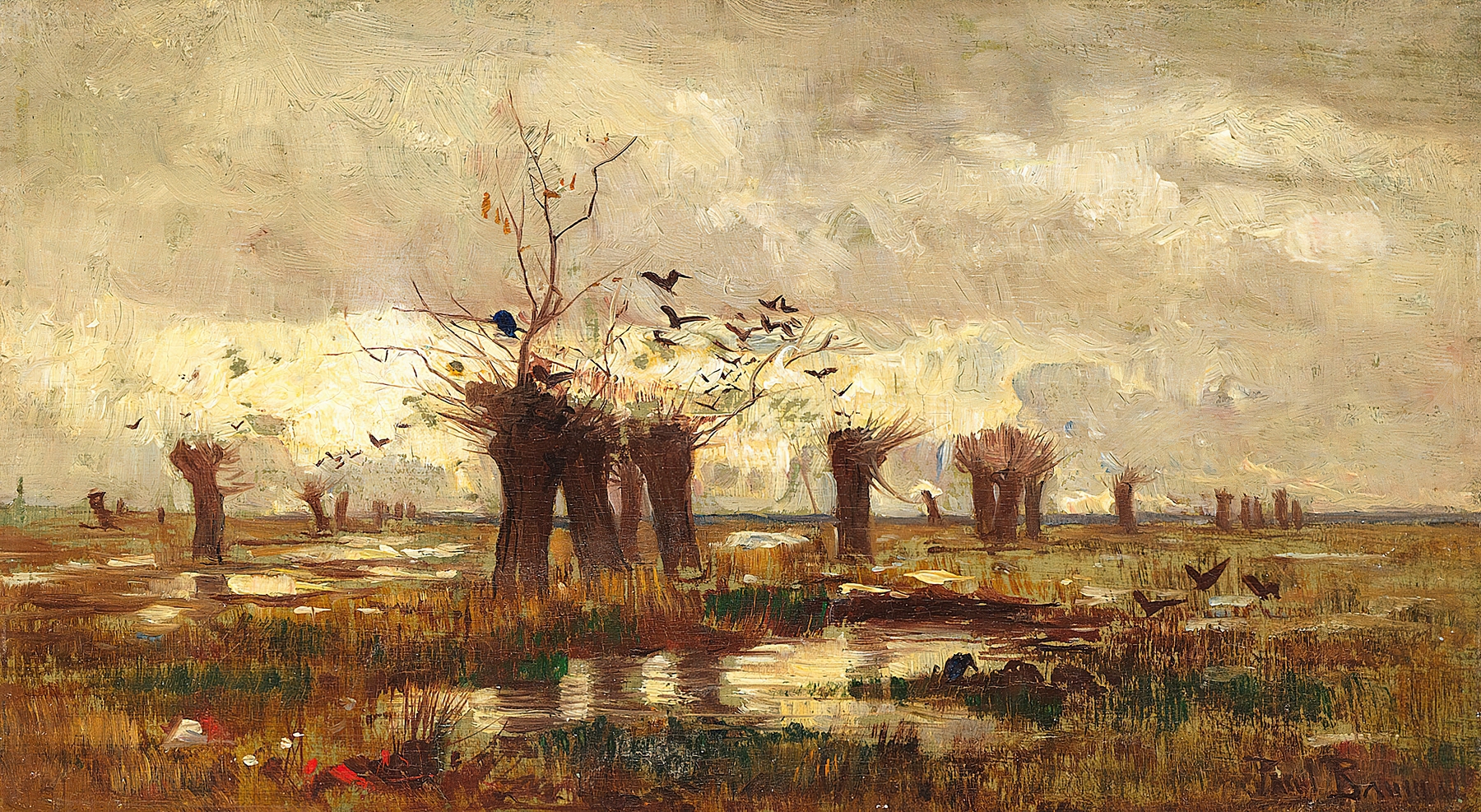
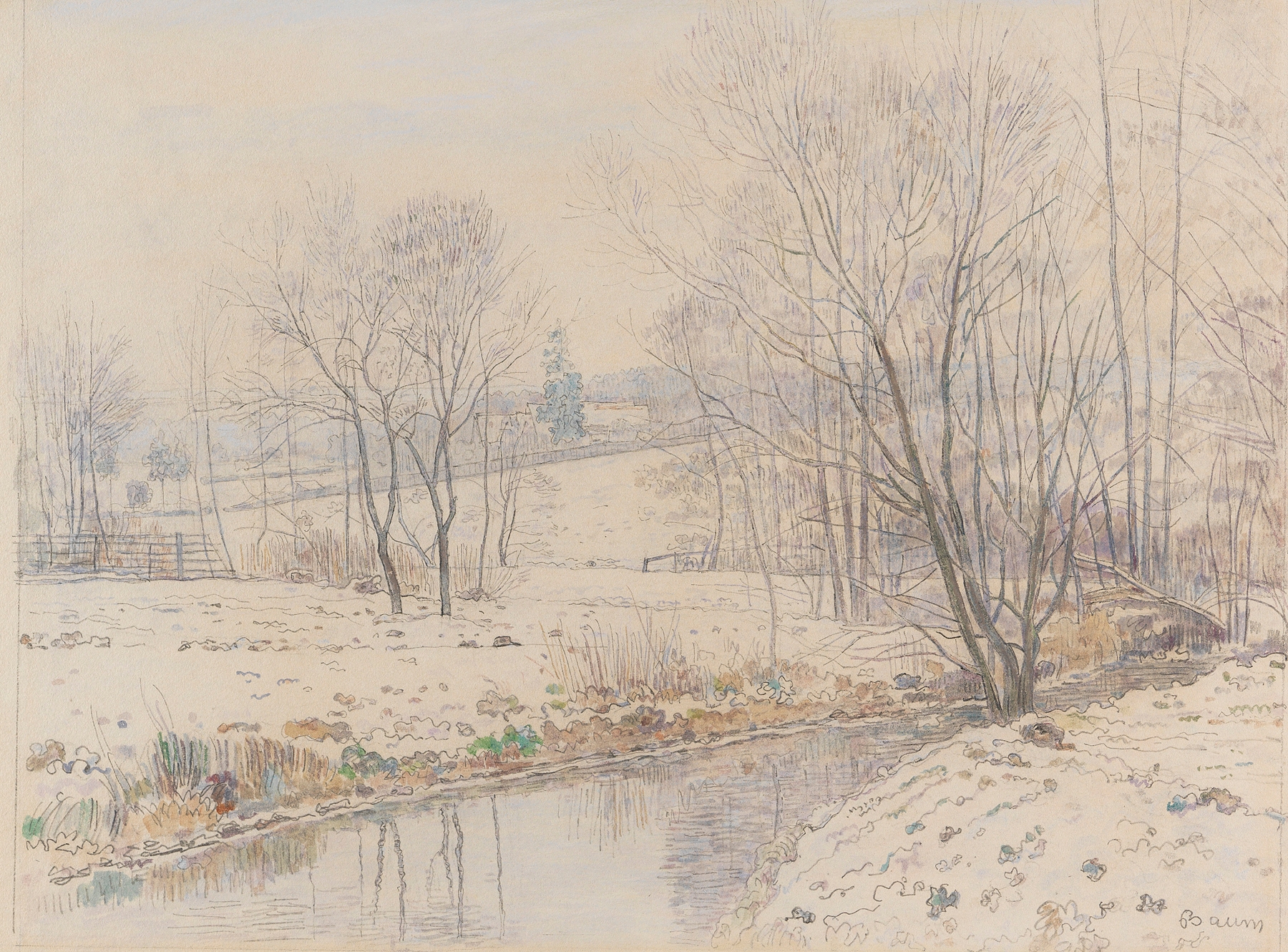
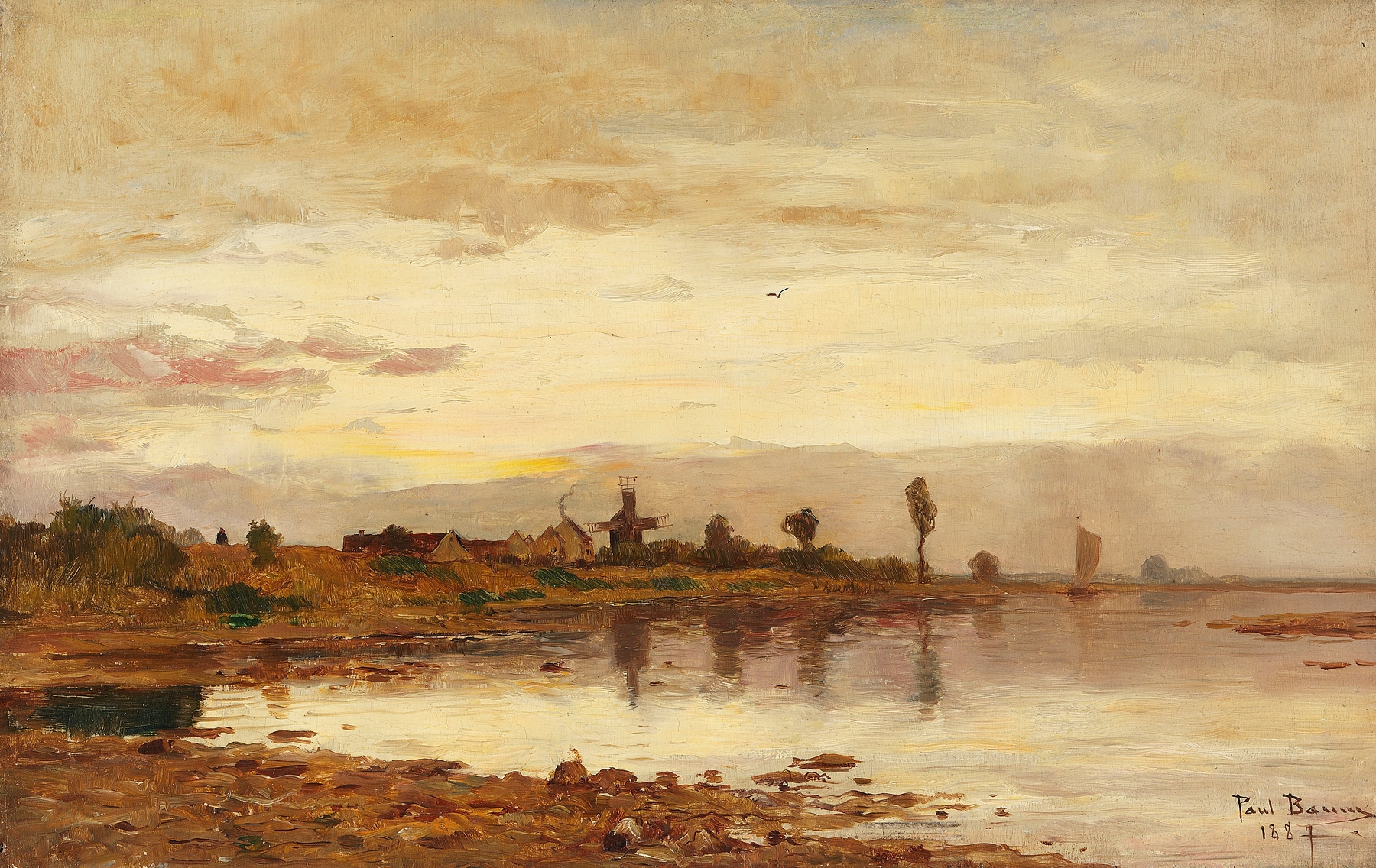
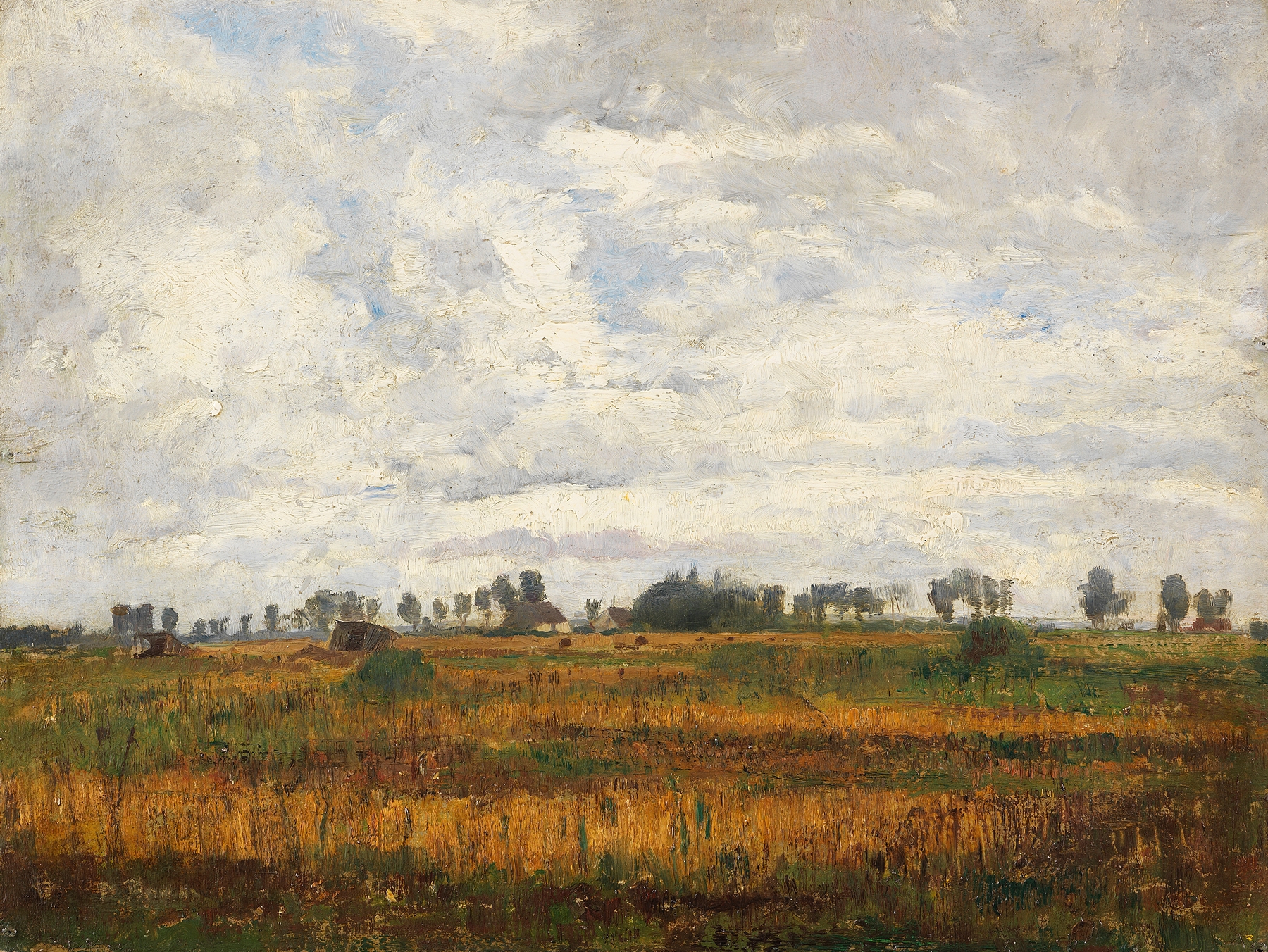
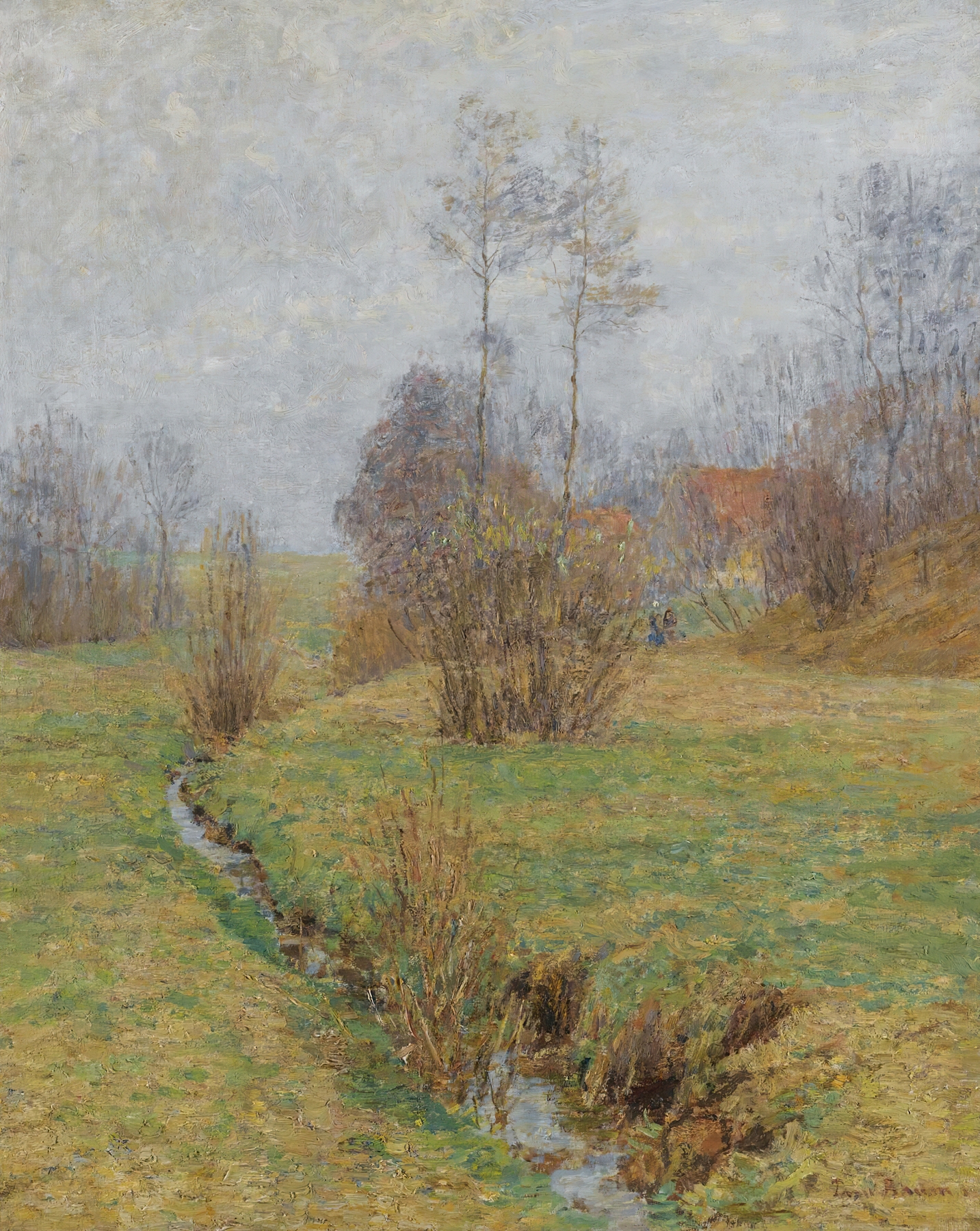
“Sometimes beauty is just pain, disguised in gold.” In Überschwemmung bei Hyères mit Baumgestrüpp und Schilfgras am Ufer, the tumult of nature unfolds amidst its stark beauty, revealing chaos veiled in serene strokes. Focus on the swirling blues and earth tones that dominate the canvas; they beckon the eye to traverse the tumultuous waters. Look closely at the tree debris scattered along the shore, where the contrasting greens of reeds stand defiantly, a testament to resilience amid disruption. The brushwork feels both frenetic and delicate, capturing a moment of nature's raw power, as if each stroke speaks of turmoil and tranquility in equal measure.
Beneath the surface, a deeper narrative brews. The overwhelming presence of water can symbolize both destruction and renewal, suggesting a cycle where chaos leads to the potential for regrowth. The placement of the straggling reeds hints at life’s tenacity, thriving in a world often marred by disorder. This juxtaposition invites the viewer to contemplate the beauty found within chaos and the delicate balance of existence itself.
Painted in 1900, Baum was immersed in the vibrant art scene of post-Impressionism, where artists sought to capture the essence of their surroundings rather than solely its appearance. Living in Germany, he was influenced by the natural landscapes he encountered, often infusing his works with emotional depth. This painting encapsulates that dynamic intersection of nature's fury and grace, a defining characteristic of his artistic journey during that period.