Holländische Kanallandschaft — History & Analysis
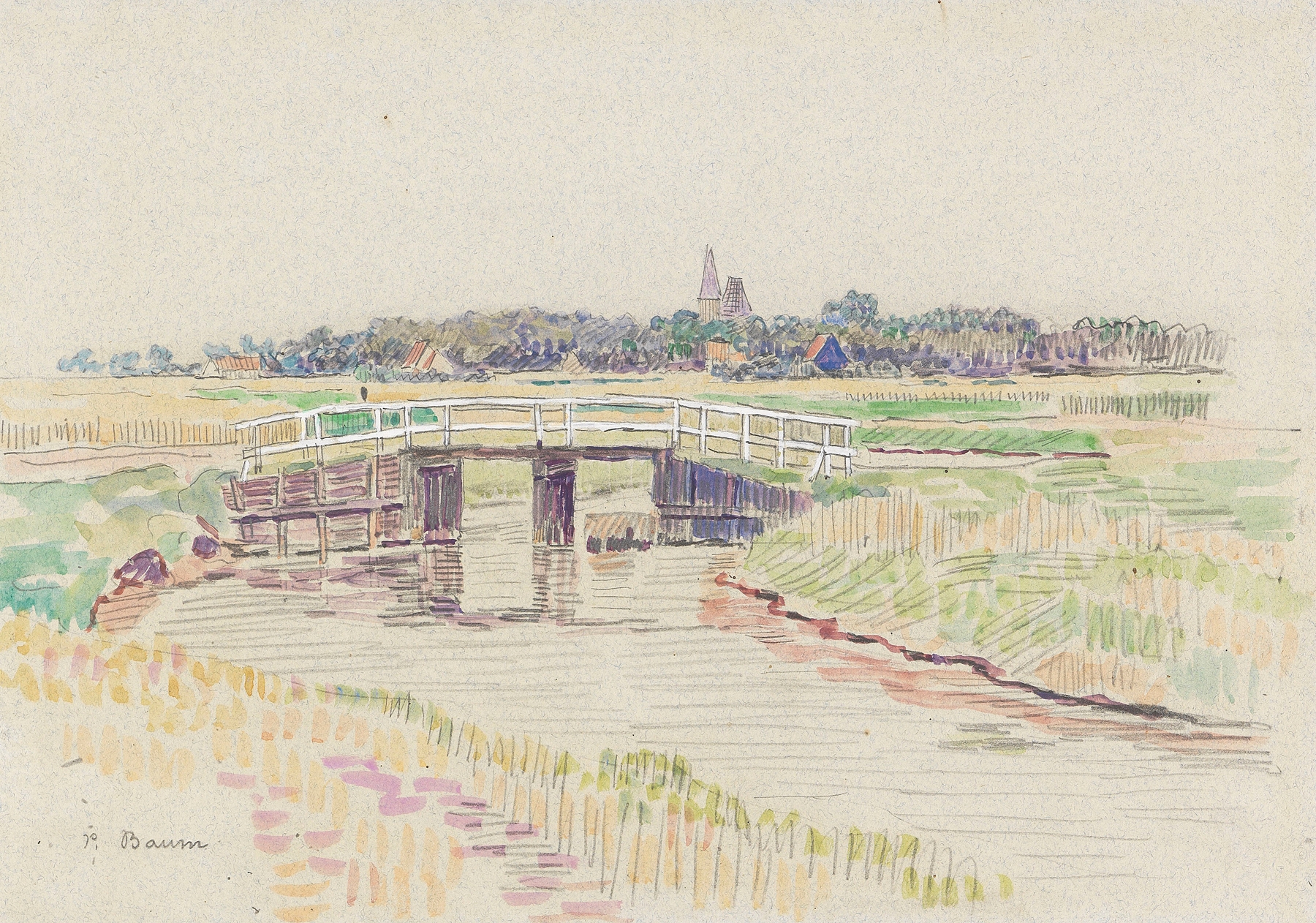
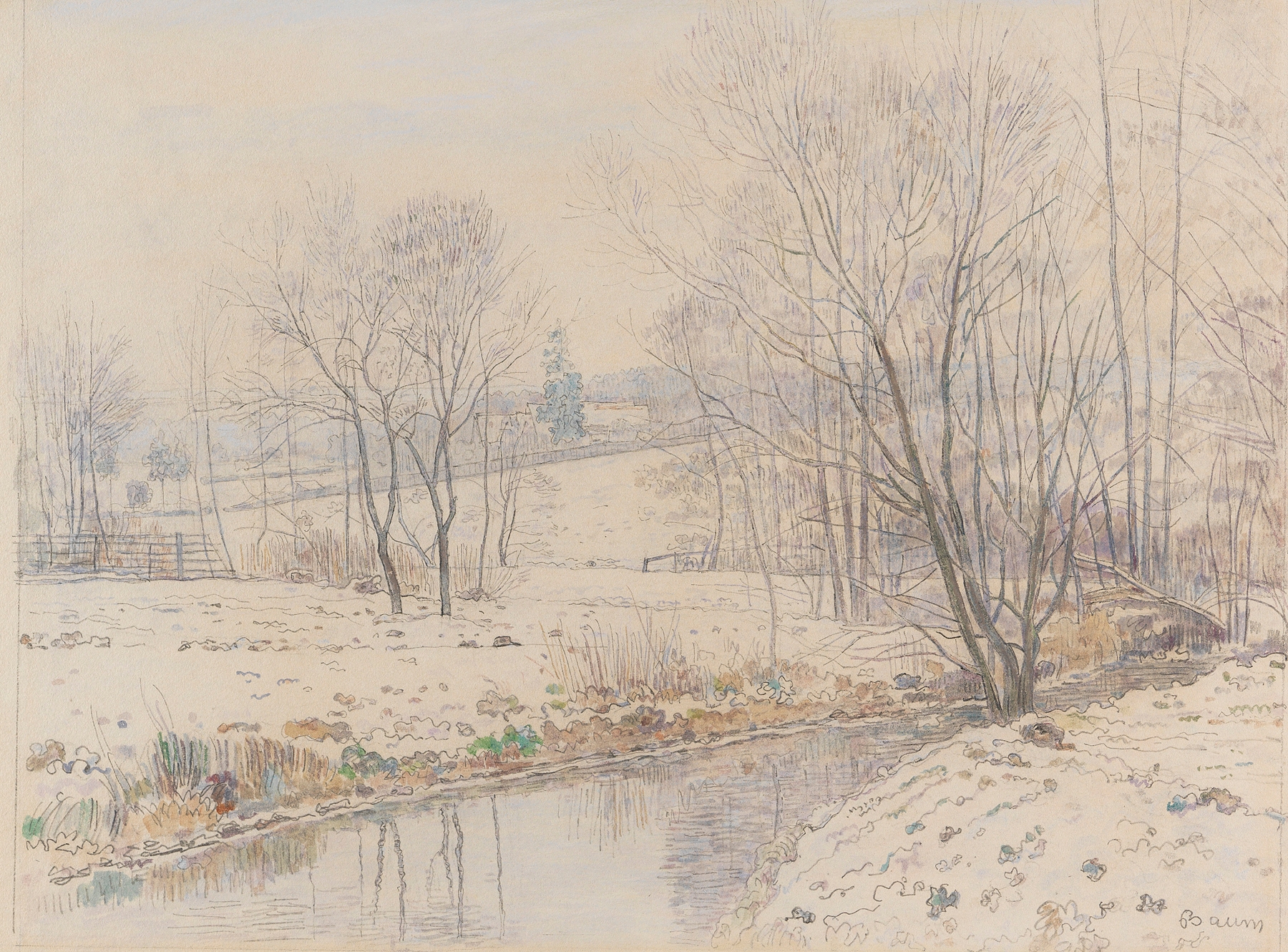
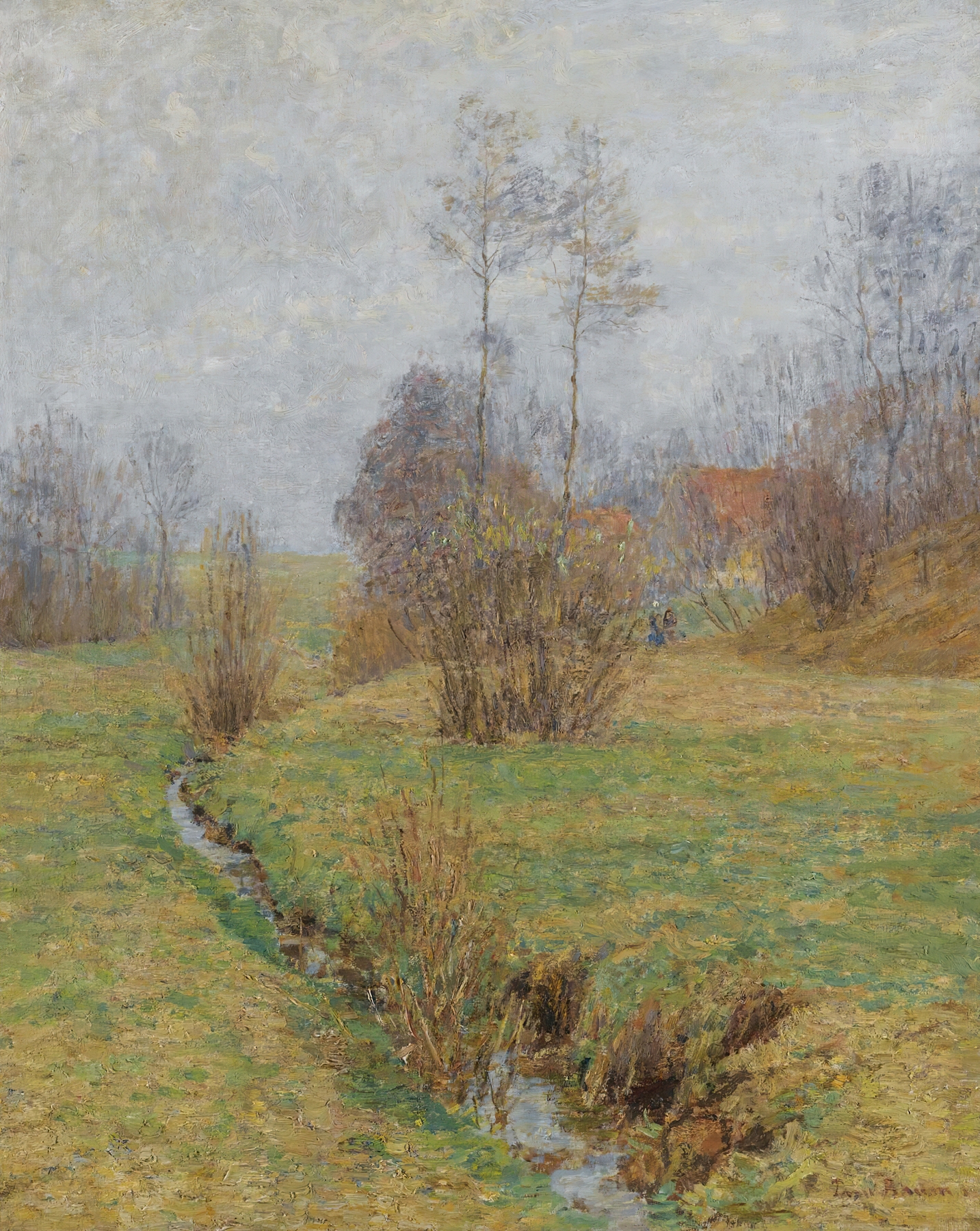
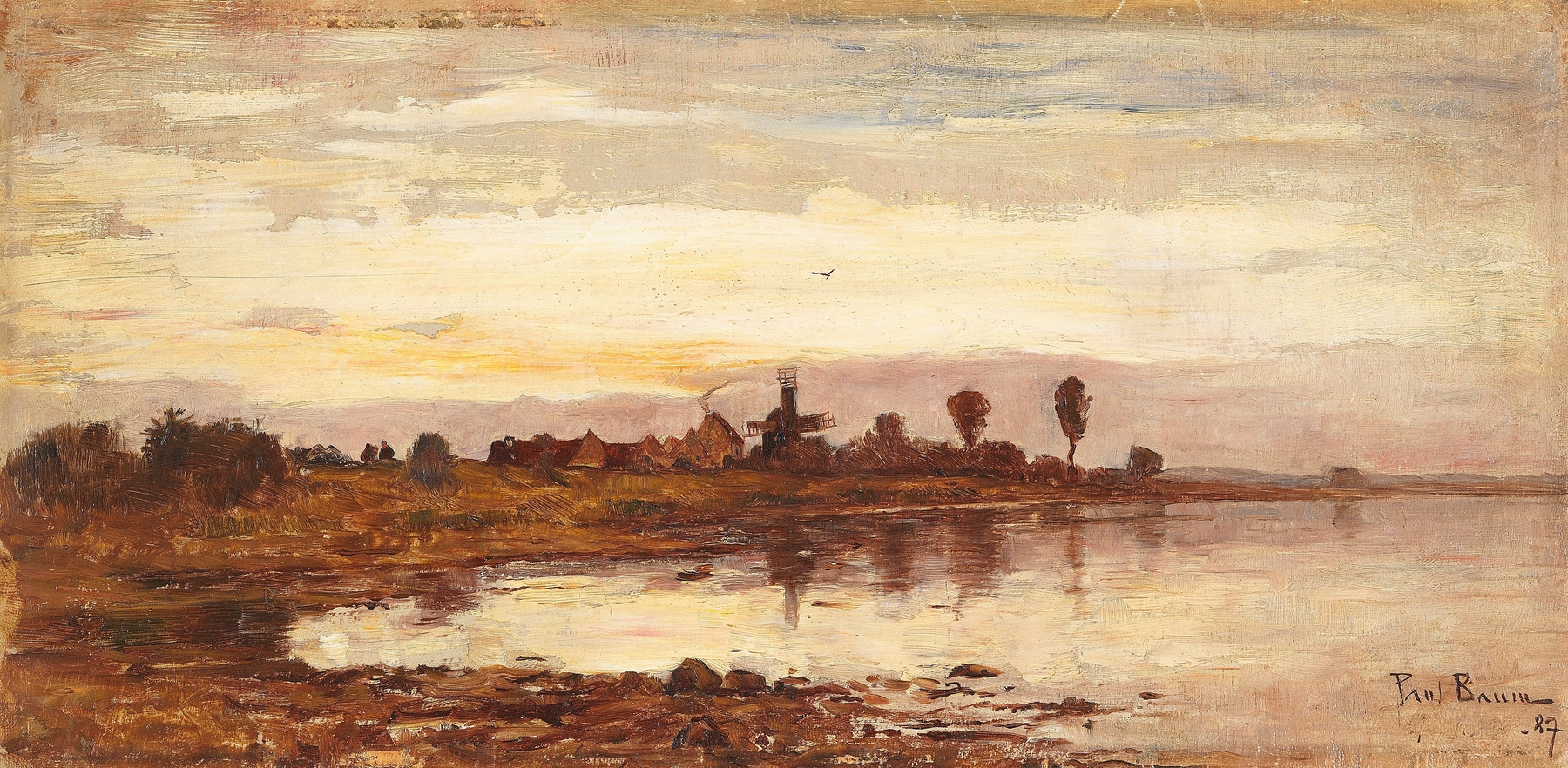
“Between color and silence, truth hides.” In the delicate interplay of hues, we are reminded of the transient nature of life itself. Look to the left at the gentle curve of the canal, cradled by lush greenery. The subtle reflections ripple softly in the water, creating a seamless blend of the sky’s blue and the vibrant earth tones. Notice how the muted sunset casts a warm glow across the landscape, softly illuminating the figures walking on the bank, their silhouettes almost merging with the horizon.
The brushwork is delicate yet assertive, capturing not just the scene but an atmosphere teeming with quiet contemplation. As you explore further, observe the contrast between the vitality of the landscape and the solitary figures. They are but fleeting shadows in a grand narrative, suggesting a deeper meditation on human existence against the backdrop of nature’s permanence. The figures engage in simple activities, yet their presence evokes a sense of mortality, reminding us of our ephemeral journey through life.
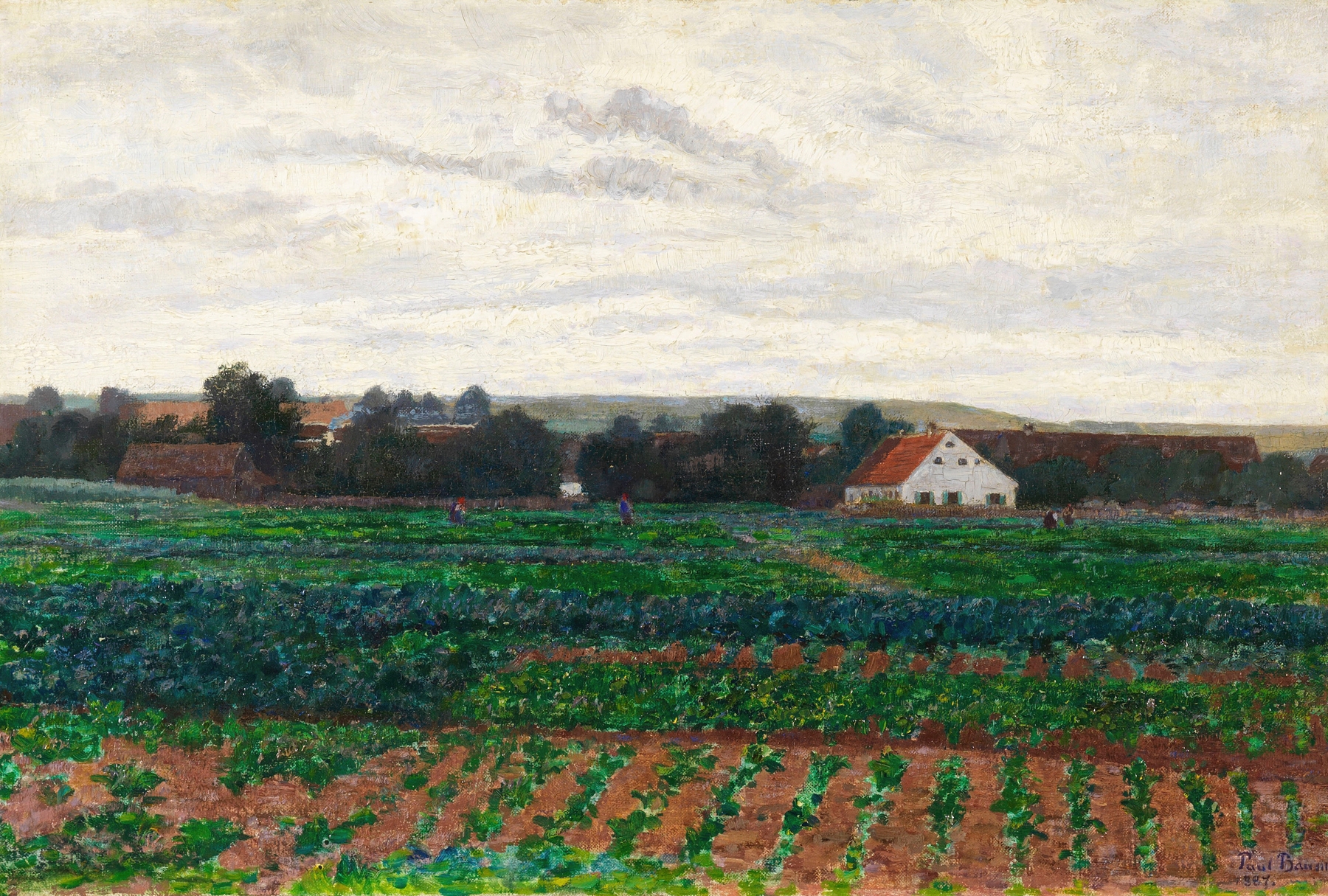
The serenity of the scene belies an underlying tension between the vibrancy of the surrounding landscape and the stillness of the human experience. In 1887, Baum painted this work in Germany, a period marked by a growing interest in Impressionism. He was navigating his own artistic evolution, seeking to capture not just the visual but the emotional resonance of landscapes. The world was shifting, with industrialization impacting traditional views of nature, and Baum’s delicate brushstrokes reflect a yearning for connection to a world that felt both breathtakingly beautiful and poignantly fleeting.