Im Dachauer Moos — History & Analysis
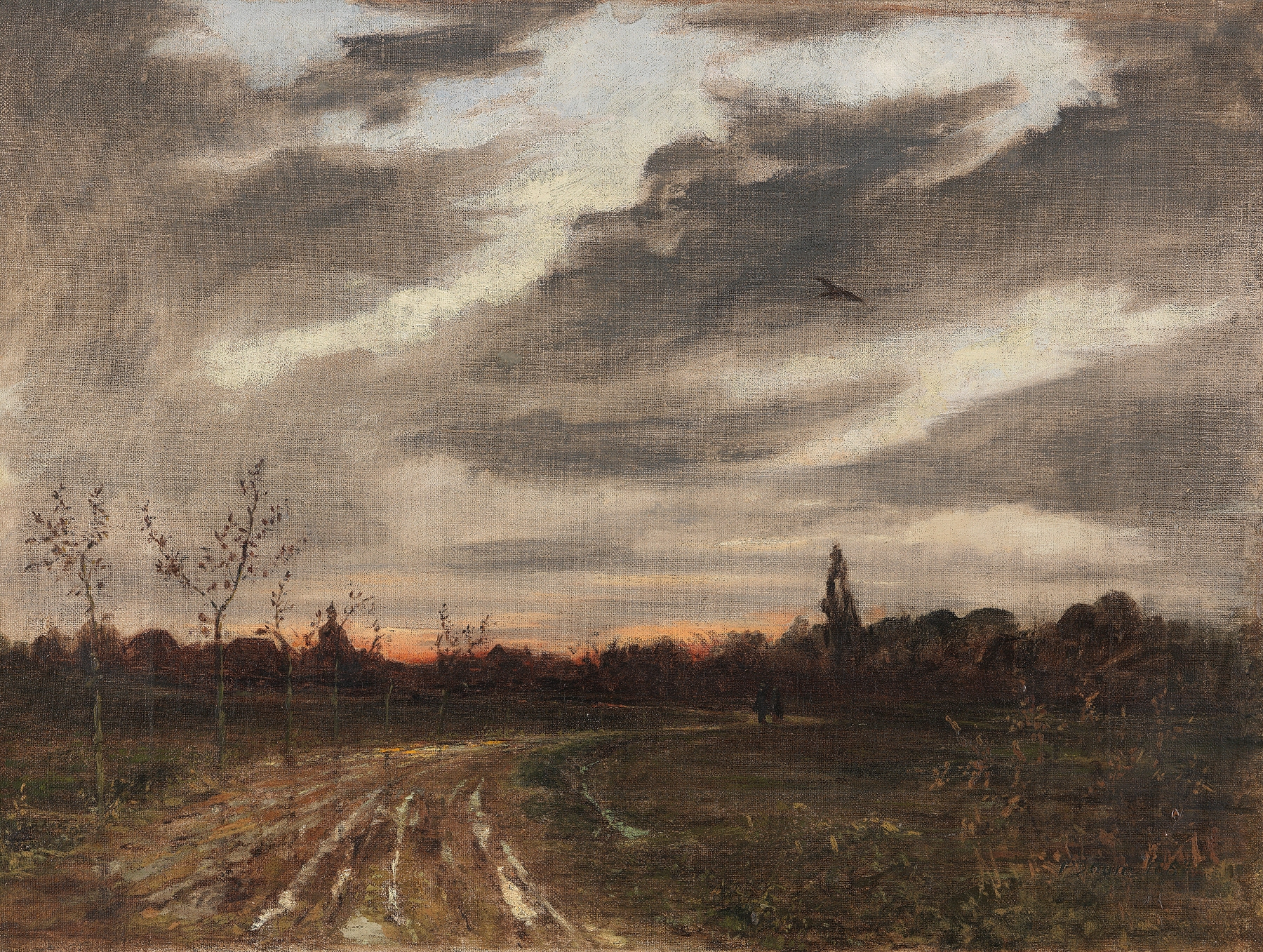
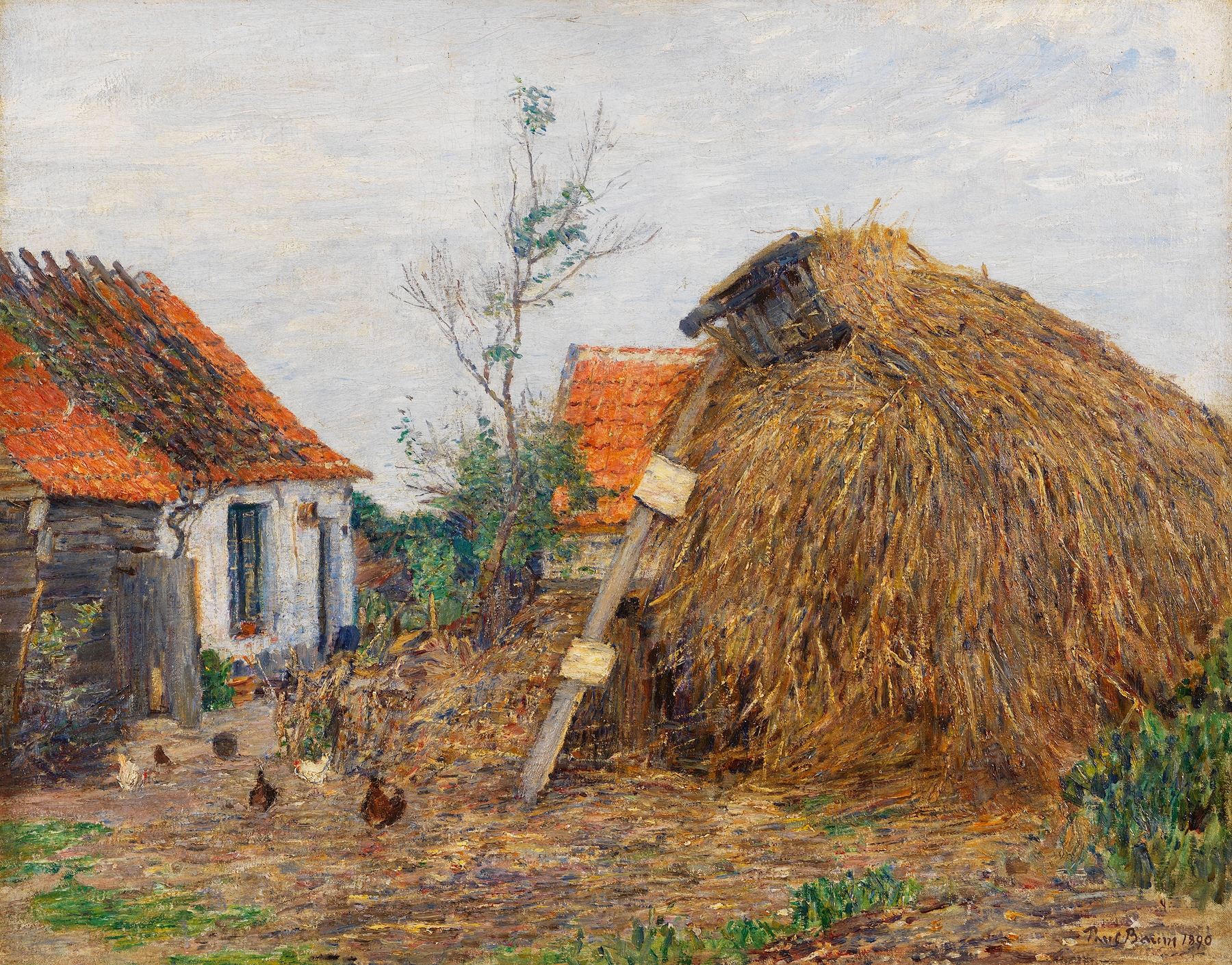
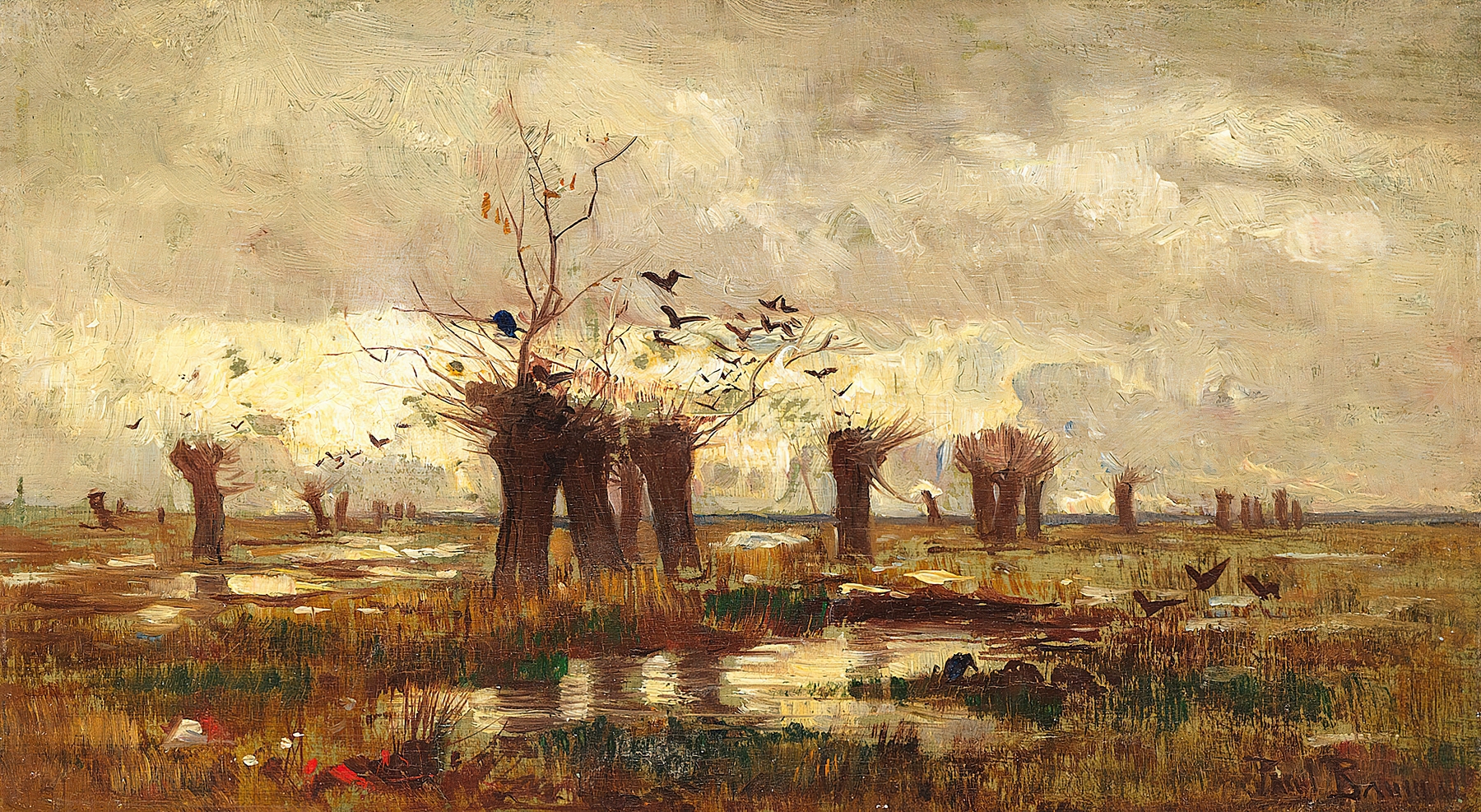
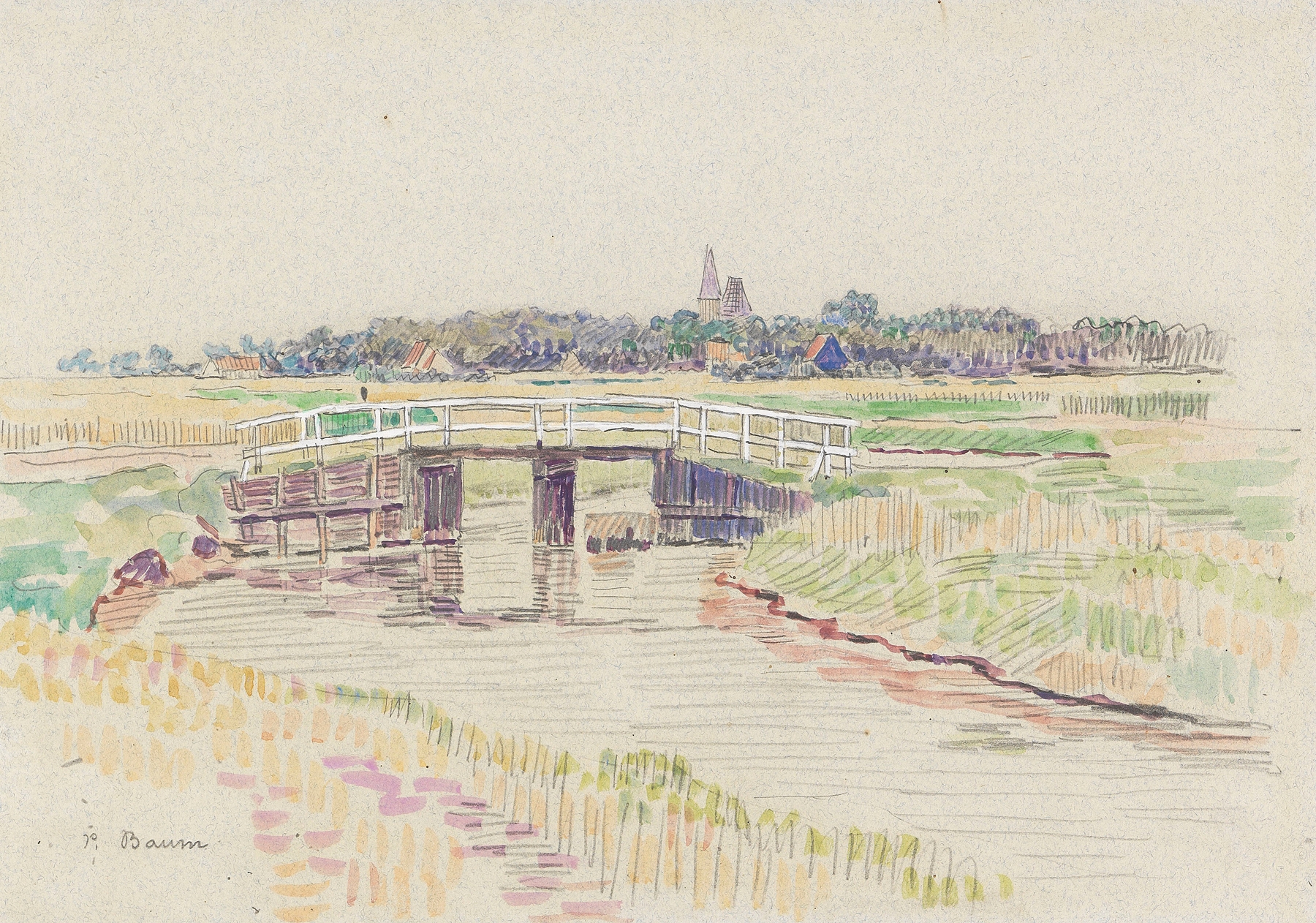
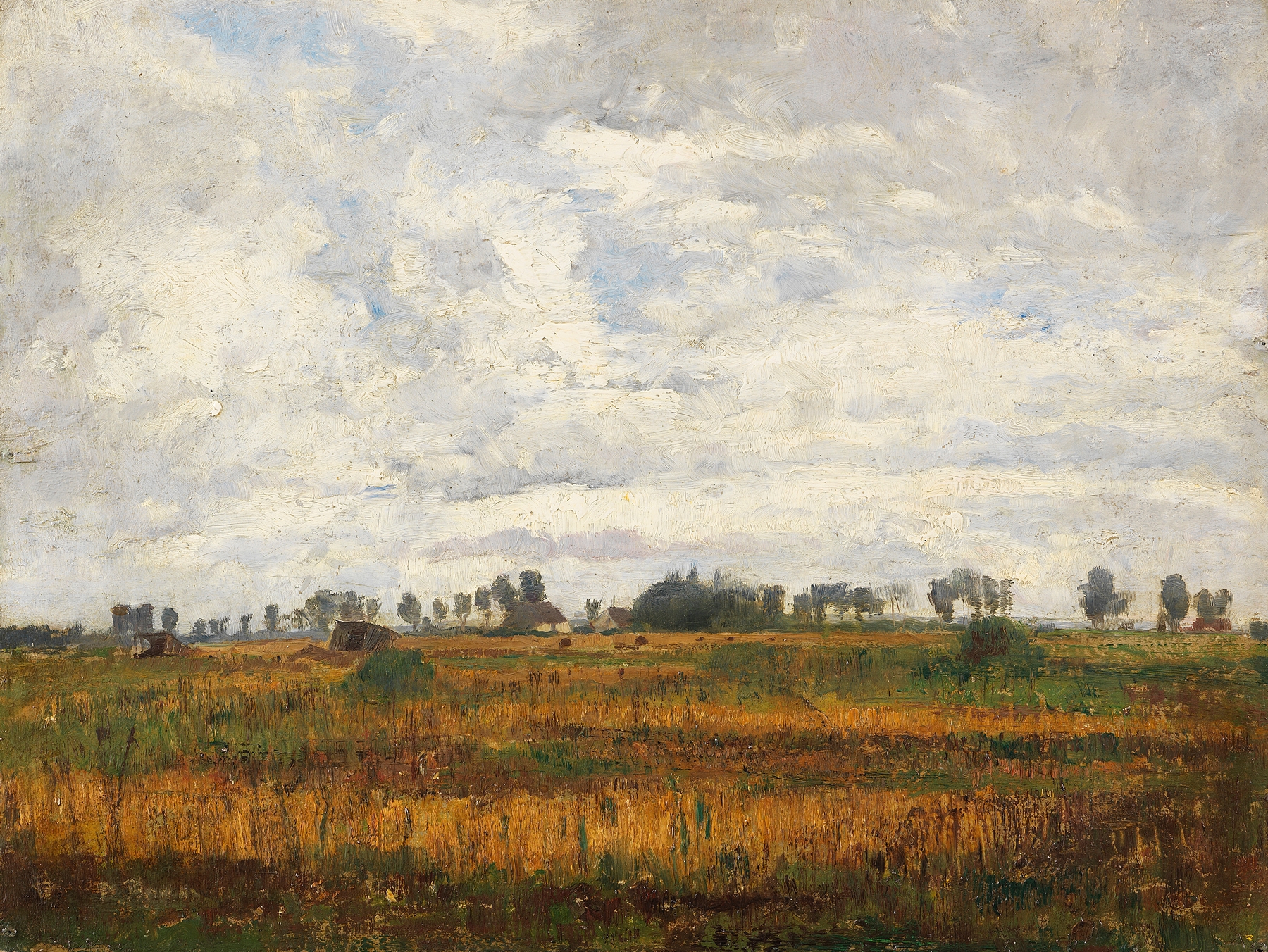
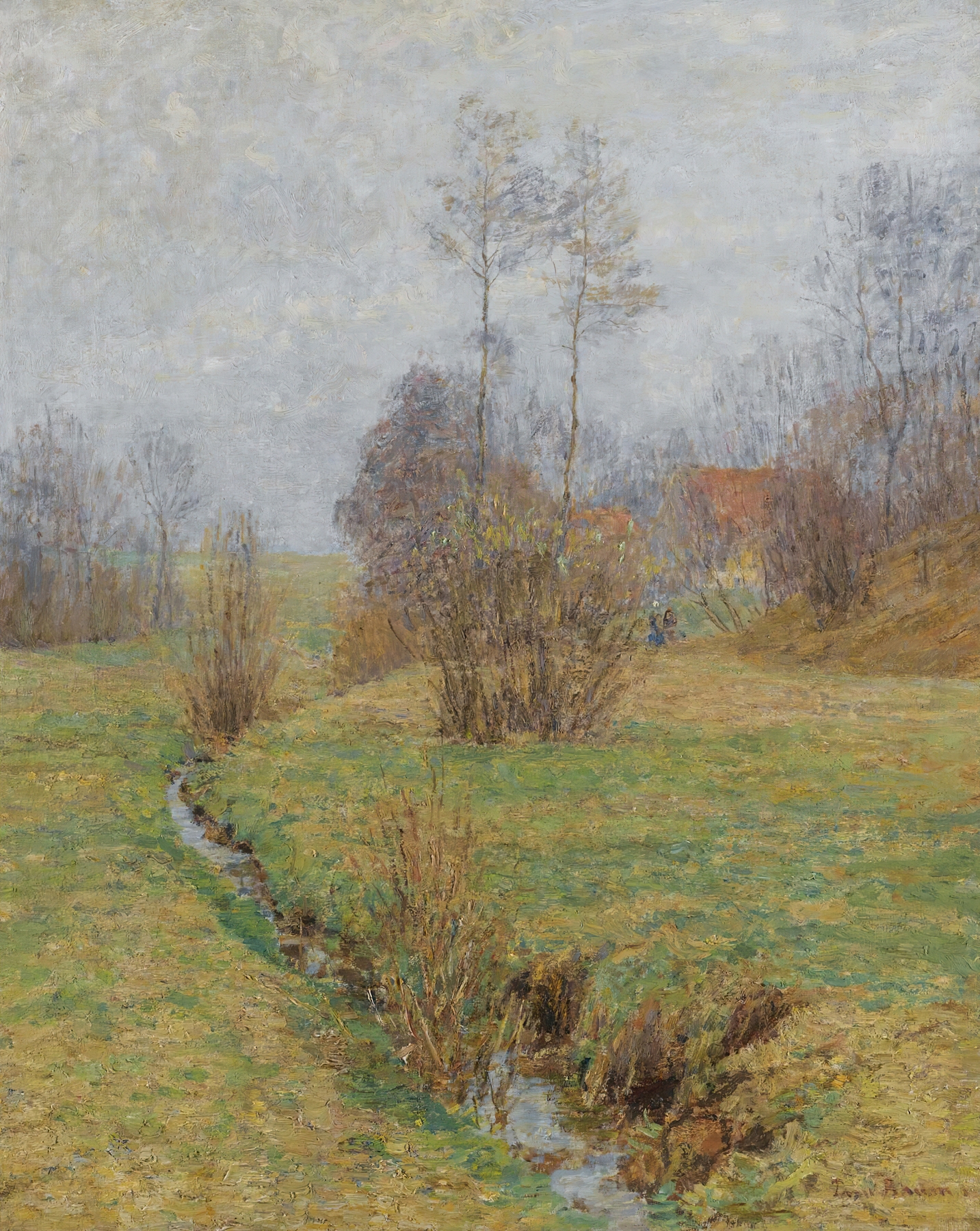
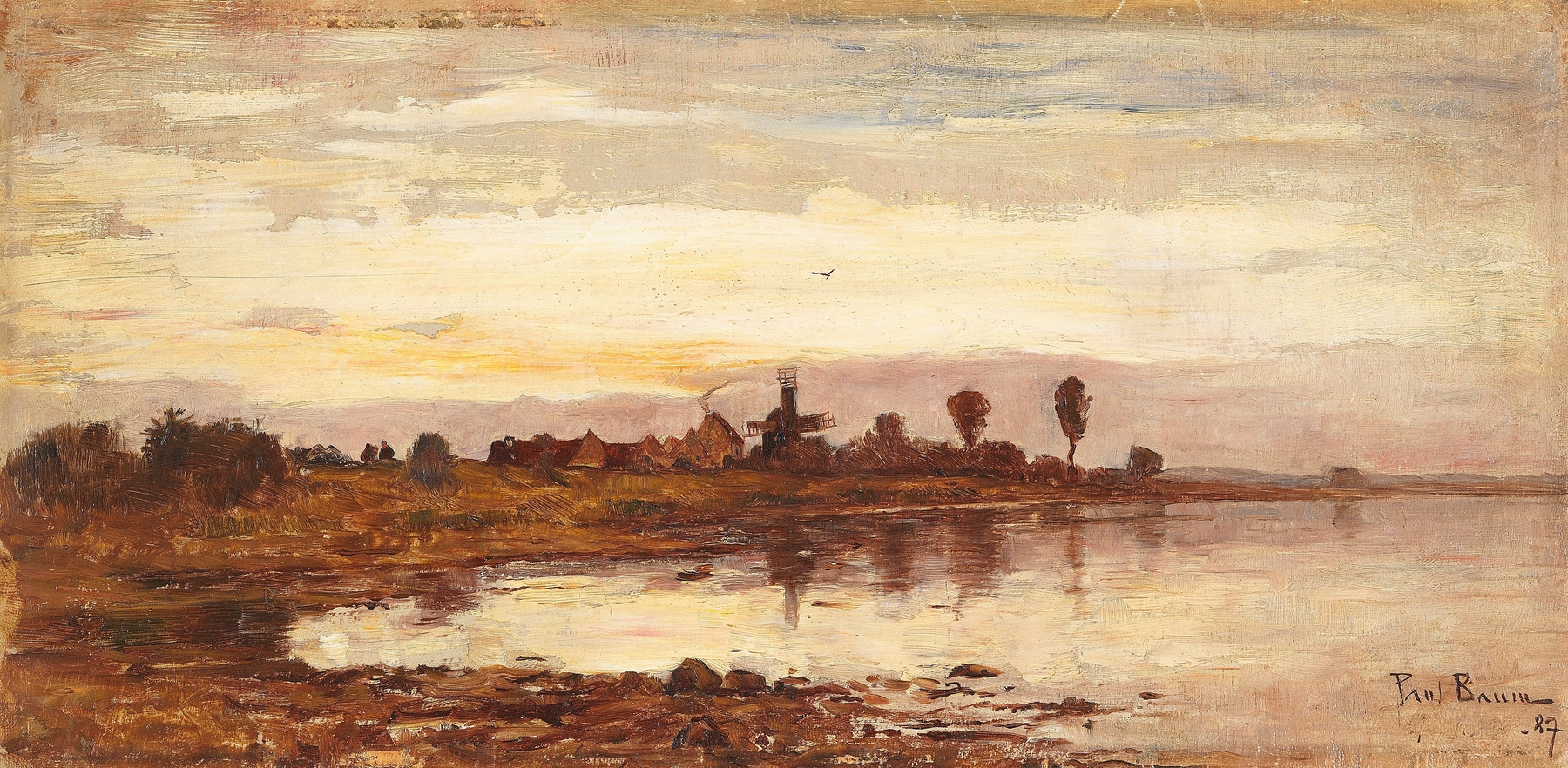
“Every silence here is a confession.” In the stillness of a landscape, where hope lingers like the soft embrace of dawn, one can almost hear the whispers of nature. Immersed in serene hues, the tranquility invites reflection, urging the viewer to dive deeper into the emotions hidden within. Look to the left at the gentle undulations of the fields painted in rich greens and muted earth tones, where dappled light dances across the surface. The composition is skillfully balanced, with the horizon line grounding the scene while the expansive sky above, rendered in delicate blues and whites, suggests a world full of possibilities.
Notice how the brushstrokes vary from deliberate to wispy, evoking a sense of movement and breathing life into the landscape, enhancing the feeling of a new beginning. At first glance, this piece may seem simply pastoral, yet beneath the surface lies a profound dichotomy of stillness and potential. The quiet expanse reflects both the weight of solitude and an unspoken promise of renewal. Each element, from the sweeping fields to the distant tree line, embodies a thread of connection between nature and human emotion, hinting at an unseen narrative of resilience and hope in the face of life’s uncertainties.
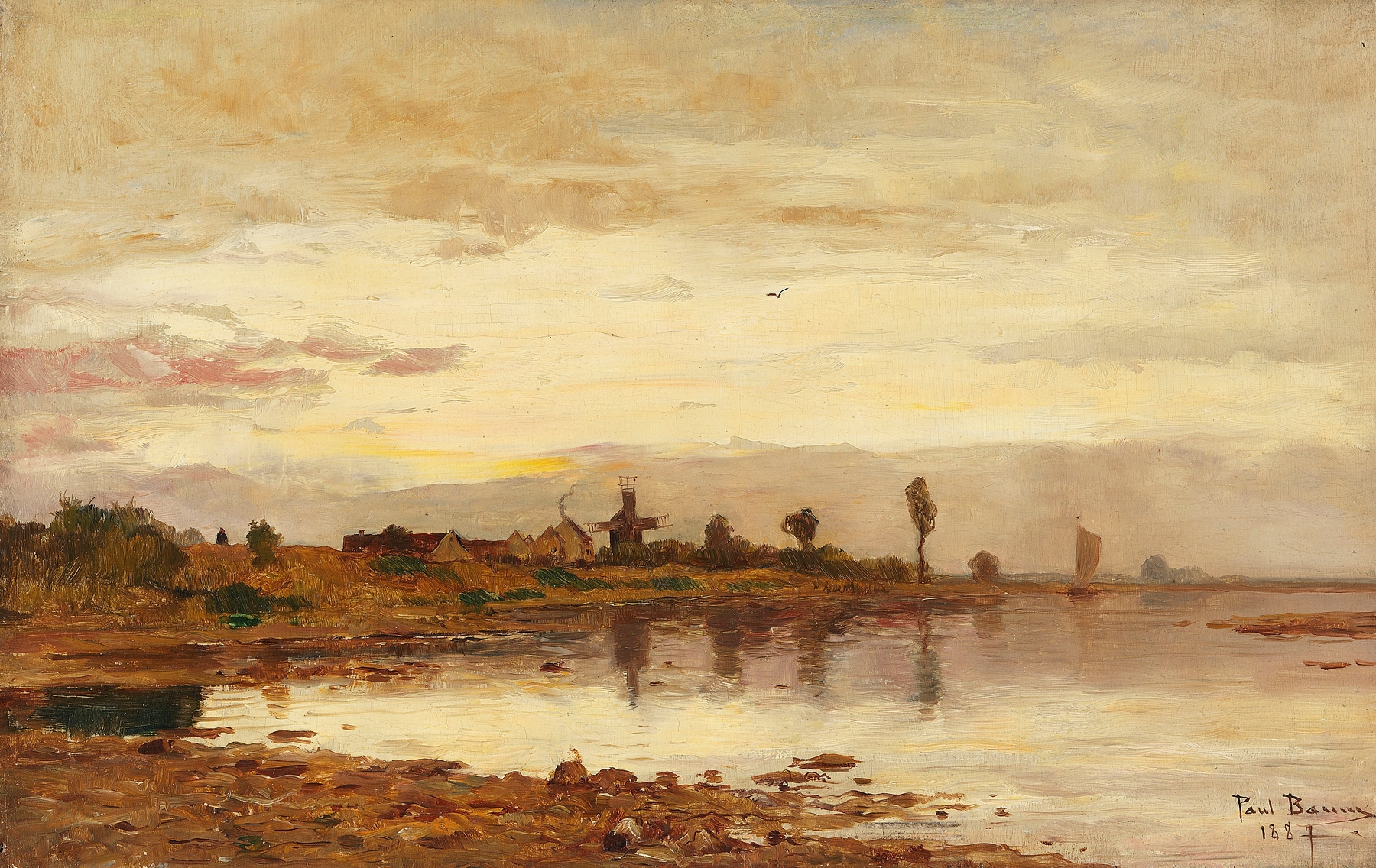
In 1887, Baum painted this work during a period of personal introspection while living in Germany. Influenced by the burgeoning Impressionist movement, he sought to capture the beauty of the natural world and the subtleties of light. This painting marked a significant time in his evolution as an artist, aligning with a broader cultural shift towards exploring emotional depth through landscape.