Moorlandschaft bei Dachau — History & Analysis
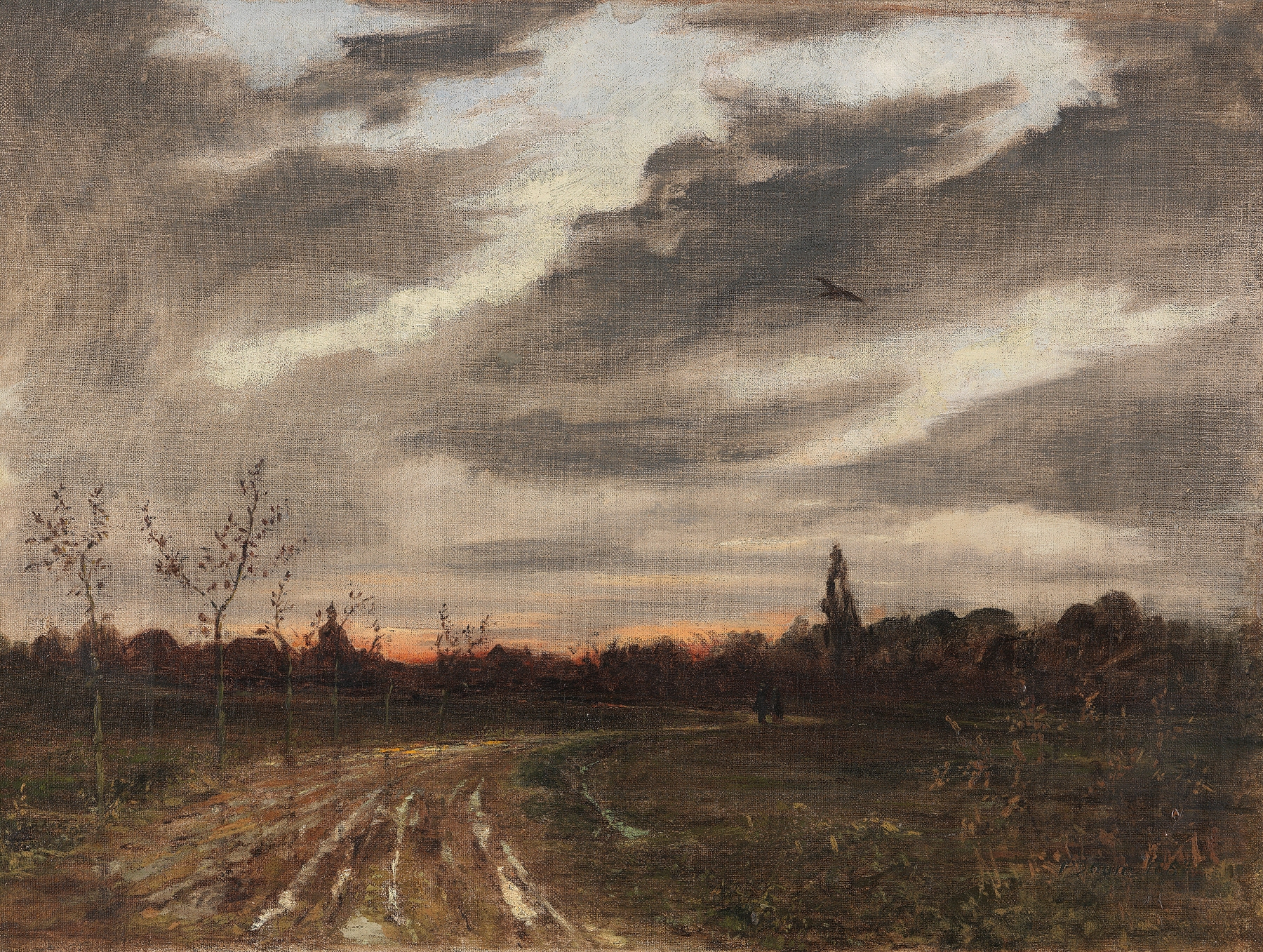
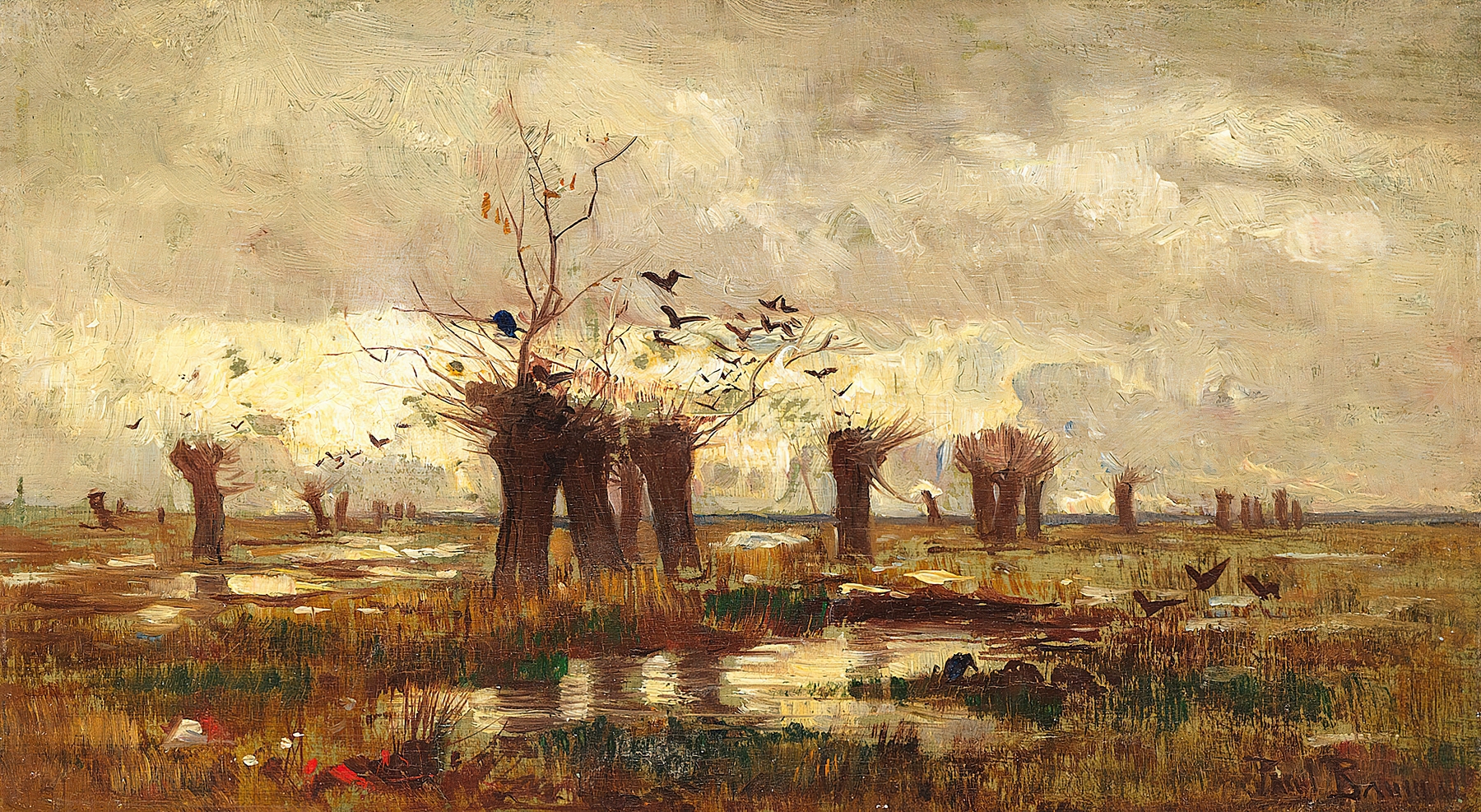
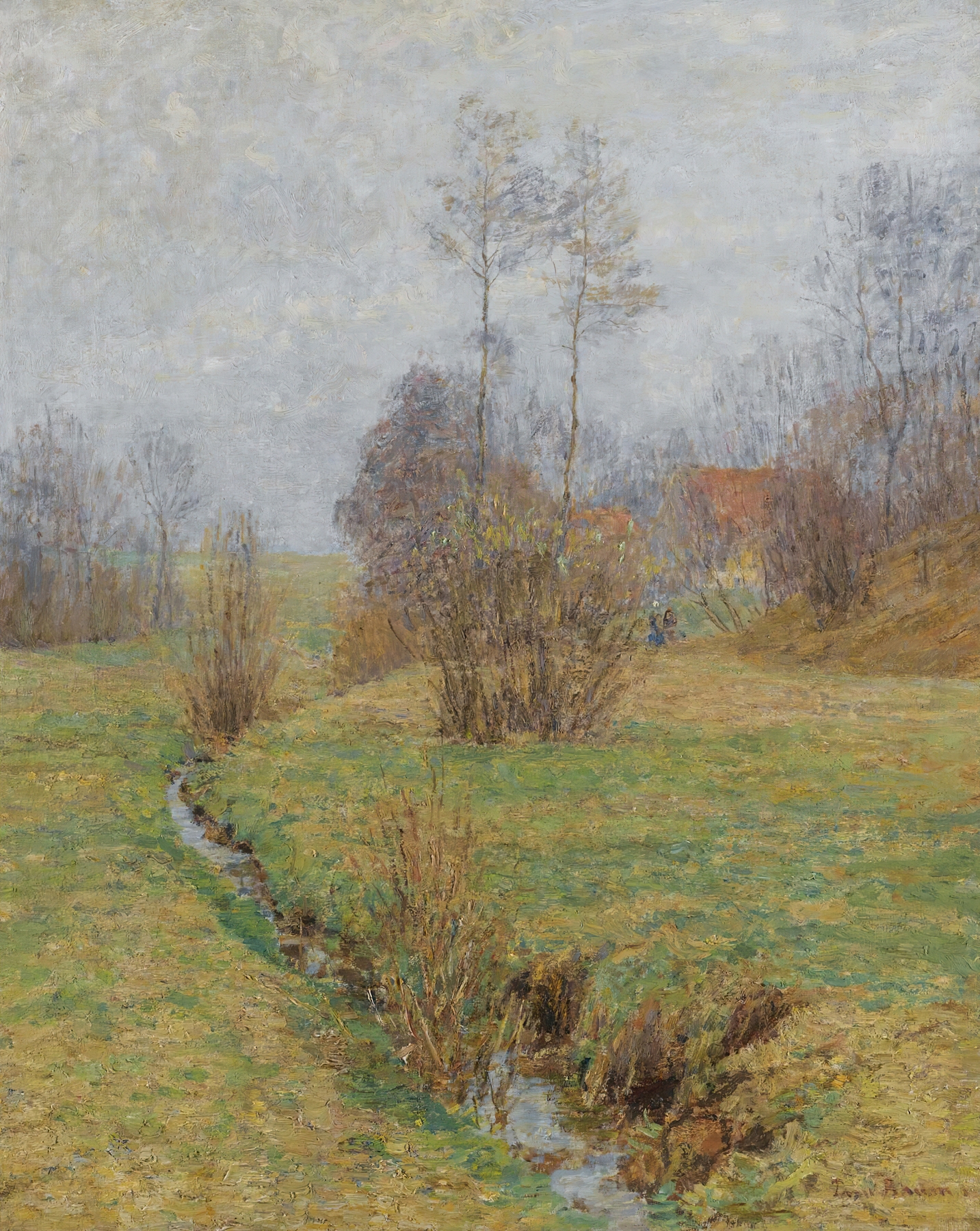
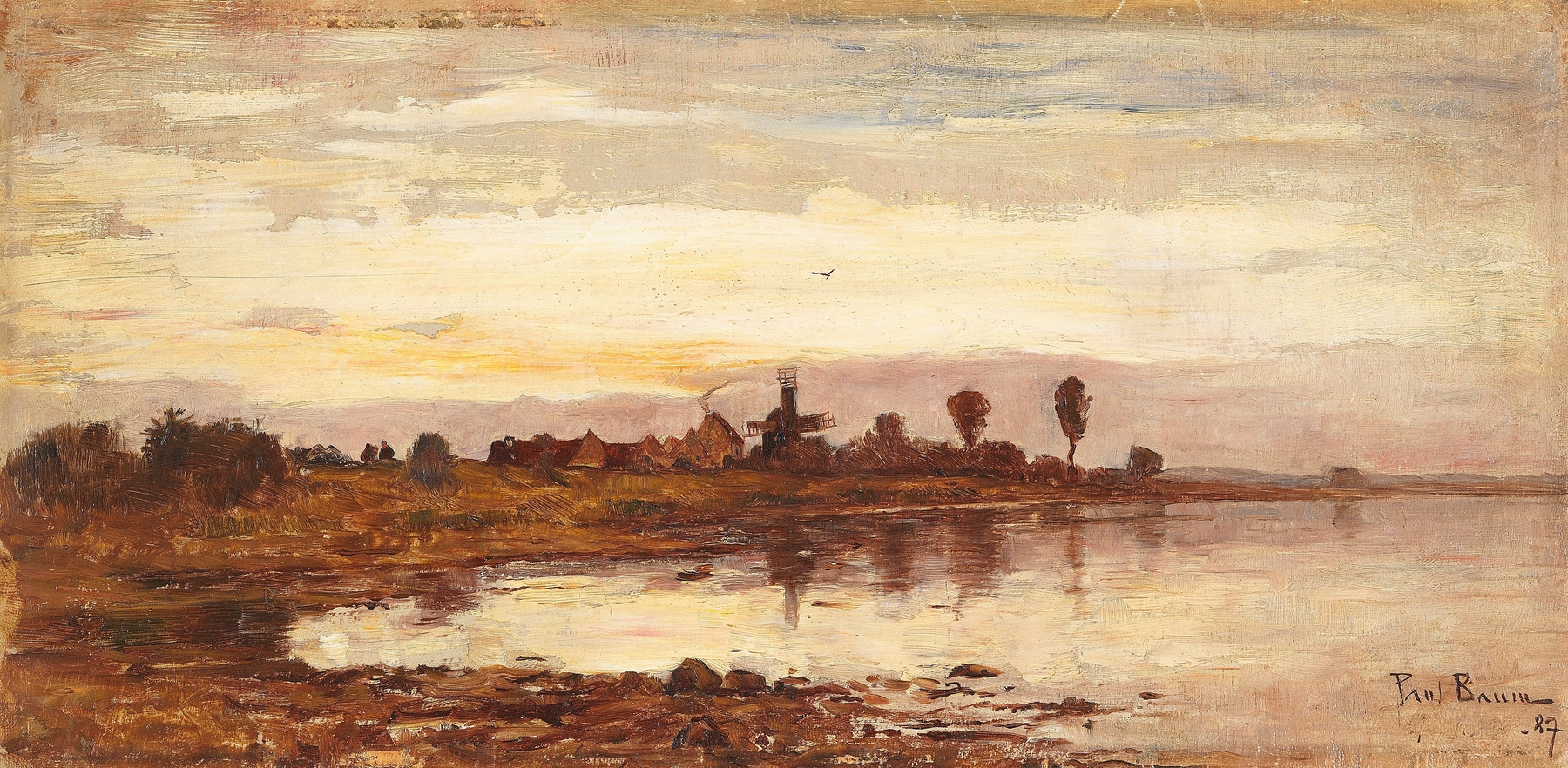
Where does light end, and longing begin? In the stillness of Moorlandschaft bei Dachau, a quiet yearning resonates through every brushstroke, inviting contemplation and reverie. Look to the horizon, where gentle hills roll like whispered secrets under a broad expanse of tranquil blue sky. The artist employs a soft palette of greens and earthy browns, contrasting the vividness of sunlight with the muted tones of the landscape.
Notice how the light dances across the moor, illuminating tufts of grass and wildflowers, while shadows gather in the folds of the land, creating layers of depth that draw the viewer into this serene moment. The composition evokes a sense of balance, tethering the viewer to the earth while simultaneously lifting the spirit. As you linger, subtle details emerge: the slight undulation of the terrain, suggesting both the passage of time and the constancy of nature. The interplay of light and dark symbolizes the dichotomy between the divine and the earthly, raising profound questions about our place within this vast expanse.
It is a landscape of contemplation—inviting emotions of both solace and longing, embodying a peaceful solitude that feels both sacred and infinite. In 1880, the artist created this piece during a period of personal exploration and development in the realm of landscape painting, in Germany. The emergence of Impressionist influences was reshaping artistic expressions of light and color, positioning him amidst a pivotal time in art's evolution. This work reflects not only his mastery of the craft but also his deep engagement with the spiritual qualities of nature, a theme that would resonate throughout his career.