Bonte stier met drie schapen — History & Analysis
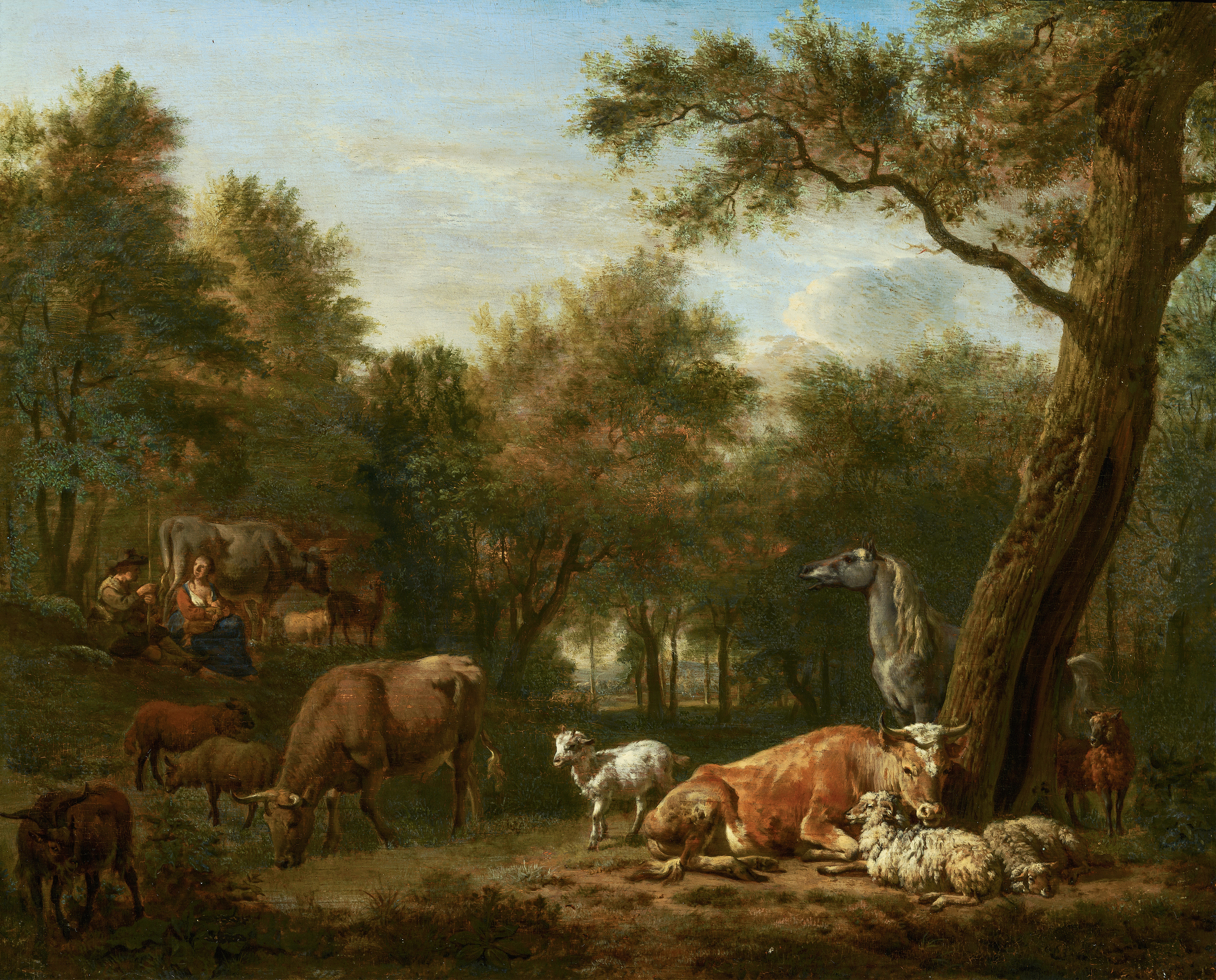
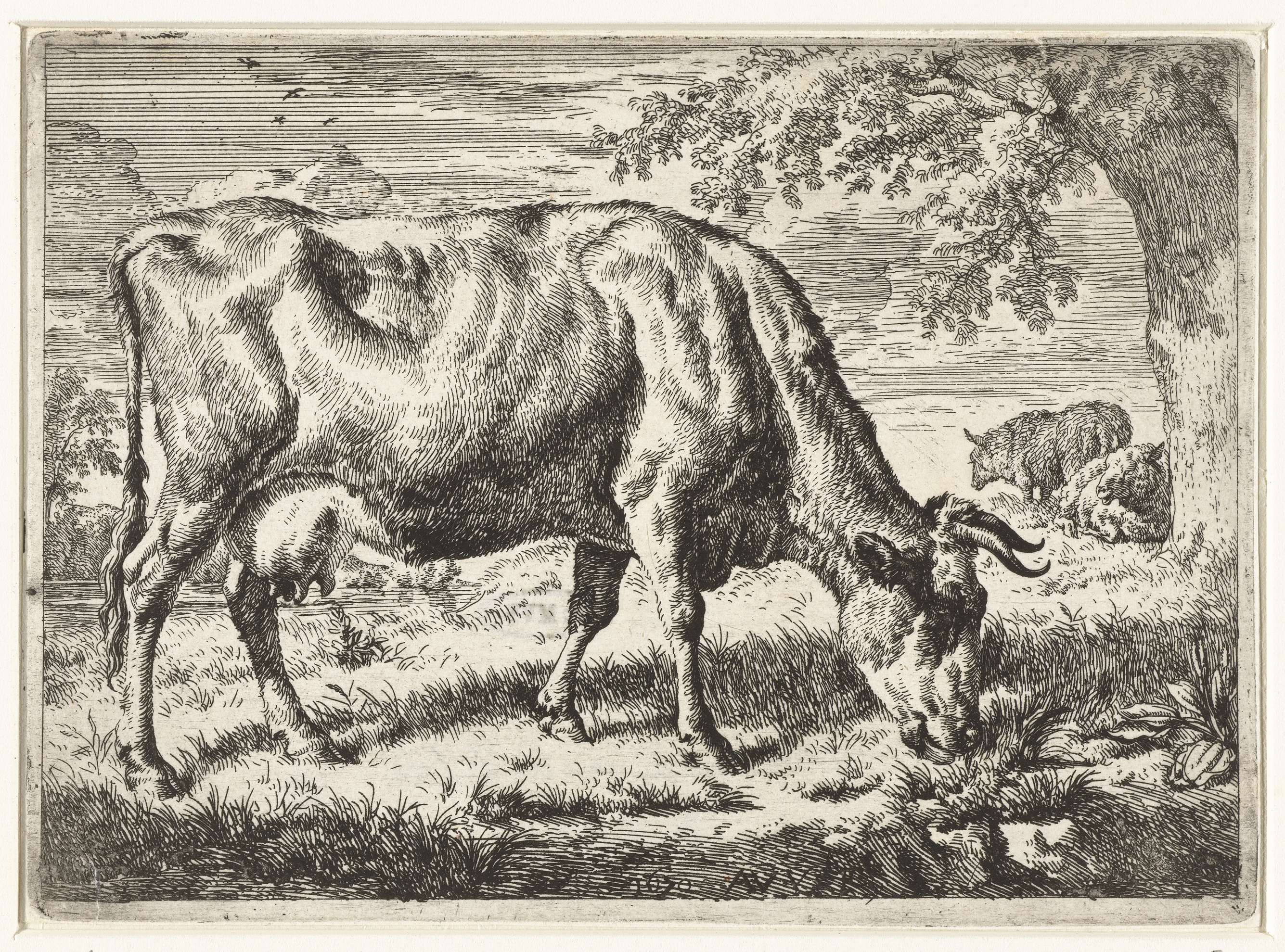
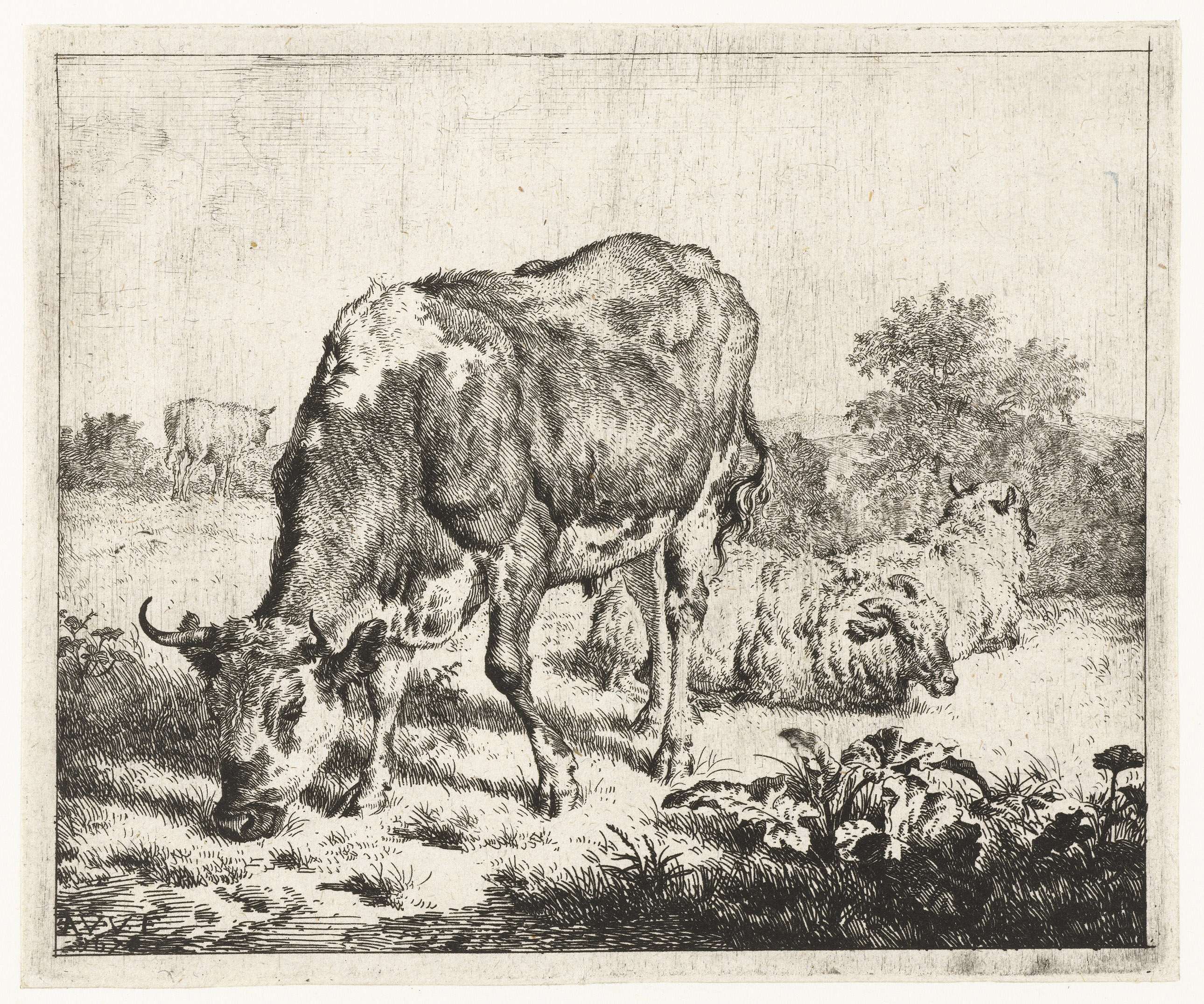
“Art reveals the soul when the world turns away.” The essence of movement, both physical and emotional, can be found within the realms of brushstroke and pigment, where stillness speaks volumes. Look to the center of Bonte stier met drie schapen, where the dynamic figure of a mottled bull commands attention. Its body, a masterful blend of browns and whites, is captured mid-stride, as if it might leap from the canvas. Notice how the artist employs light to create depth, accentuating the contours of the bull’s muscular form while casting gentle shadows that bring rhythm to the pastoral landscape.
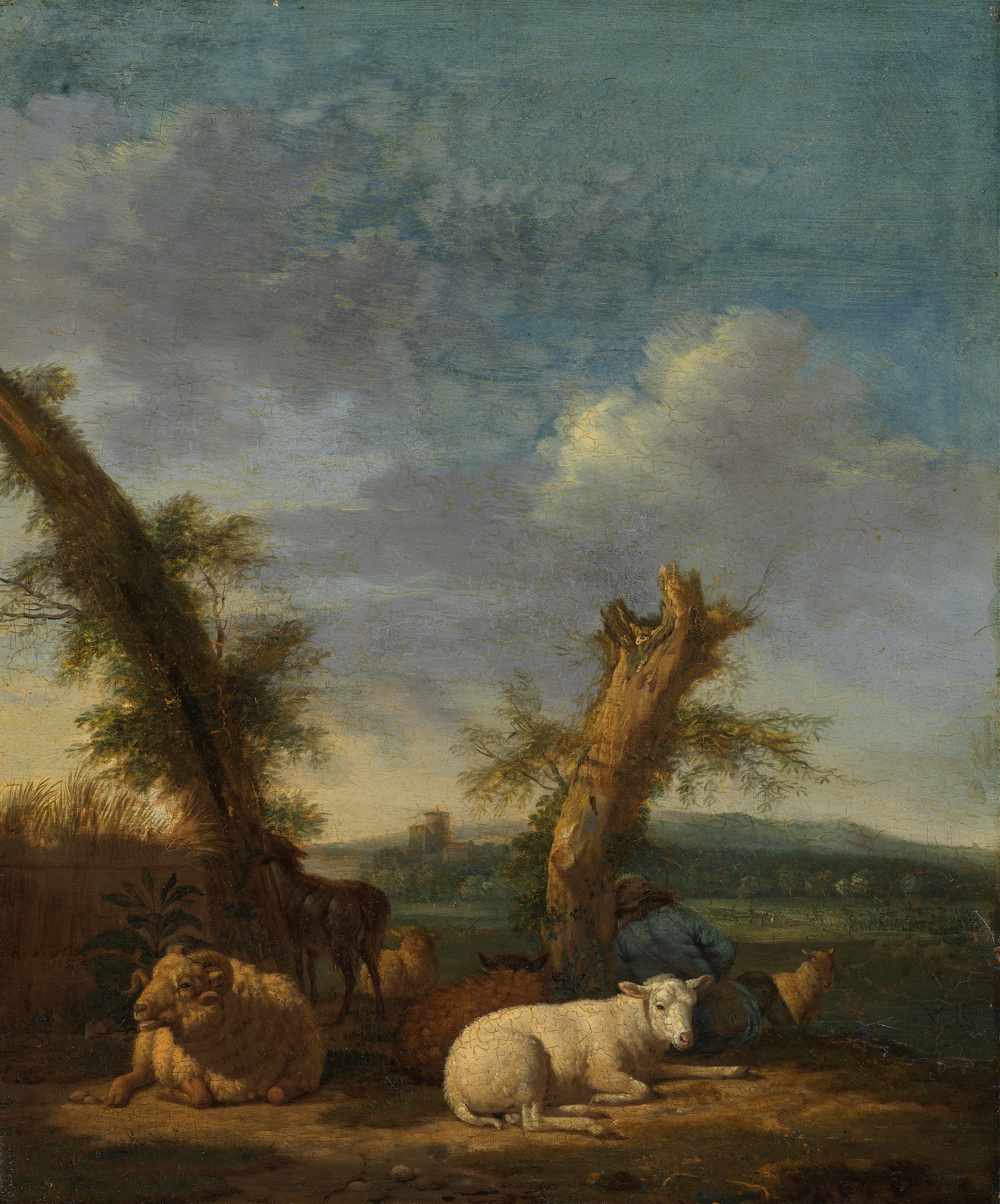
The sheep, delicate and serene, contrast with the bull's energy, forming a harmonious yet tension-filled ensemble. Delve deeper into the subtleties of the painting, where the contrasting textures of fur and grass come alive in intricate detail. Each sheep holds a quiet presence, their soft wool enmeshed with the gentle hues of the earth, evoking vulnerability amidst the raw power of the bull. This juxtaposition serves as a metaphor for the balance of nature, revealing an intimate dialogue between strength and fragility, movement and stillness.
In 1670, Adriaen van de Velde painted Bonte stier met drie schapen during a time when Dutch art was marked by a flourishing interest in landscape and animal depictions. Living in Amsterdam, he drew inspiration from the natural world, capturing its beauty with meticulous detail. This piece reflects the broader Baroque movement, showcasing the artist’s keen observation and unique ability to convey life through paint, while also revealing the changing dynamics of Dutch society and its engagement with the environment.