Bos met ruïne — History & Analysis
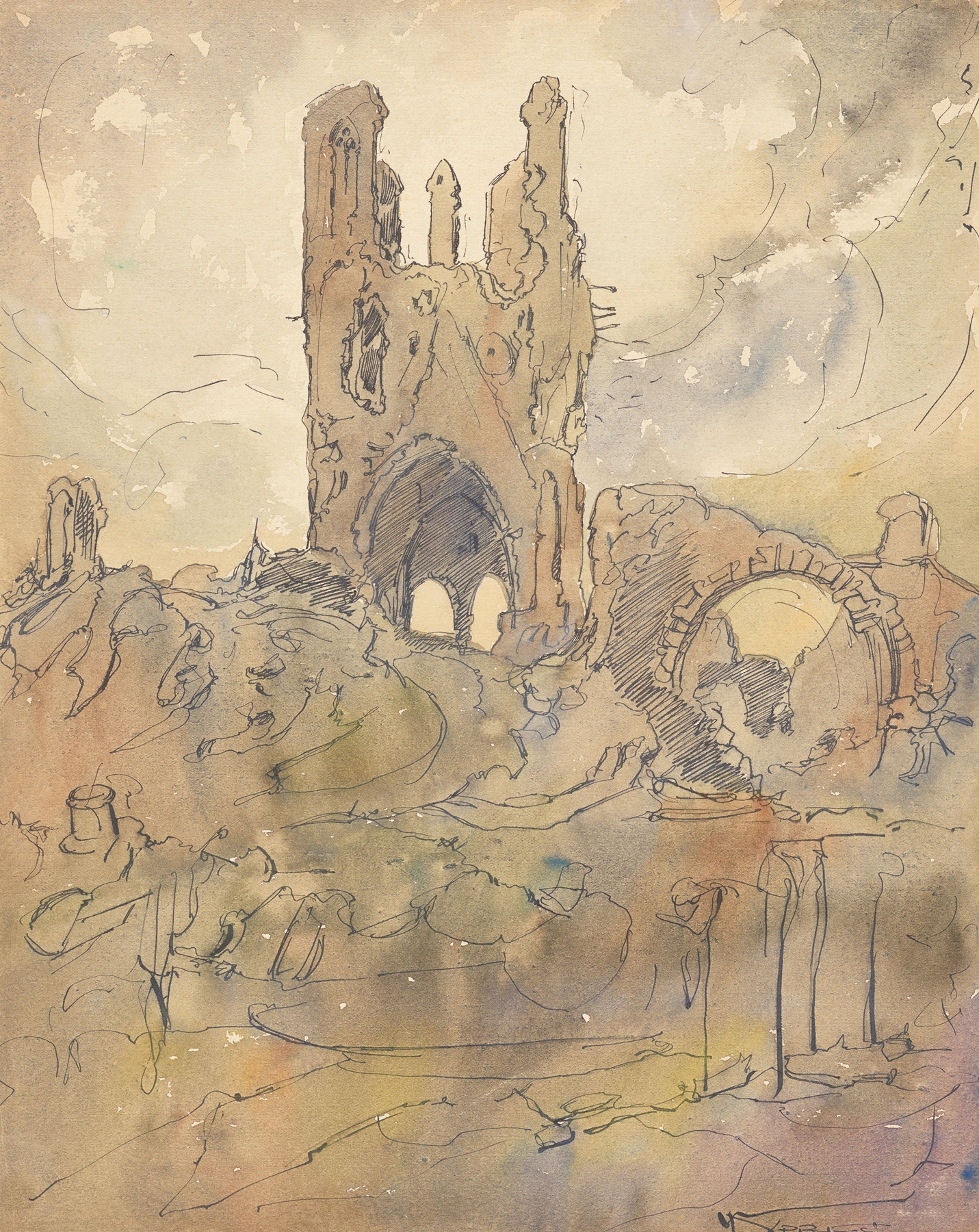
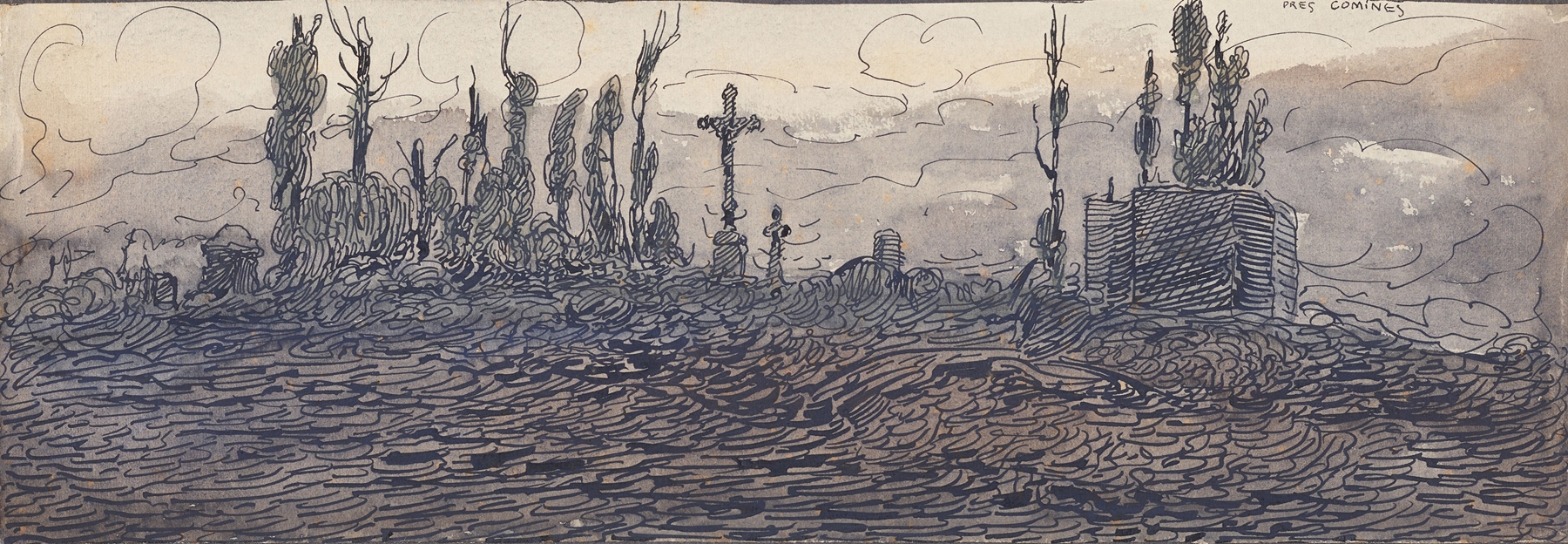
“Between color and silence, truth hides.” In the depths of a forest, remnants of a crumbled past rise from the earth—a testament to what was and what could be. The scene whispers of revolution, urging us to listen closely to its muted cries and vibrant hues. Look closely at the left side of the canvas, where lush greens and browns blend into ochre tones, creating an inviting yet haunting atmosphere. Here, the light filters through the branches, casting dappled shadows that dance upon the ruins, suggesting both decay and the vitality of nature reclaiming its space.
Notice how Ost’s brushwork oscillates between delicate strokes and bold swathes, imbuing the landscape with a sense of movement, as if the past and present are in constant dialogue. Amidst the serenity lies a deep tension—an interplay of life versus despair. The verdant foliage surrounds the crumbling structure, symbolizing both the inevitability of change and the resilience of life amidst destruction. The juxtaposition of vibrant greens against the muted gray of the ruins invites contemplation on what is lost and what remains, reflecting the emotional weight of a world on the brink of transformation.
In 1940, Alfred Ost created this piece during a tumultuous time in Europe, marked by the onset of World War II. Living in Belgium, he was surrounded by the chaos of a continent in upheaval, where the echoes of revolution permeated daily life. This context influenced his portrayal of landscapes, imbued with a sense of both nostalgia and hope as he sought to capture the essence of a world caught between turmoil and beauty.