Burning of the Frigate Philadelphia in the Harbor of Tripoli — History & Analysis
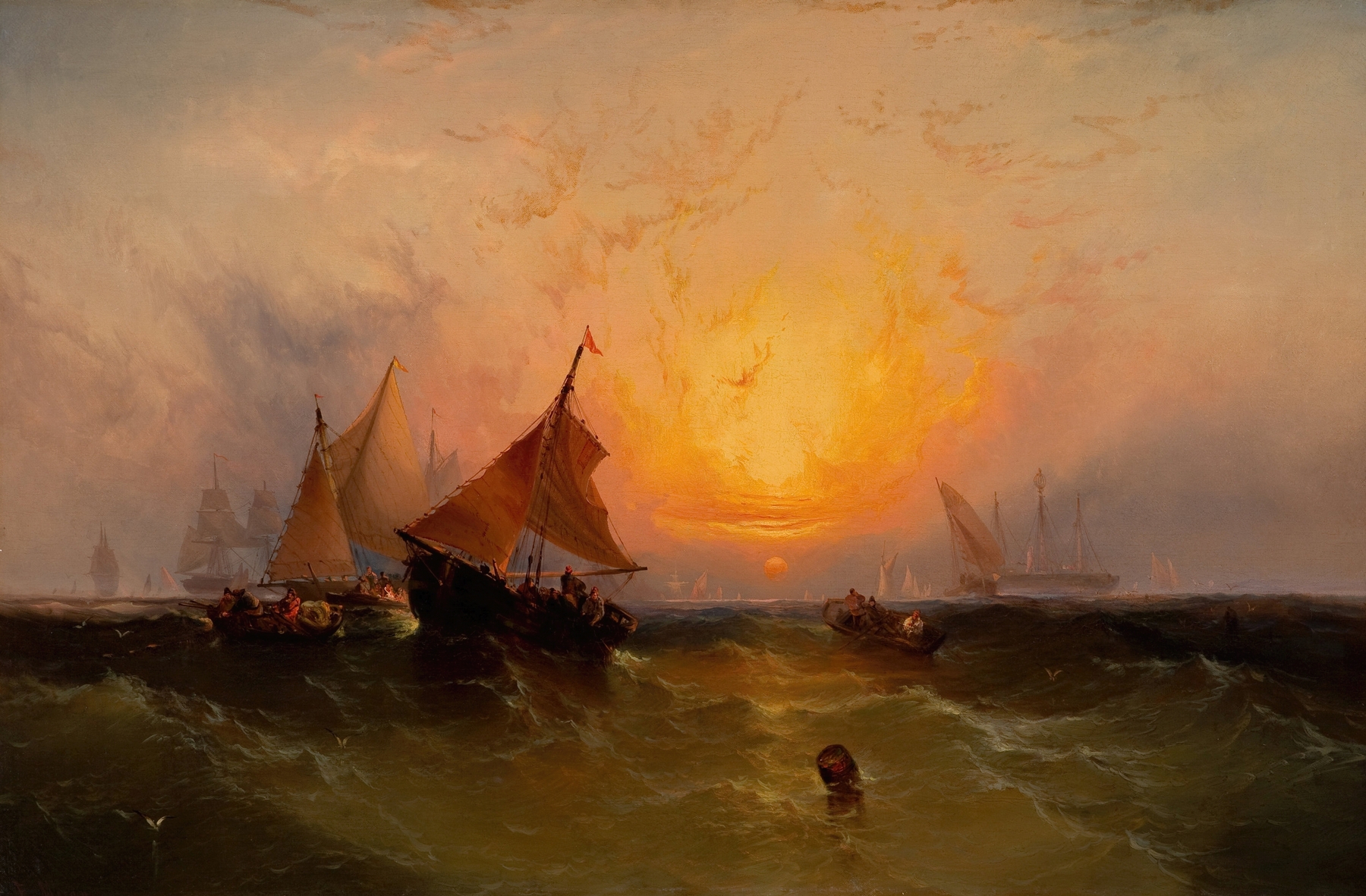
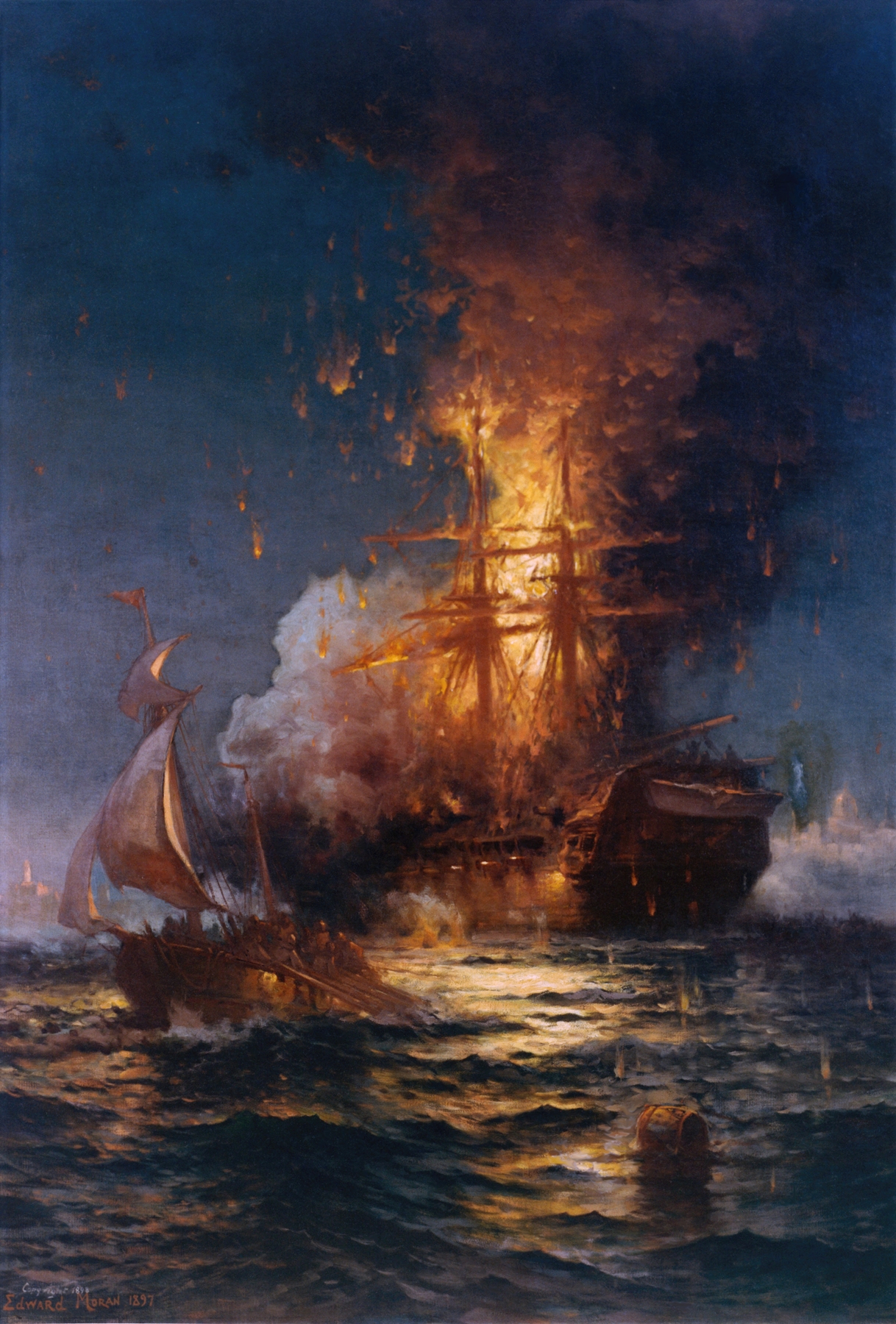
Could beauty survive in a century of chaos? In Edward Moran’s Burning of the Frigate Philadelphia in the Harbor of Tripoli, the answer is an unsettling yes, as the flames cast a surreal glow over turbulent waters, transforming destruction into a striking tableau. Look to the center of the canvas where the blazing ship’s hull dominates the scene, its vibrant reds and oranges contrasting sharply with the cool blues of the harbor. Notice how the light from the fire dances on the water's surface, creating a shimmering illusion that distracts from the despair beneath.
Surrounding figures, part soldiers and part shadows, appear to blur into the chaos, their gestures expressing a mix of urgency and helplessness that draws the viewer in. The painting reveals a profound tension between beauty and devastation. The illusion of radiant flames becomes a poignant reminder of sacrifice, illuminating the struggles of those who fought in the early 19th-century naval battles.
Yet, amidst this chaos, the serenity of the sky looms above, creating a juxtaposition of tranquility against the scene’s turmoil, compelling the viewer to reflect on the fragility of both life and art. Created in 1897, this work emerged during a time when Moran was deeply influenced by maritime history and the broader narrative of American expansionism. As the nation grappled with its identity and the complexities of war, Moran’s detailed rendering of this historical event offered more than mere representation; it encapsulated a moment when valor met vulnerability against the backdrop of global conflict.