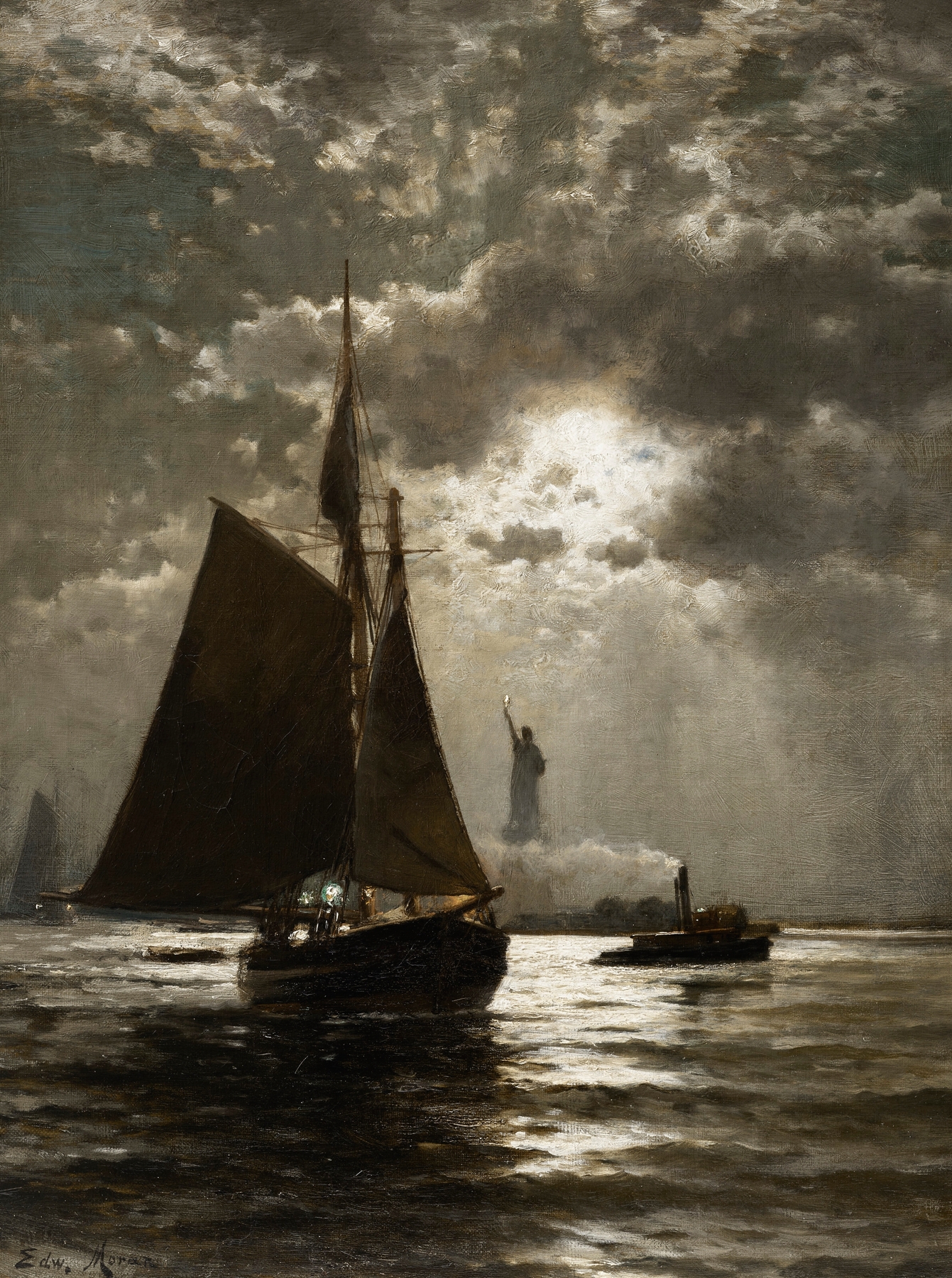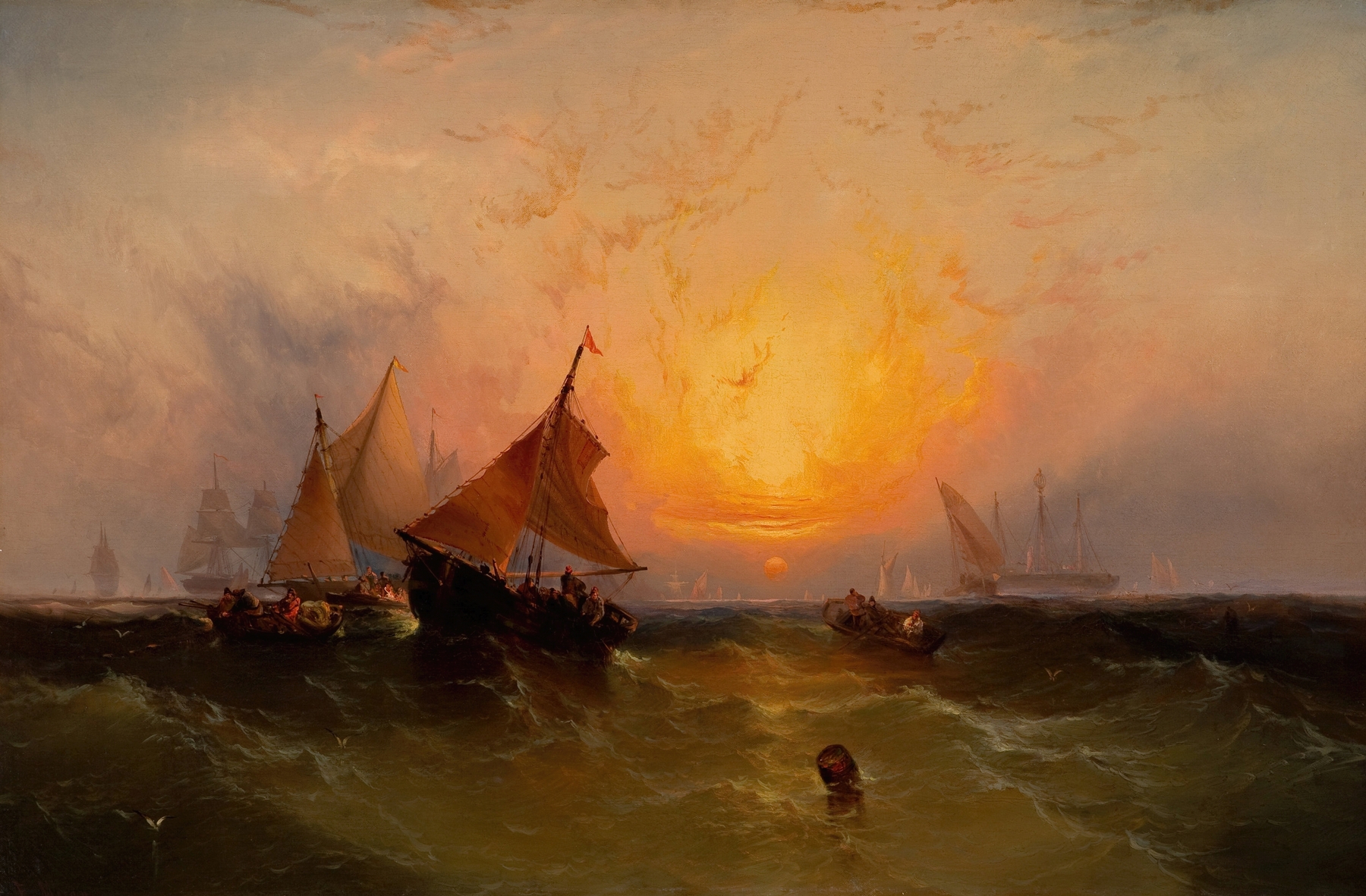
Ships at Sunset (New York Harbor Sunset) — History & Analysis
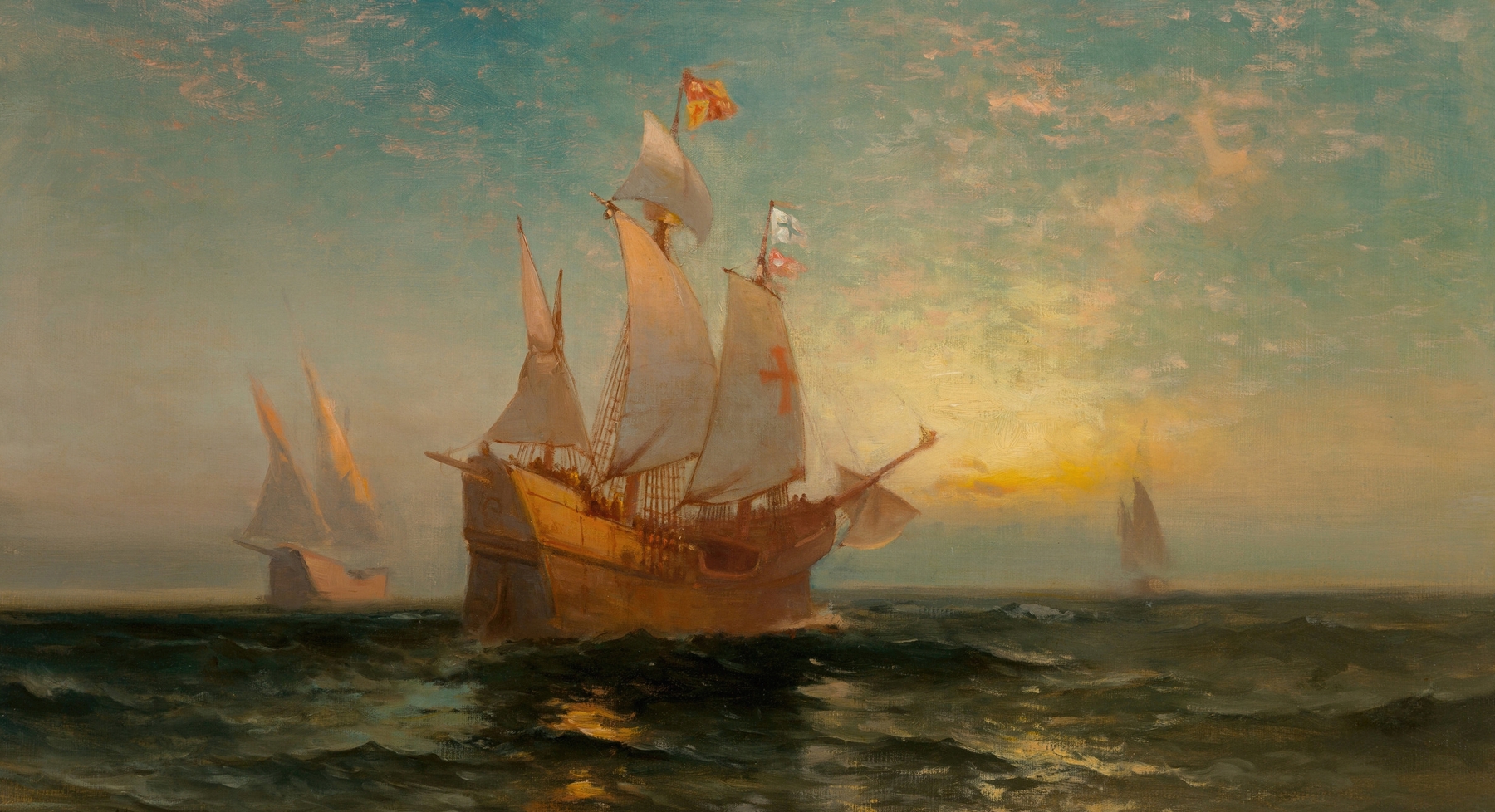
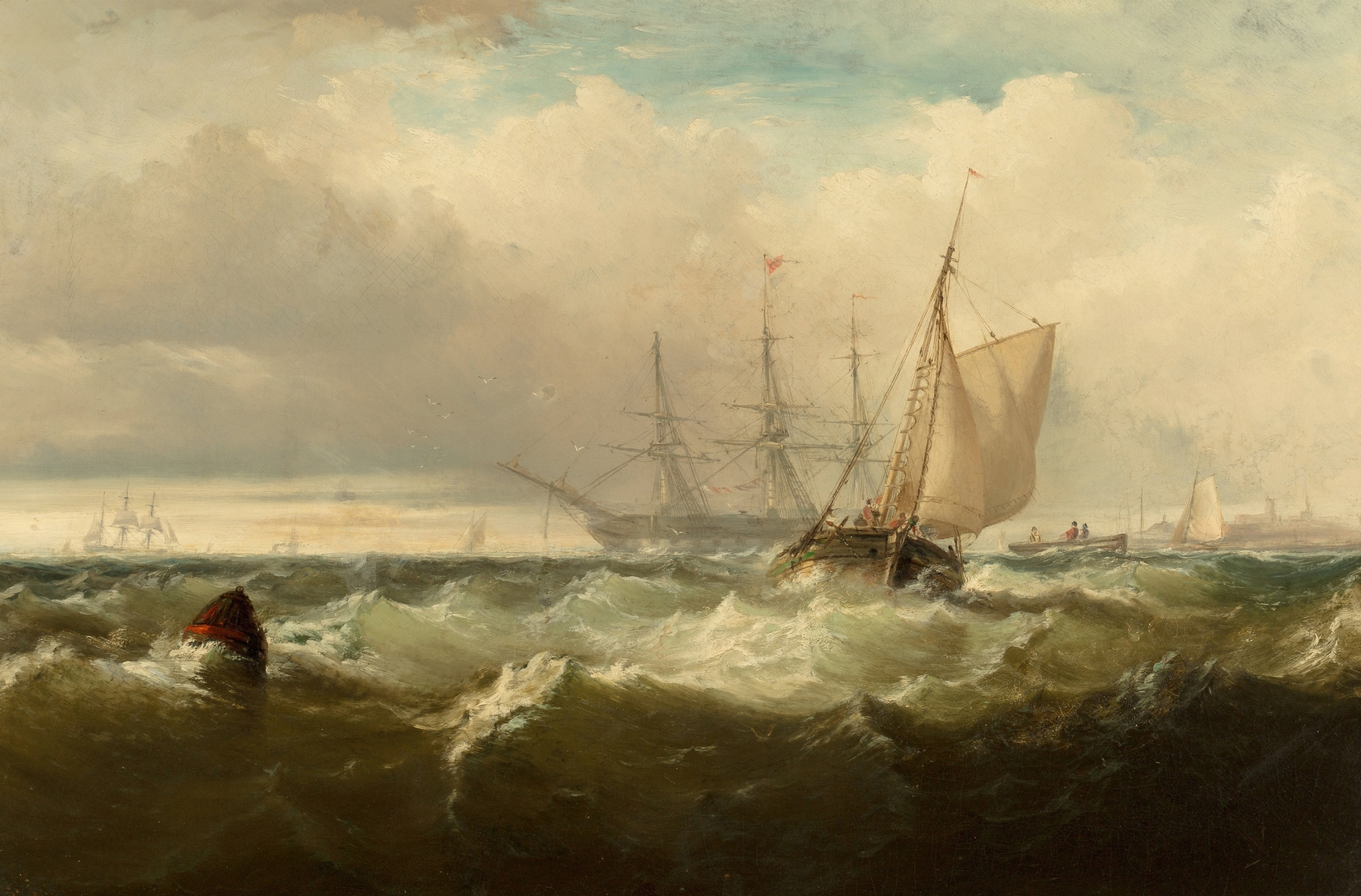
Can paint confess what words never could? In the twilight of a fading day, where light meets horizon, the canvas breathes decay and renewal, whispering truths embedded in the heart of time. Look to the right at the vibrant reflection of the sunlit water, where warm hues of orange and yellow blend seamlessly with the deep blues of the harbor. The ships, silhouettes against the dramatic sky, stand still, evoking a sense of pause. Moran’s brushwork captures the rippling waves, animated yet fleeting, while the fading light casts an ethereal glow, amplifying the contrast between the ephemeral beauty and the permanence of the vessels.
Beneath the surface lies a contemplation of transience. The setting sun symbolizes not just the end of a day, but the slow passage of time, hinting at the decay of once-great maritime endeavors. Each ship, while steadfast, also carries the weight of faded glories and forgotten journeys. The interplay of light and shadow suggests a perpetual cycle of life and loss, urging viewers to reflect on their own narratives within the larger tapestry of existence.
Created in 1872, this work emerged during a transformative period in American art. Edward Moran, living in New York, witnessed the rise of urbanism and industrialization. His focus on maritime themes mirrored both the nation’s aspirations and its vulnerabilities, as the harbor served as a gateway to new worlds and the remnants of an era in transition. In this painting, he encapsulates a moment in time that resonates with generations, both celebrating and mourning the inevitable decay of what once was.