By the Lake of Uri — History & Analysis
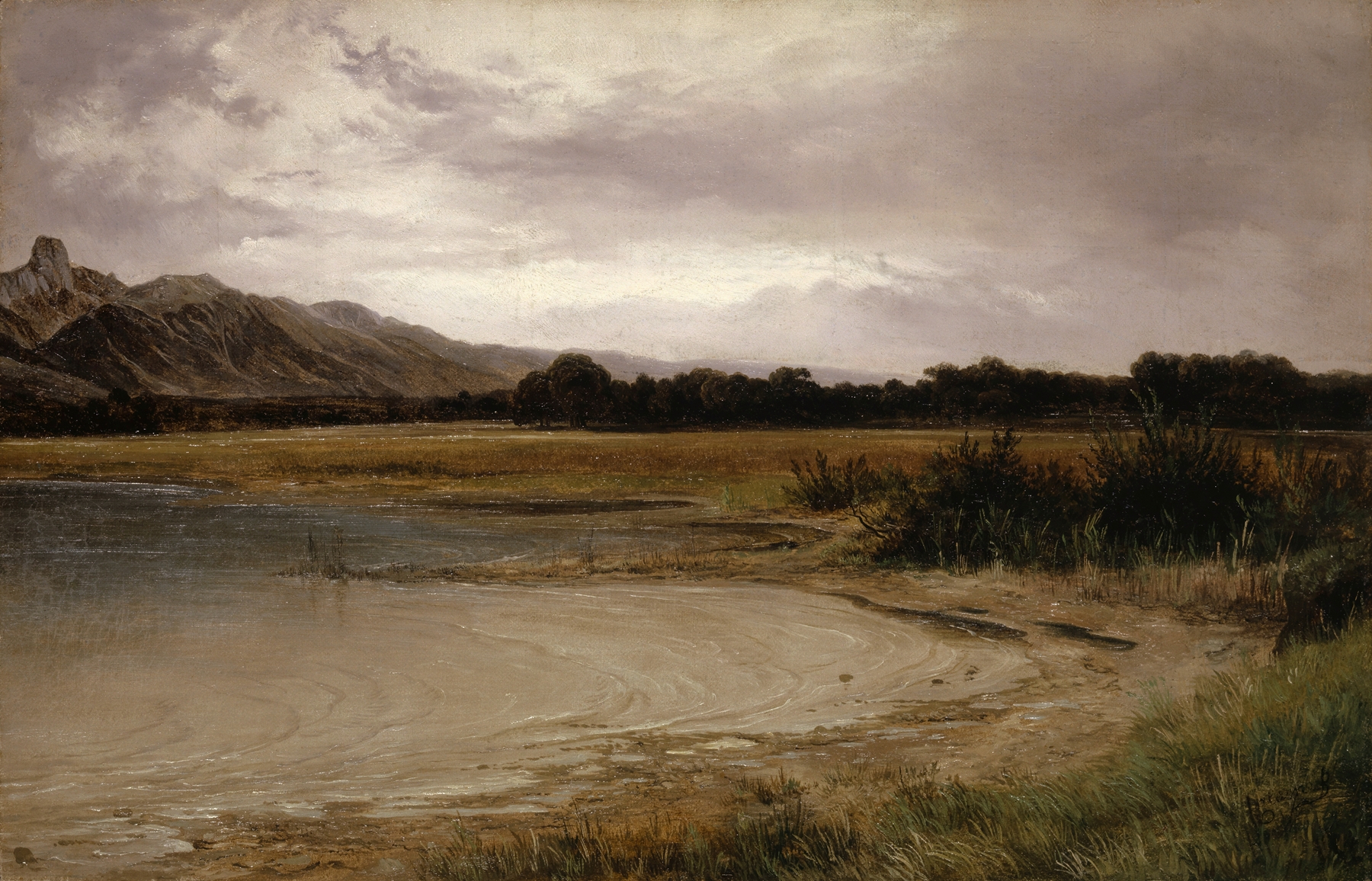
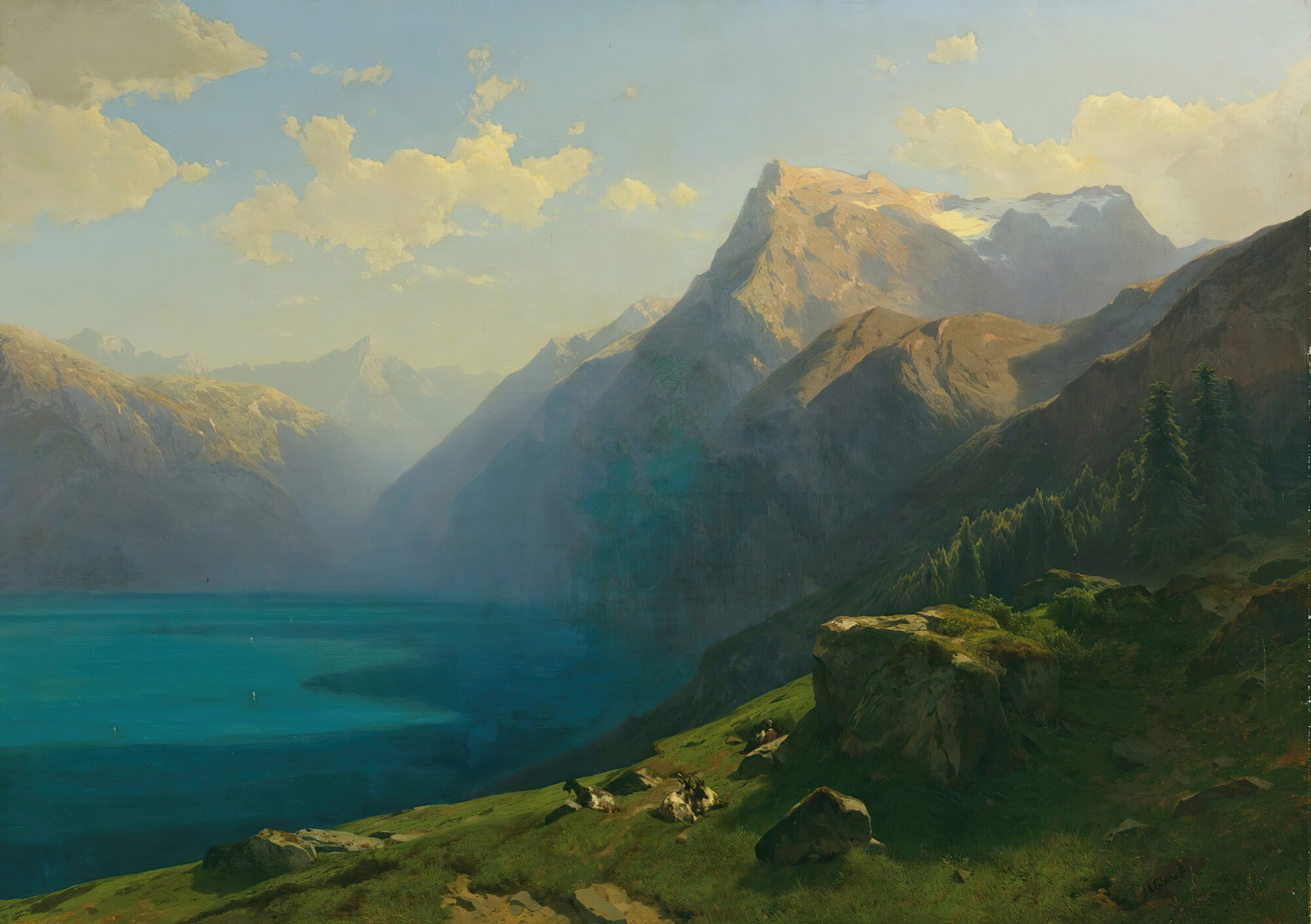
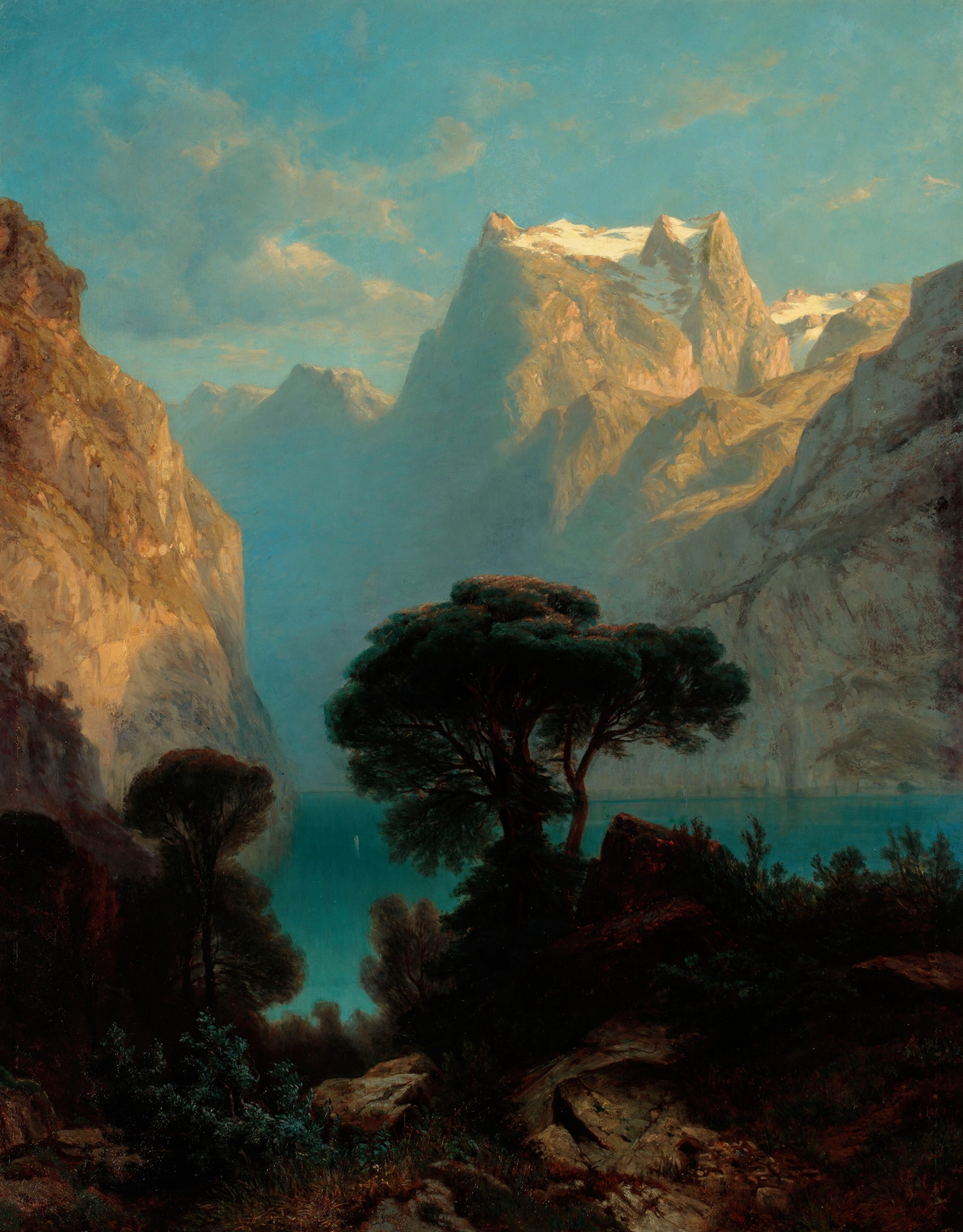
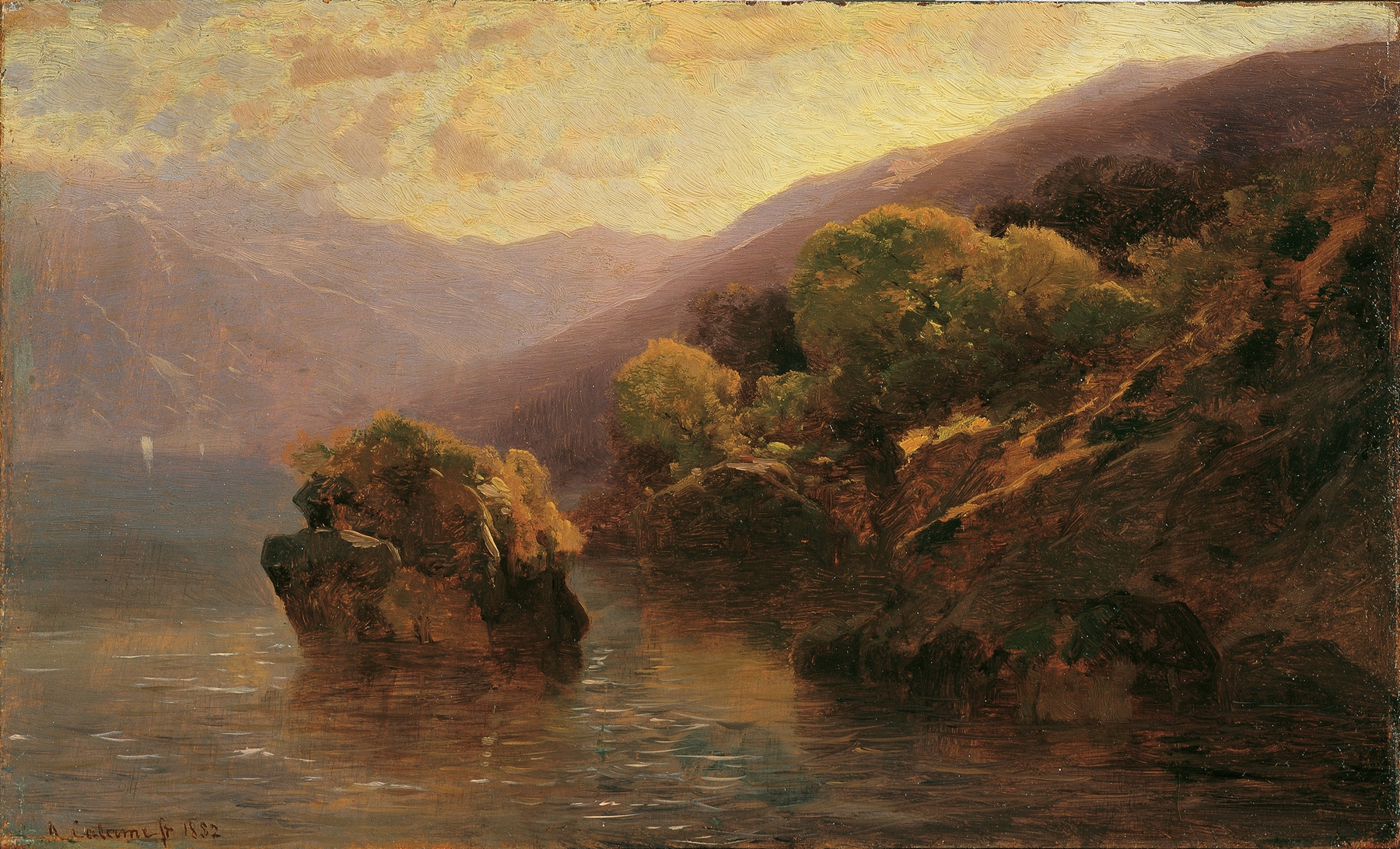
What if beauty was never meant to be finished? In By the Lake of Uri, a haunting serenity conceals the undercurrents of despair and betrayal that ripple beneath the surface of this idyllic landscape. Look to the left at the tranquil waters reflecting the towering mountains, their majestic peaks bathed in a soft, golden light. The composition draws your eye into the heart of the scene, where the smoothness of the lake contrasts sharply with the jagged edges of the rocky cliffs.
Notice how Calame masterfully employs a palette of earthy greens and blues, evoking a sense of peace while simultaneously hinting at the lurking darkness in the shadows. The brushwork is fluid yet deliberate, guiding the viewer through this seemingly perfect world. Delve deeper, and the delicate interplay of light and shadow suggests a motive beyond mere aesthetics. The calm surface of the lake belies the turmoil beneath, capturing the essence of a betrayal that mirrors the complexities of nature — beautiful yet treacherous.
The lone figure on the shore, seemingly at peace, stands as a poignant reminder of isolation amidst beauty, drawing parallels to the human experience of longing and loss. In 1849, Alexandre Calame painted this work during a time of personal reflection and exploration, influenced by the Romantic movement that sought to capture the sublime in nature. Living in Switzerland, he was surrounded by the very landscapes that inspired his art, reflecting not only the beauty of his surroundings but also the emotional depth of a world grappling with the tension between nature and humanity.