Caen. Le Bassin de Saint-Pierre — History & Analysis
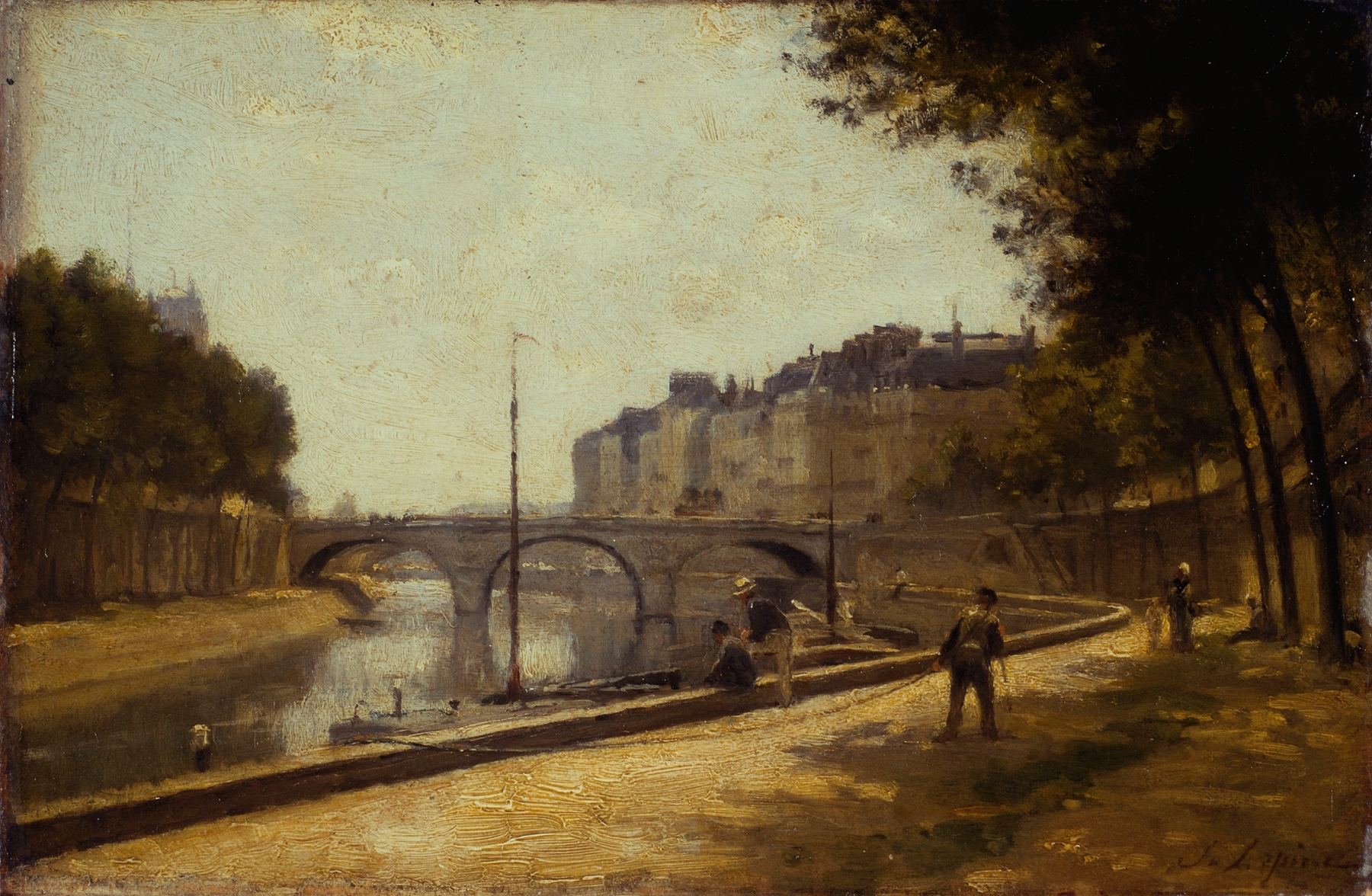
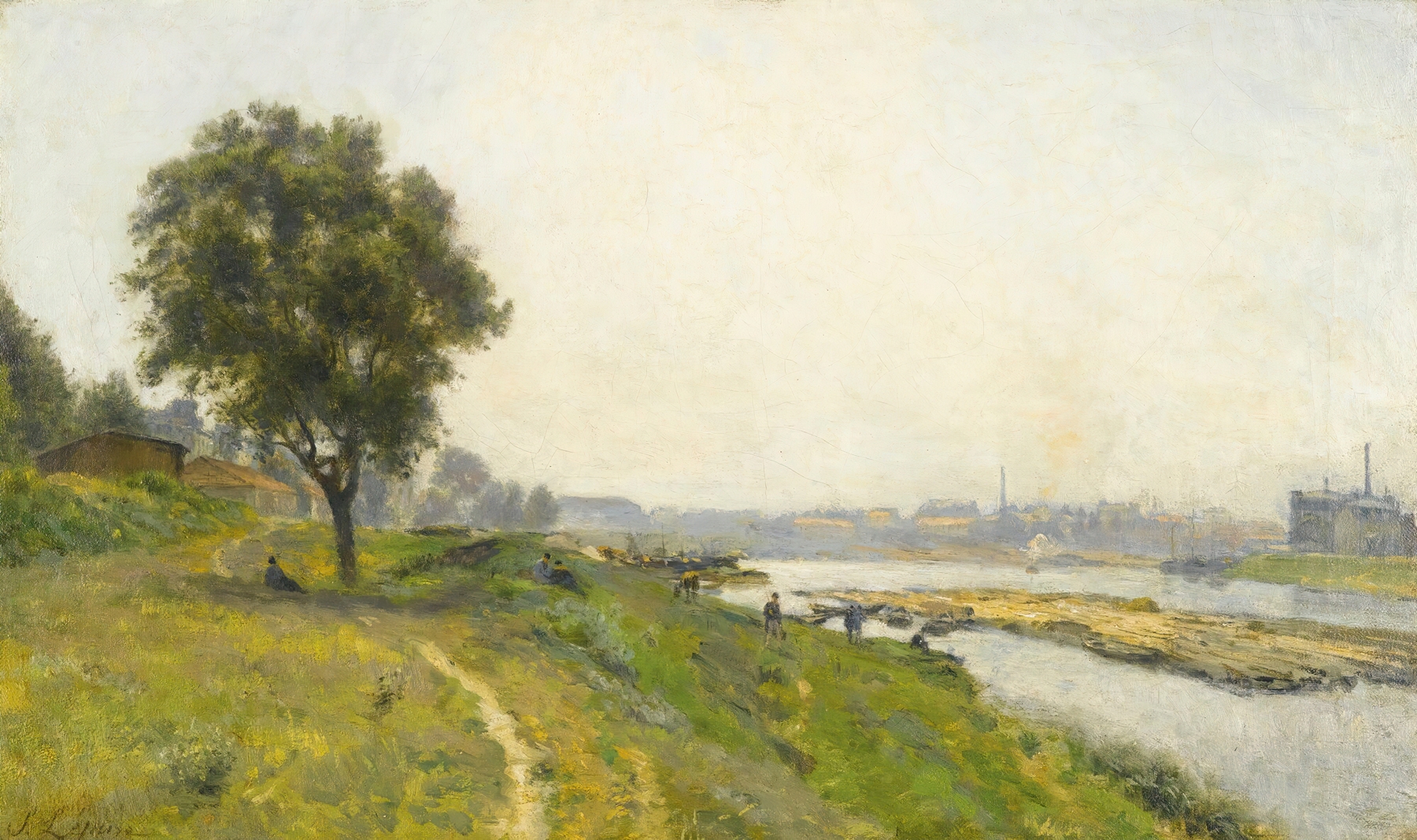
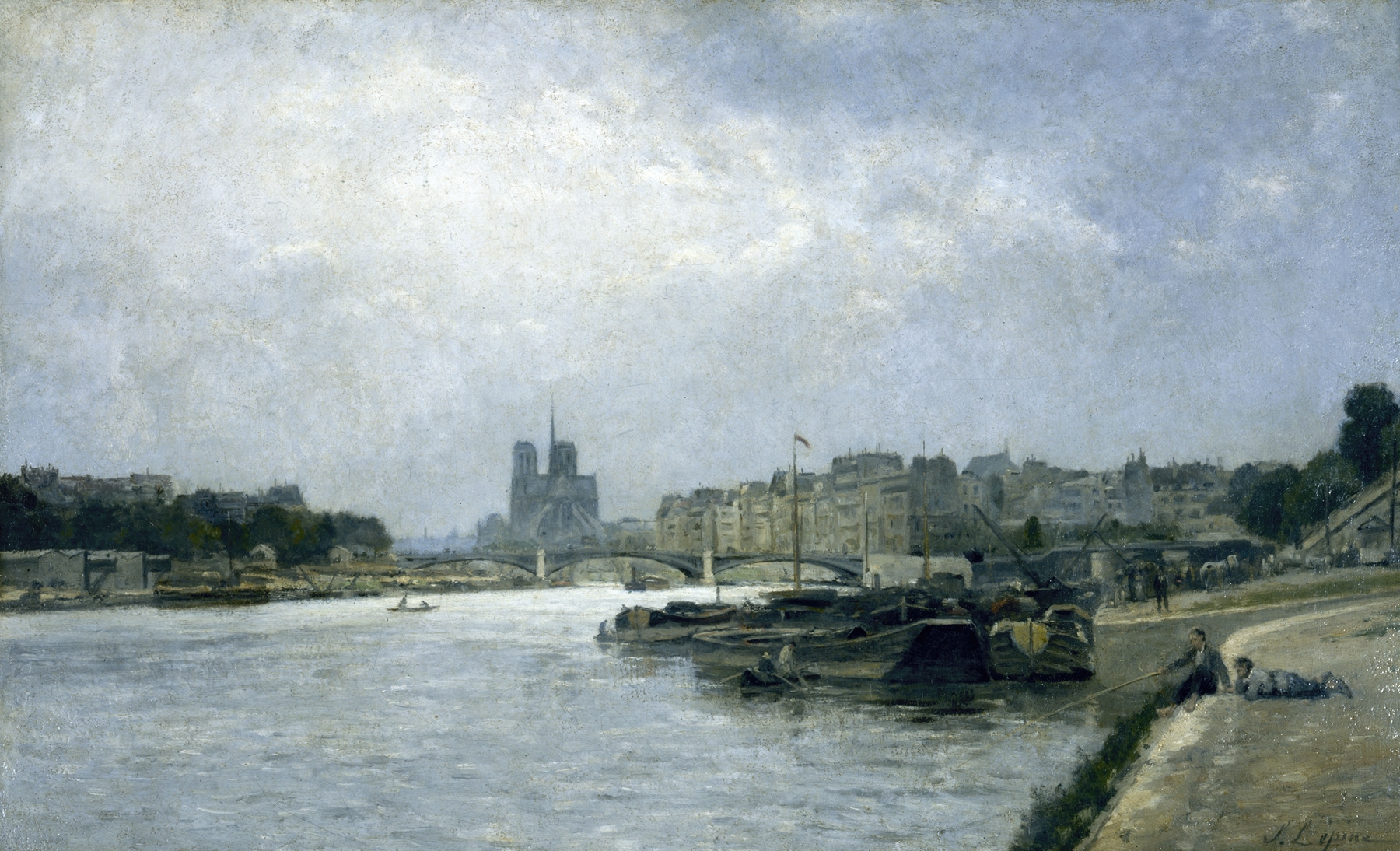
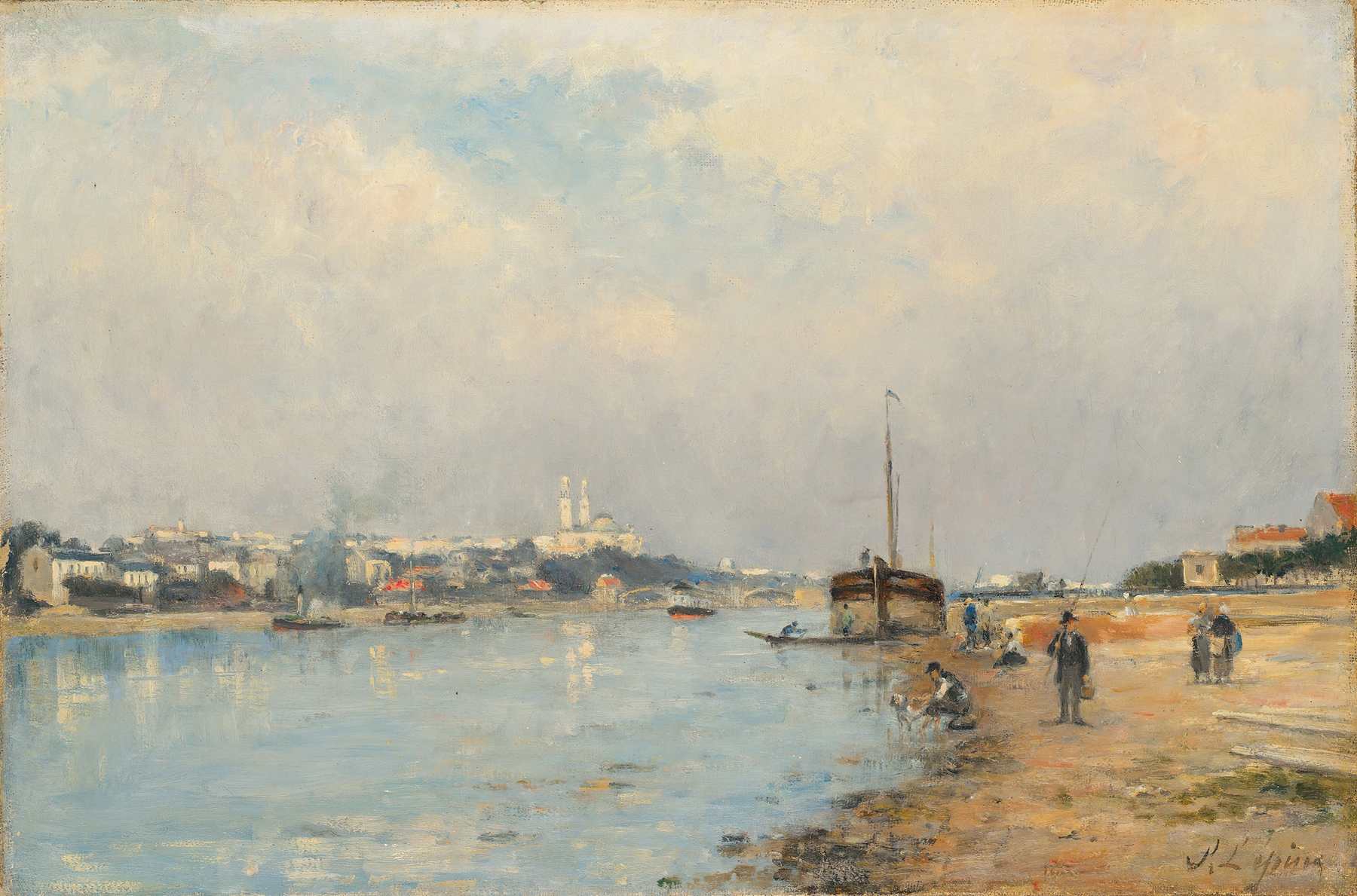
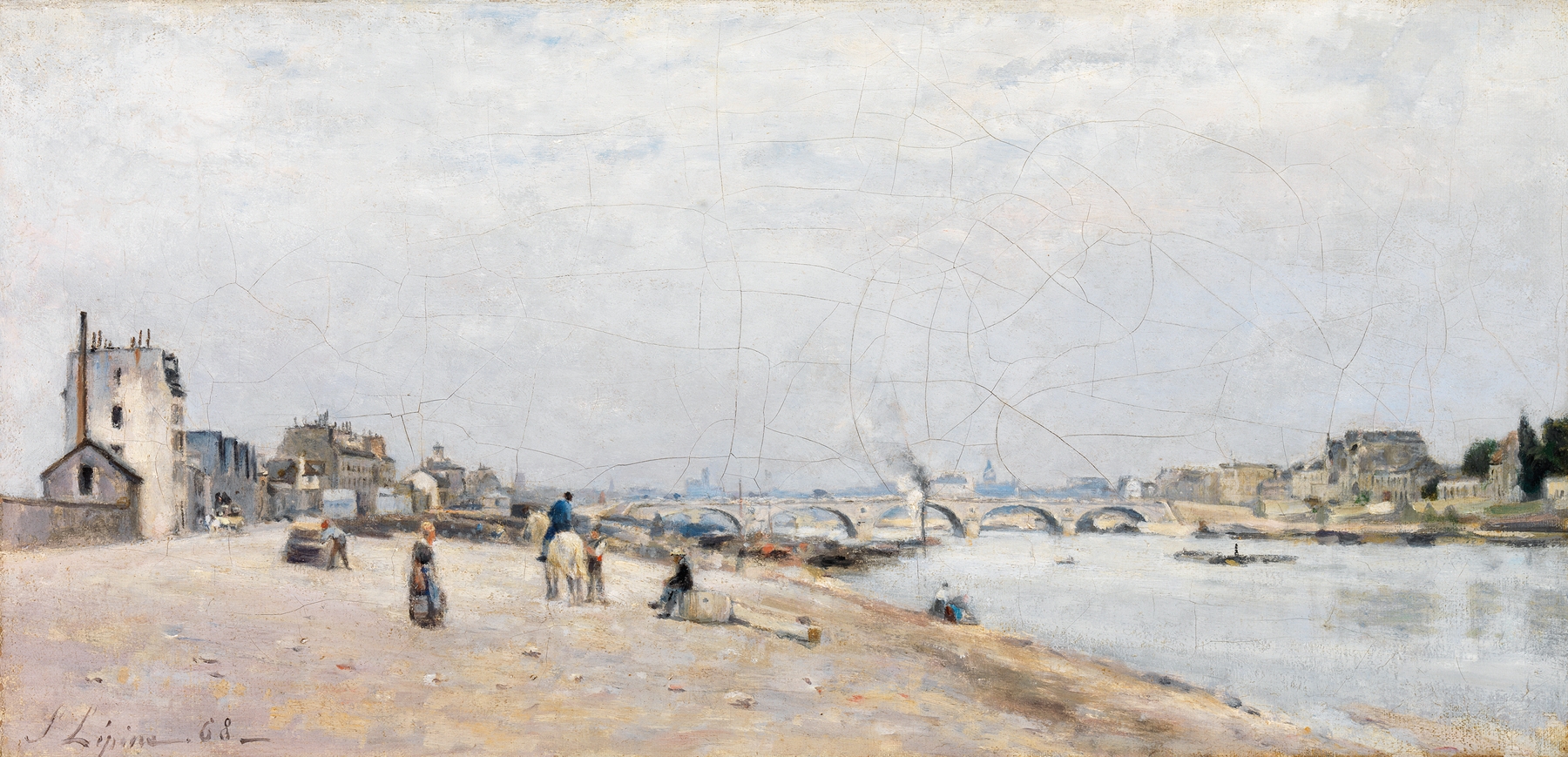
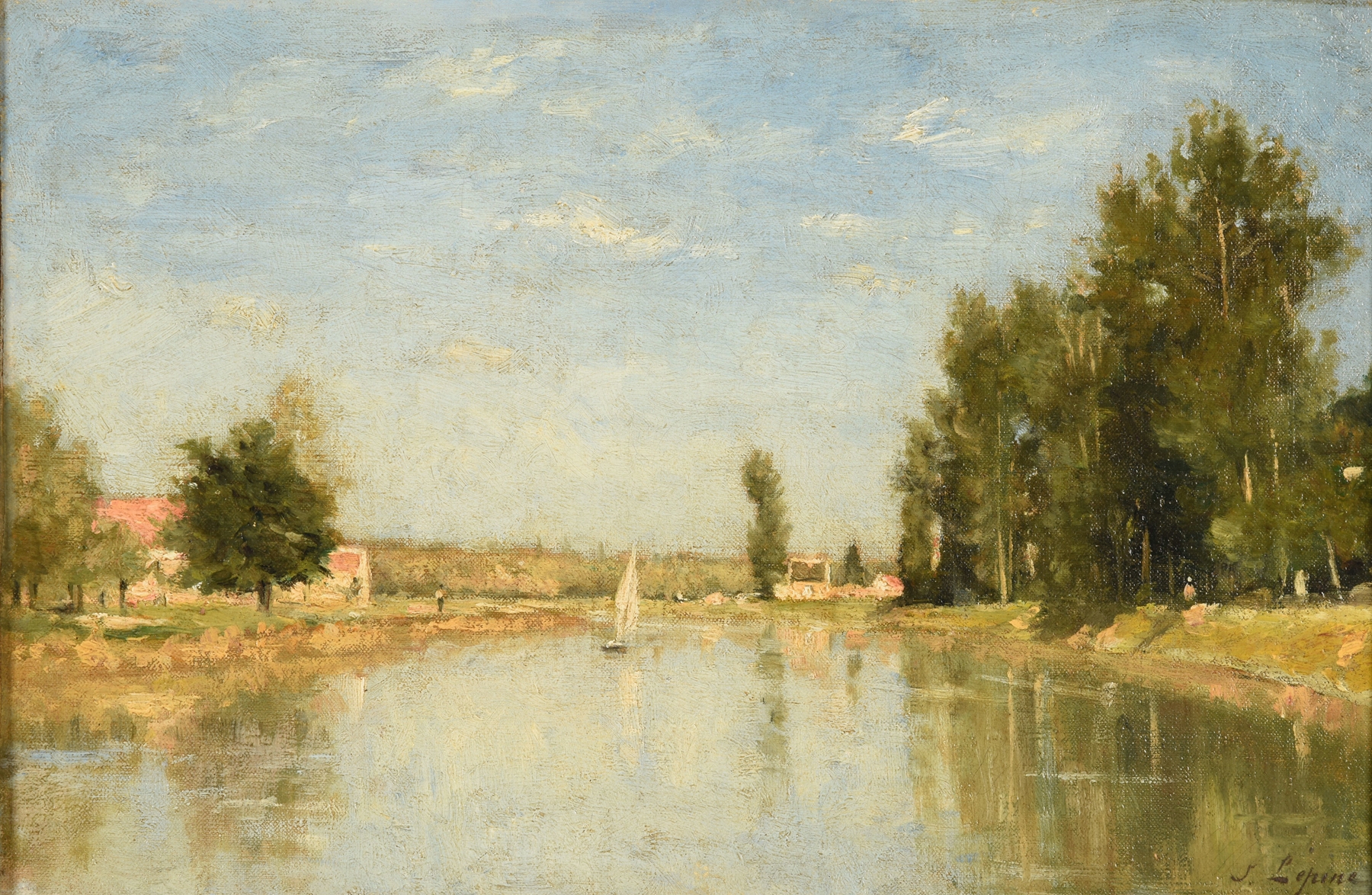
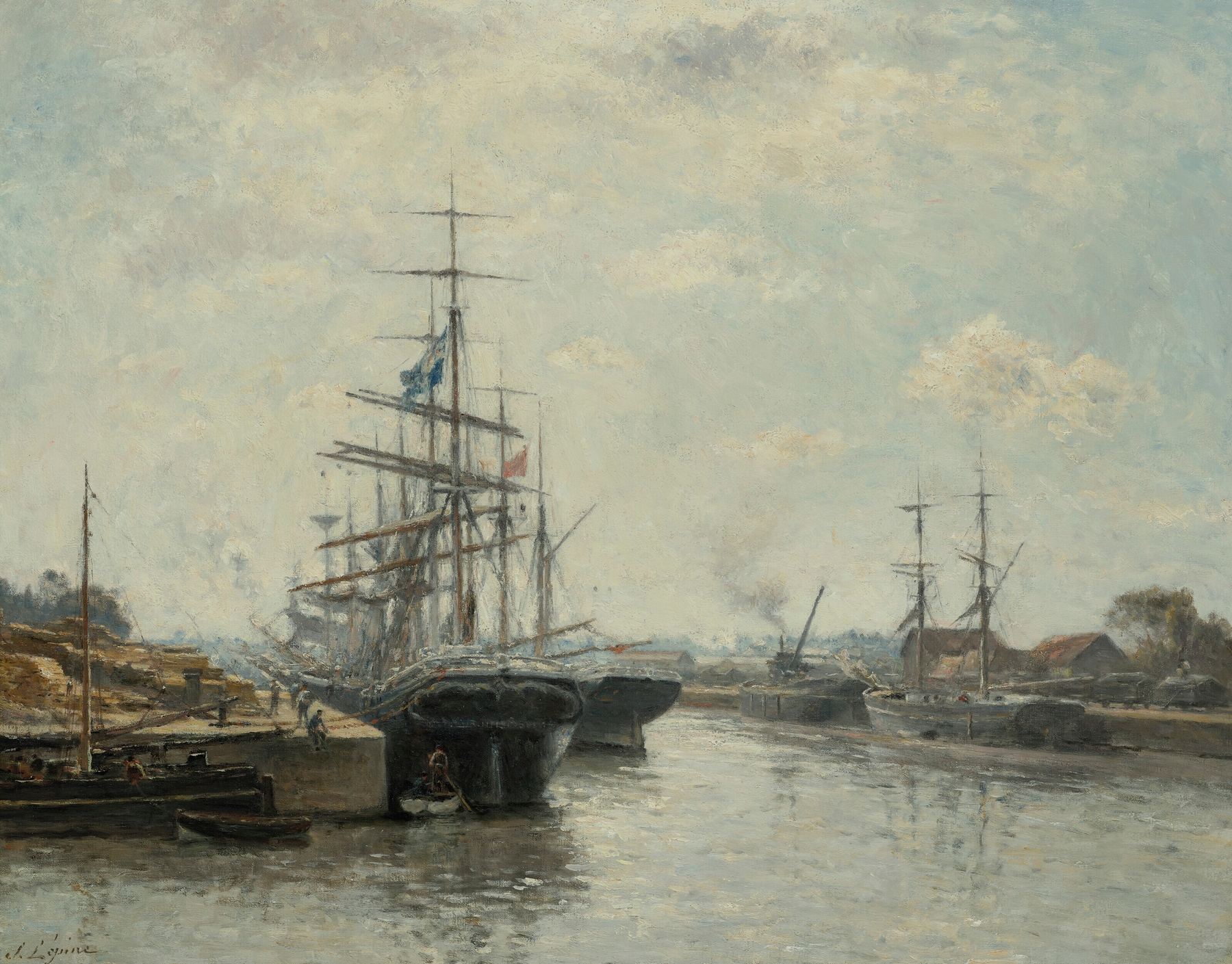
Could beauty survive in a century of chaos? In Caen. Le Bassin de Saint-Pierre, the artist captures a moment where serenity emerges from turmoil, inviting viewers to ponder the essence of obsession with nature amidst urban disarray. Look to the left at the gentle curve of the water, reflecting the soft blues and greens of the sky, mirroring the tranquility of the scene.
Notice how the boats, gently swaying, draw your gaze across the canvas toward the charming backdrop of historic buildings that frame the basin. Lépine employs delicate brushwork to create a shimmering surface, while the subtle variations in light define the contours of the landscape, transforming a mundane harbor into a lyrical invitation. Yet, beneath the calm surface lies a tension that speaks of the industrial changes sweeping through 19th-century France. The water’s stillness contrasts starkly with the menacing shadows cast by the looming structures, suggesting a struggle between nature and progress.
The fleeting moment captured here fosters a sense of longing, as it serves both as a celebration of beauty and a lament for the chaos that threatens to engulf it. Between 1875 and 1880, Lépine painted this piece during a period of great transformation in France, marked by rapid industrialization and urbanization. Living in Paris, he was influenced by the Impressionists, yet sought to maintain a connection to the past, as seen in his focus on landscapes and water scenes. This work reflects not only his personal aesthetic but also the broader artistic movement grappling with the shifting realities of modern life.