Capriccio Of Roman Monuments With The Colosseum And Arch Of Constantine — History & Analysis
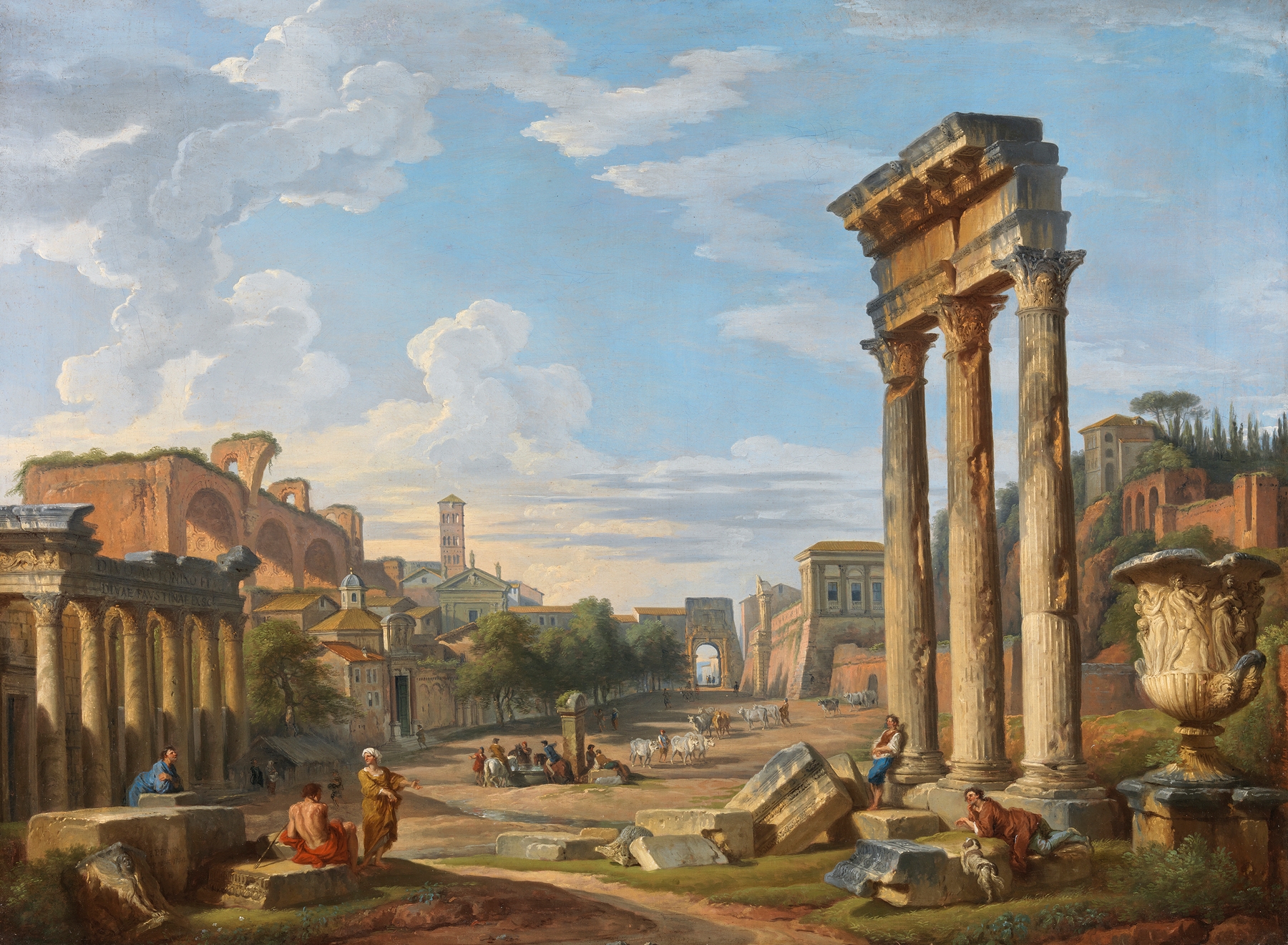
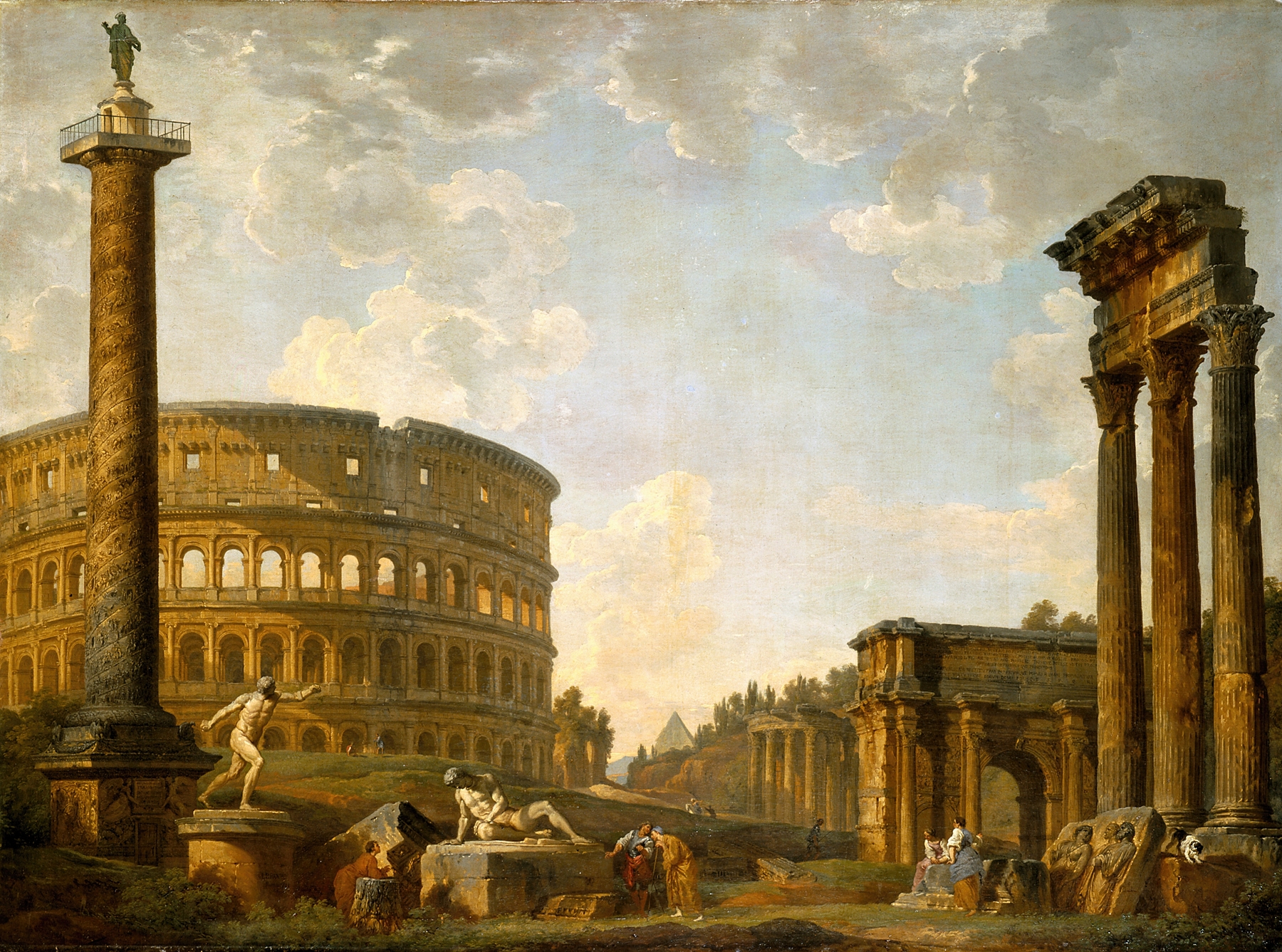
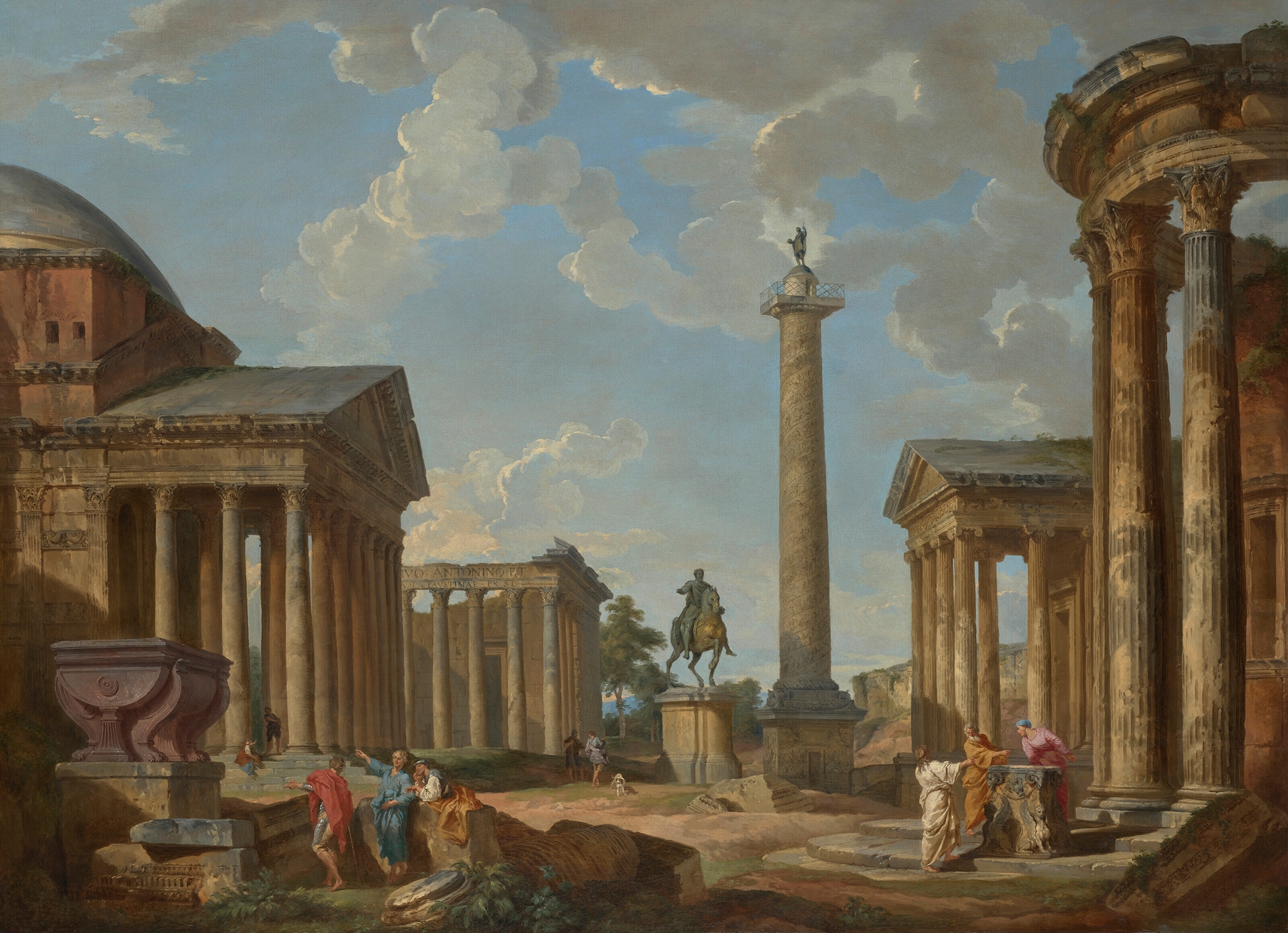
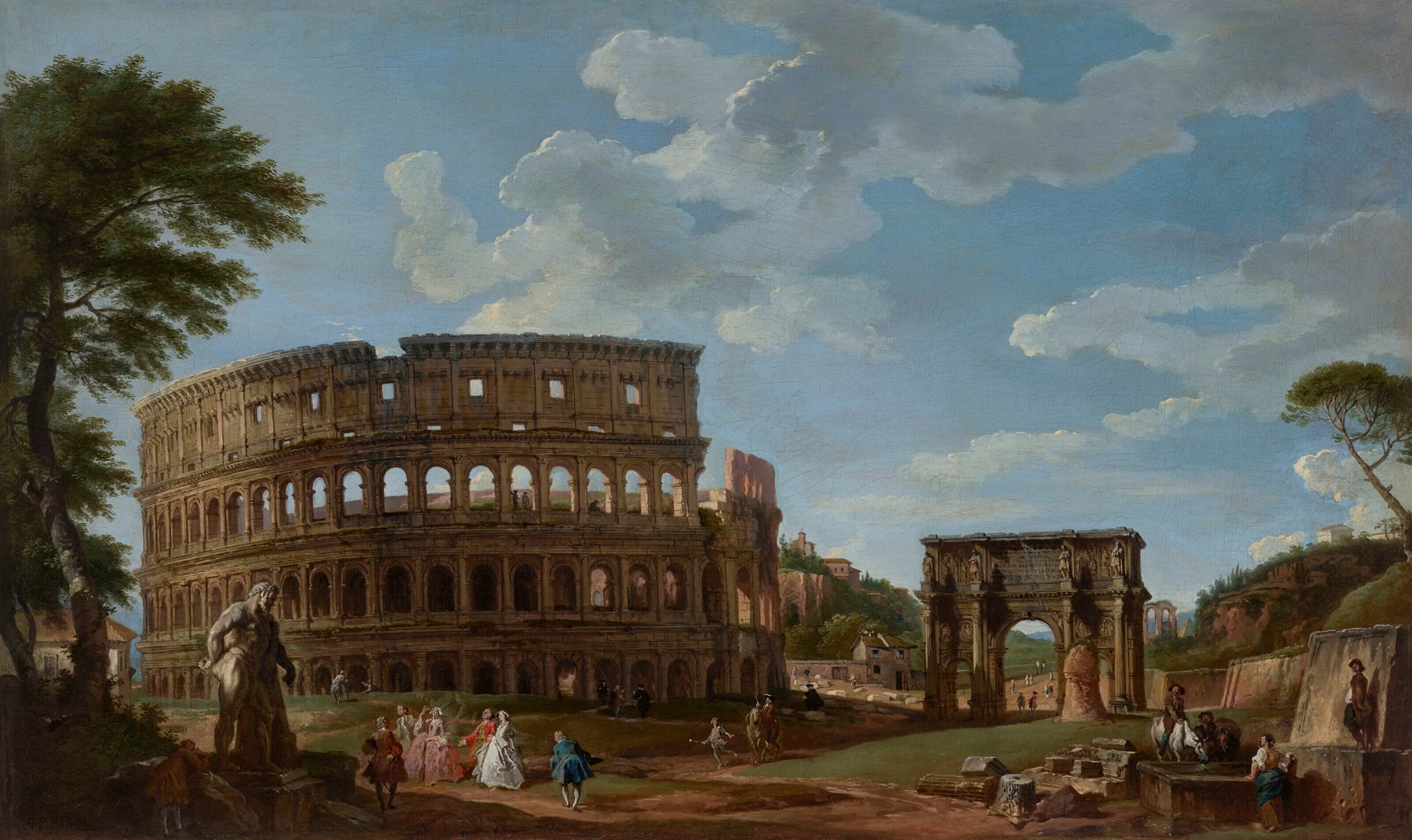
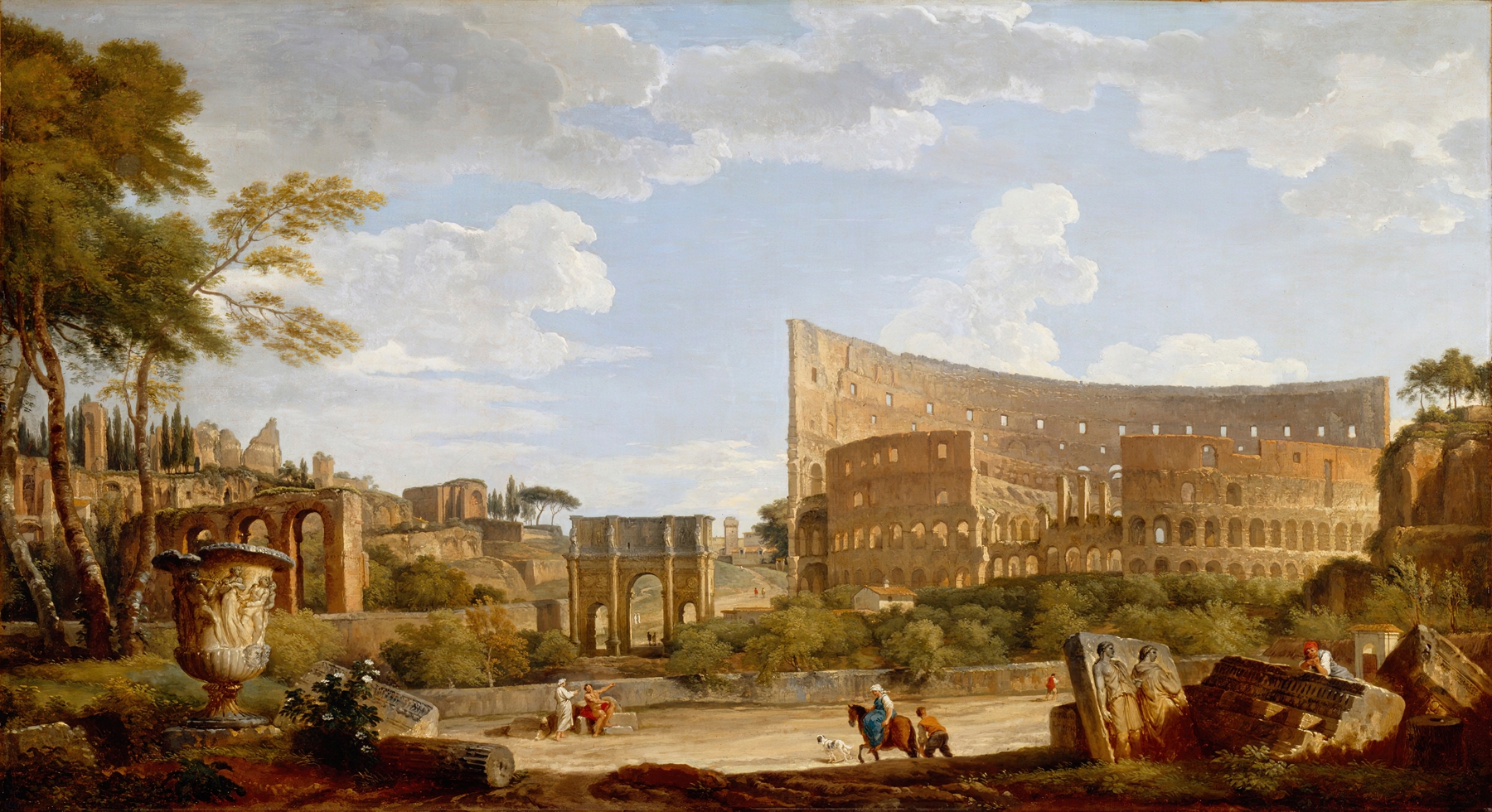
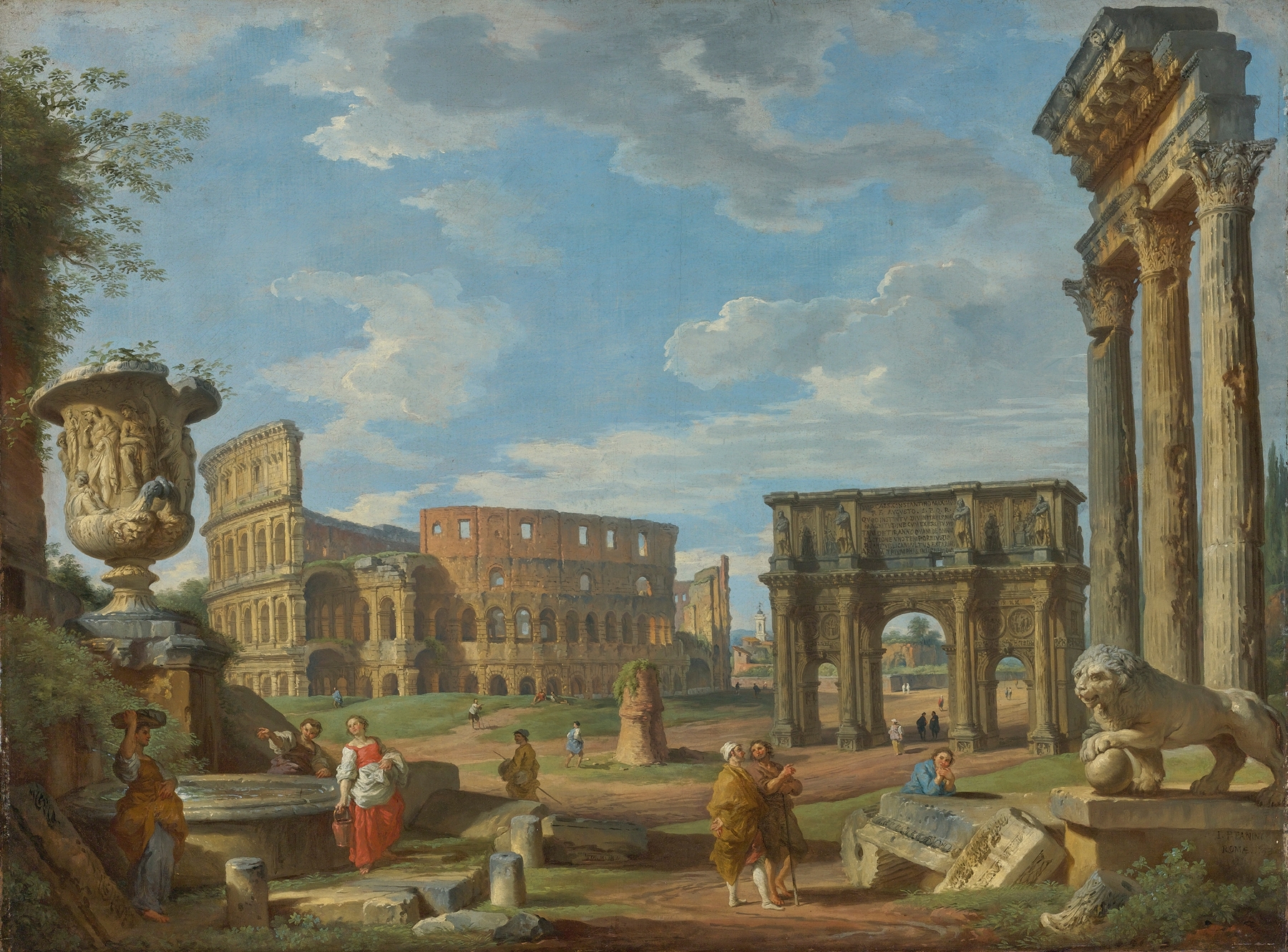
Could beauty survive in a century of chaos? In Capriccio Of Roman Monuments With The Colosseum And Arch Of Constantine, Giovanni Paolo Panini presents a harmonious vision that invites us to ponder the resilience of art amid tumultuous times. Look to the left at the grand Colosseum, rising majestically against a backdrop of soft clouds, its weathered stones illuminated with a warm, golden hue. Just beyond, the Arch of Constantine stands as a proud testament to triumph and history, intricately detailed with sculptural reliefs that capture both movement and emotion.
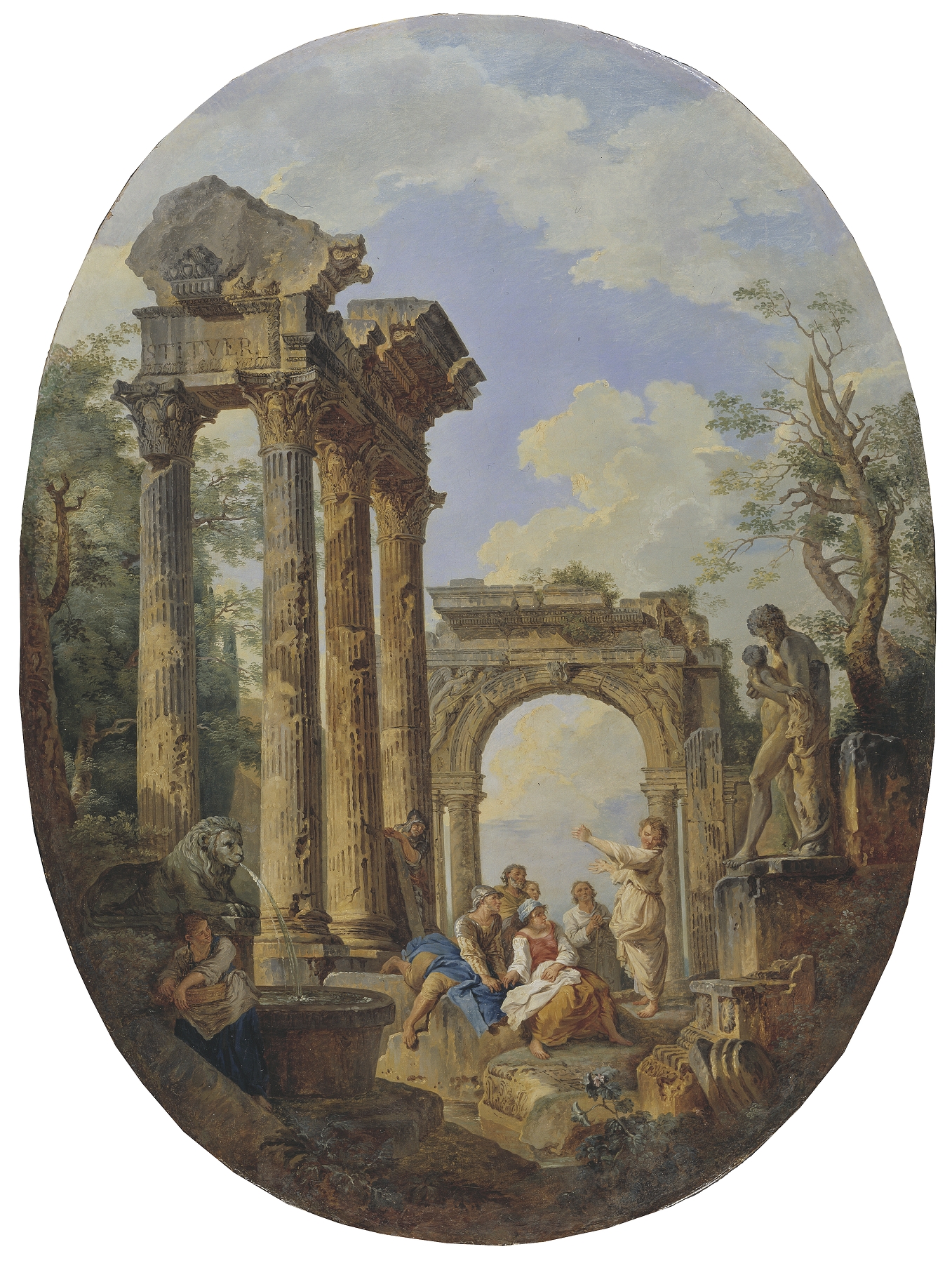
The careful arrangement of elements creates a visual rhythm, leading the eye seamlessly across the canvas, while the vibrant palette underscores a lively yet contemplative atmosphere. The painting deftly balances the monumental with the ephemeral, contrasting the enduring architecture with the fleeting figures that populate the scene. Notice the tiny silhouettes of people engaged in various activities, mirroring the bustling life of ancient Rome, yet dwarfed by the greatness of their surroundings. This interplay of scale invites reflection on humanity's relationship with history and nature, echoing the struggle to maintain beauty amidst decay.
Panini painted this work in the 18th century, during a time when Europe was grappling with both artistic innovation and a fascination with the classical past. An established member of the Roman art scene, Panini was inspired by the ruins of his city, which became a canvas for his imagination. This piece reflects the Baroque era's complexity, as artists sought to blend reality with fantasy, creating a landscape where the echoes of an ancient world remain vibrantly alive.