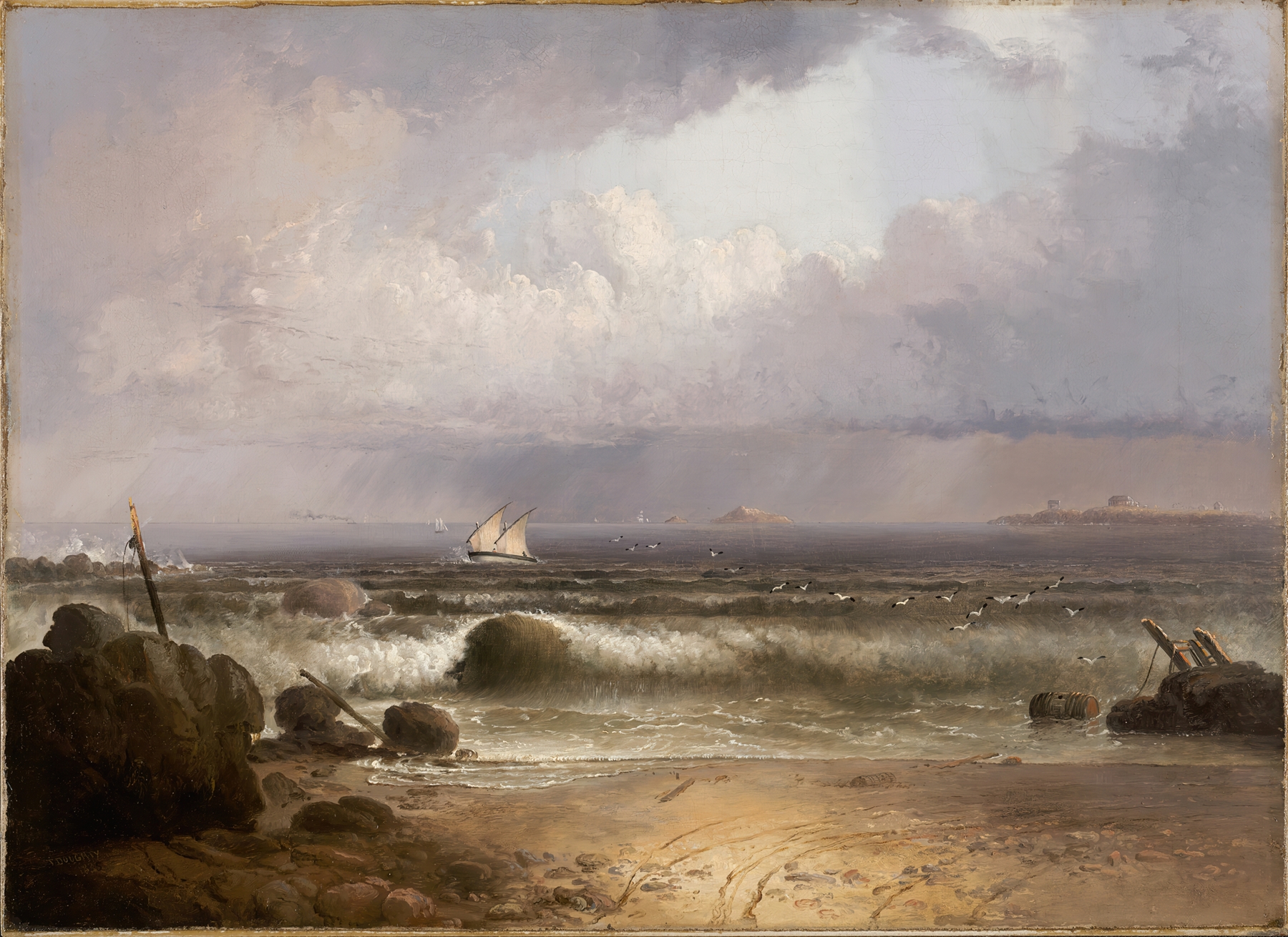
Catskills — History & Analysis
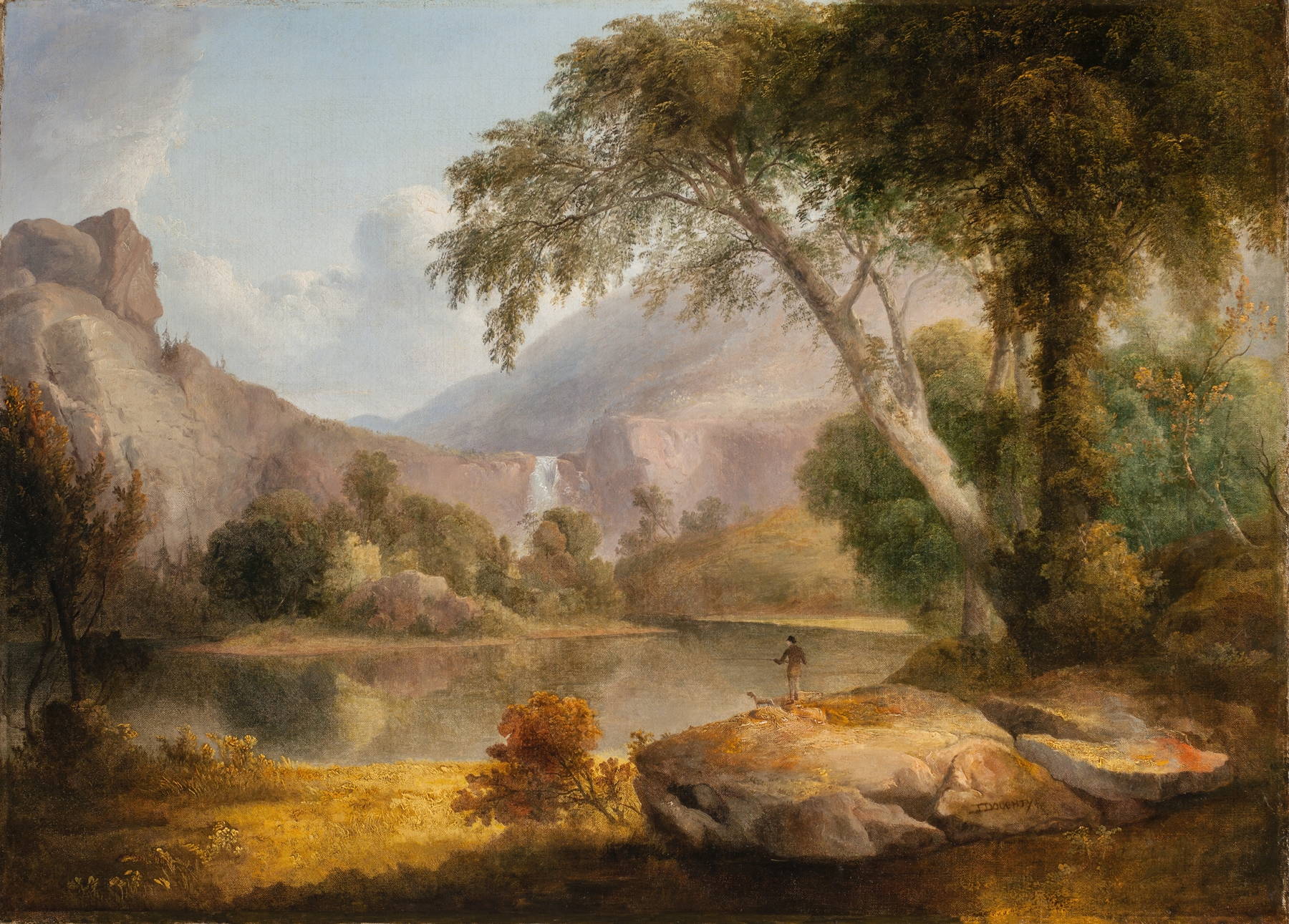
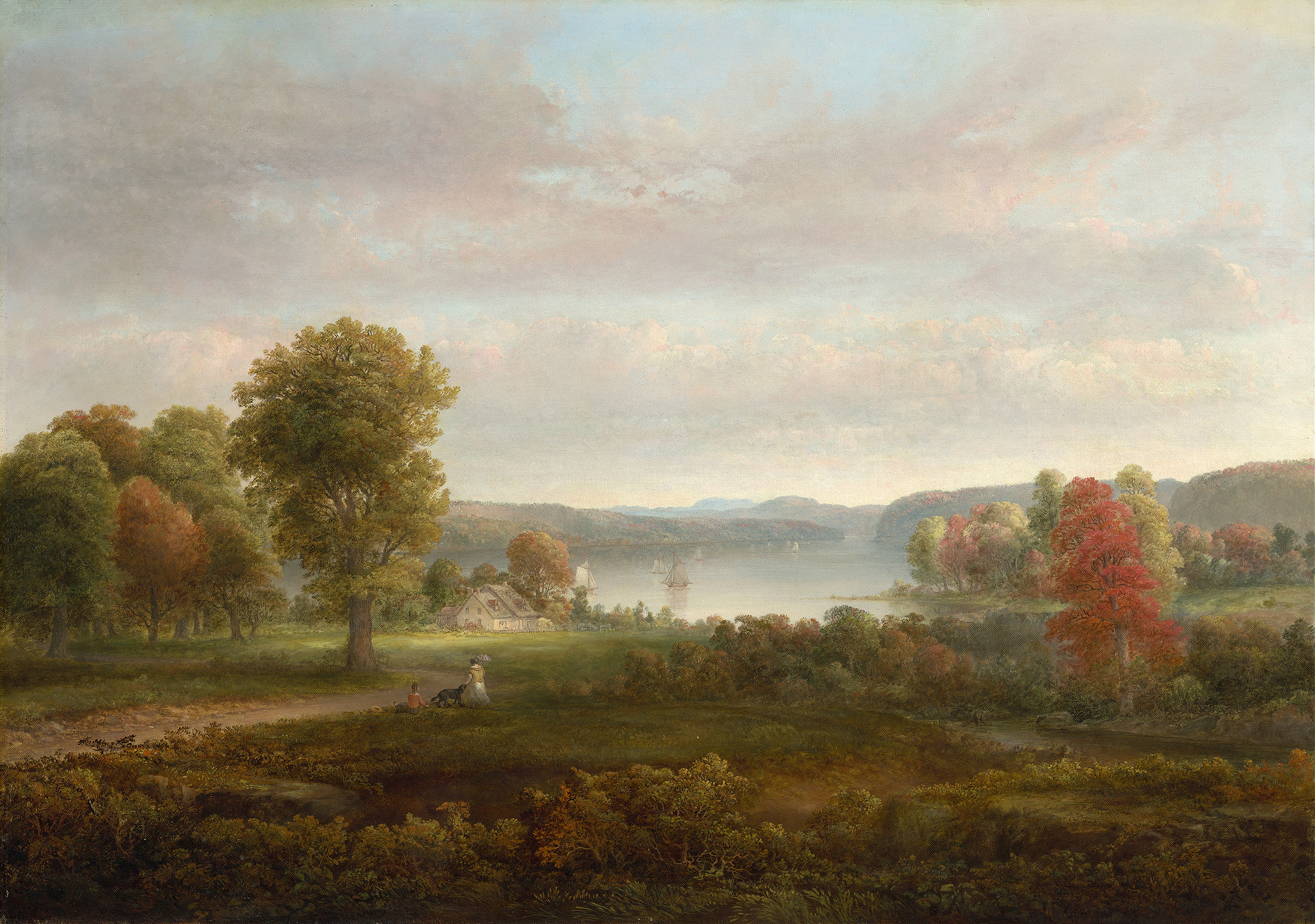
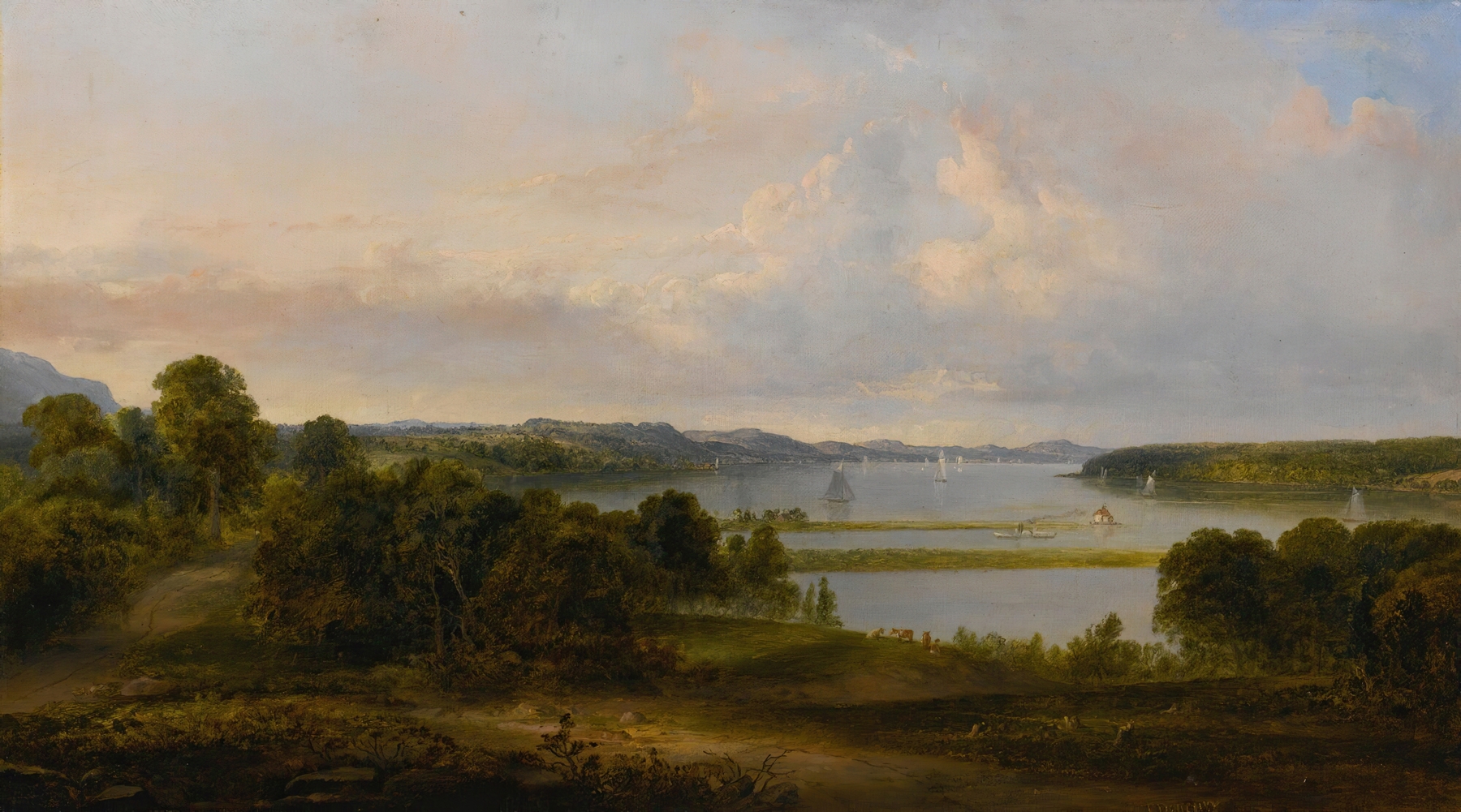
Could a single brushstroke hold eternity? In the presence of Catskills, the viewer is invited to ponder the sublime, where nature’s majesty meets the transcendence of art. Look to the lower right corner, where a gentle cascade of trees meets the tranquil waters. The rich greens and earthy browns blend harmoniously, while soft blues above reflect the sky’s embrace, creating a seamless union of land and water.
Notice how the light dances across the surface of the lake, shimmering like whispered secrets, pulling the eye toward the distant, majestic mountains that cradle the horizon. Within this serene landscape, contrasts emerge; the stillness of the foreground juxtaposes the dynamic play of light, evoking a sense of fleeting time. The mountains stand timeless, yet the clouds and reflections shift, reminding us of life’s transitory nature.
In every brushstroke, Doughty captures not just a scene, but a profound emotional yearning—to feel both grounded and uplifted by the world. In 1848, Thomas Doughty painted Catskills amidst an evolving American landscape, where the Hudson River School was heralding a new appreciation for the beauty of nature. As a prominent figure in this movement, he sought to blend realism with romanticism, depicting the sublime qualities of the American wilderness while reflecting the transcendental ideals of his time.