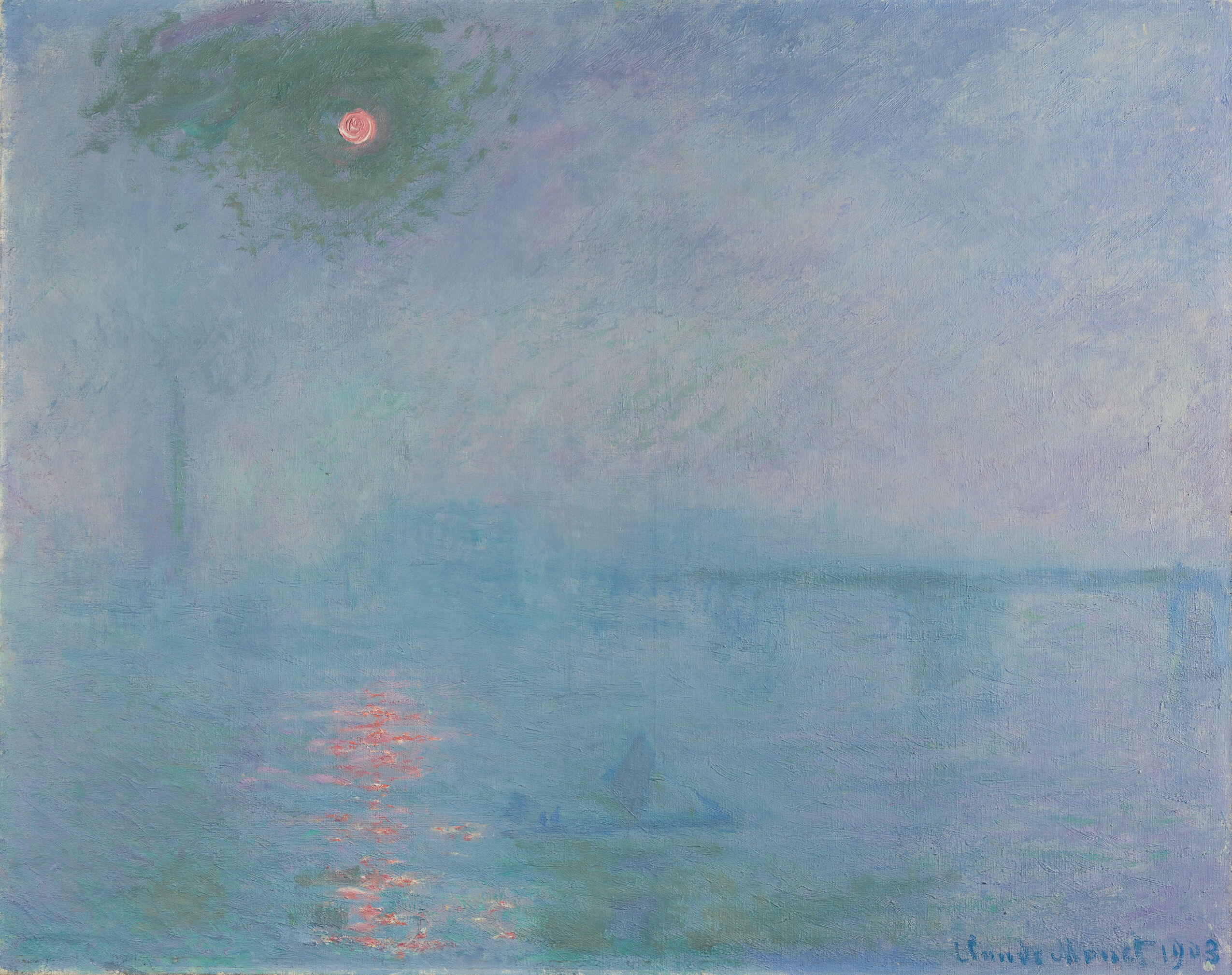
Charing Cross Bridge: Fog on the Thames — History & Analysis
“Between color and silence, truth hides.” In the muted embrace of fog, where clarity dissipates and forms blur, a moment of decay unfolds, revealing the nuanced beauty of loss. Focus on the rich palette that Monet employs; shades of blue and grey intertwine, creating a fluid atmosphere that envelops the viewer. The bridge, barely perceptible through the haze, emerges as a ghostly silhouette against the backdrop of the Thames. Notice how the brushstrokes blend and swirl, capturing the ephemeral quality of the scene—a visual symphony that embodies both movement and stillness.
The light, diffused and soft, casts an ethereal glow that dances upon the water’s surface, inviting contemplation. Delve deeper into the emotional landscape; this painting speaks to the transience of life and the decay inherent in nature. The fog acts as a veil, masking the vibrancy of the city beneath—a metaphor for the inevitable ebb of time. Hidden within the soft strokes are echoes of a bustling world, now shrouded in silence, suggesting a longing for connection amid the isolation that fog can bring.
The juxtaposition of the solid structure of the bridge against the ephemeral mist defines a moment caught between permanence and impermanence. Claude Monet created Charing Cross Bridge: Fog on the Thames in 1903 while living in France. During this period, he was exploring the effects of light and atmosphere, striving to capture a fleeting moment in time. The early 20th century was a time of significant change in art, with Impressionism gaining traction, and Monet's focus on capturing the beauty in the transient reflected an evolution in the artistic narrative of the era.