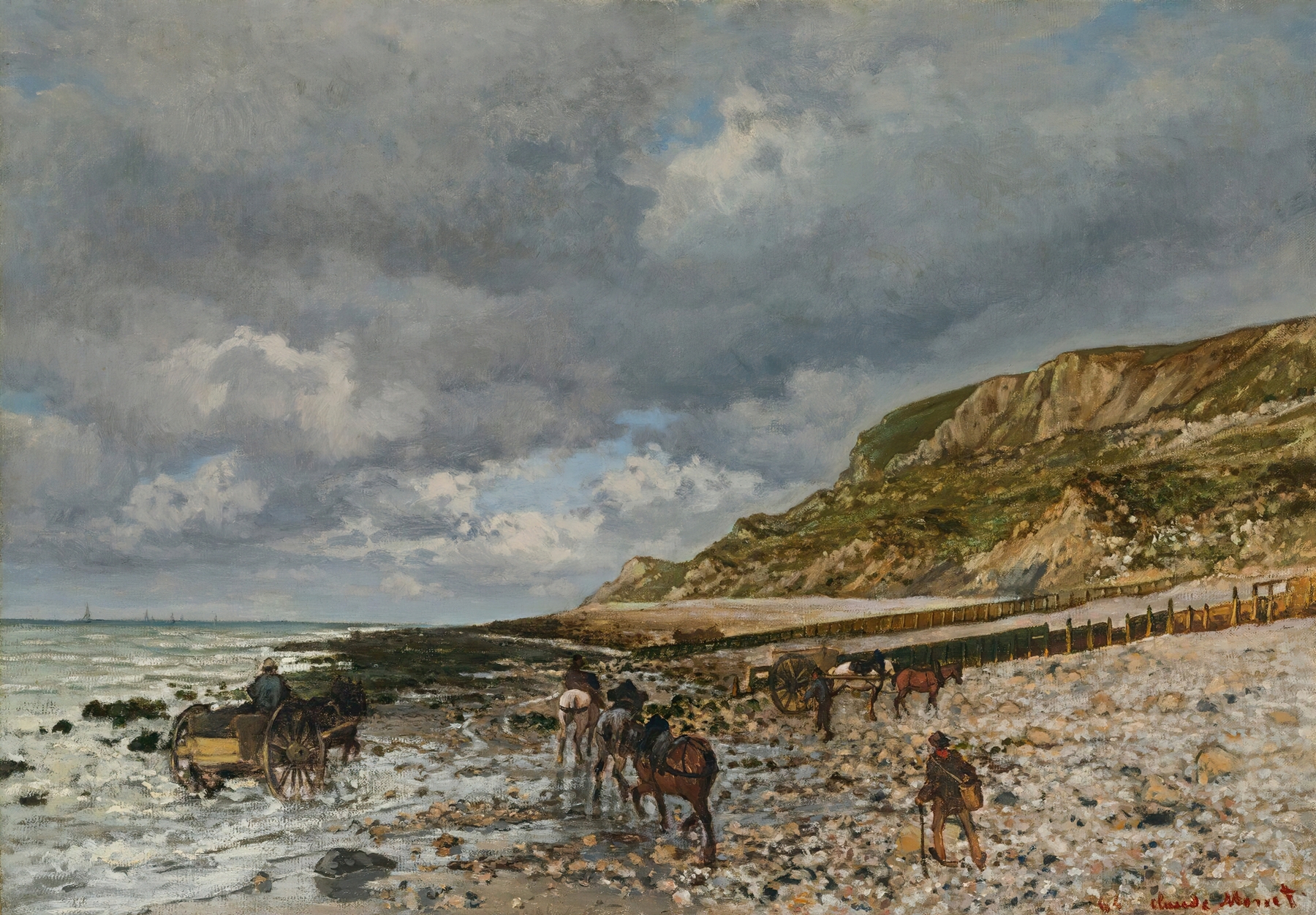
Chevaux À La Pointe De La Hève — History & Analysis
“Between color and silence, truth hides.” This sentiment echoes through time, capturing the essence of fleeting memories and the ephemeral nature of existence. In a world often ruled by noise, there are moments that demand our full attention, inviting us to reflect on what lies beneath the surface. Look closely at the soft blues and greens that dominate the canvas; they invite your eyes to roam freely across the scene. Notice how the horses, rendered with delicate strokes, seem to blend into the landscape, embodying both motion and stillness. The gentle play of light across their glossy coats creates a shimmering effect, enhancing the impression of life and vitality. The distant horizon, where water meets sky, draws you into a contemplative space—an invitation to linger and consider the passage of time. At first glance, the composition appears tranquil, yet a subtle tension lies in the interplay between the horses and the vastness of the setting. They are both part of and separate from the landscape, evoking a sense of yearning and nostalgia. This duality captures the essence of memory itself—a fleeting glimpse of beauty that becomes a whisper in our minds. The colors, while soothing, hint at deeper emotional currents, suggesting that what we remember may be both joyous and laced with a sense of loss. In 1864, Monet painted this work during a formative period in his career, seeking to define his unique style within the evolving Impressionist movement. Living in France, he was influenced by the changing light and atmospheric conditions of his surroundings, which he sought to capture on canvas. It was a time of exploration, both personally and artistically, as he pushed the boundaries of traditional depiction, searching for an authentic representation of nature that resonated with the essence of memory.