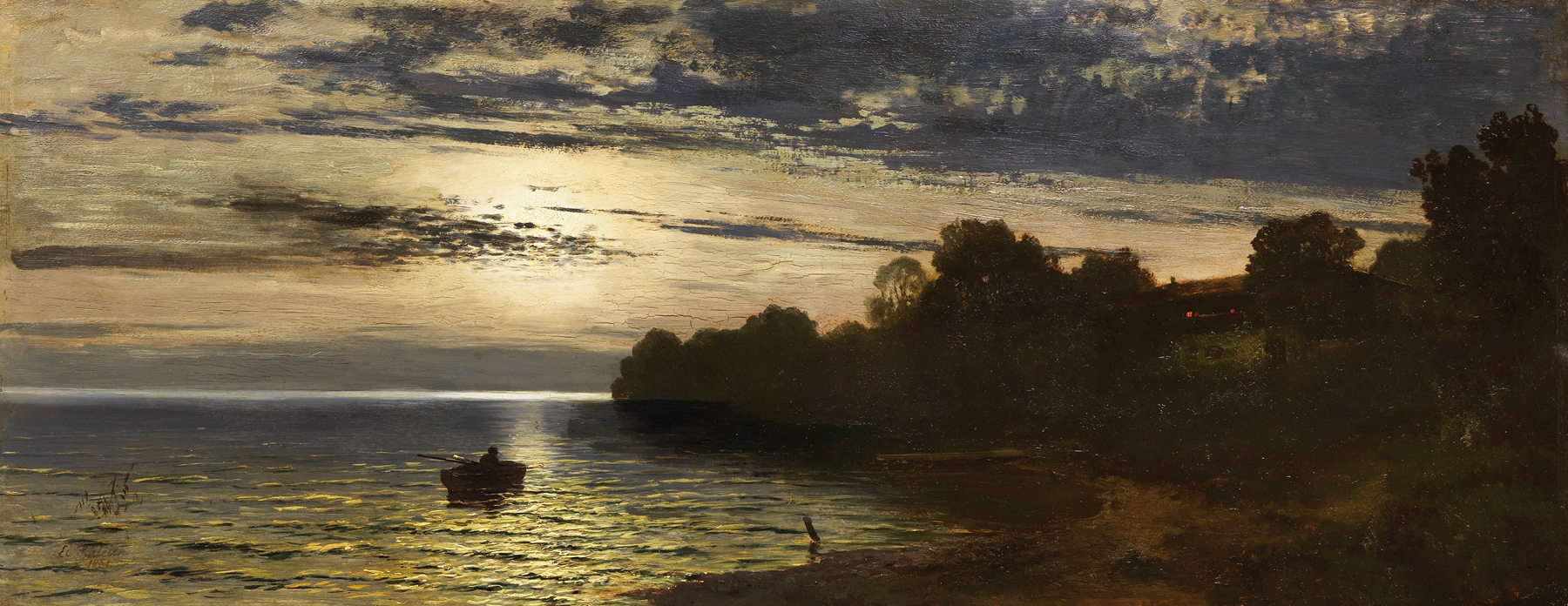
Chiemseelandschaft mit Aussicht auf die bayrischen Alpen — History & Analysis
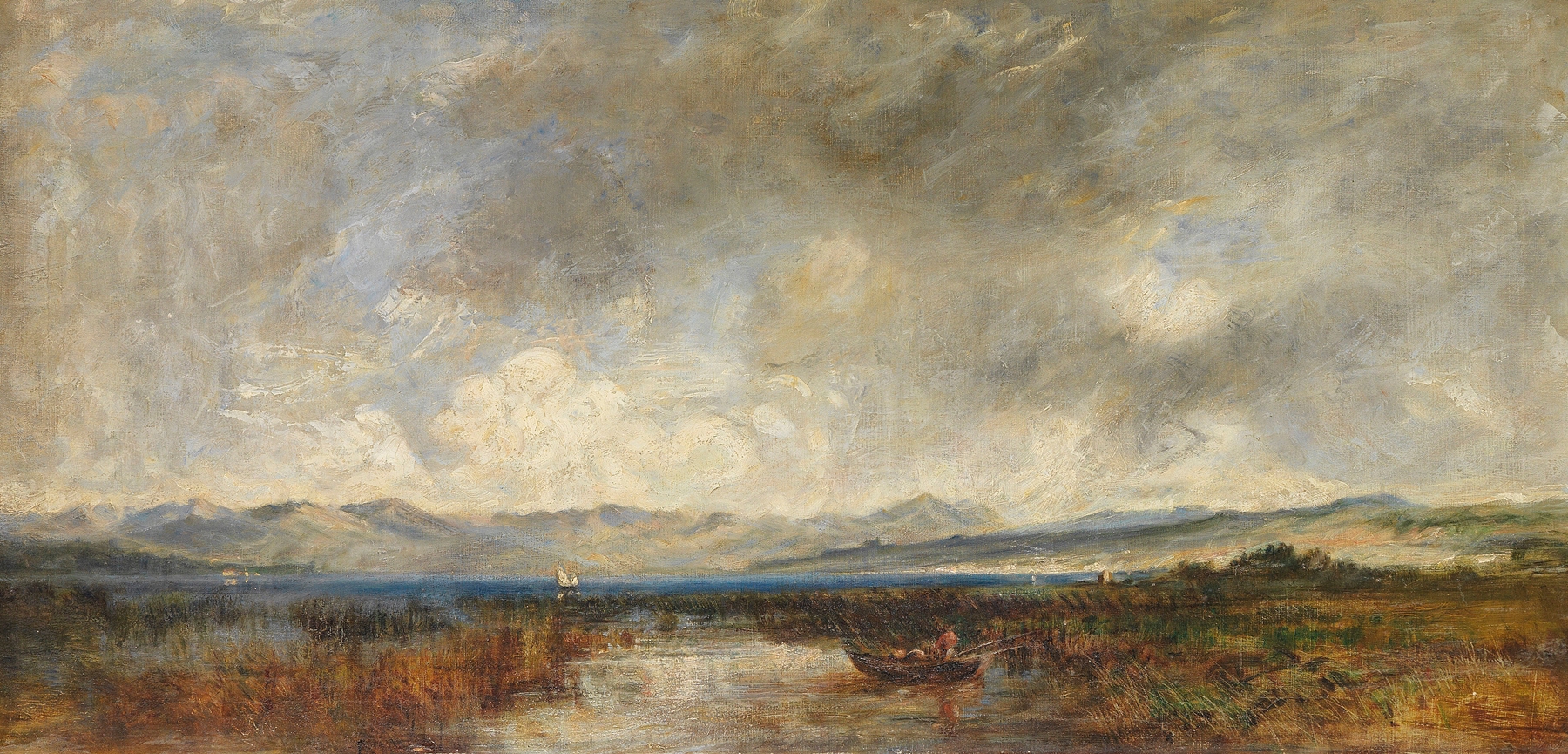
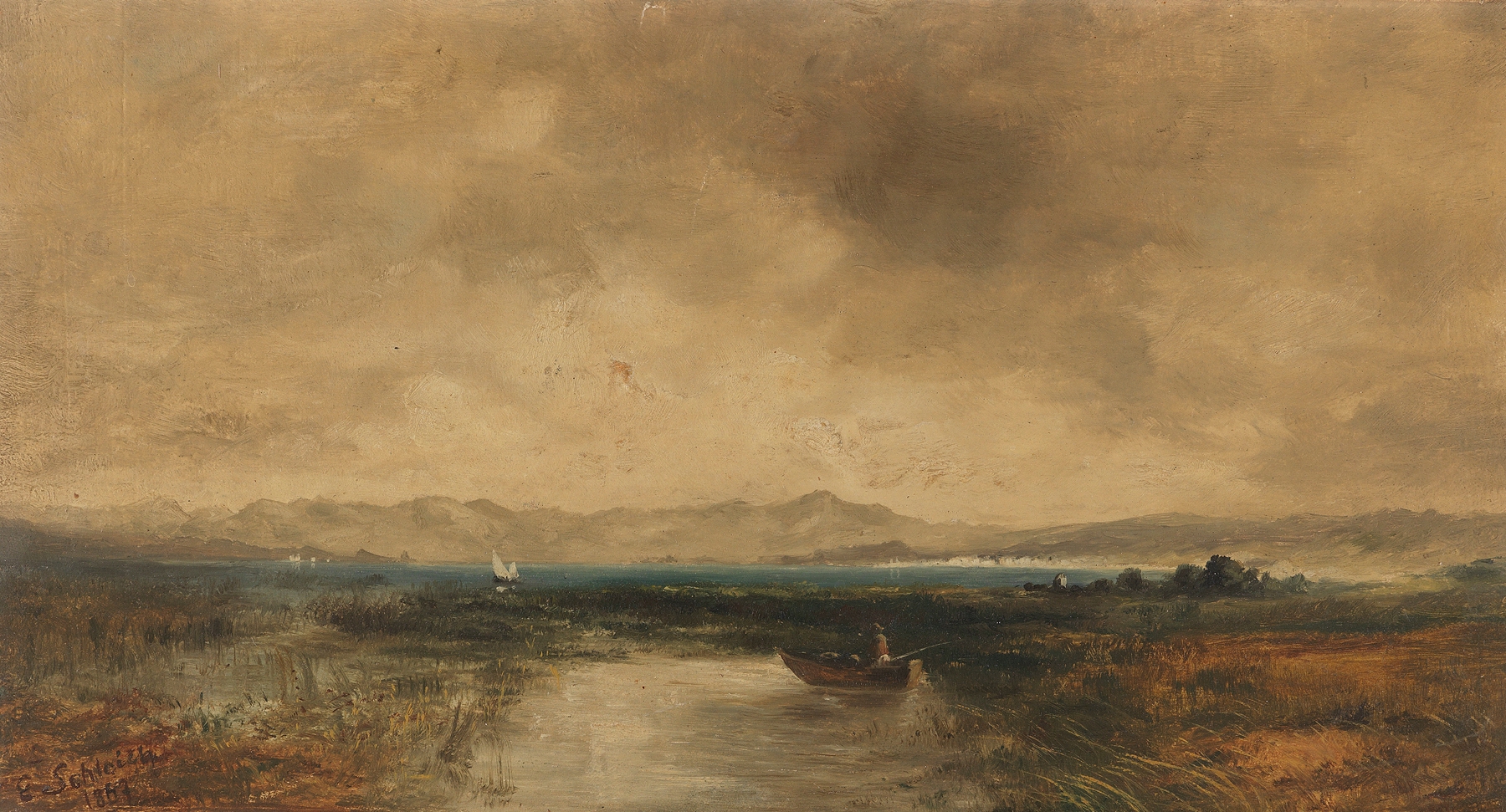
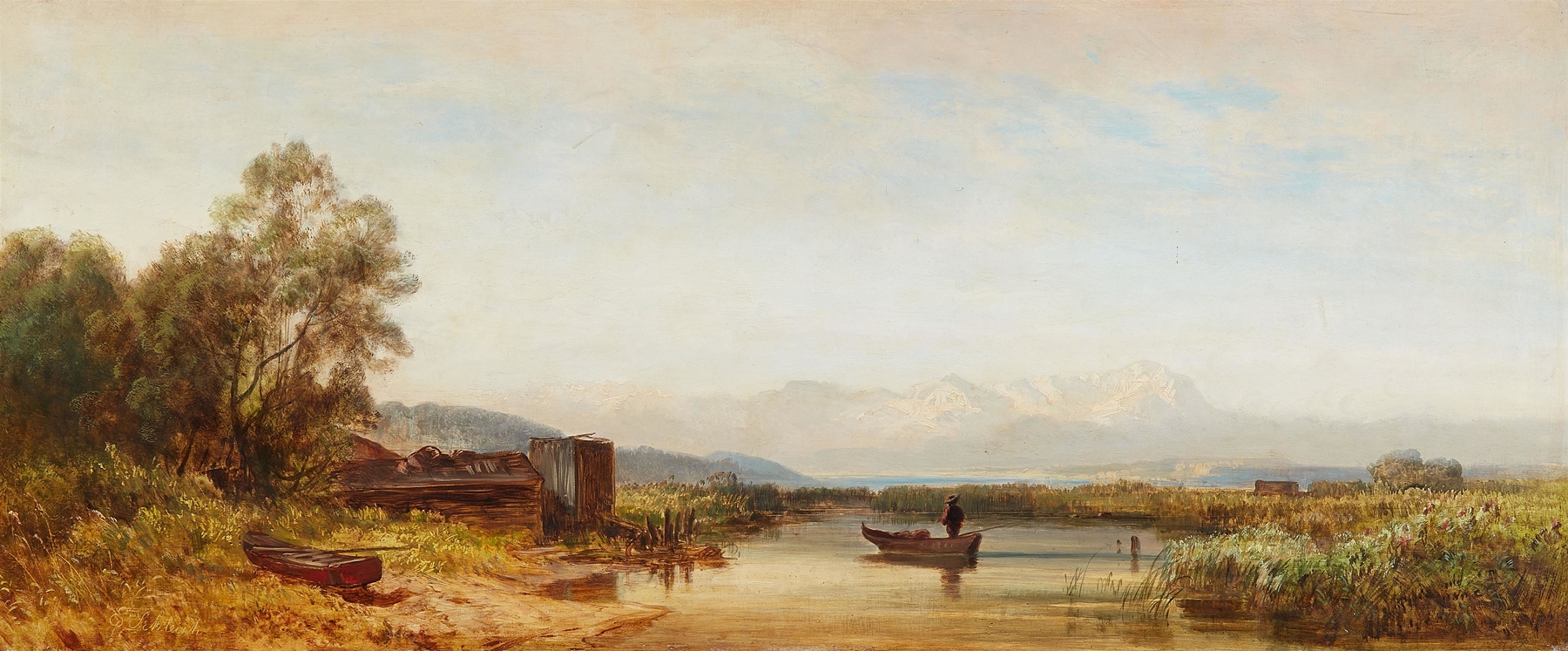
Is this a mirror — or a memory? In Chiemseelandschaft mit Aussicht auf die bayrischen Alpen, a landscape unfolds, whispering secrets of time and place, wrapped in the embrace of nature’s beauty. Look to the foreground, where soft grasses sway gently in the breeze, their green hues contrasting against the shimmering blue of Lake Chiemsee. Notice the delicate brushwork that captures the light reflecting off the water, creating a sense of tranquility that envelops the entire scene. The eye is drawn up toward the majestic peaks of the Bavarian Alps, their grandeur both inviting and imposing, while the sky above swirls with soft clouds, dancing in a palette of pastel blues and pinks.
This harmonious composition evokes a serene yet melancholy atmosphere, hinting at feelings of longing and nostalgia. Delve deeper into the painting, and a story of betrayal begins to surface. The calm surface of the lake suggests an illusion of peace, yet the underlying currents speak of hidden emotions. The gentle slopes of the landscape cradle the viewer, yet they simultaneously obscure the rugged, austere mountains — a metaphor for what lies beneath the surface of idyllic beauty.
In the juxtaposition of the warm sunlight on the water and the cool shadows cast by the mountains, one can sense the tension between hope and disillusionment. Eduard Schleich The Elder painted this work in 1850, during a time of personal and artistic exploration. Residing in Munich, he was part of a movement that sought to depict the beauty of the German landscape, reflecting a growing appreciation for nature amid the rapid industrial changes of the era. His commitment to capturing the essence of Bavaria's vistas led to a profound connection with the land, revealing both its splendor and its hidden depths.