Ansicht des Chiemsees — History & Analysis
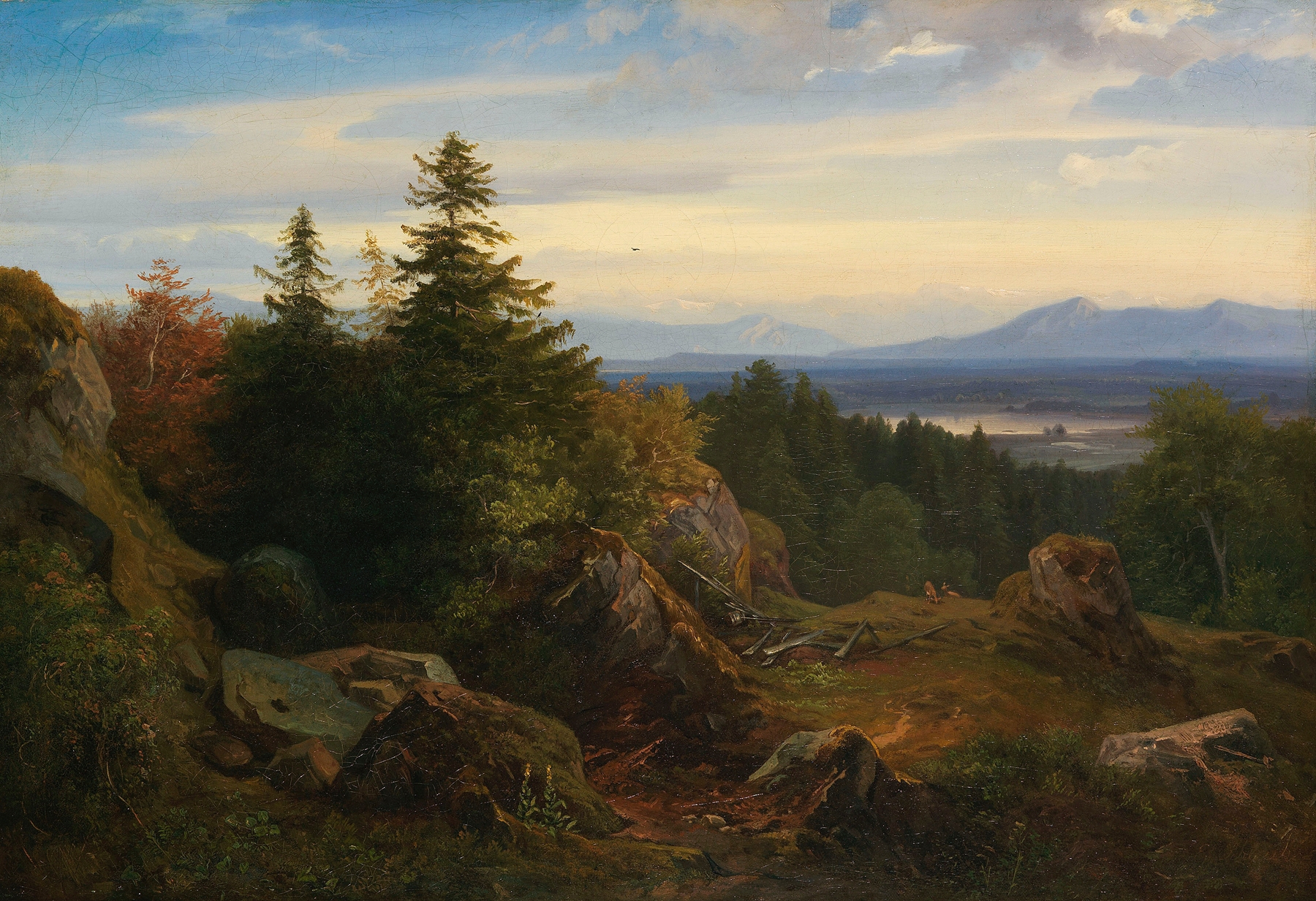
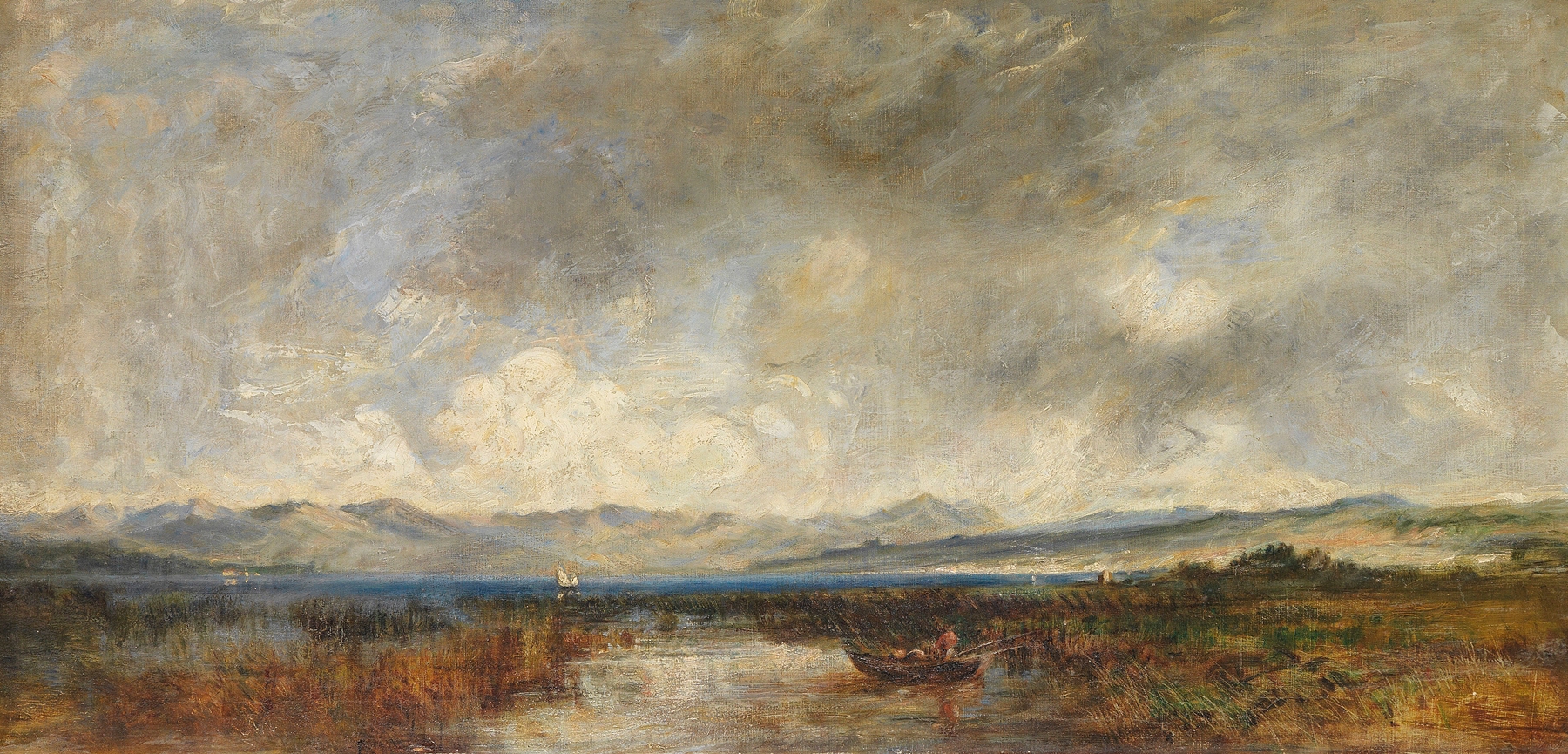
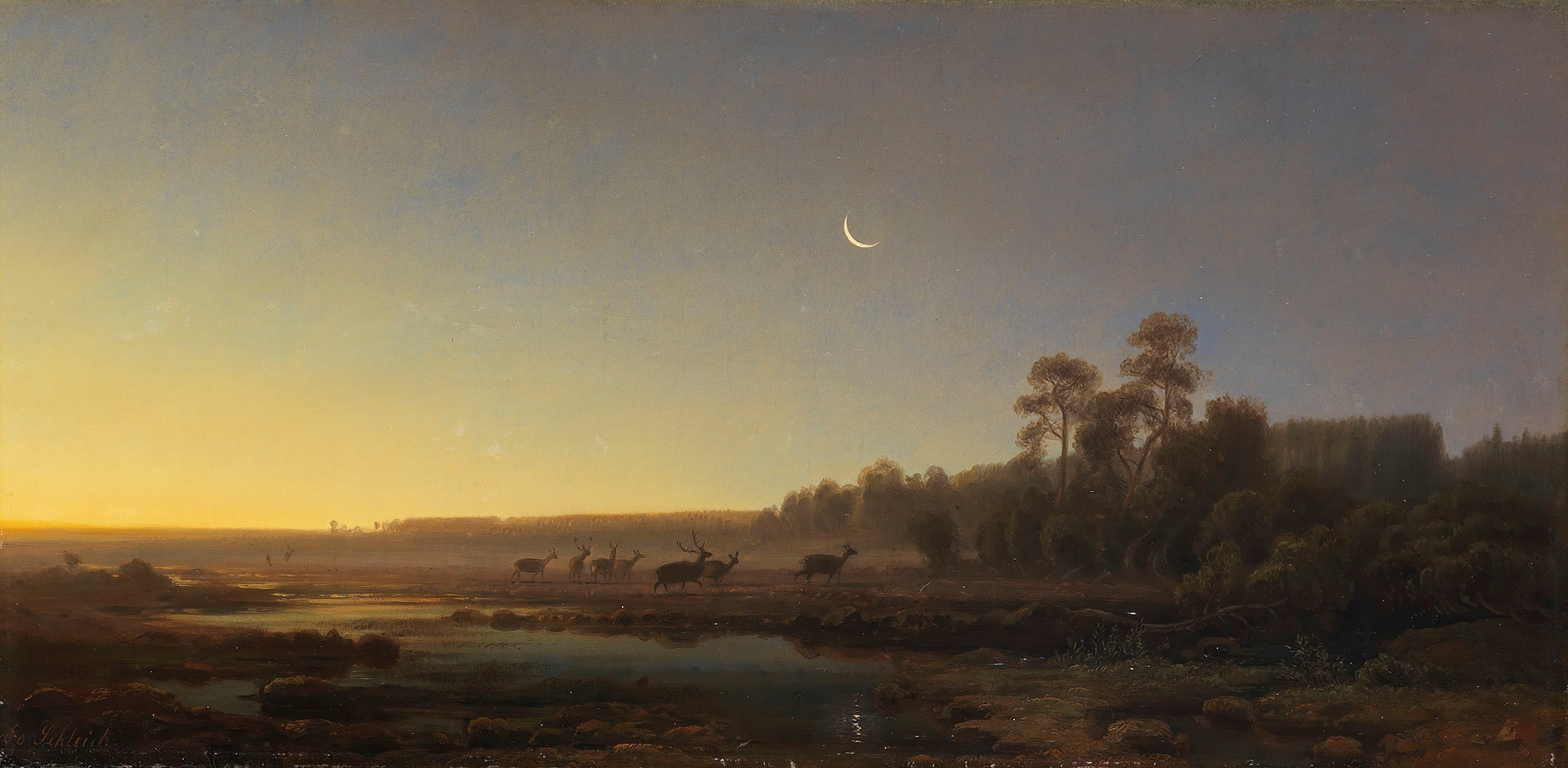
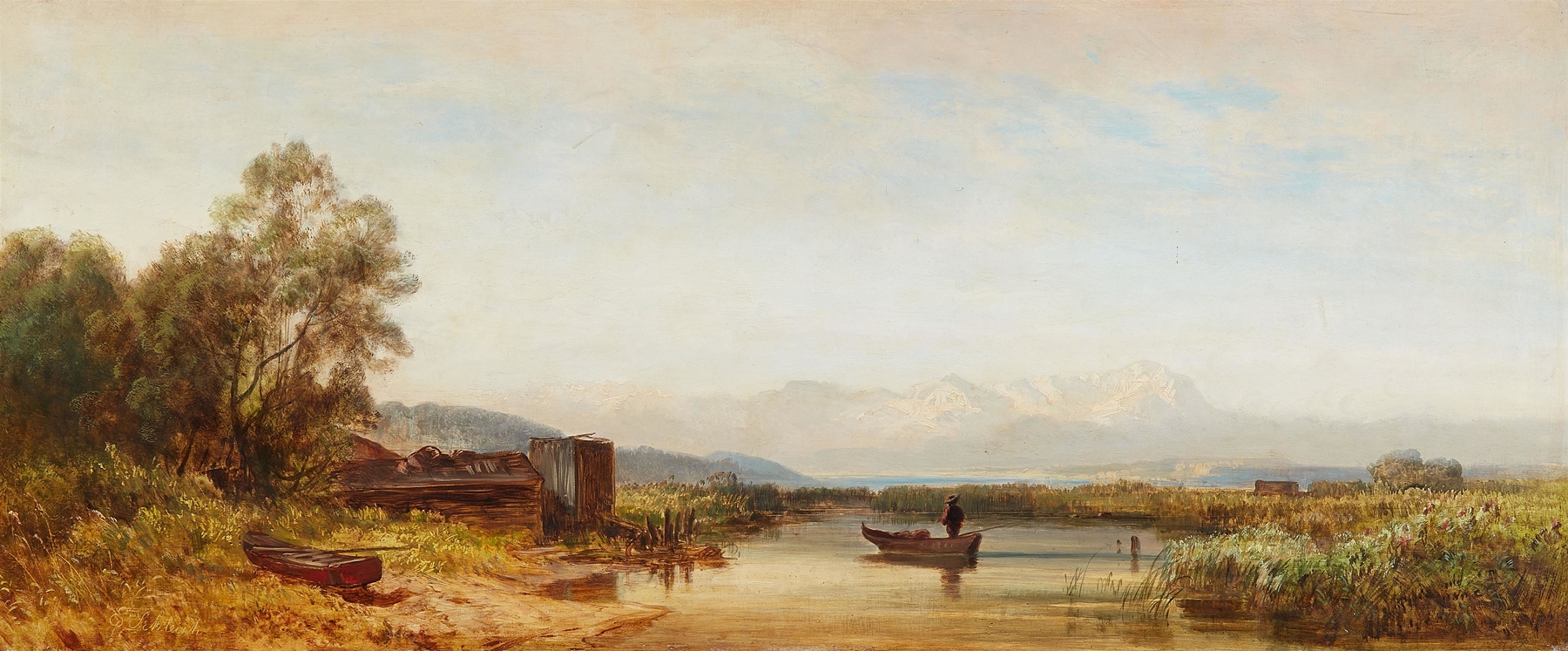
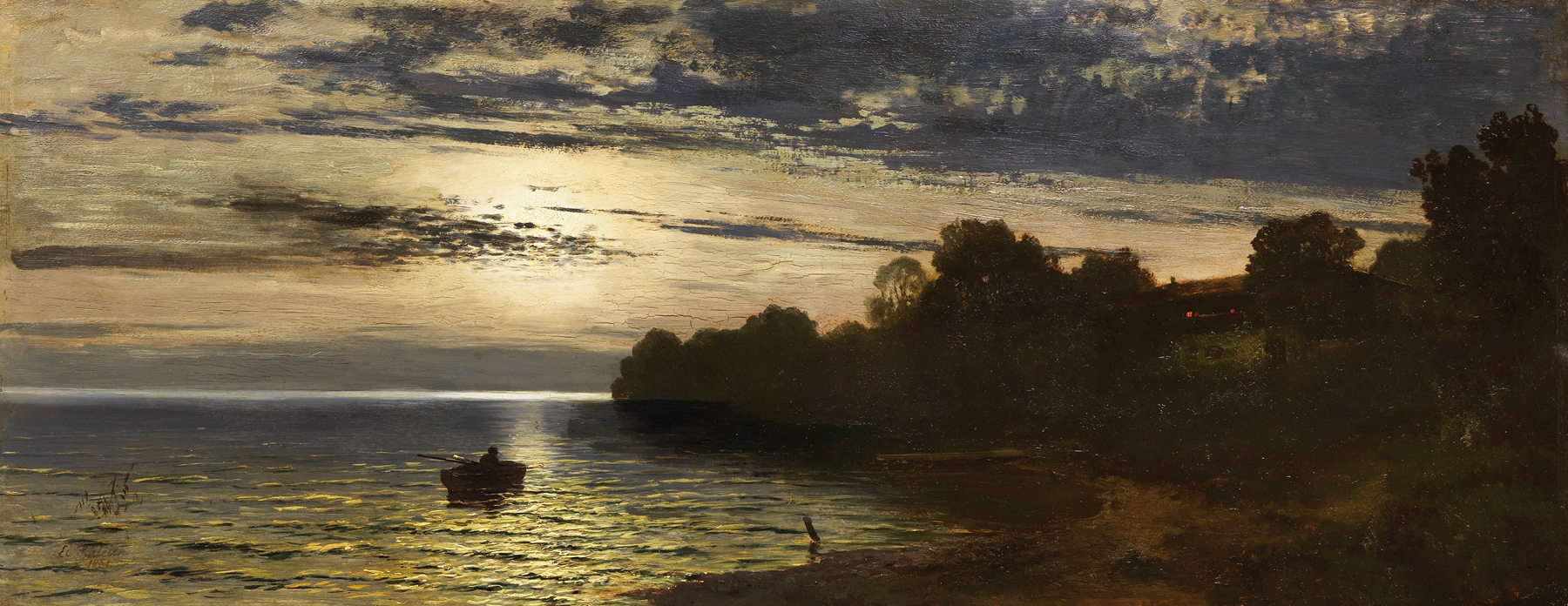
What if beauty was never meant to be finished? This notion lingers in the air, casting a shadow over every tranquil detail captured in this serene landscape. Look to the left at the gentle ripples of the Chiemsee, where the water reflects the soft hues of twilight. Notice how the sky transitions from a warm golden glow to the deepening indigos, drawing your gaze towards the horizon where mountains stand guard, their peaks almost ethereal against the gradient of light.
The careful brushwork and palette create a sense of harmony, inviting viewers to linger, yet suggesting an elusive, transient quality to the beauty portrayed. Delve deeper into the interplay between light and shadow, which evokes a silent tension within the scene. The tranquil lake seems to whisper of time’s passage, hinting at a fleeting moment of perfection that is forever unattainable. The distant figures, mere silhouettes against the expansive canvas, embody a metaphor for human existence—lost in thought, they are both part of and separate from the breathtaking landscape, mirroring our often fraught relationship with nature and beauty.
Eduard Schleich The Elder painted this captivating scene in 1867, a time when Romanticism was at its peak, and artists were drawn to nature’s splendor as a source of inspiration. Living in Munich, Schleich was part of an artistic community that sought to capture the sublime, navigating personal and societal challenges while engaging in a world increasingly affected by industrialization. In Ansicht des Chiemsees, he reflects both the desire for tranquility and the underlying fear of what beauty might mask.