Mondnacht über dem See — History & Analysis
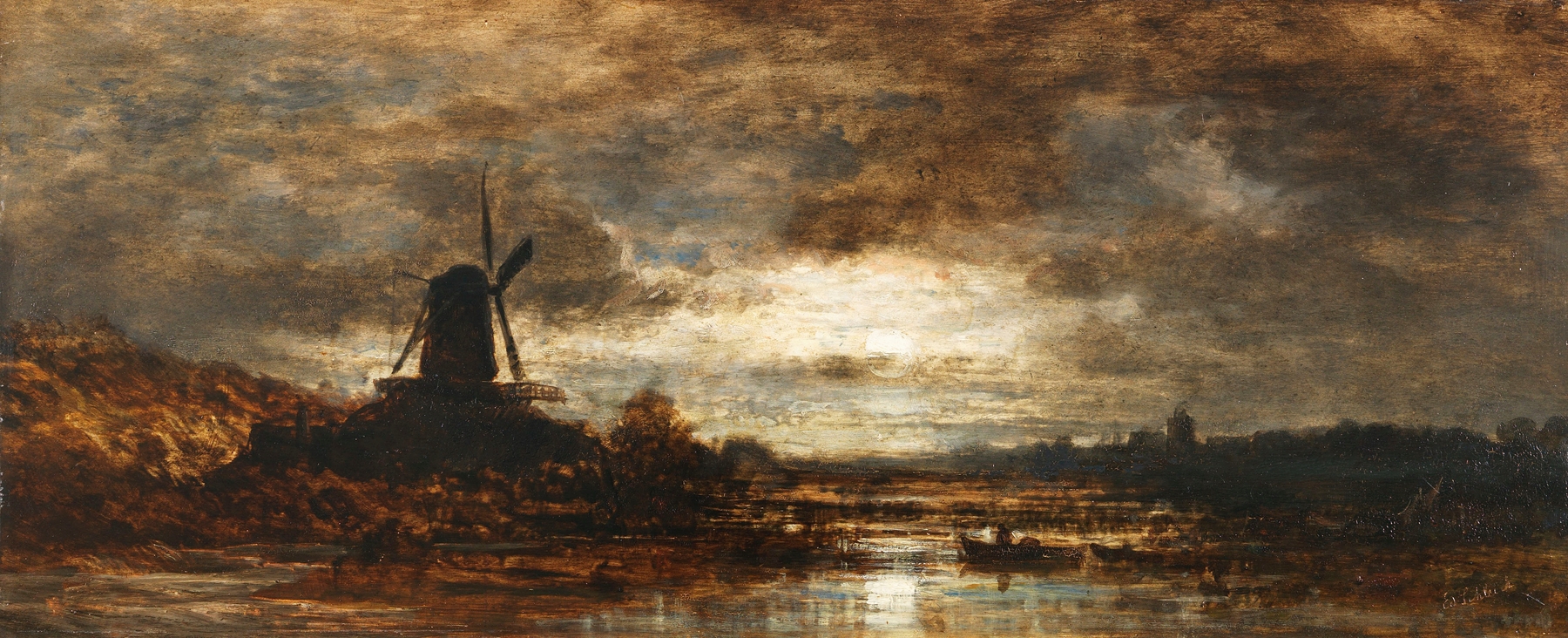
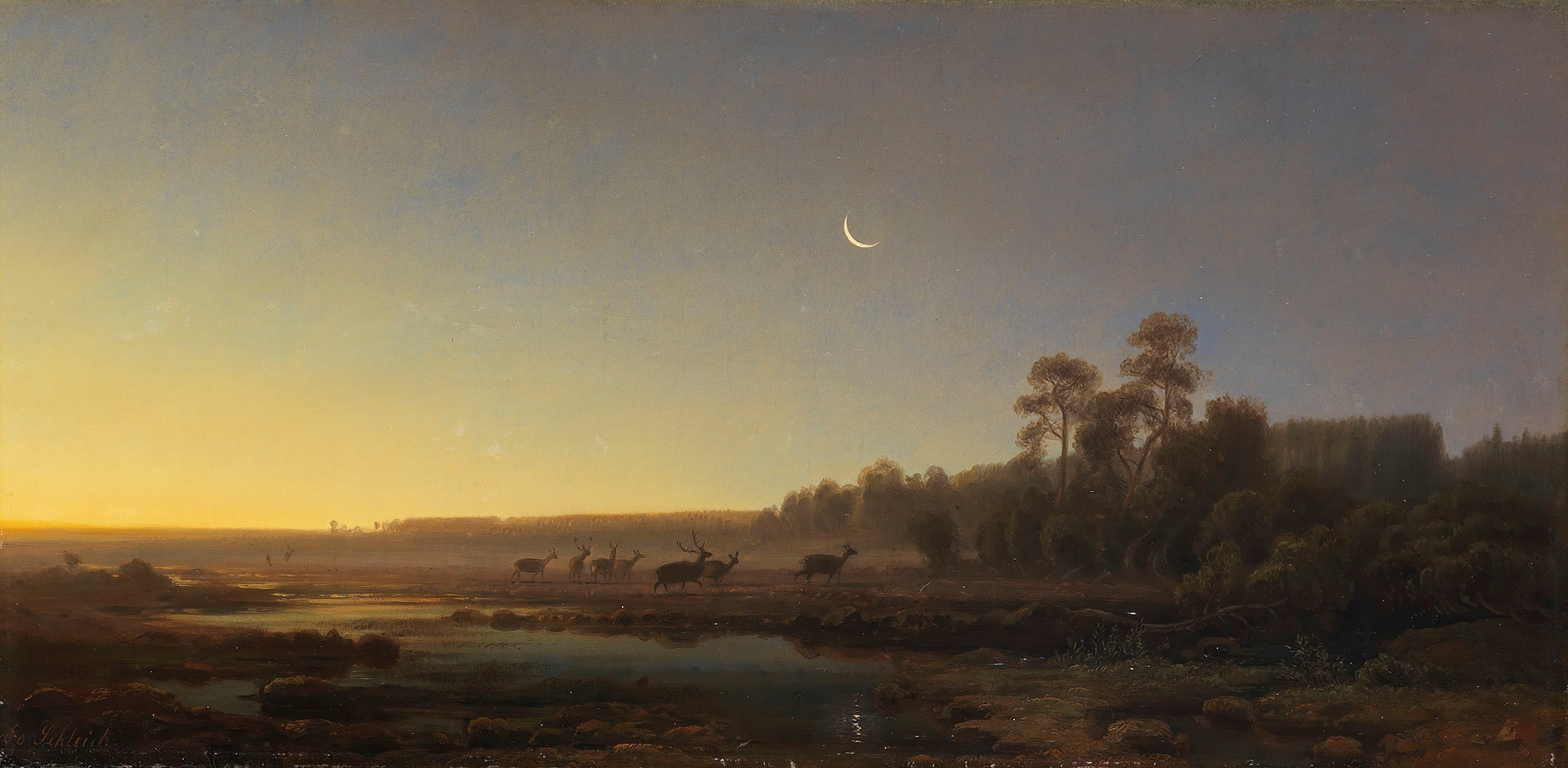
Could beauty survive in a century of chaos? In Mondnacht über dem See, serenity triumphs amid the tumult that marked the mid-19th century. The stillness of the moonlit lake invites contemplation, offering an embrace of calm that feels almost otherworldly. It asks us to pause, to breathe, and to find solace in the delicate balance of nature. Look to the center of the canvas where the moon casts a silvery glow, softly illuminating the tranquil water.
The gentle ripples in the lake reflect the luminous orb, creating a mesmerizing dance of light and shadow. Notice how the surrounding trees, dark and majestic, frame this ethereal scene, their silhouettes sharp against the soft pastel sky. The color palette, filled with blues and silvers, evokes a sense of timelessness, as if capturing a moment that exists beyond the constraints of time. Yet beneath this façade of tranquility lies a deeper tension. The moon's brilliance casts an eerie glow, hinting at fleeting beauty and the inevitability of change.
The dark trees stand as silent witnesses, perhaps symbolizing the struggles and uncertainties of the era. This contrast between light and shadow echoes the duality of existence—serenity juxtaposed with the chaotic undercurrents of the world outside the frame. Eduard Schleich The Elder painted Mondnacht über dem See in 1851, during a period marked by political upheaval and social change in Europe. He was navigating the turbulent waters of Romanticism, where the natural world was often portrayed as a refuge from the harsh realities of life. This painting reflects his desire to capture moments of beauty and stillness in a rapidly changing world, a theme that resonates through his body of work.