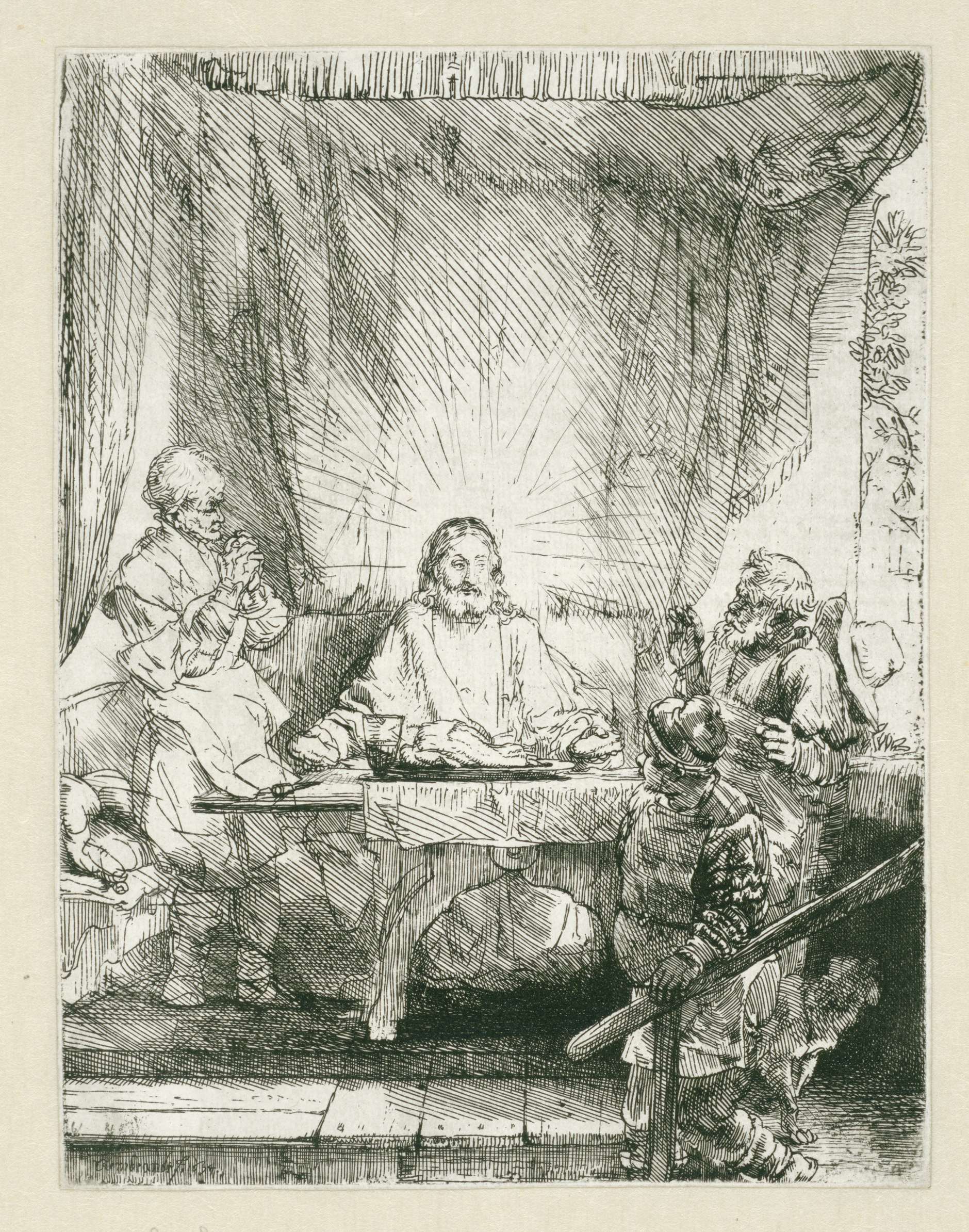
Can paint confess what words never could? In *Christ at Emmaus*, Rembrandt van Rijn captures a transformative moment, one that echoes the profound intersections of faith and destiny. Look to the left to find the figure of Christ, his countenance illuminated by a warm, divine light that seems to radiate from within him. This illumination contrasts beautifully with the cooler tones of the surrounding shadows, creating a powerful focal point. Notice how the dynamic gestures of the two disciples amplify their astonishment; their hands, frozen in mid-reaction, speak volumes. The rich textures of the fabric and the meticulous details in the faces evoke a palpable sense of intimacy and revelation, inviting the viewer into this sacred moment. Delve deeper into the canvas, and you’ll uncover layers of meaning. The bread on the table, partially visible, symbolizes communion and the breaking of barriers between the divine and humanity. The expressions on the disciples' faces reveal a blend of disbelief and awakening, reflecting a universal struggle between doubt and faith. This tension transforms the ordinary act of sharing a meal into a moment of profound spiritual significance, hinting at the destinies that intertwine in the shadow of divine intervention. In 1654, Rembrandt painted this artwork in Amsterdam during a period marked by both personal strife and artistic evolution. Having faced losses and financial difficulties, he was also influenced by the burgeoning Baroque movement, which emphasized emotional depth and realism. This piece embodies his mastery in depicting the human condition, revealing his understanding that every encounter can be laden with destiny and transformation.