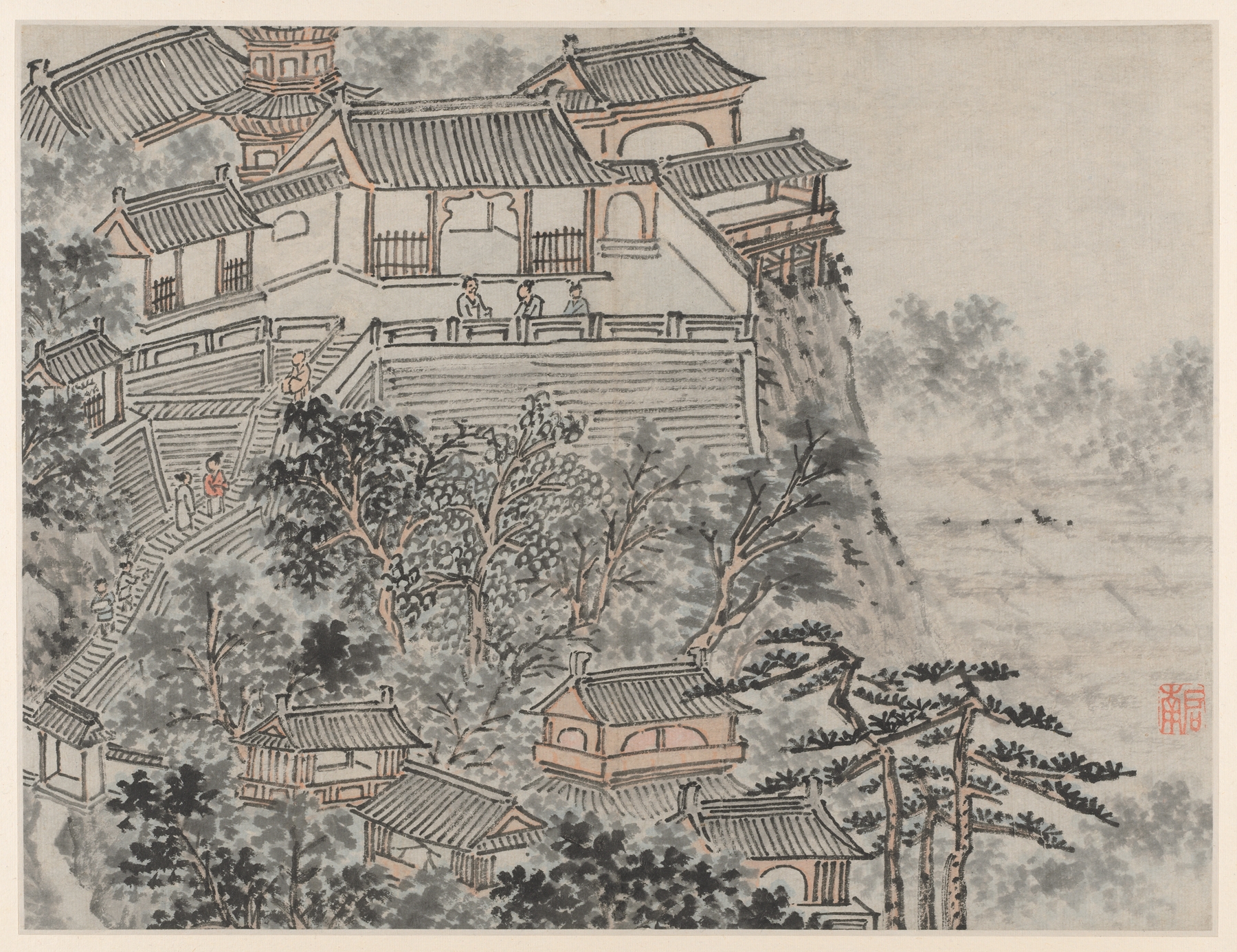
Cloud-Climbing Pavilion, from Twelve Views of Tiger Hill, Suzhou — History & Analysis
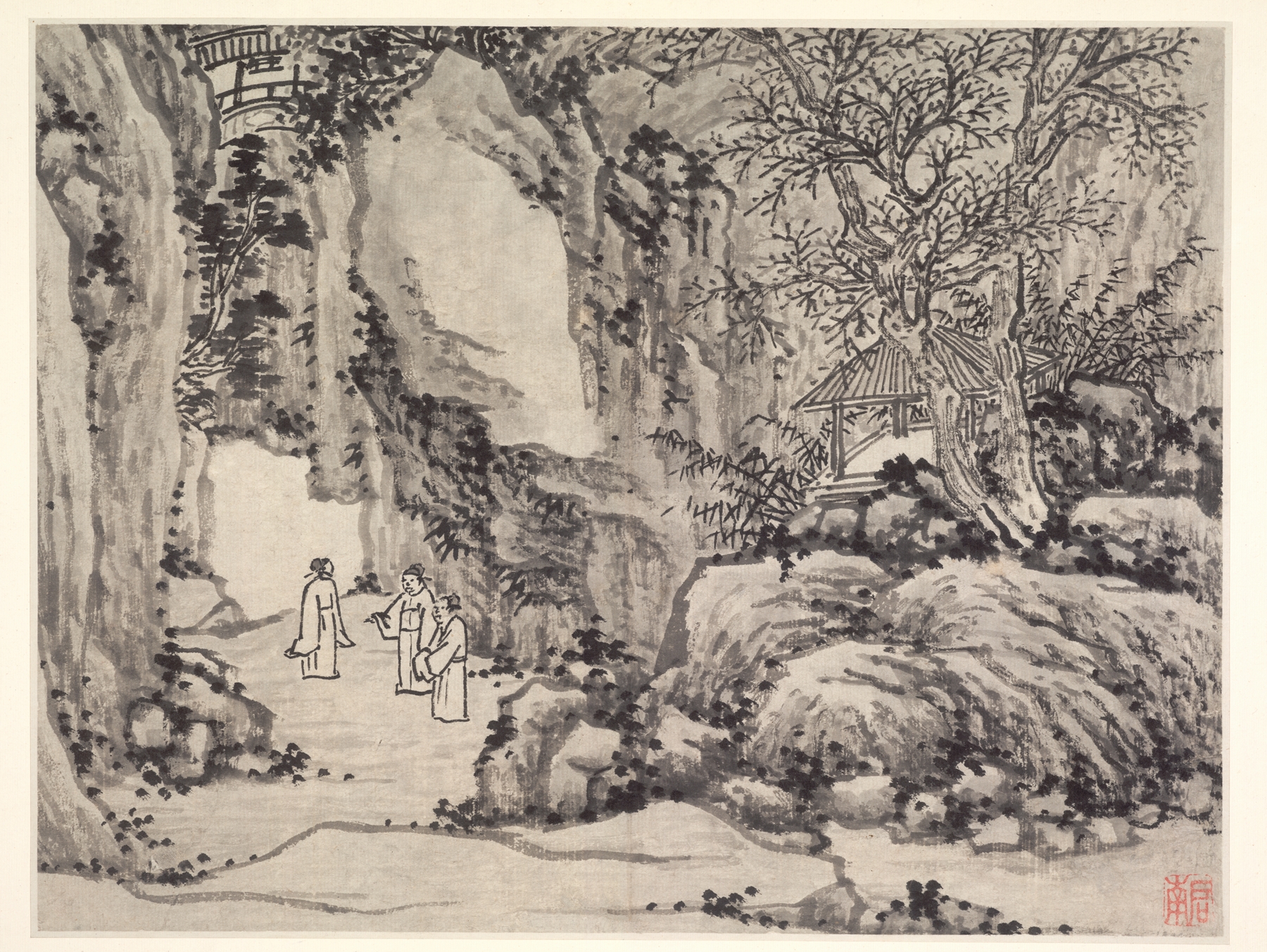
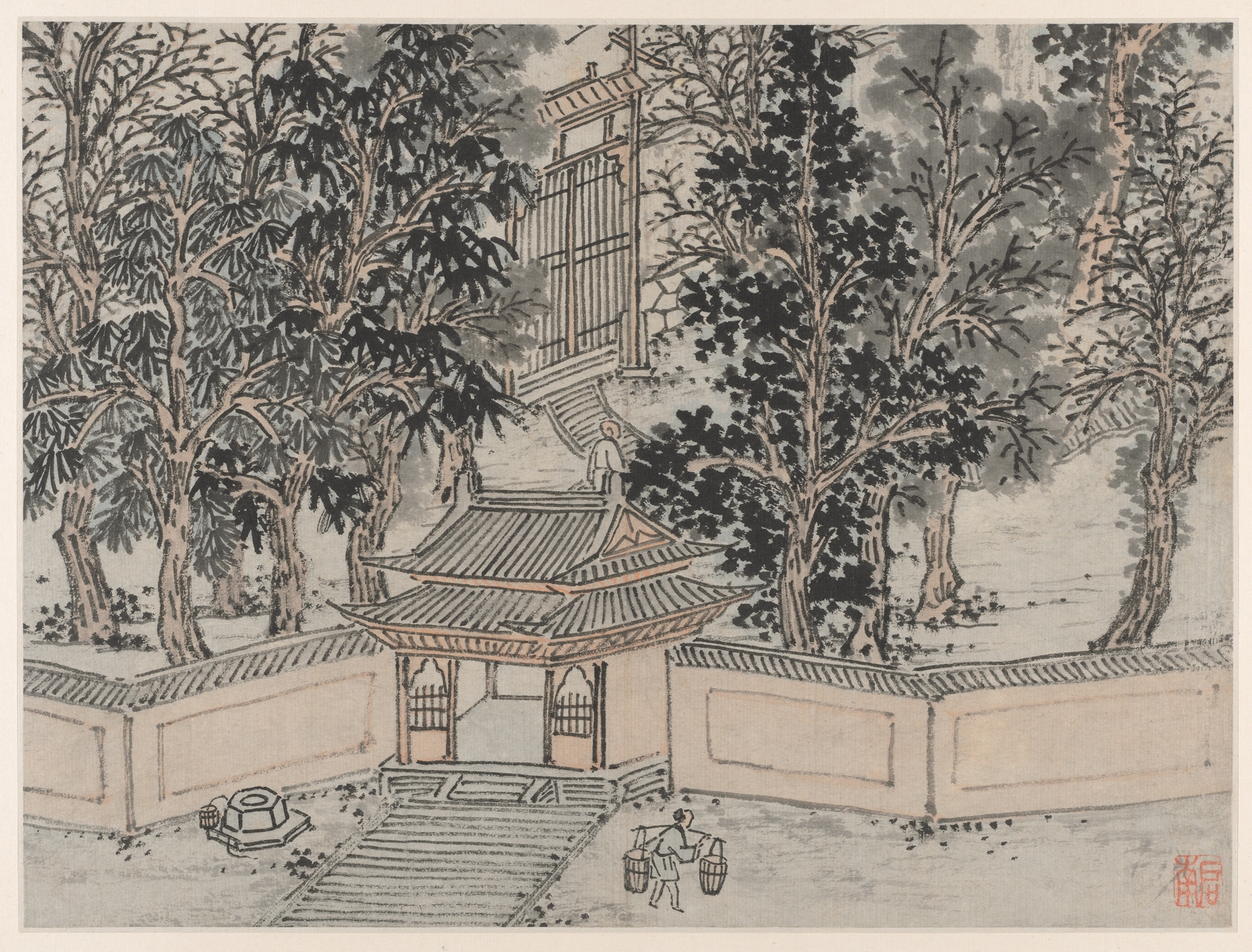
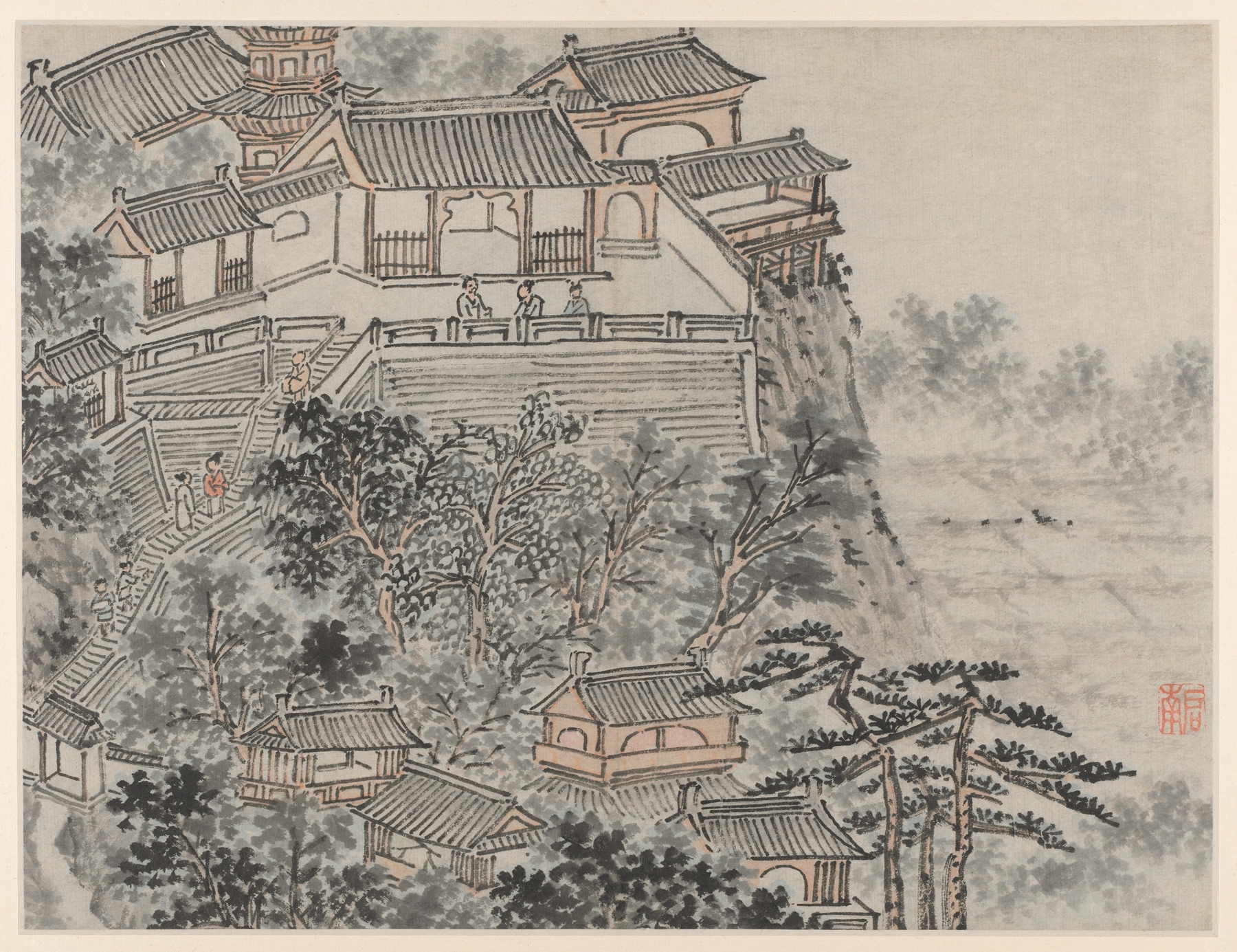
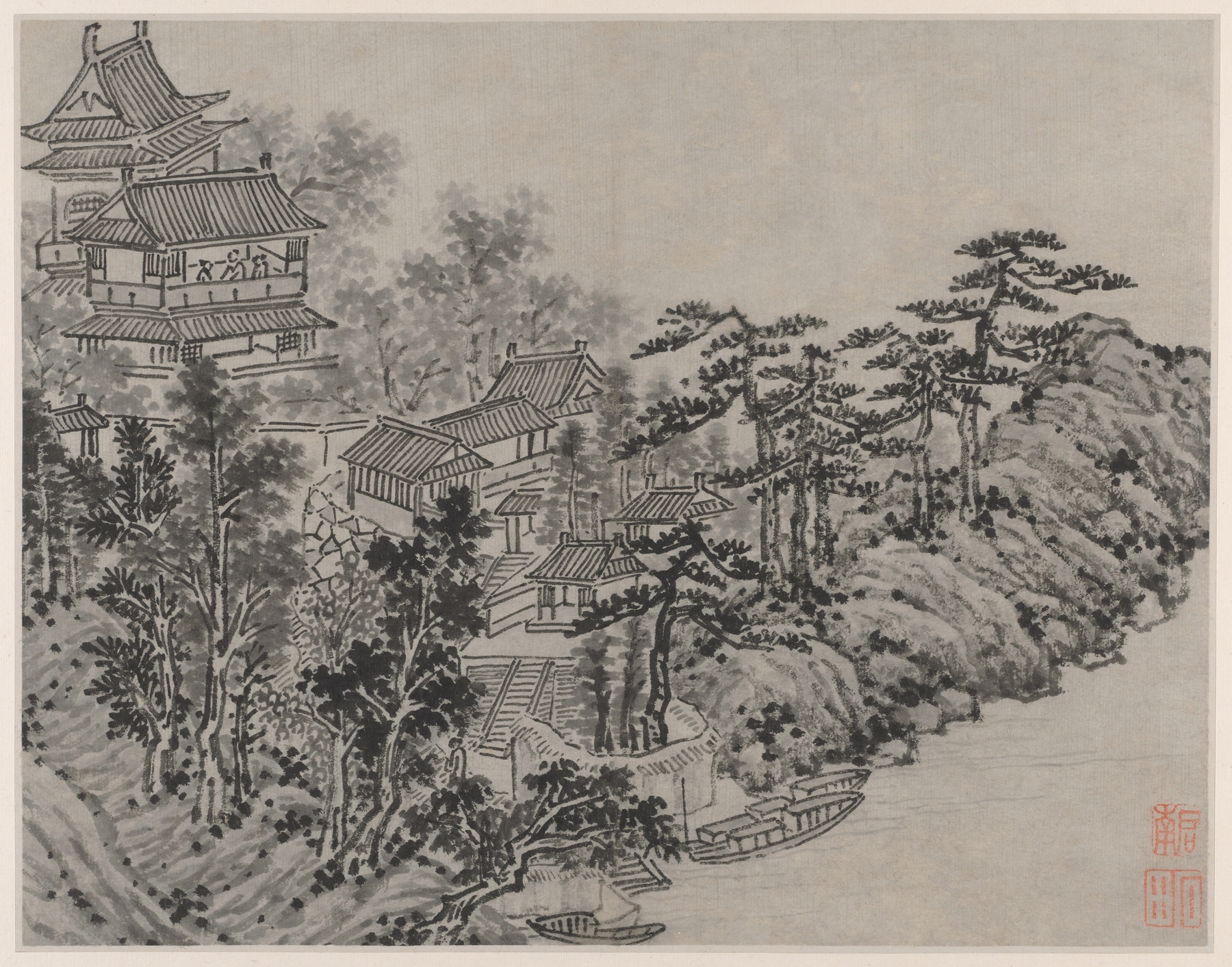
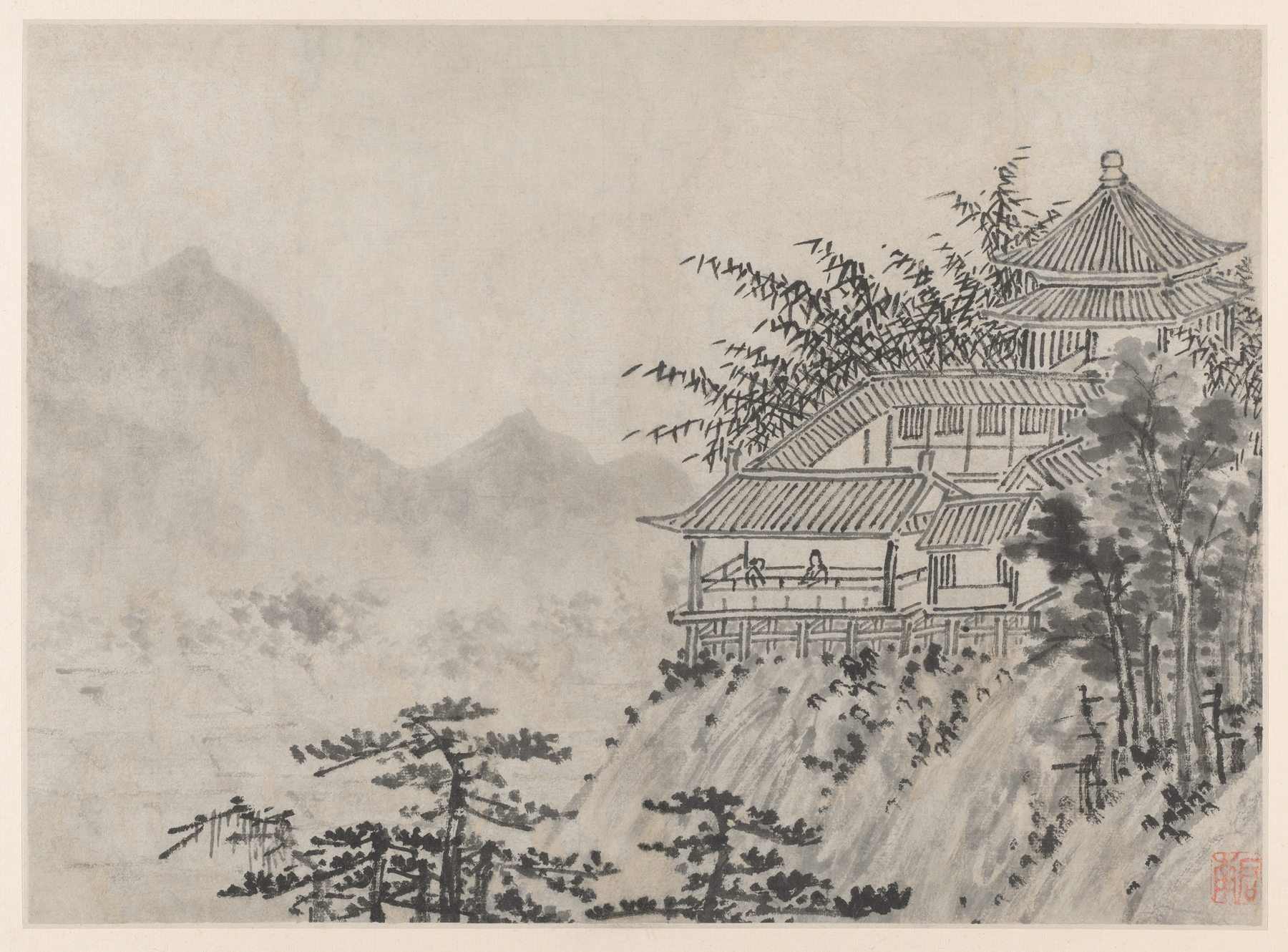
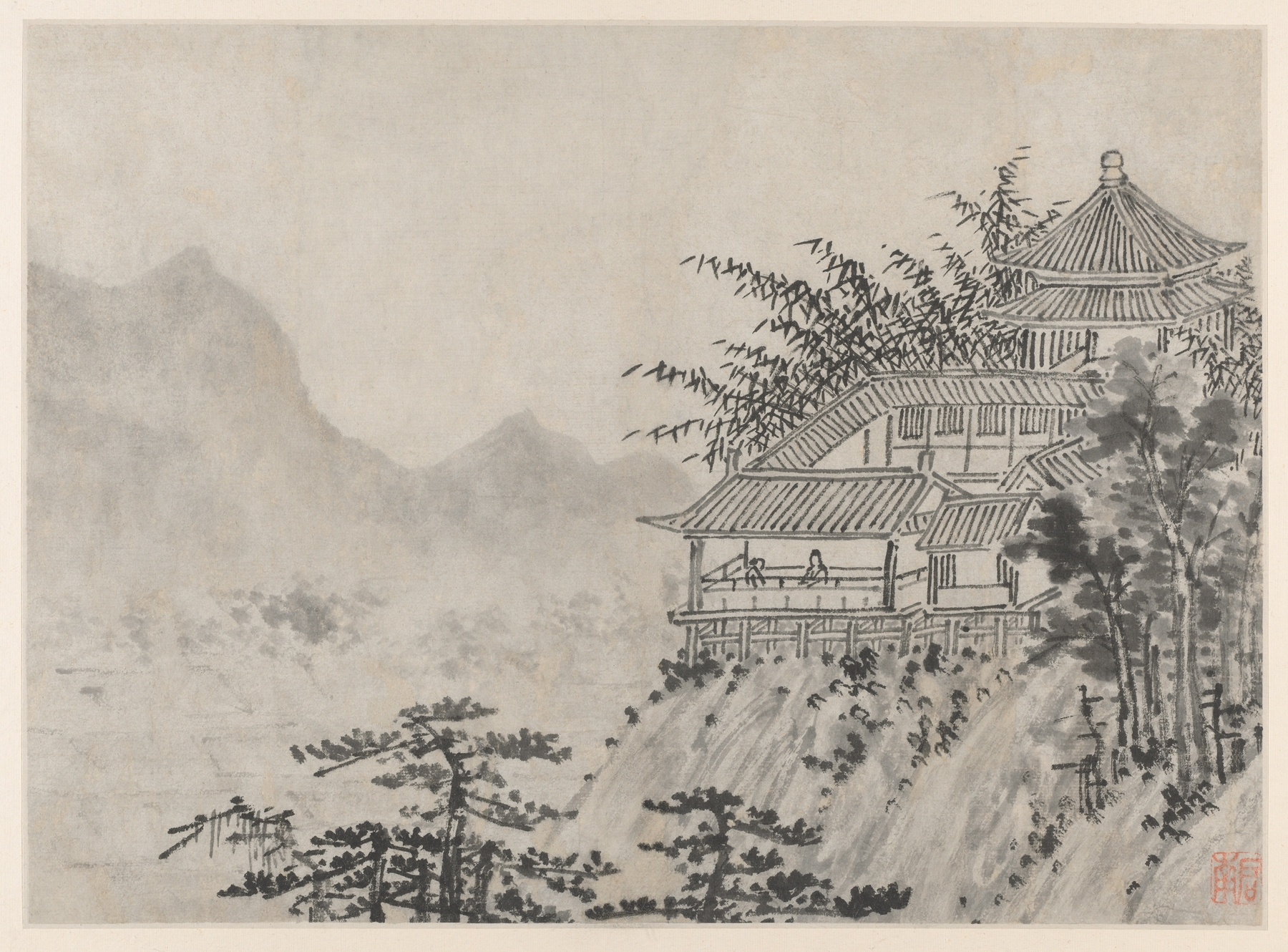
Could beauty survive in a century of chaos? The answer lies in the serene tranquility depicted in Cloud-Climbing Pavilion. This exquisite work captures a moment of reflection, inviting the viewer to pause and ponder the harmony between nature and human endeavor. Look to the left, where delicate, undulating mountains cradle the ethereal pavilions like a mother holding her child.
Notice how the tranquil waters mirror the soft hues of the sky, blending blues and greens with gentle brushstrokes that evoke a sense of peace. The careful arrangement of trees and structures suggests a purposeful balance, emphasizing the artist's skillful hand in both composition and color, each stroke whispering the story of a landscape cherished. In this artwork, contrasts emerge between the natural and the man-made, the ephemeral and the eternal. The pavilion stands as a bastion of human aspiration amidst the towering mountains, which symbolize the challenges of existence.
The tranquil waters reflect not only the structures above but also the deeper layers of consciousness — a poetic reminder of mankind's fragile connection to nature and the relentless passage of time. Shen Zhou created Cloud-Climbing Pavilion after 1490 during a period marked by both personal introspection and broader cultural upheaval in China. As a prominent Ming dynasty painter, he was deeply influenced by the philosophies of Taoism and Buddhism, which encouraged harmony with nature. This work reflects his response to a world often in turmoil, showcasing his belief that beauty and tranquility could still flourish even amidst chaos.