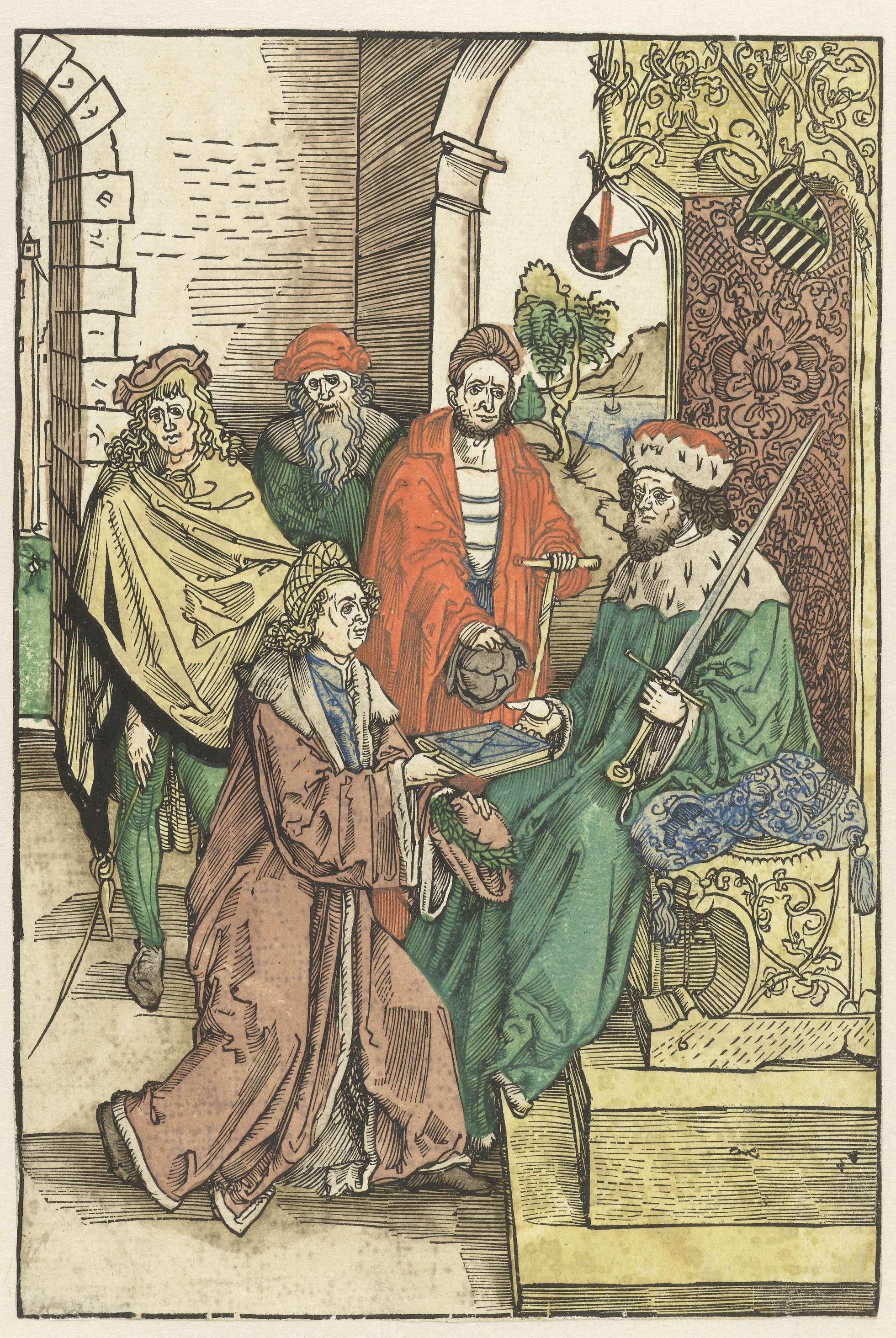
Conrad Celtis biedt Frederik III de Wijze, keurvorst van Saksen, een boek met het werk van Roswitha van Gandersheim aan — History & Analysis
Can paint confess what words never could? In *Conrad Celtis biedt Frederik III de Wijze, keurvorst van Saksen, een boek met het werk van Roswitha van Gandersheim aan*, a delicate interplay of desire and intellect unfolds, capturing a moment of scholarly exchange that transcends mere conversation. Look to the center of the composition, where the figures of Celtis and the Elector stand in respectful proximity. Dürer employs rich, earthy tones that evoke the weight of the moment, while light delicately illuminates the book, its pages glowing with potential knowledge. The detailed textures of their robes contrast sharply with the smoothness of the book cover, emphasizing the significance of the gift — it is a bridge between the intellectual aspirations of the Renaissance and the spiritual depth found in ancient texts. The tensions in the scene are palpable; the open book, a symbol of desire for understanding and connection, contrasts with the solemnity of the men’s expressions. Celtis’s outstretched hand suggests urgency and reverence, while the Elector's contemplative gaze reveals a moment of decision — will he embrace this gift of knowledge or let it slip into the shadows of forgetfulness? The background, modest yet rich, hints at a world where learning was both revered and sought after, underscoring the importance of this meeting in history. Created between 1496 and 1501, this painting emerged during a transformative period in Europe, where Dürer, a key figure of the Northern Renaissance, was deeply engaged in ideas of humanism and the revival of classical thought. The artist was navigating his own rising fame, while society was witnessing an awakening to science, philosophy, and literature, making this moment not just a personal exchange but a reflection of a broader cultural renaissance.