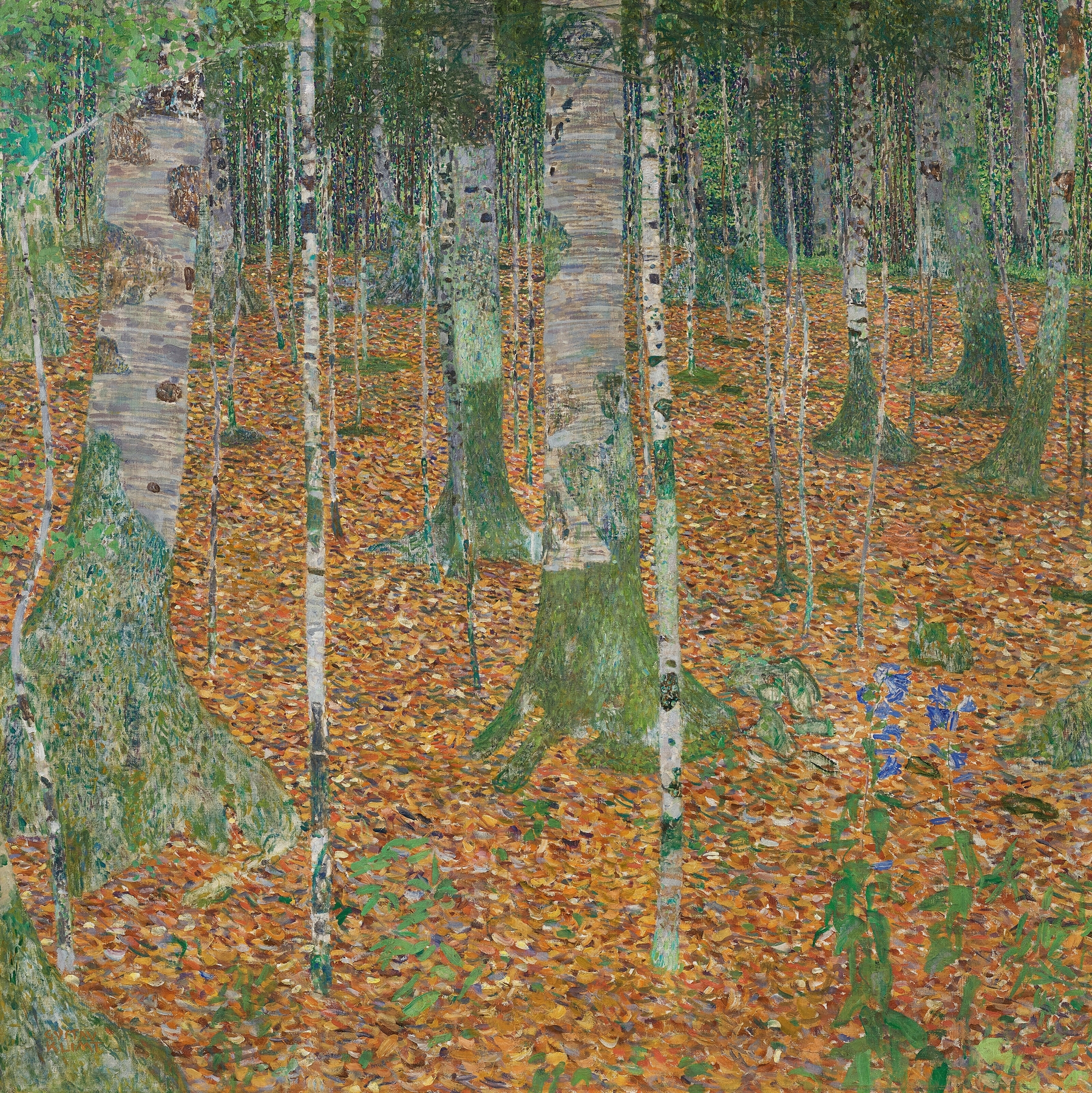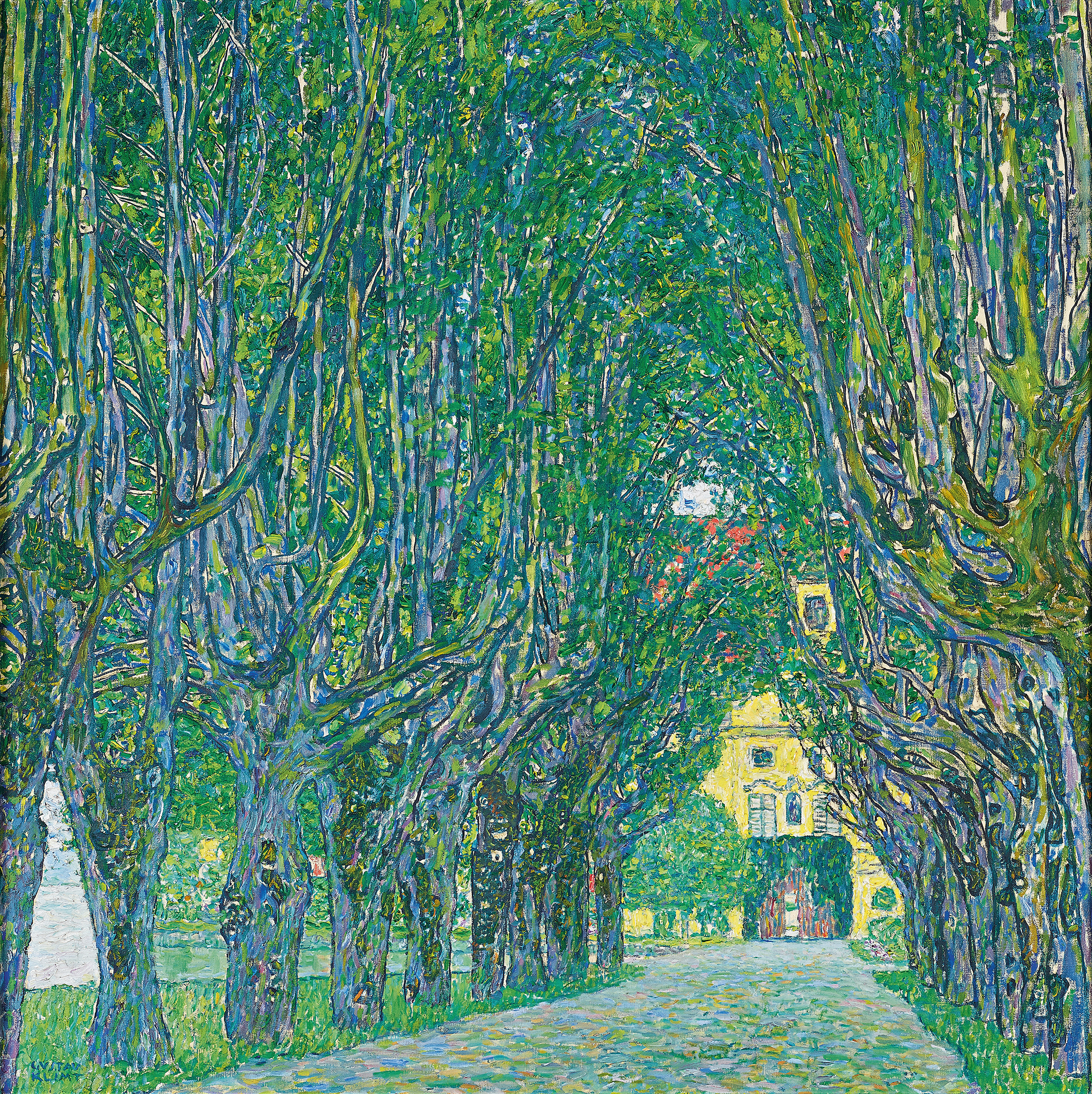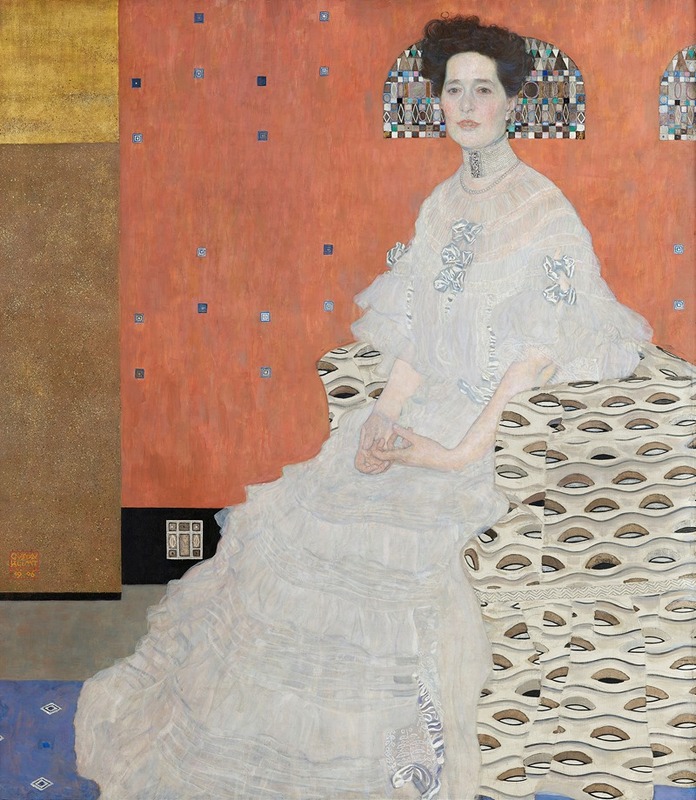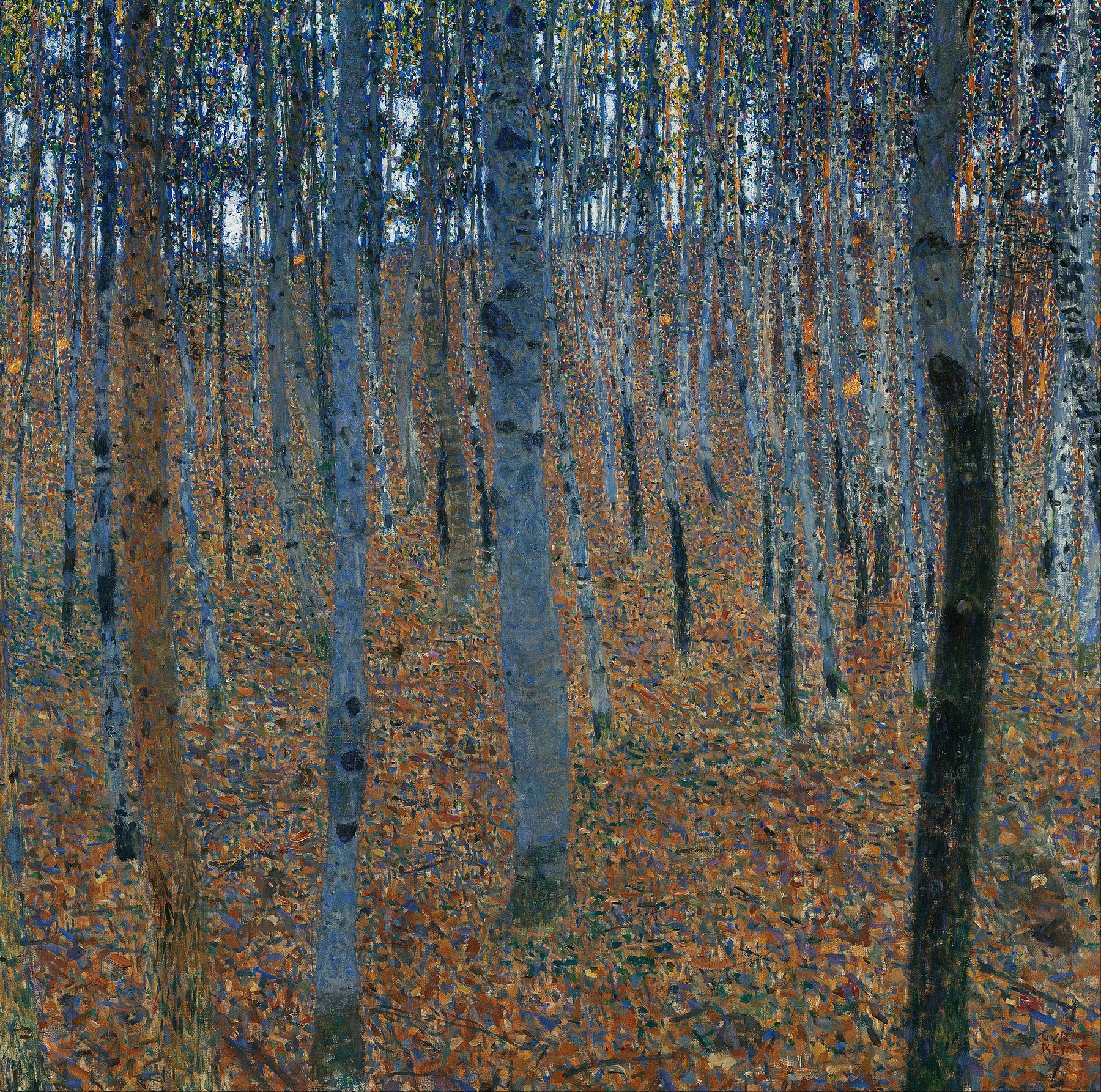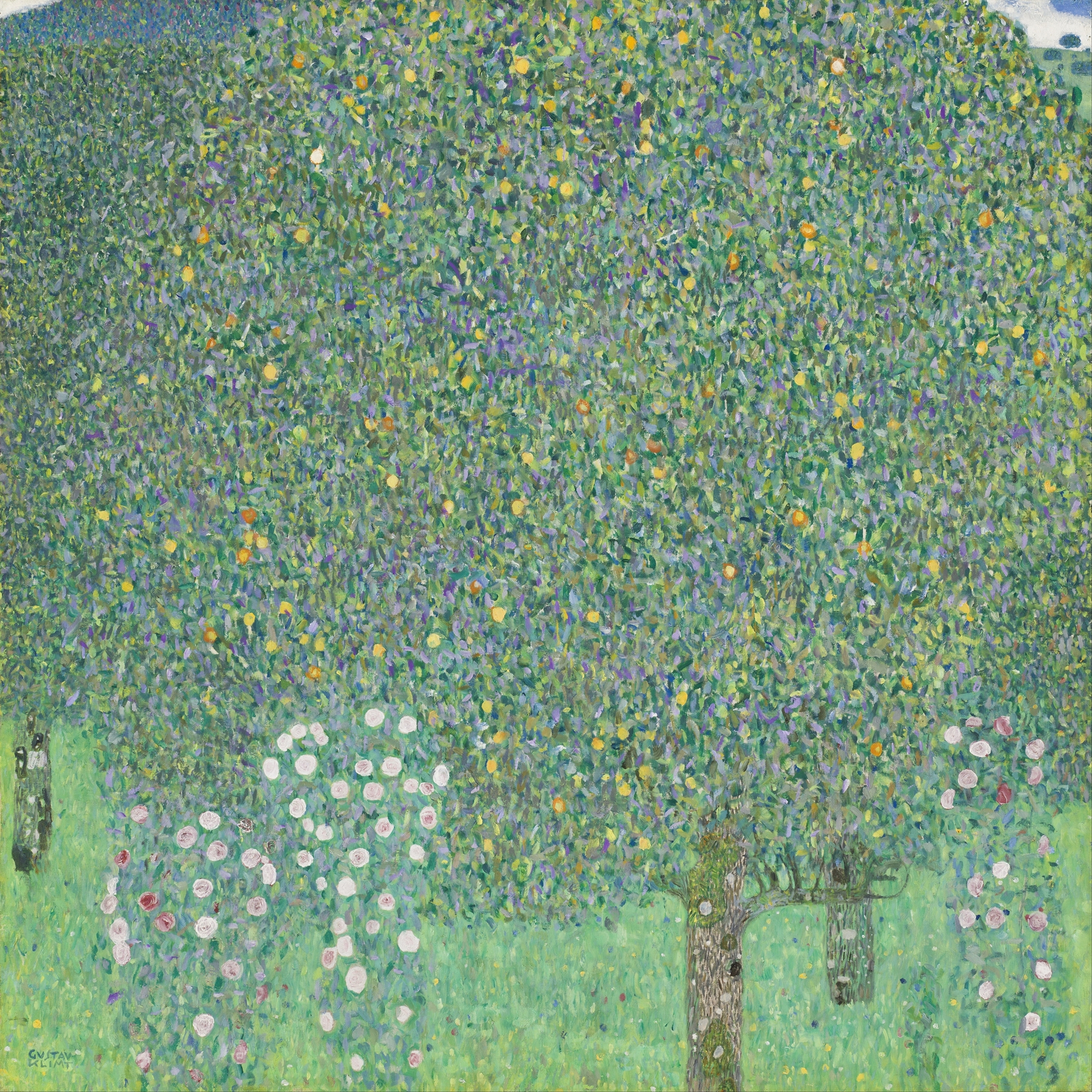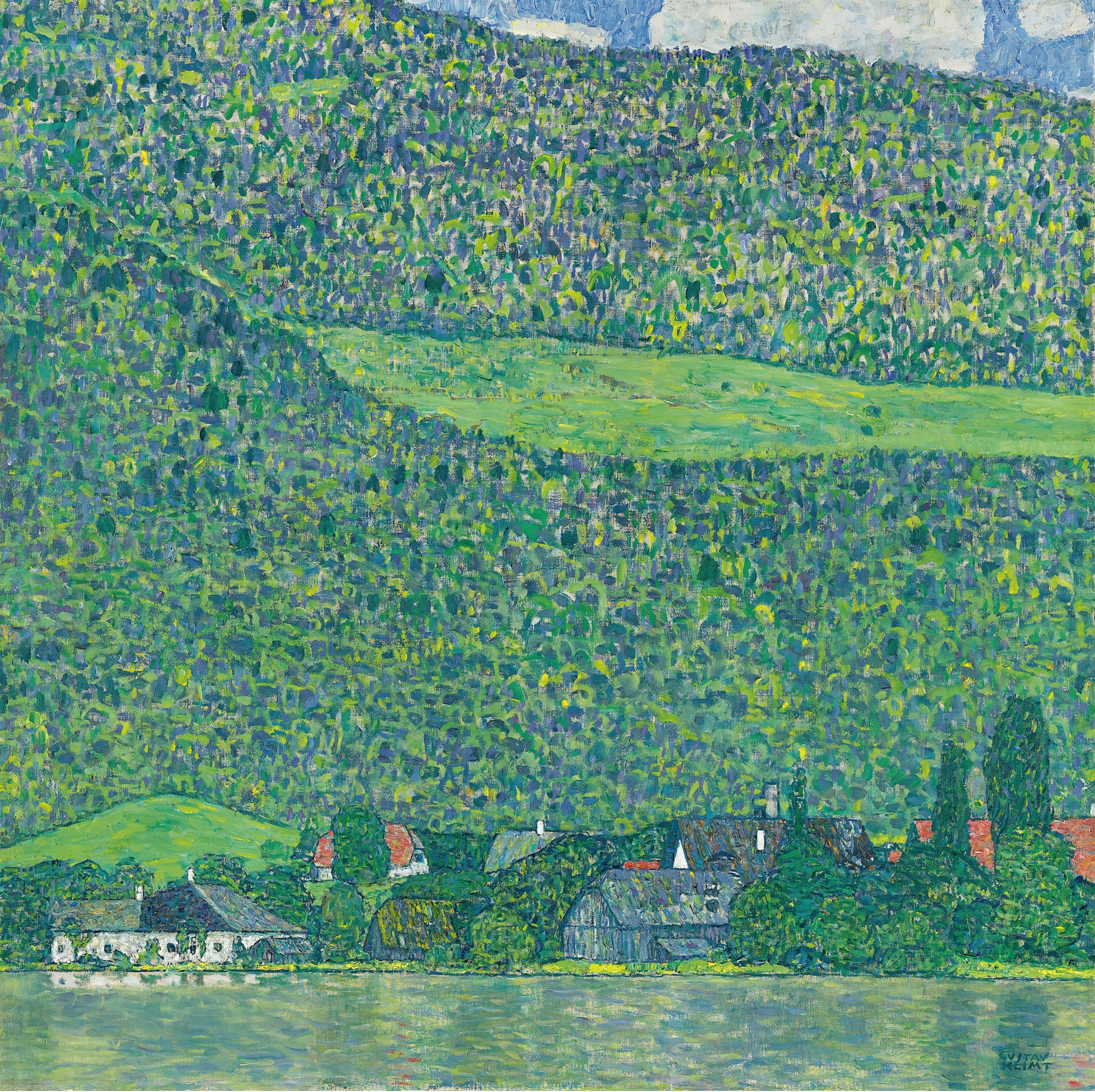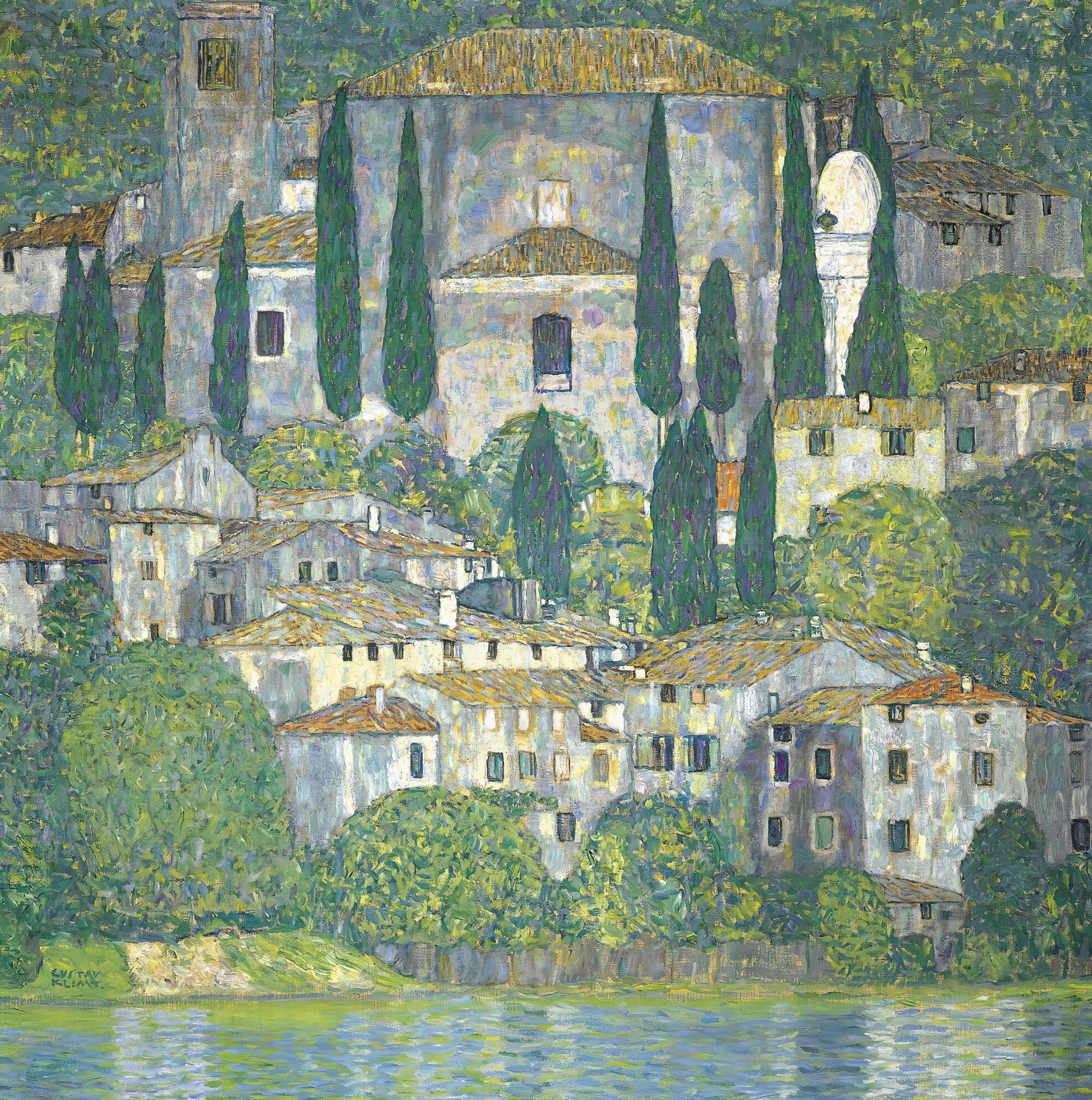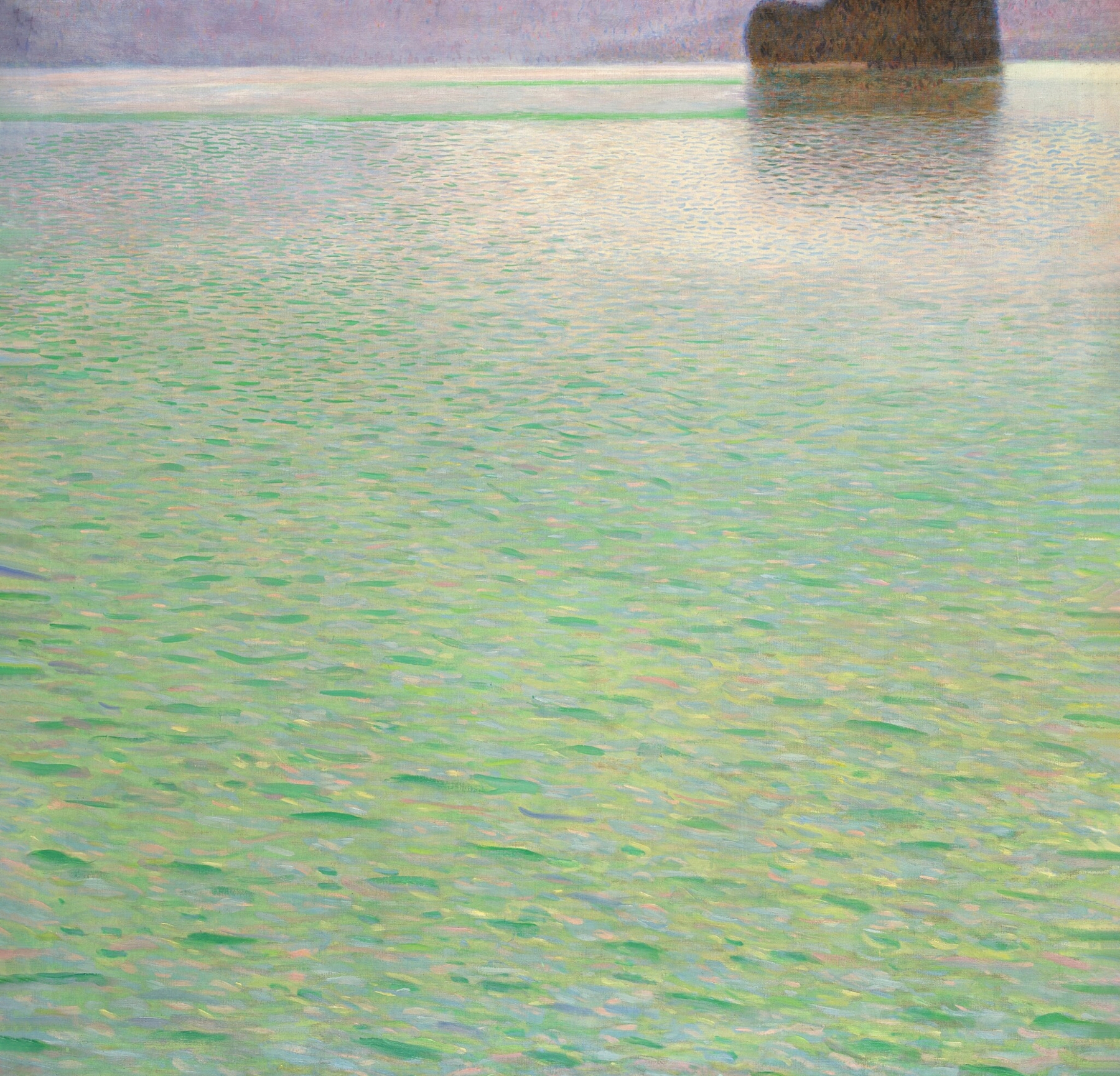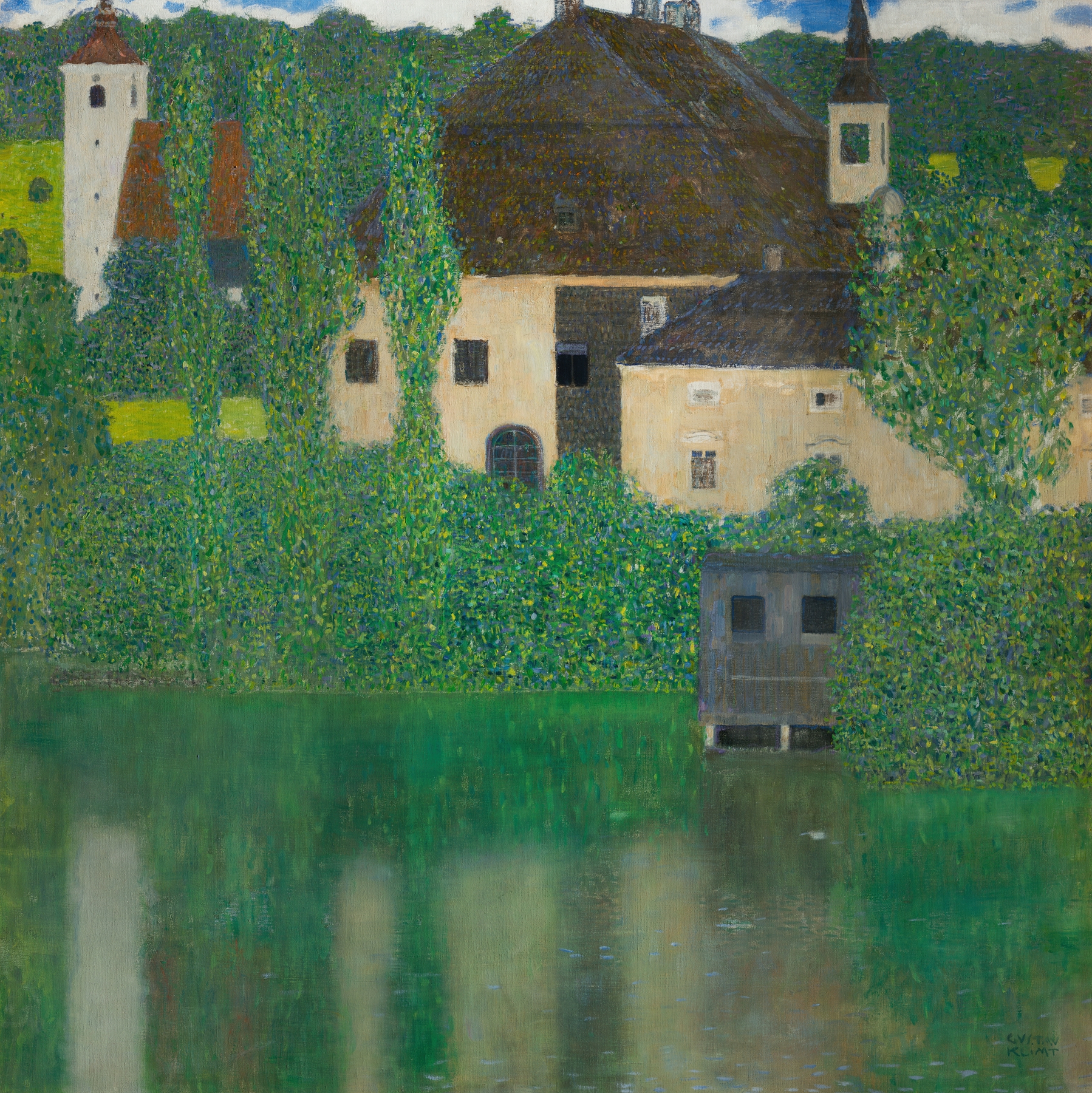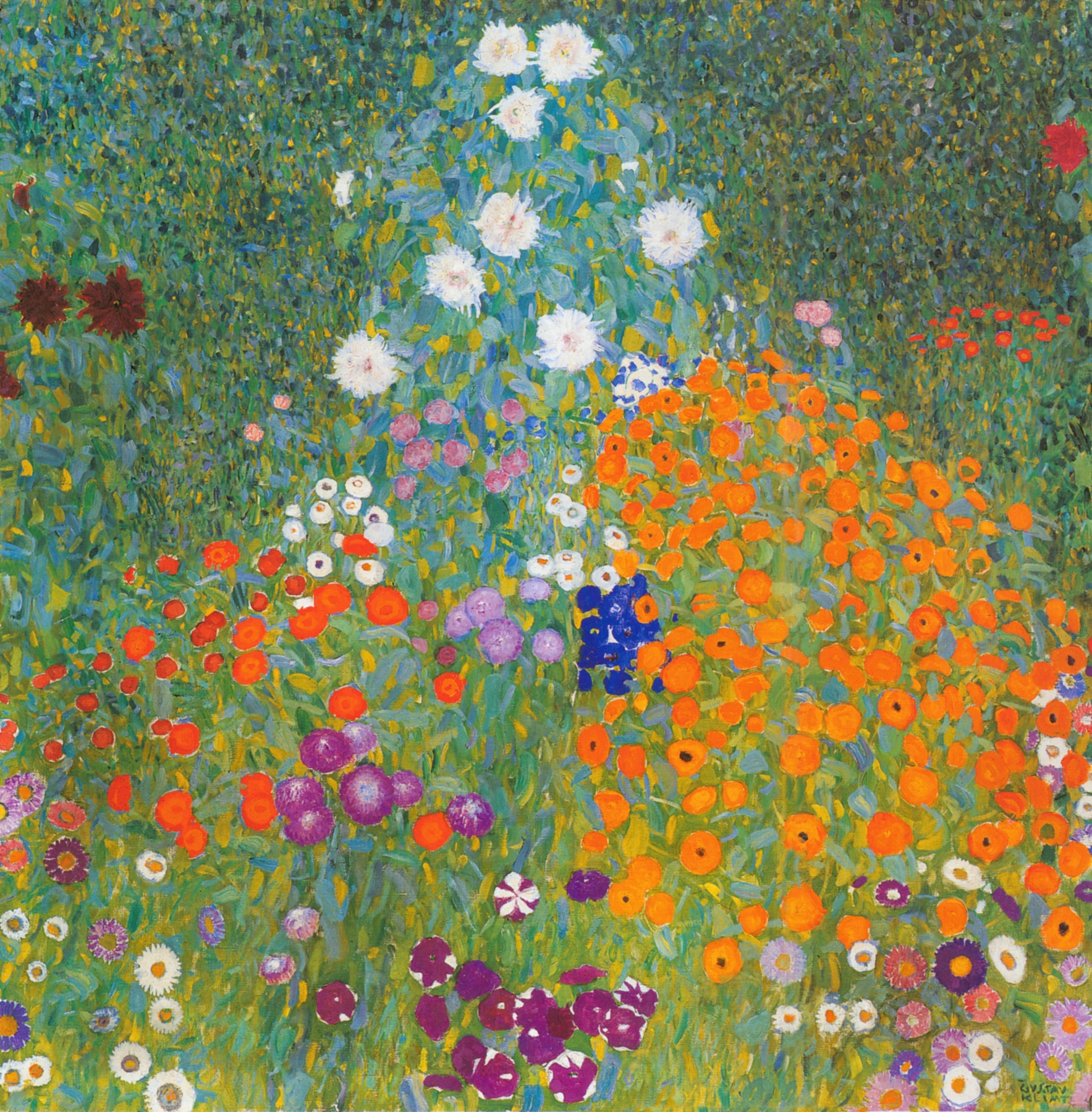

The sun filters softly through the foliage, dappling the garden in a tapestry of light and shadow. A woman stands at the edge, her hand gently brushing against the vibrant blooms, lost in contemplation. The air is thick with the sweet fragrance of flowers, yet a palpable silence lingers, as if the garden itself holds its breath, waiting for her next move. Look to the right at the riot of color that bursts forth from the canvas — brilliant reds, soft yellows, and deep greens entwine in a joyful embrace. Notice how Klimt's brushwork captures the delicate petals, each stroke pulsating with life. The composition draws your gaze in spirals, inviting you to wander through this serene paradise, where the overlapping floral patterns create an almost hypnotic rhythm, revealing the artist's devotion to the natural world. Amidst this lush setting, subtle contrasts emerge. The woman, draped in a flowing gown, embodies both stillness and motion, a paradox that evokes a sense of longing and introspection. Her figure, distinct yet immersed in the garden's chaos, suggests a delicate balance between humanity and nature. Each flower seems to whisper secrets of truth and beauty, challenging the viewer to discern their own connections to the space around them. Created between 1905 and 1907, this work emerged during a transformative period for Klimt, when he was solidifying his reputation within the Vienna Secession movement. The world was buzzing with artistic innovation, as the tension between tradition and modernity began to reshape the landscape of art. In this moment, Klimt embraced the ornamental and the sublime, fusing personal reflection with the vibrant essence of the natural world, crafting a scene that speaks to the universal search for truth.