De kruisiging — History & Analysis
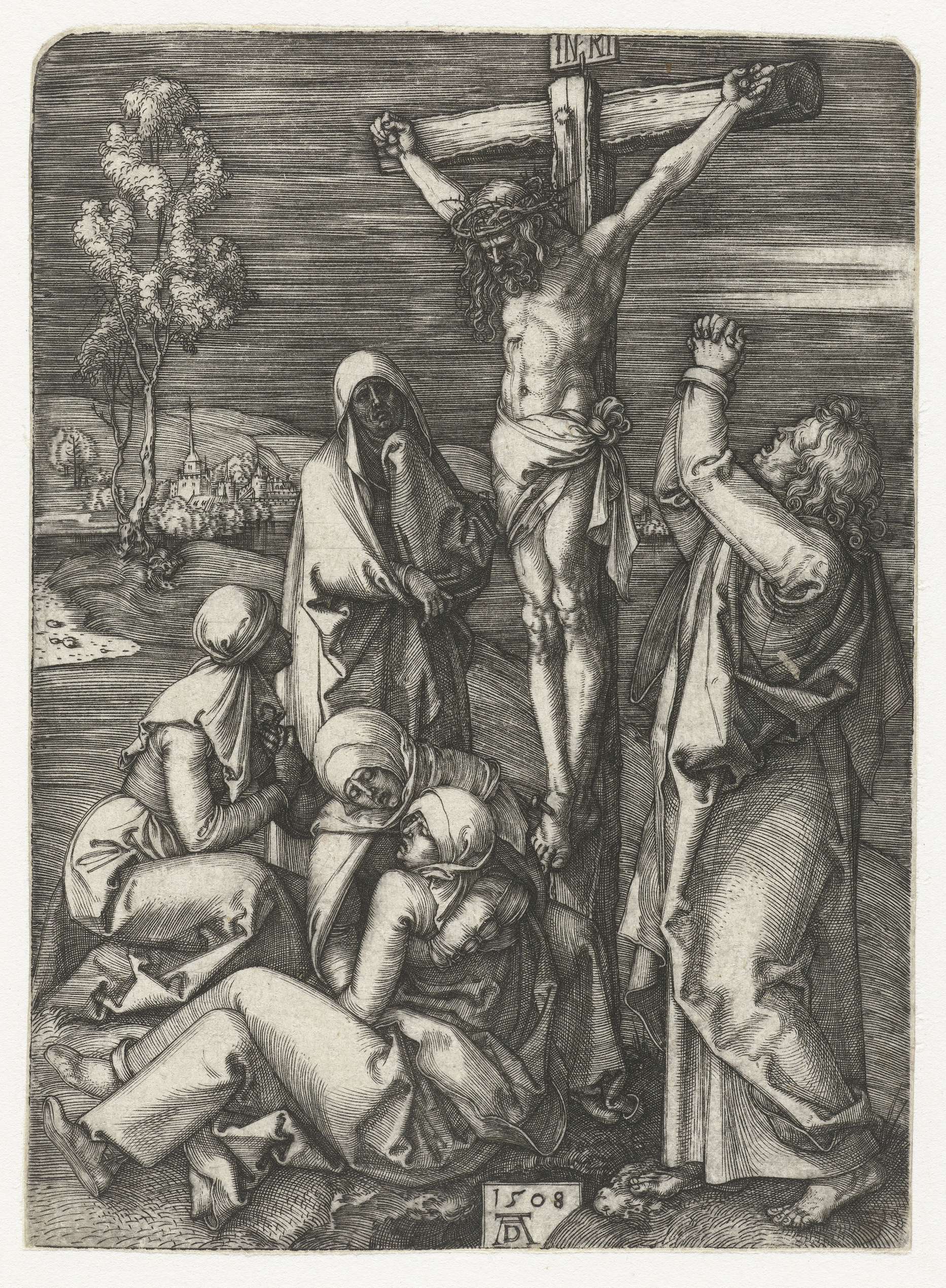
“Sometimes beauty is just pain, disguised in gold.” Beneath the surface of elegance often lies the rawness of decay, a truth that resonates deeply in the work before you. Look closely at the intricate details of De kruisiging, where the figure of Christ dominates the foreground, suspended in a moment of tragic grace. Notice how the muted tones of the landscape contrast with the radiant halo encircling his head, emphasizing both divinity and despair. Each brushstroke reveals the artist's meticulous technique, particularly in the way shadows play across the figures, creating a haunting depth that invites viewers to confront their own feelings of mortality.
In the background, the desolate landscape mirrors the emotional turmoil of the scene. The crumbling ruins symbolize the decay of human constructs, while the dramatic sky—swirling with dark clouds and patches of light—reflects the tumultuous nature of faith and suffering. The juxtaposition of the serene expression on Christ's face against the agony of his situation speaks to the complexities of sacrifice, urging viewers to ponder the cost of redemption and the beauty that can emerge from suffering.
Created in 1508 during a period of profound religious upheaval, Dürer painted this work in Nuremberg, a center for both Renaissance and Reformation thought. This era saw a shift in artistic expression, with artists exploring not only the divine but also the human experience of pain and joy. Dürer was influenced by the growing tension between tradition and innovation, capturing the essence of his time in this poignant portrayal of sacrifice.