De Van Iseghemlaan onder de sneeuw — History & Analysis
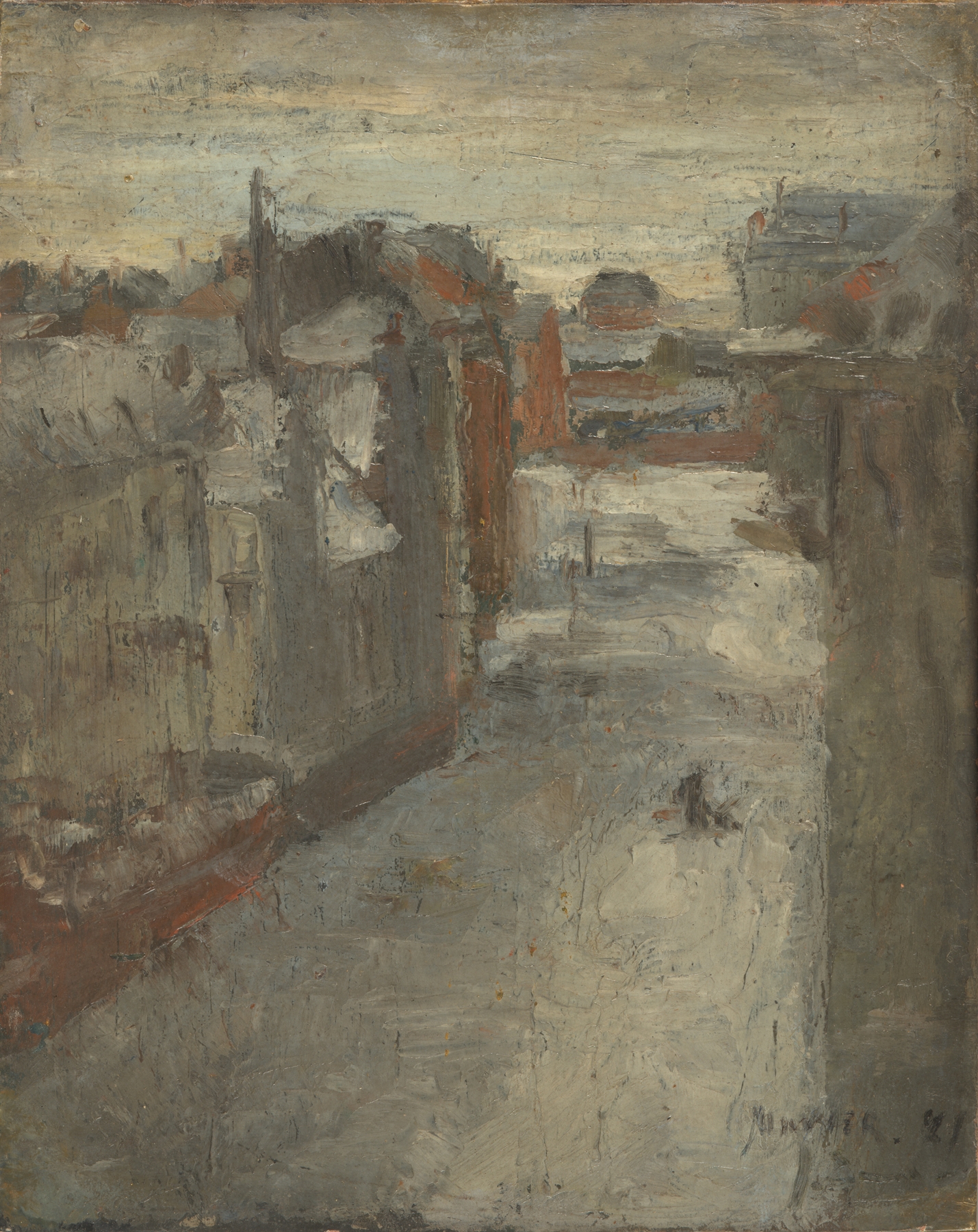
What if silence could speak through light? In De Van Iseghemlaan onder de sneeuw, a stark winter landscape reveals the soft, profound whispers of nature's stillness. Look to the center of the canvas, where the blanket of snow blankets the ground, its cool white inviting a sense of calm. Notice how the light filters gently through the leafless trees, casting delicate shadows that dance across the snow.
The palette of muted blues and silvery whites creates a serene atmosphere, while the sturdy, dark branches of the trees anchor the scene, lending a sense of stoic permanence against the ethereal beauty of the moment. Beneath this tranquil exterior lies a deeper tension between solitude and revelation. The absence of figures evokes a profound sense of isolation, yet the luminous quality of the snow suggests a hidden warmth, a glimmer of hope in the chill. Each brushstroke seems to whisper secrets of the winter season, hinting at the beauty found in both silence and solitude.
The snow not only covers the ground but also transforms the landscape into a canvas of introspection, inviting viewers to reflect on their own inner landscapes. In 1881, Ensor painted this piece during a time of personal and artistic exploration in Belgium. He was grappling with the shifting tides of modern art, moving away from traditional techniques toward more expressive forms. The world around him was changing, yet here he captures a moment of quiet, a stark contrast to the evolving artistic movements, reminding us of the power of stillness and the revelations that can emerge from it.