Detail: Army, after stone relief at Angkor Wat — History & Analysis
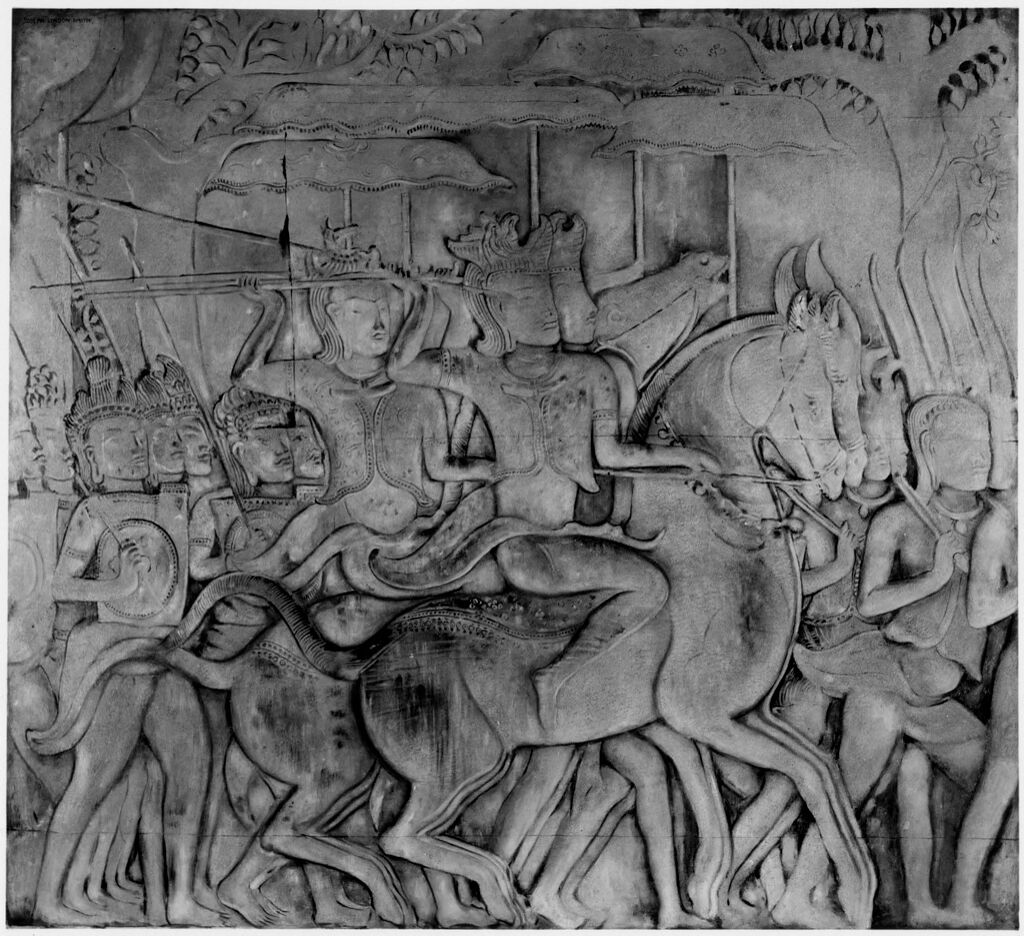
Could a single brushstroke hold eternity? The fluidity captured in Detail: Army, after stone relief at Angkor Wat speaks to the timeless dance between history and artistry, where movement transcends the confines of time. Look closely at the intricate details in the composition. Notice how the figures emerge from the canvas, each one a testament to careful craftsmanship. The subtle variations in tone and texture breathe life into the soldiers, with a tender gradient of earth tones that evoke the strength of their stone counterparts.
The interplay of light across their forms accentuates the dynamic poses, suggesting a march that is more than just a movement — it embodies a shared purpose and collective memory. Hidden within this visual narrative is a tension between permanence and transience. The stone relief that inspired the painting holds the weight of centuries, while the artist's brushstrokes capture a fleeting moment of action. This juxtaposition invites reflection on the legacy of human endeavor, as each soldier stands not only as an individual but as part of a larger story.
The swirling lines guide the eye, creating a sense of rhythm that pulses with life, echoing the vibrancy of the cultures they represent. Joseph Lindon Smith painted this work in the late 19th to early 20th century, during a time of burgeoning interest in Asian art and culture in the Western world. Living in the United States, he was influenced by the broader art movements that sought to explore and integrate non-Western themes. The artist's travels and his dedication to depicting the grandeur of ancient civilizations fueled his creativity, allowing him to capture the spirit of Angkor Wat in a new light.