Landscape with Palm Trees — History & Analysis
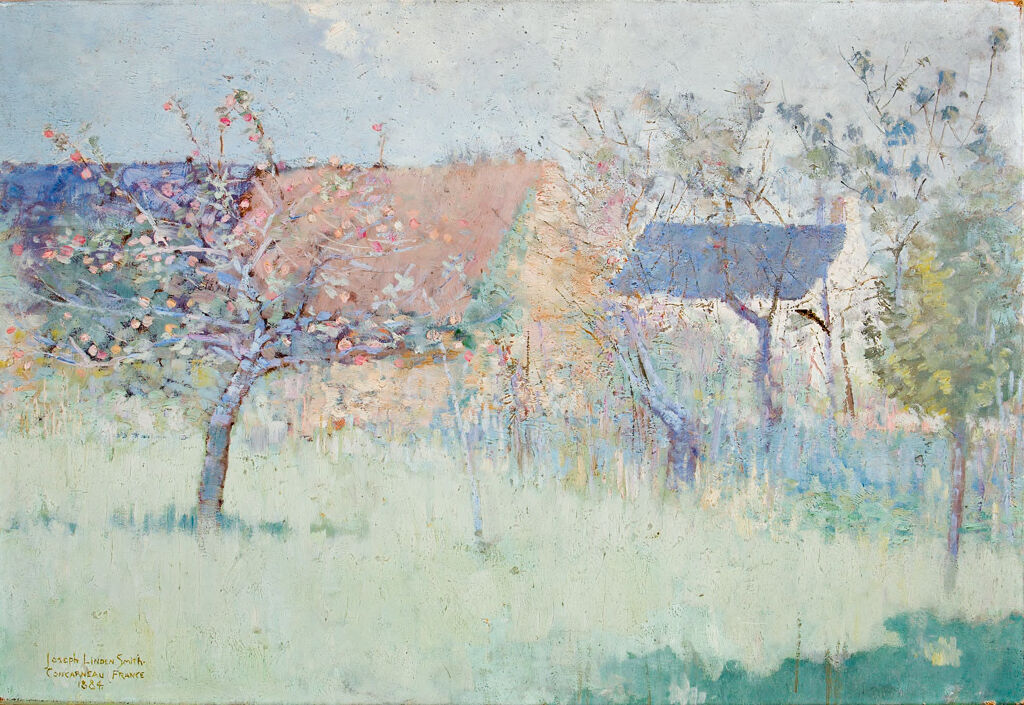
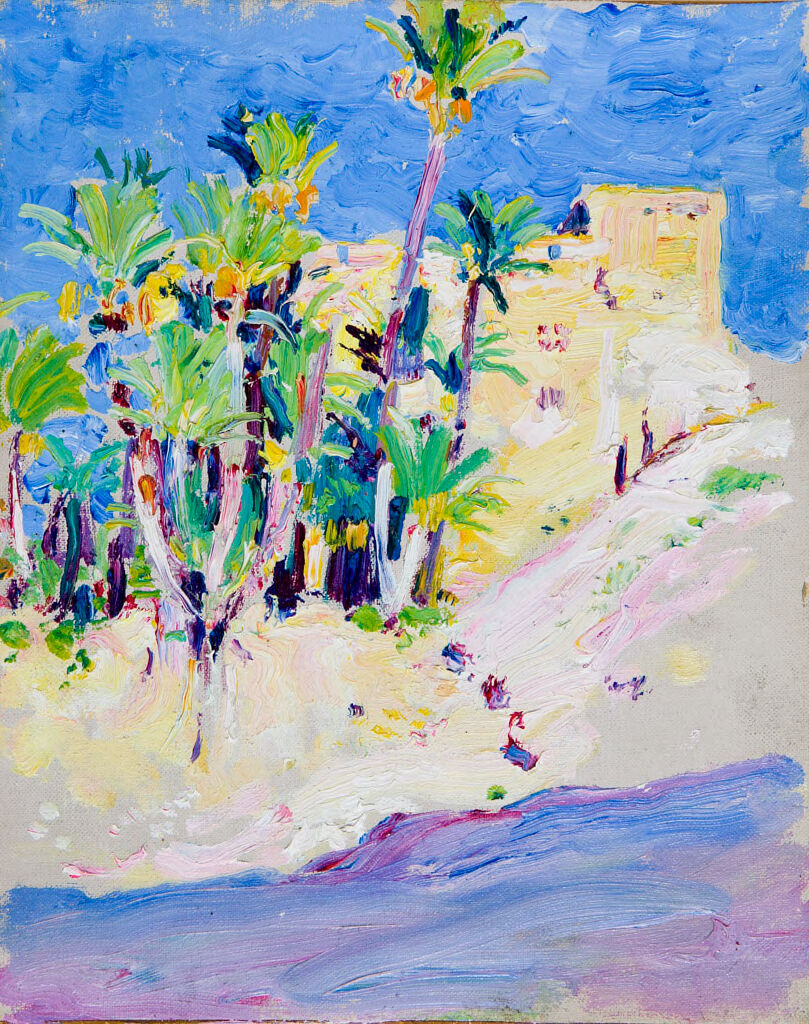
“Sometimes beauty is just pain, disguised in gold.” In Landscape with Palm Trees, the tension between tranquility and turmoil unfurls like the leaves of the palm fronds that sway gently against the horizon. Look to the left, where the vivid green of the palm trees beckons you in—a lush canopy that contrasts dramatically with the muted tones of the earth beneath. Notice how the dappled sunlight filters through the foliage, creating a dance of light and shadow that pulls your gaze deeper into the composition. The brushwork is both delicate and forceful, suggesting a harmony between nature’s elegance and the underlying struggle for balance in this serene yet dynamic setting.
The painting encapsulates the juxtaposition of stillness and movement—palm trees rooted yet resilient against the winds of change. The colors speak of both life and decay; the vibrant greens symbolize hope while the earth tones evoke a more somber reality. In this delicate balance, one might find reflections of the artist's own experiences, a reminder that life can hold both beauty and sorrow in its embrace.
Created during the late 19th to early 20th century, this work emerged from the hands of an artist deeply influenced by the shifting tides of the art world. Joseph Lindon Smith painted in an era marked by the transition from romanticism to modernism, capturing the nuances of landscapes that resonated with the personal and collective struggles of his time. As industrialization progressed, his reverence for nature stands as a poignant reminder of what is often lost in the pursuit of progress.