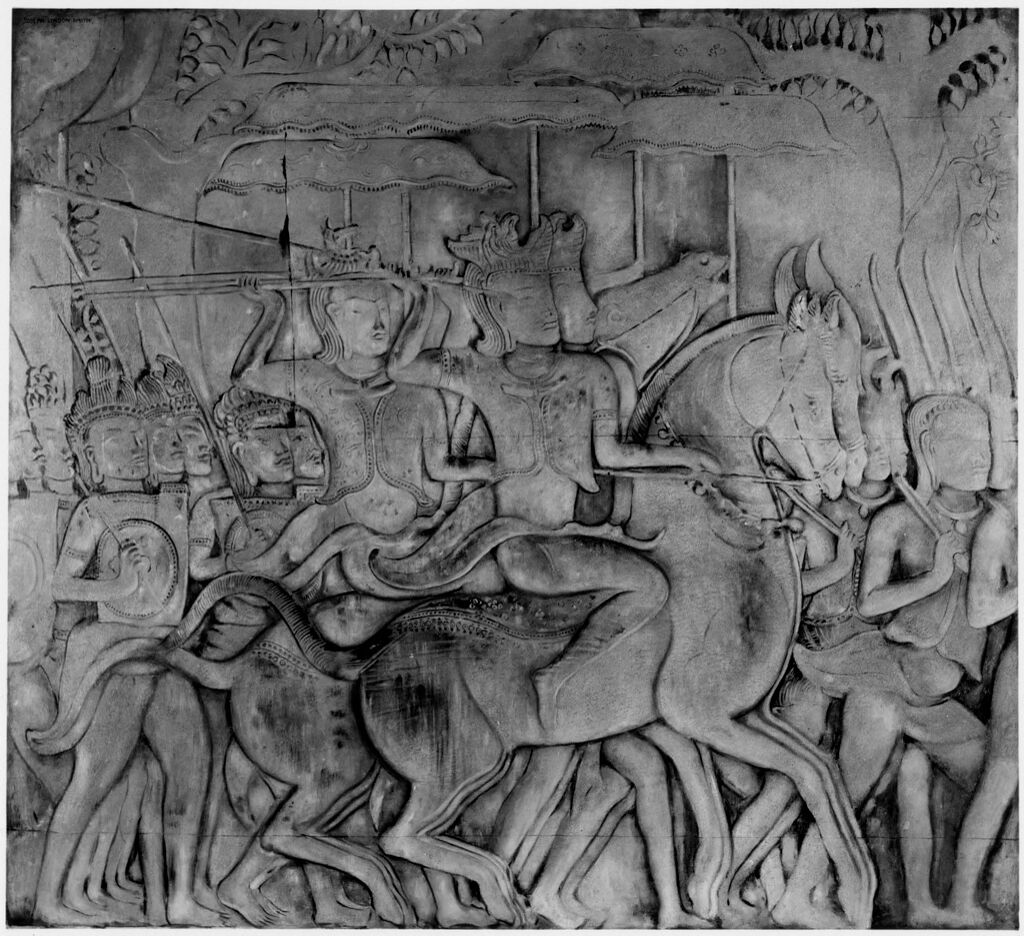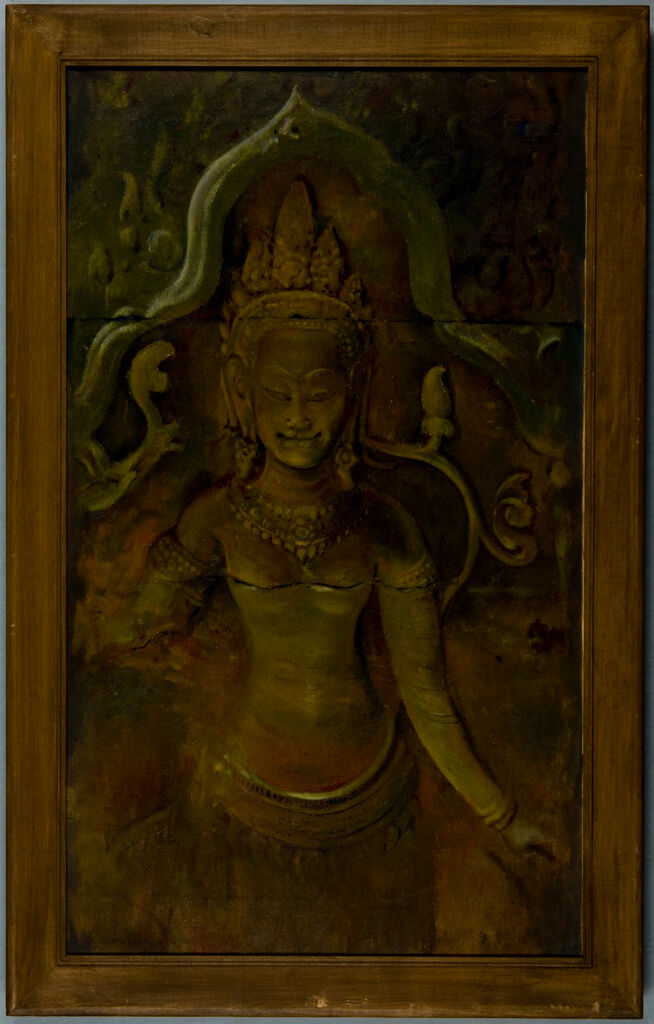
Detail: Devata, after stone relief at Angkor Wat — History & Analysis
“Sometimes beauty is just pain, disguised in gold.” This duality of desire and longing is palpable, a whisper echoing through the intricate carvings in this piece. It beckons us to explore the depths of the human soul, where beauty often conceals a yearning that can be both exquisite and tormenting. Look closely at the delicate curves of the figures, specifically to the left where the graceful form of the Devata emerges from the stone relief. Notice how the light dances across the ornate details, illuminating the flowing drapery that clings to her form—a testament to skillful craftsmanship.
The warm golden hues contrast with shadows that suggest both vibrancy and a sense of melancholy, emphasizing the tension between the physical beauty and the emotional weight it carries. Beneath the surface, this work reveals the complexities of desire and the transient nature of beauty. The Devata, a celestial being, represents not only divine grace but also the unfulfilled hopes and aspirations of humanity. The intricate patterns etched into her skin symbolize the burdens we bear in our quest for perfection, while the gentle smile hints at an inner conflict—one that yearns for connection yet remains eternally distant.
Joseph Lindon Smith created this piece during the late 19th to early 20th century, a period when Western artists were profoundly influenced by Eastern spirituality and art. Living in an era of growing interest in Asian cultures, he sought to bring the grandeur of Angkor Wat’s reliefs to life, melding his admiration for their artistry with a Western perspective. This intersection of cultures marked a critical moment in art history, where the appreciation for beauty would be intertwined with deeper, often painful, emotions.