Study of Niagara Falls — History & Analysis
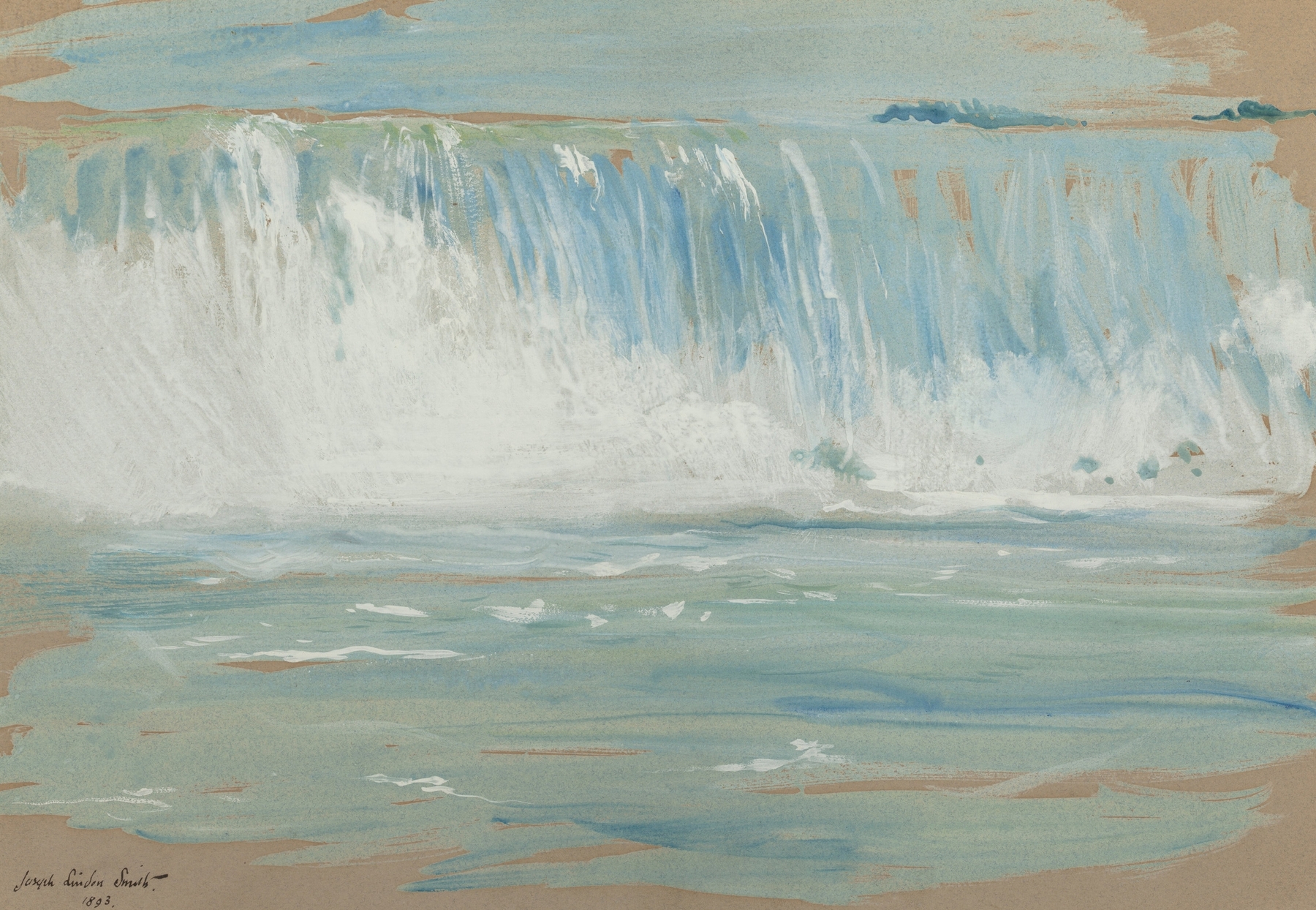
“Every brushstroke is a heartbeat remembered.” In the realm where dreams and nature intertwine, waterfalls become more than mere water; they pulse with life and emotion. Focus first on the cascading torrents that dominate the canvas. The tumultuous waters leap forth, captured in a brilliant array of blues and whites, vibrant yet ethereal. Notice how the light glimmers on the surface, creating a rhythmic dance that draws the eye deeper into the scene.
The surrounding rocks are rendered with precision, their earthy tones contrasting sharply with the fluidity of the falls, embodying a delicate balance between stability and chaos. In this study, the artist conveys a sense of awe and reverence for the natural world. The juxtaposition of the powerful waterfall against the stillness of the surrounding landscape evokes feelings of both humility and grandeur. Hidden within the flowing water are whispers of the sublime, each droplet a fragment of a larger dream that speaks to humanity’s desire to connect with something greater.
This emotional tension between the fierce energy of the falls and the serene landscape invites viewers to contemplate nature’s duality. Painting Study of Niagara Falls in 1893, Joseph Lindon Smith sought to capture both the majesty of the American landscape and the spirit of the era. At this time, the United States was experiencing rapid industrialization, yet there remained a profound longing for nature. As an artist who often explored themes of natural beauty, Smith immersed himself in this captivating scene, reflecting a shift in the artistic focus toward the raw power of nature, even as the world around him began to change dramatically.