Die Birkenallee im Wannseegarten — History & Analysis
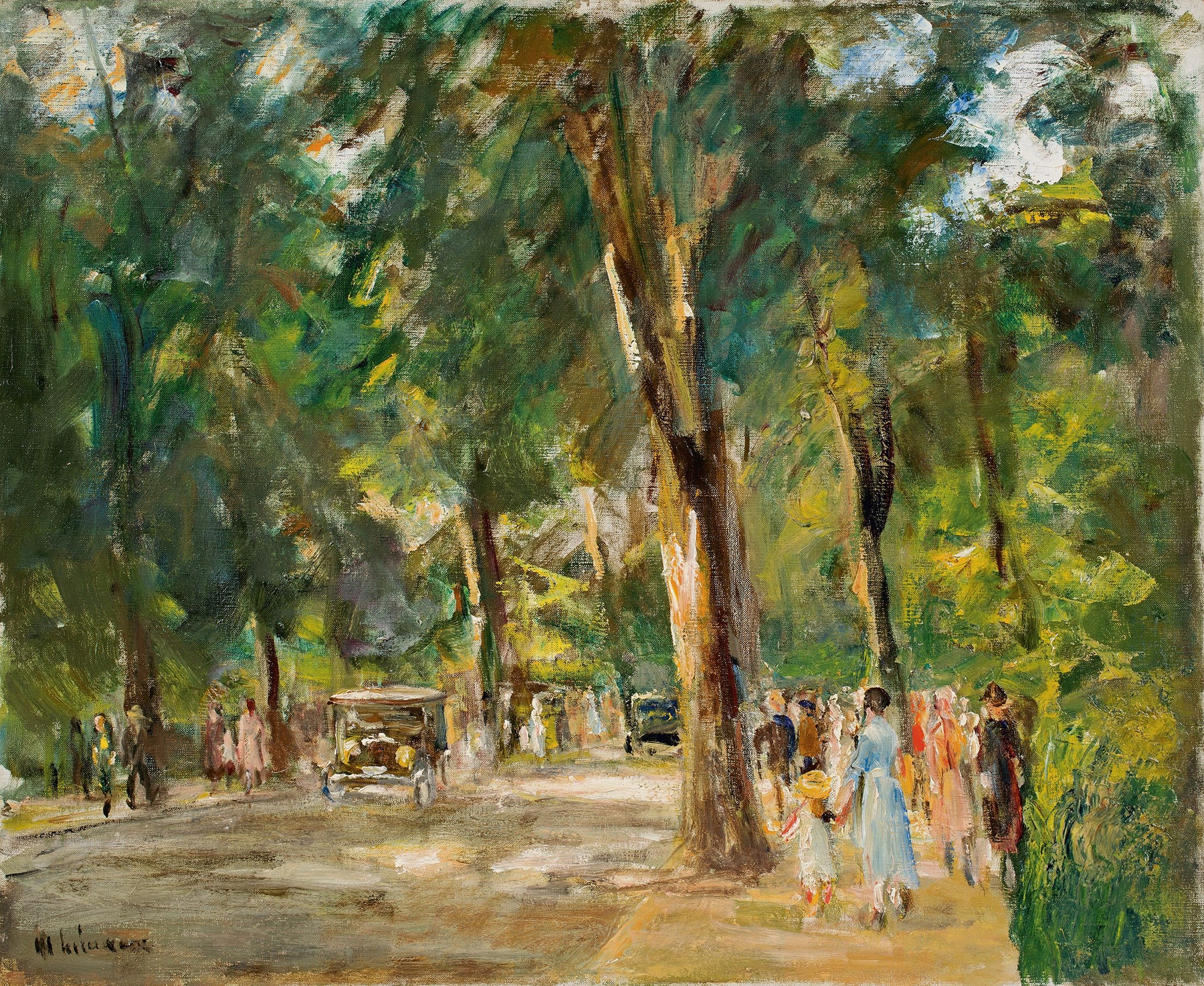
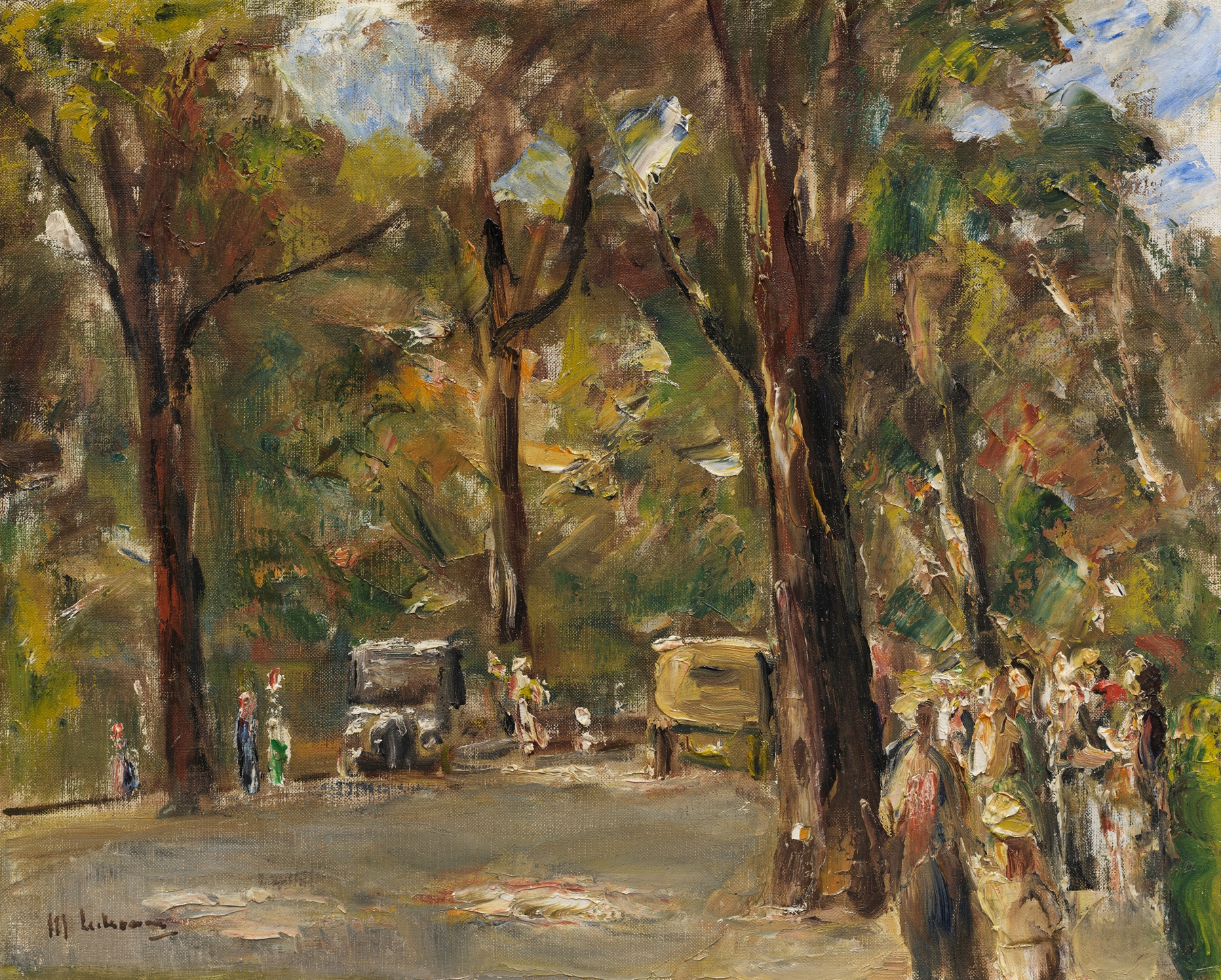
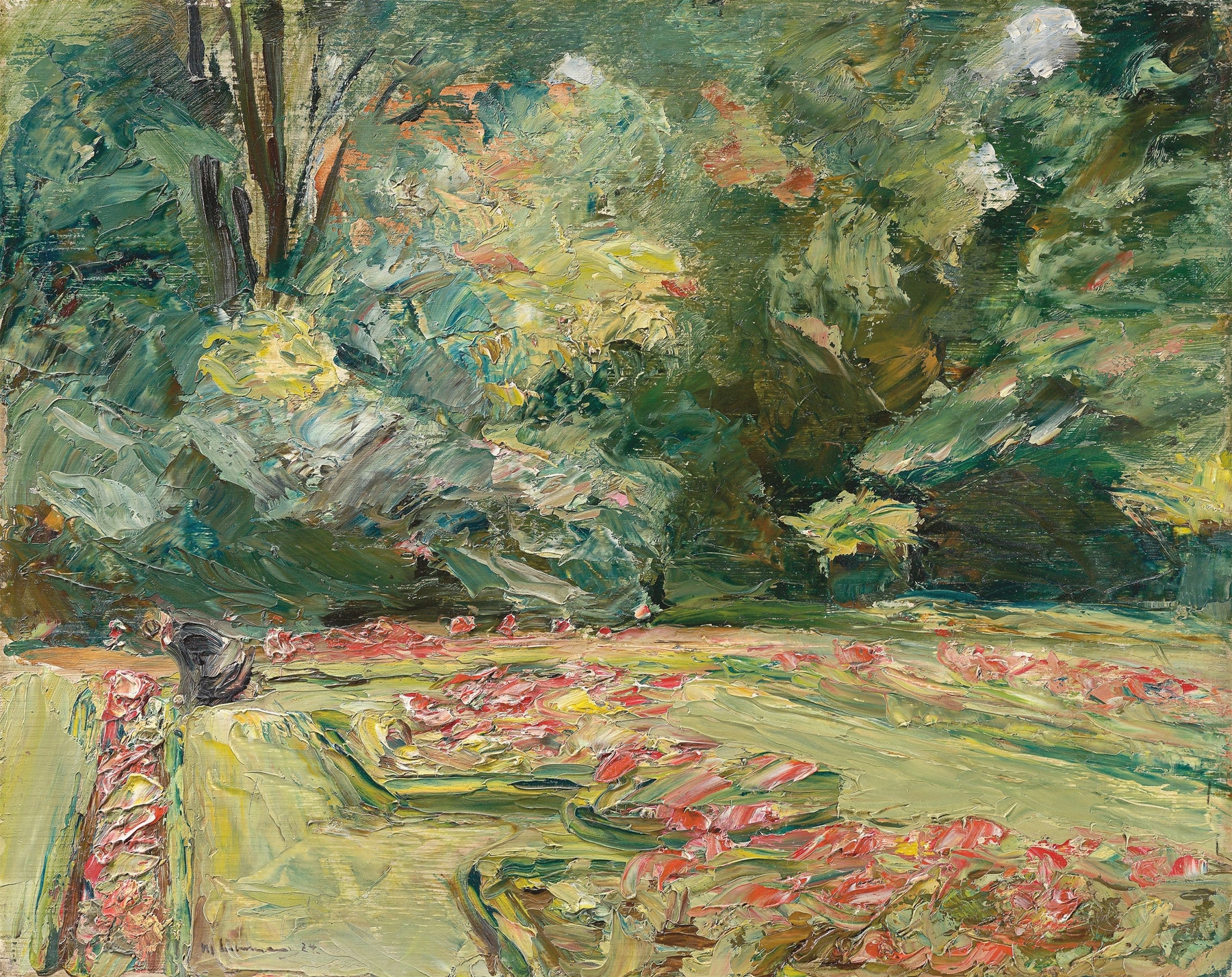
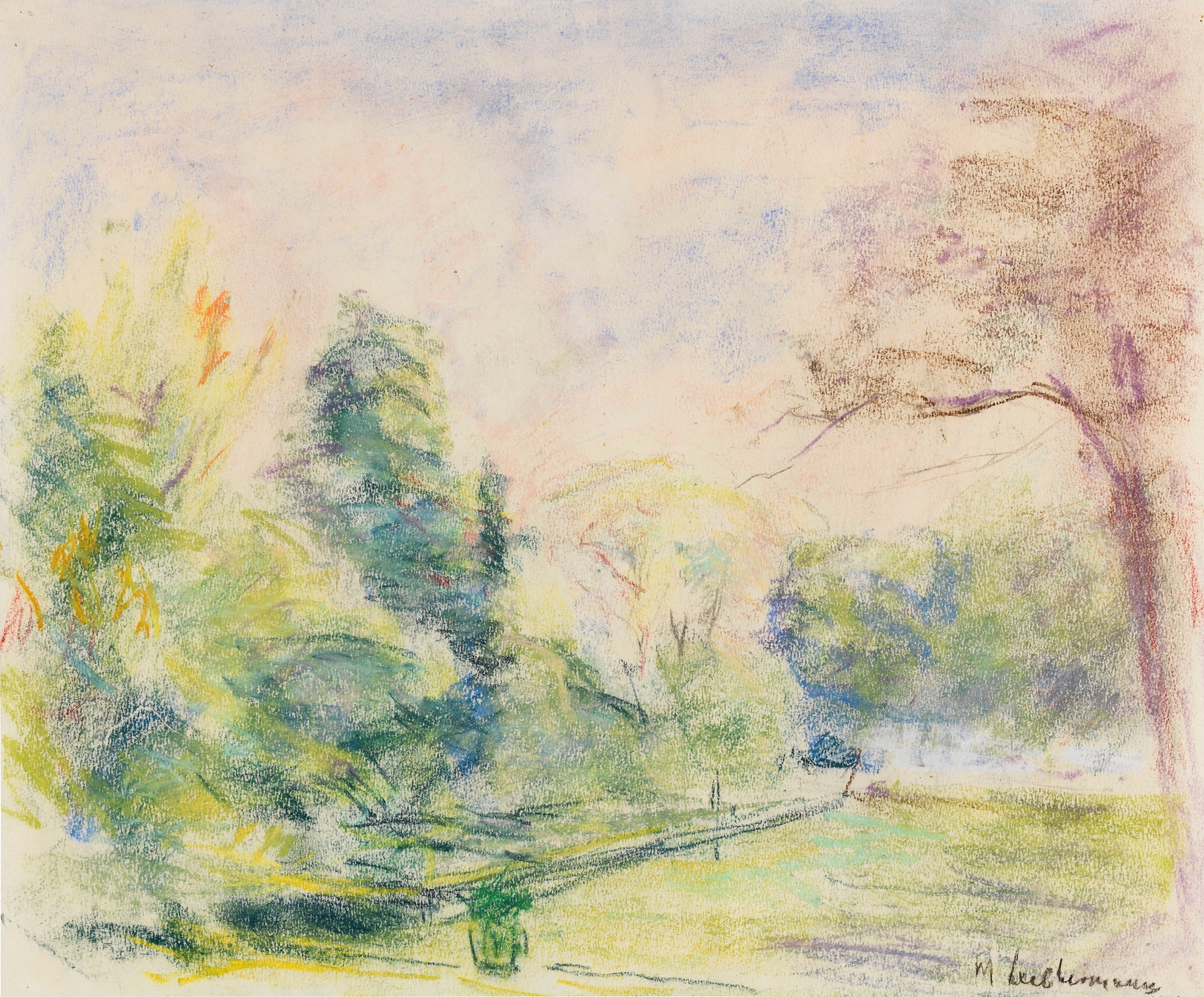
Could beauty survive in a century of chaos? In the wake of World War I, the question hung in the air like a delicate whisper, echoing against the backdrop of humanity's scars. Focus on the vibrant greens and soft browns that envelop the canvas, drawing your gaze toward the serene path lined with birch trees. Notice how the light filters through their delicate leaves, casting dappled shadows upon the ground, inviting you to step into this tranquil respite.
The composition leads your eye down the lane, creating a sense of depth and perspective, while the brushwork imbues the scene with a lively texture that feels both spontaneous and deliberate. As you take in the details, reflect on the contrast between the idyllic tranquility of the garden and the turmoil of the world outside its borders. The birch trees, with their white bark and gentle sway, stand as a symbol of resilience, silently witnessing the passage of time. Liebermann’s choice of colors encapsulates the quietude of nature, suggesting a sanctuary that offers solace amid societal upheaval, a reminder of the enduring power of beauty in the face of disruption.
In 1919, Max Liebermann was living in Berlin, emerging from the shadows cast by the Great War. The era was fraught with political and social upheaval, yet it was during this time that he celebrated the natural world with an unwavering spirit. This work encapsulates his commitment to capturing the essence of beauty, even as the cultural landscape shifted dramatically around him.