Die Blumenterrasse im Wannseegarten nach Nordosten — History & Analysis
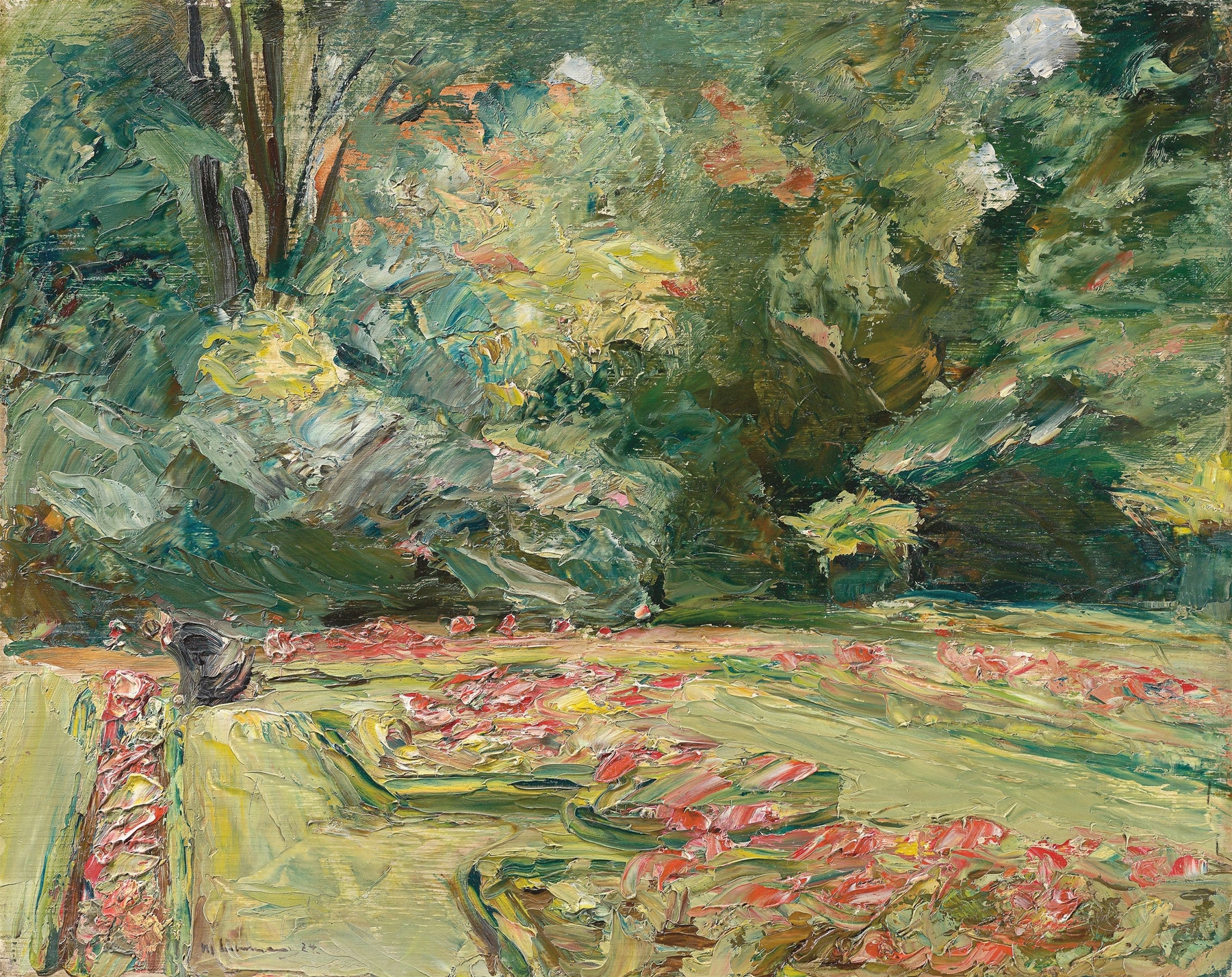
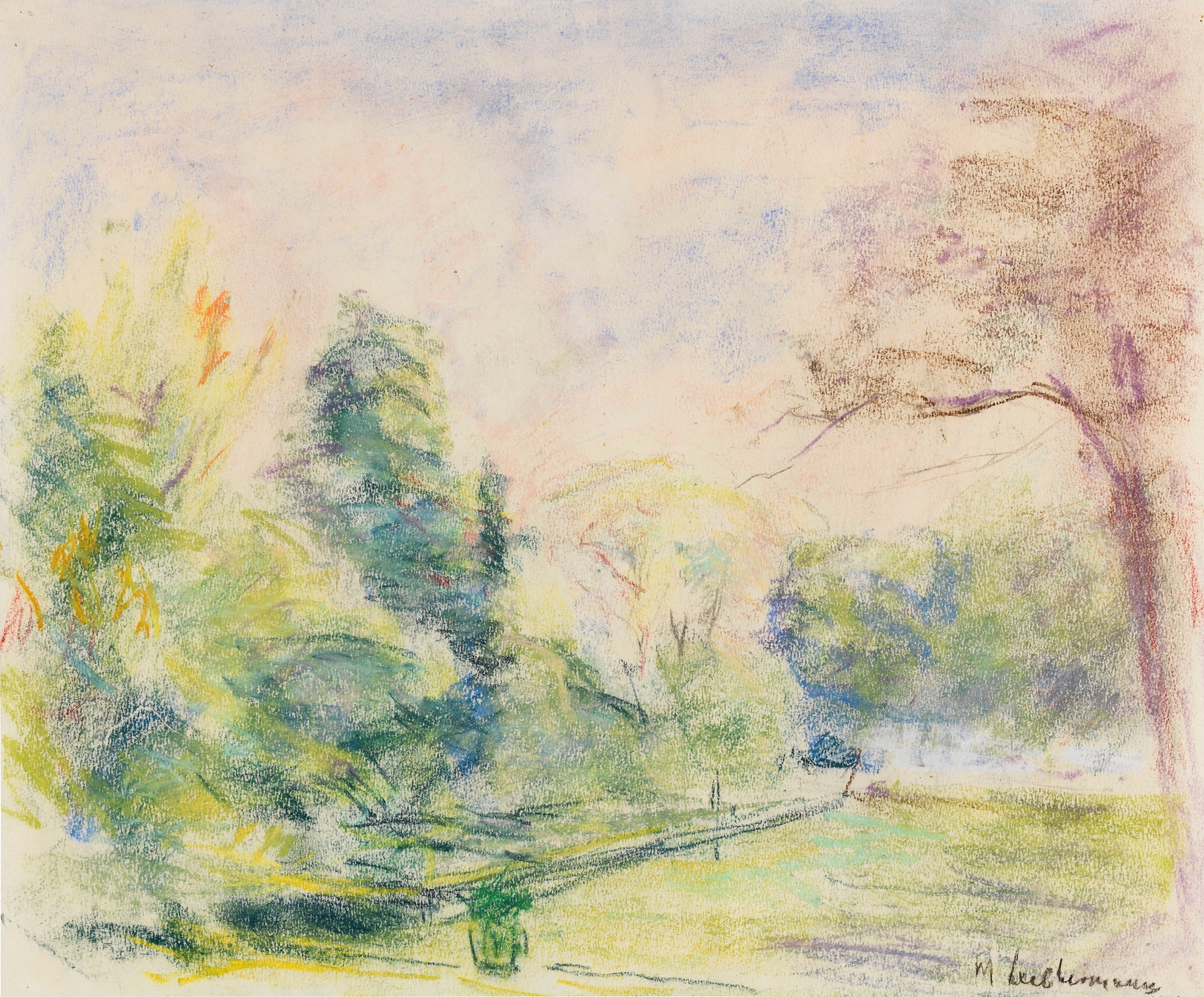
When did color learn to lie? In the embrace of a garden, vibrant blooms whisper secrets of sorrow beneath their cheerful facades, a haunting reminder of what once was. Begin your gaze at the left side of the canvas, where a riot of flowers bursts forth in a kaleidoscope of colors, their petals almost pulsating with life. As your eyes travel right, they encounter the tranquil surface of the Wannsee, its muted blues reflecting the soft light of a late afternoon. Notice how Liebermann employs delicate brush strokes, imbuing each bloom with an almost tangible texture, while the surrounding greenery envelops the scene with a sense of serene melancholy.
The composition draws you in, inviting contemplation of both beauty and loss. Hidden beneath the vividness lies a poignant contrast. The bright colors vibrate with a life that feels almost artificial, evoking questions about the nature of joy amidst grief. The relaxed arrangement of the flowers suggests a fleeting beauty, a moment suspended in time, while the distant waters appear calm yet silently echo a deeper sadness.
This juxtaposition encourages a reflection on how nature, despite its brilliance, often mirrors the complexities of human emotion. In 1923, Max Liebermann was working during a period of great social and political upheaval in Germany following World War I. This painting was created at his summer residence at Wannsee, where he found solace in nature. At a time when the art world was grappling with modernism and the memories of war lingered in the collective consciousness, Liebermann's work resonated with a longing for beauty amidst the shadows of grief.