Die Burgruine Emmerberg in der neuen Welt bei Wiener Neustadt — History & Analysis
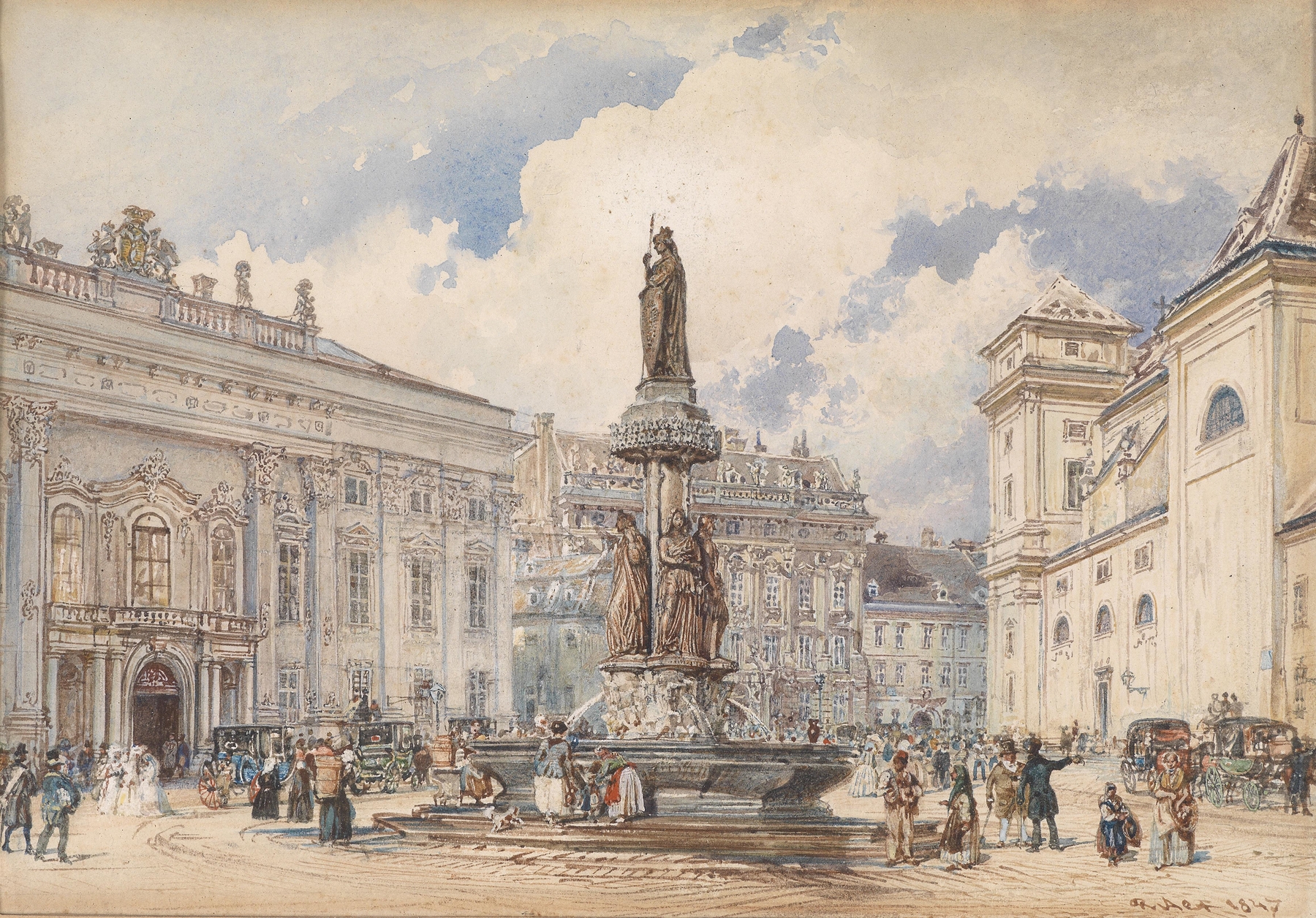
“Art reveals the soul when the world turns away.” In moments of betrayal, the heart’s quietest truths emerge, often hidden from the gaze of the world. Look to the foreground of Die Burgruine Emmerberg in der neuen Welt bei Wiener Neustadt, where the remnants of a once-magnificent castle rise defiantly against the horizon. Notice how the artist captures the interplay of light and shadow, illuminating the crumbling stones bathed in a warm golden hue, while the surrounding landscape remains shrouded in cooler tones.
The composition draws the viewer’s eye towards the ruins, inviting contemplation of their storied past and the passage of time. There’s an emotional tension within this painting—a juxtaposition of decay and beauty. The ruins stand as a metaphor for betrayal, embodying the fragility of human constructions against the relentless advance of nature.
Delicate brushstrokes suggest the gentle caress of wind through the grass, whispering secrets of glory days long gone, while the distant mountains loom like silent witnesses to the forgotten tales of love and loss that echo in the stones. Created in an undefined moment of his career, the artist was influenced by the Romantic movement, which emphasized emotion and nature. Painting during a period marked by political upheaval and a burgeoning interest in the sublime aspects of the landscape, he sought to capture not just a scene, but the palpable sorrow and wistfulness of impermanence—a resonant theme that continues to speak to us today.