The Fleischmarkt in Vienna with the Greek-Orthodox Church of the Holy Trinity — History & Analysis
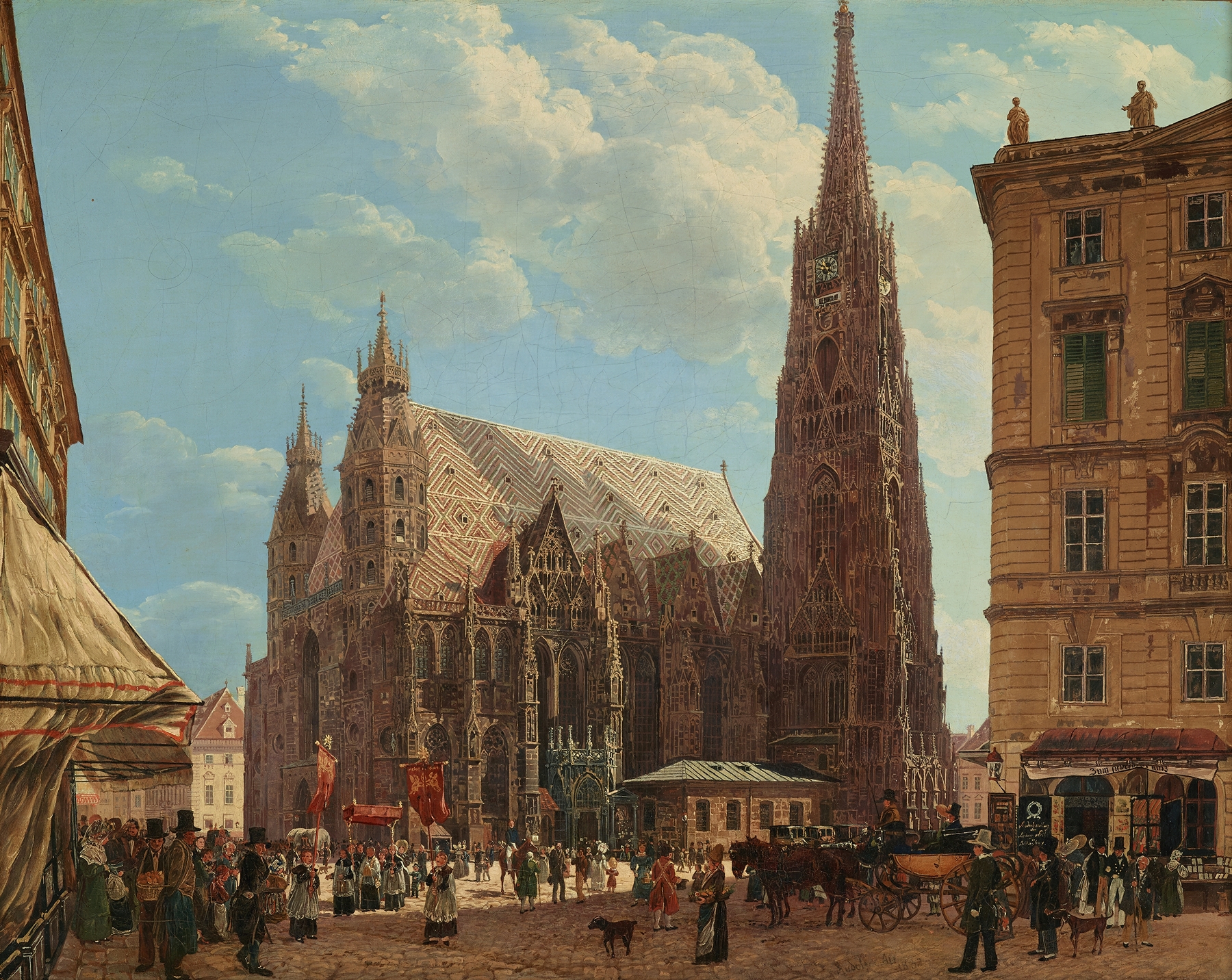
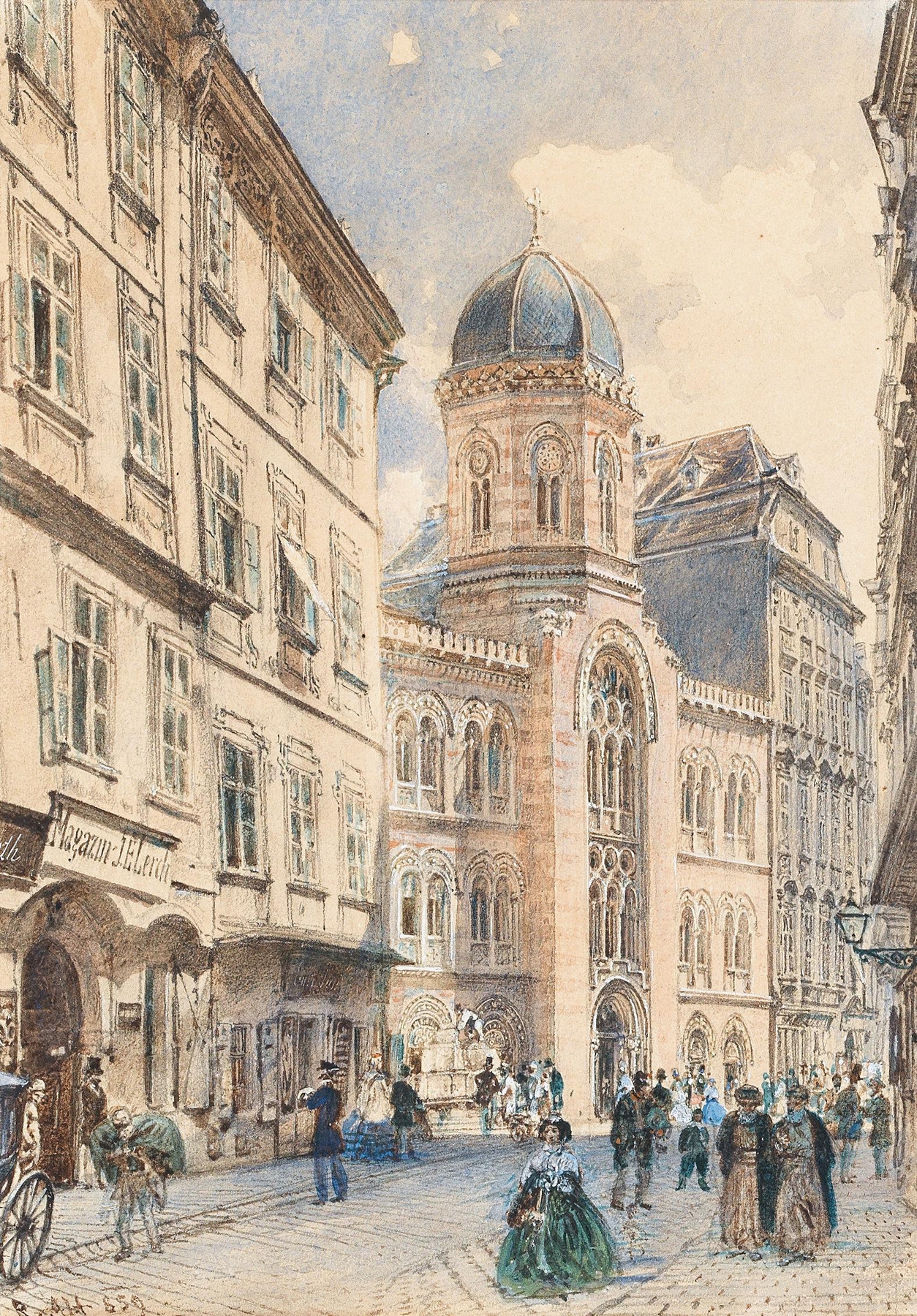
Can paint confess what words never could? In the bustling heart of Vienna, where history intertwines with the everyday, we find a moment frozen in time, a legacy captured in color and light. Look to the lower left corner, where the market's lively stalls spring to life, vibrant with fresh produce and the animated gestures of vendors. The palette is rich yet soft, with muted earth tones that harmonize with splashes of brighter colors from fruits and textiles, drawing the eye toward the church’s elegant dome in the background.
Notice how the play of light dances across the cobblestones and illuminates the figures, creating a dynamic rhythm that envelops the viewer in the scene’s palpable energy. Yet beneath this lively exterior lies a deeper narrative—one of tradition meeting modernity. The architecture of the Greek-Orthodox Church stands as a steadfast reminder of cultural heritage amidst the hustle of the market, suggesting a tension between the passage of time and the endurance of faith. Subtle contrasts emerge as the figures engage in commerce, reflecting the daily struggles and joys of life, while remnants of historical significance linger in the backdrop, evoking a sense of continuity and change.
Rudolf von Alt painted this work in 1859, during an era when Vienna was a crucible of diverse cultures and artistic expressions. As he traversed the city, he experienced the pulsating life around him, which greatly influenced his artistic vision. This period marked a shift in the art world, as traditional styles began merging with emerging modernist ideas, prompting von Alt to capture the vibrancy of urban life through meticulous detail and rich storytelling.