Freyung mit Austriabrunnen — History & Analysis
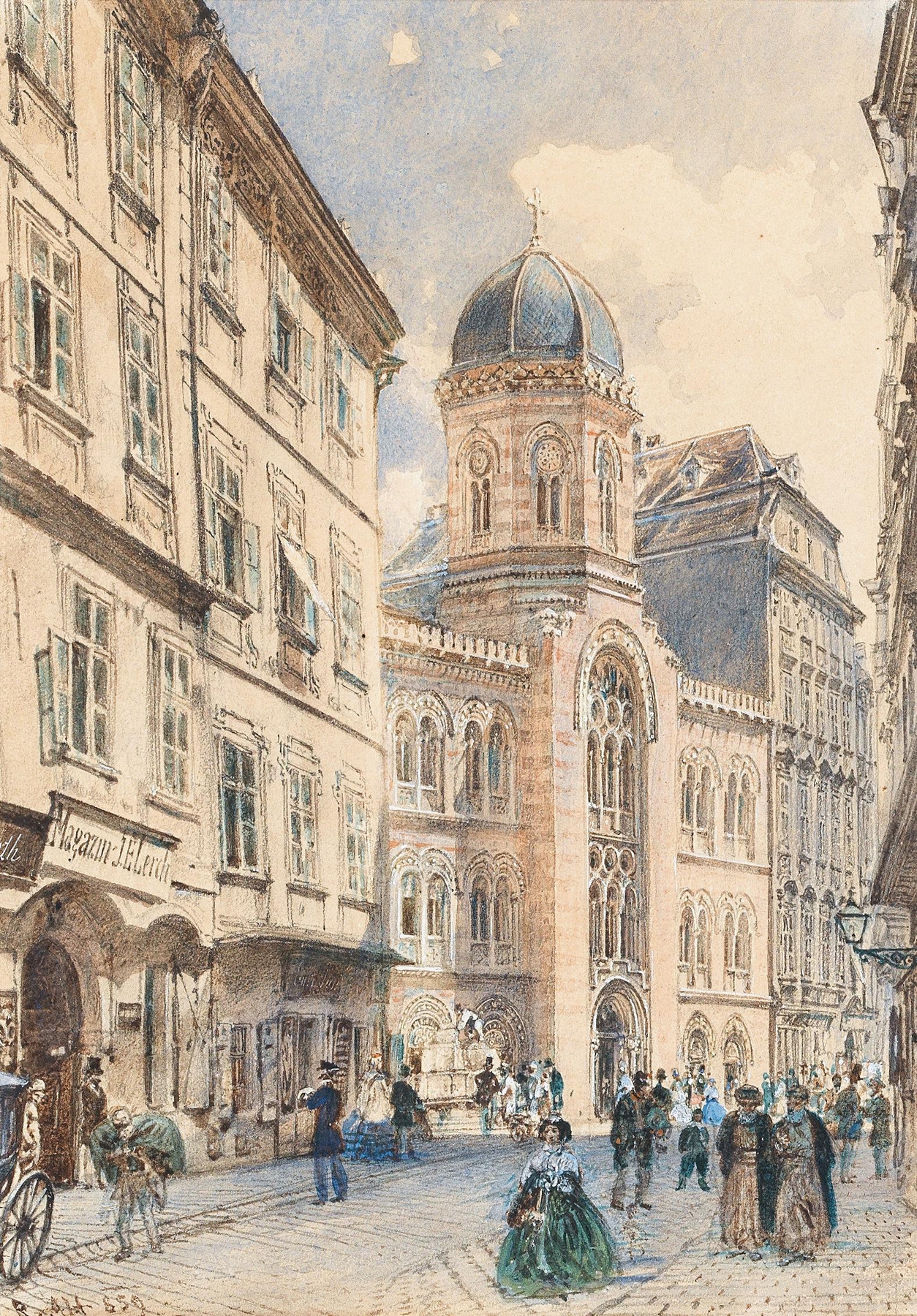
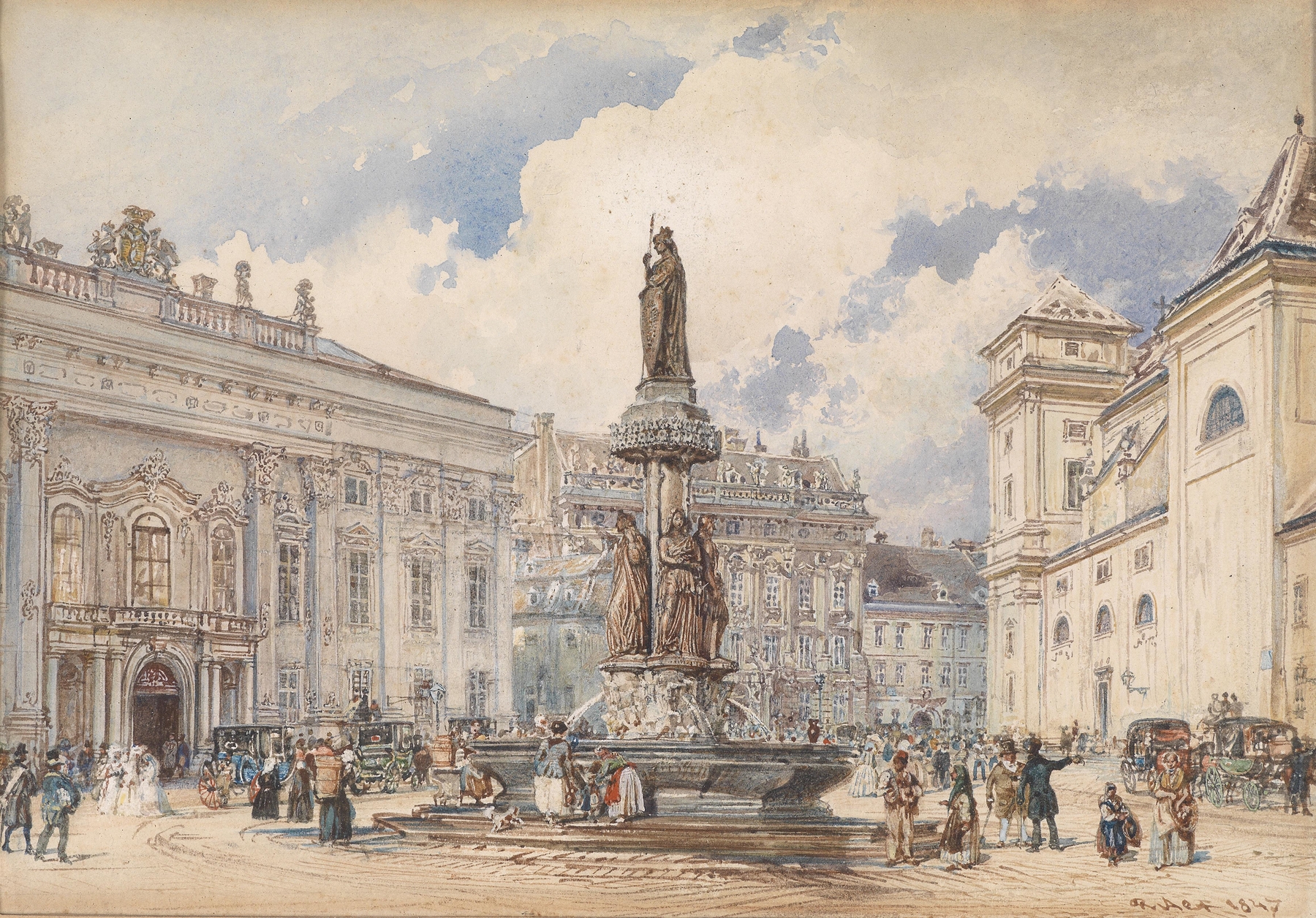
“Art reveals the soul when the world turns away.” Each brushstroke whispers secrets of longing, capturing the desire inherent in all human experience. Look to the center, where the majestic Austriabrunnen stands proudly, its intricate details beckoning the eye. Surrounding it, a vibrant crowd of elegantly dressed figures engages in animated conversation, their garments painted with rich, saturated colors that contrast with the cooler palette of the architecture. The careful play of light highlights the fountain's flowing water, creating a shimmering effect that enhances the sensation of movement and life in this bustling scene.
Yet, amidst the crowd’s joyful interaction lies an undercurrent of solitude. Notice the solitary figure just beyond the fountain's edge, observing the vibrancy but remaining detached, a palpable sense of yearning reflecting in their stance. This contrast between collective joy and individual desire speaks to the complexities of human connection, highlighting how one can feel both a part of society and isolated in one’s emotions.
Created in 1847, this work reflects Rudolf von Alt’s keen interest in urban landscapes and sociocultural life. During this period, he was immersed in the vibrant art scene of Vienna, where Romanticism was flourishing, encouraging artists to explore deeper emotional themes. It was a time of change in Europe, where technology and modernity began reshaping daily life, which may have informed the artist's exploration of desire and community in his work.