Stephansplatz — History & Analysis
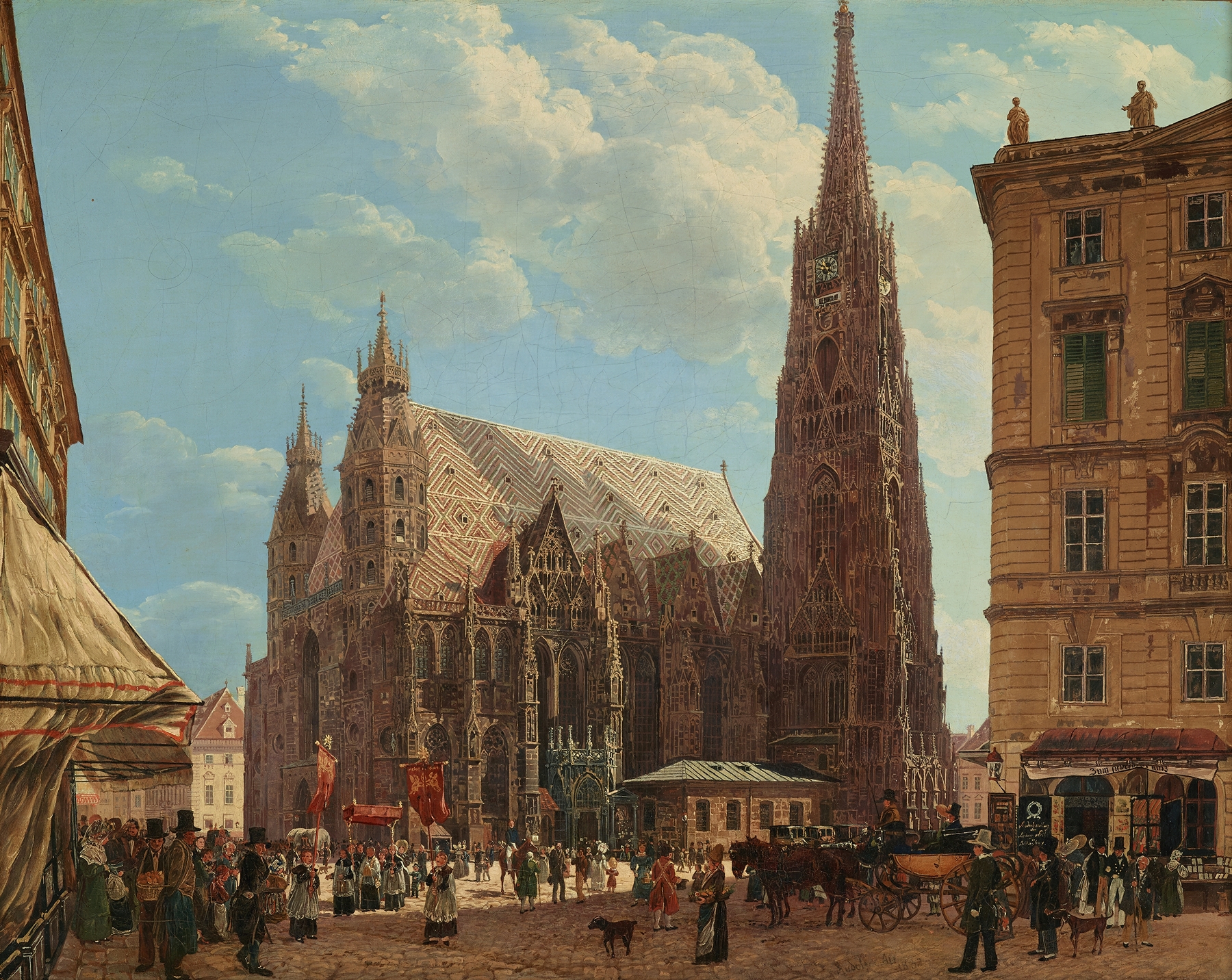
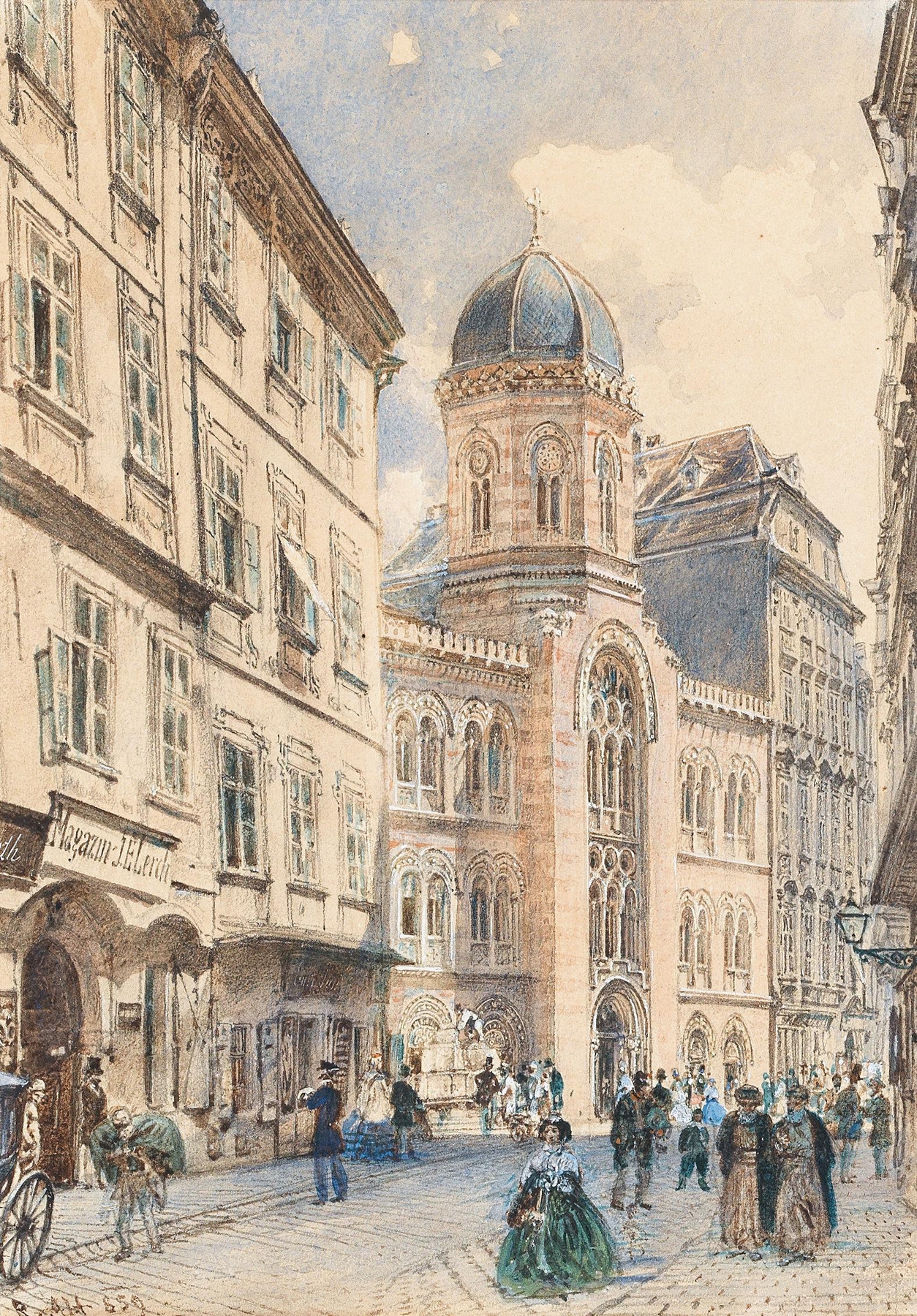
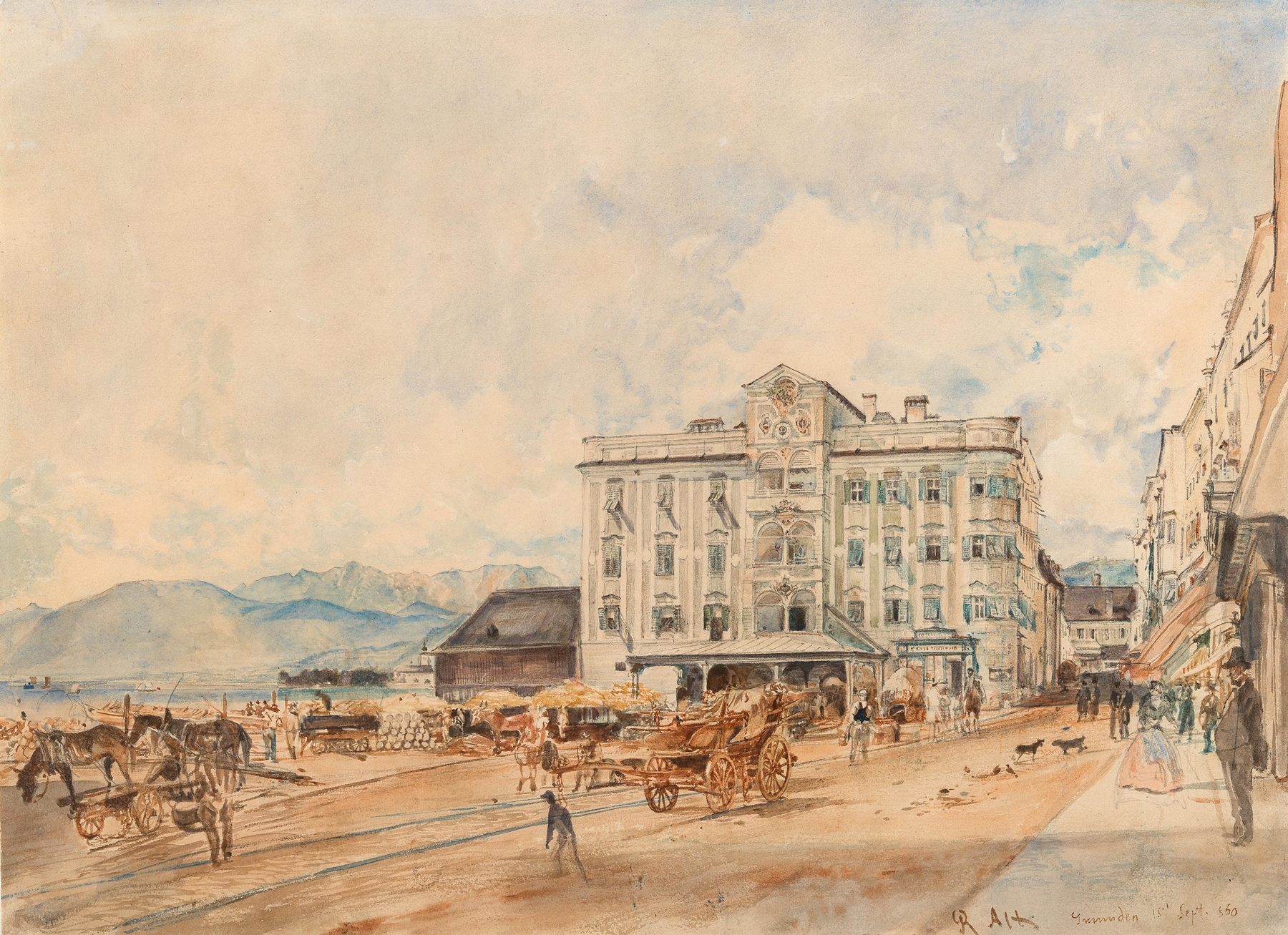
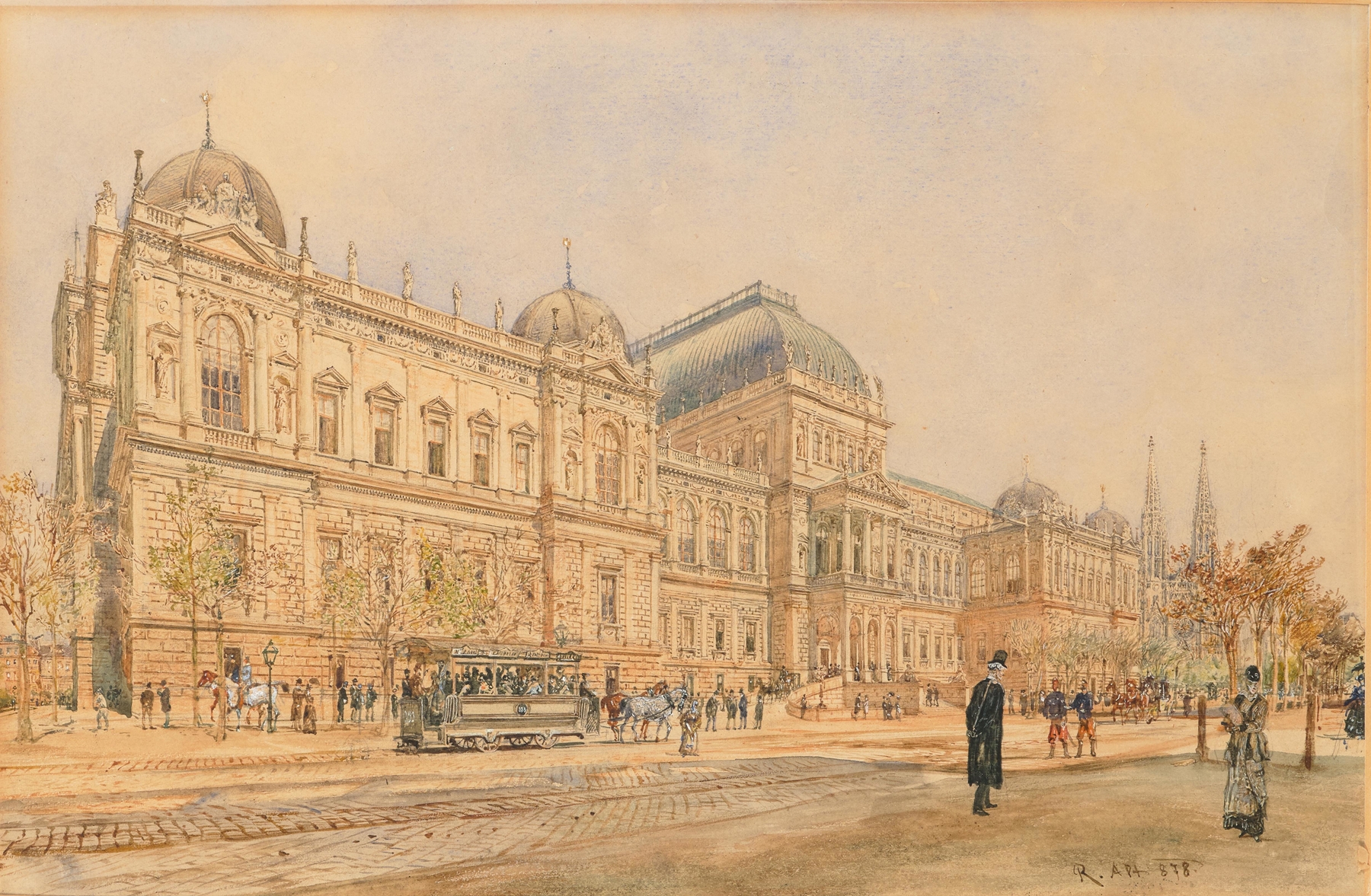
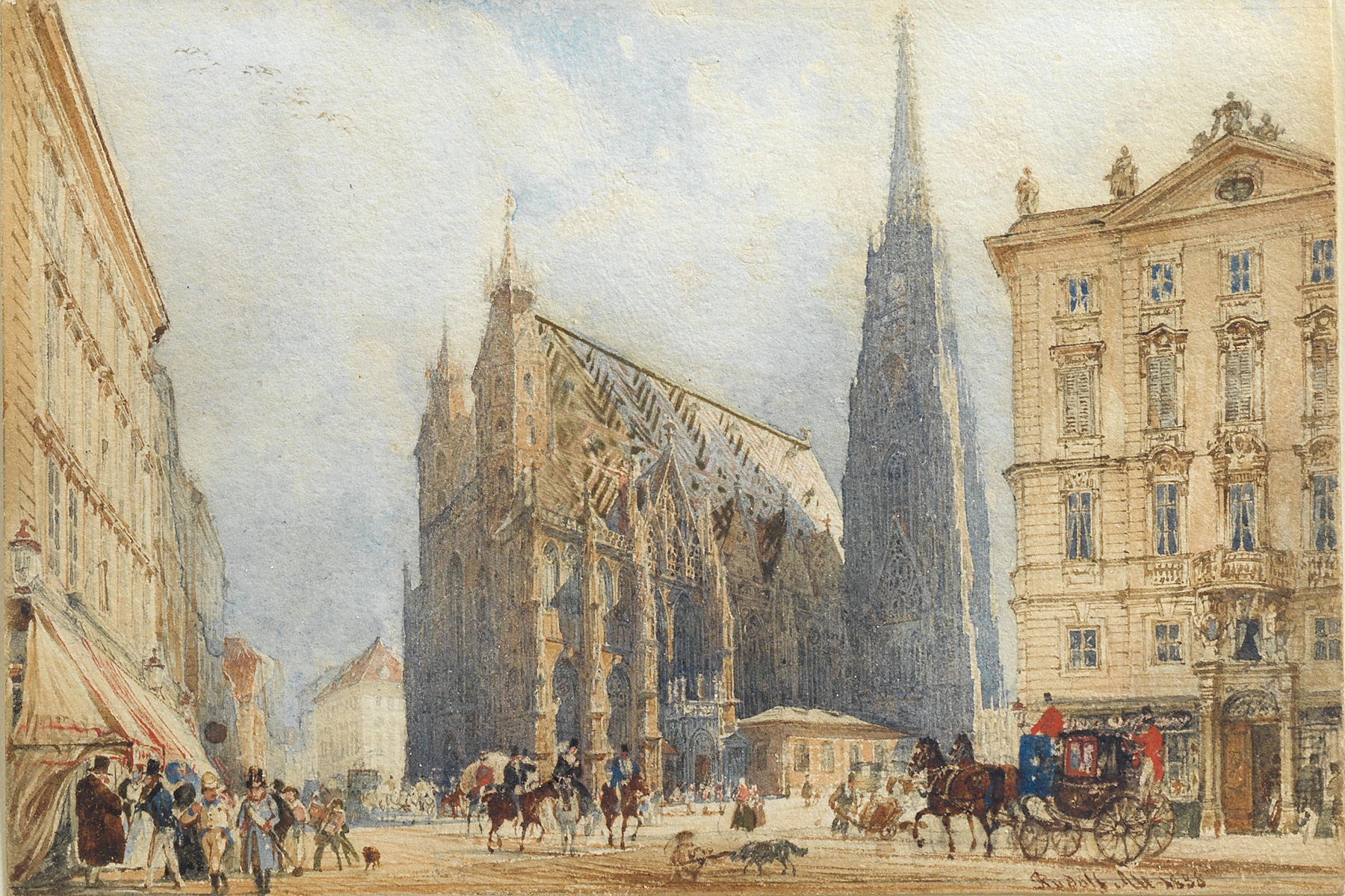
Could a single brushstroke hold eternity? In the art world of 1838, a moment of stillness can echo through history, capturing the spirit of revolution against the backdrop of serene architecture. Focus first on the sweeping expanse of Stephansplatz, where the majestic St. Stephen's Cathedral towers over the bustling scene below. Your eyes are drawn to the intricate details of the façade, where every stone seems to pulse with life.
The play of sunlight casts gentle shadows that dance across the cobblestones, revealing the interactions of locals and visitors amid the vibrant atmosphere, painted with a palette that vibrates between earthy tones and brilliant blues. Here, contrasts are palpable. The cathedral symbolizes stability and tradition, while the lively figures suggest a society on the brink of change. Notice the subtle expressions of the people; some engage in animated conversation, embodying hope and anticipation, while others stand contemplative, perhaps reflecting on the weight of the world around them.
The harmony of the scene hints at a society in flux, where the past and future collide. In 1838, Rudolf von Alt found himself in Vienna, a city rich with cultural awakening and political unrest. During this period, European cities were buzzing with revolutionary fervor, and artists were exploring new ways to express the spirit of their times. Alt’s detailed representation of this iconic square not only reflects his skill as a landscape painter but also serves as a subtle commentary on the shifting tides of his era.