The Arch Of Constantine And The Colosseum, Rome — History & Analysis
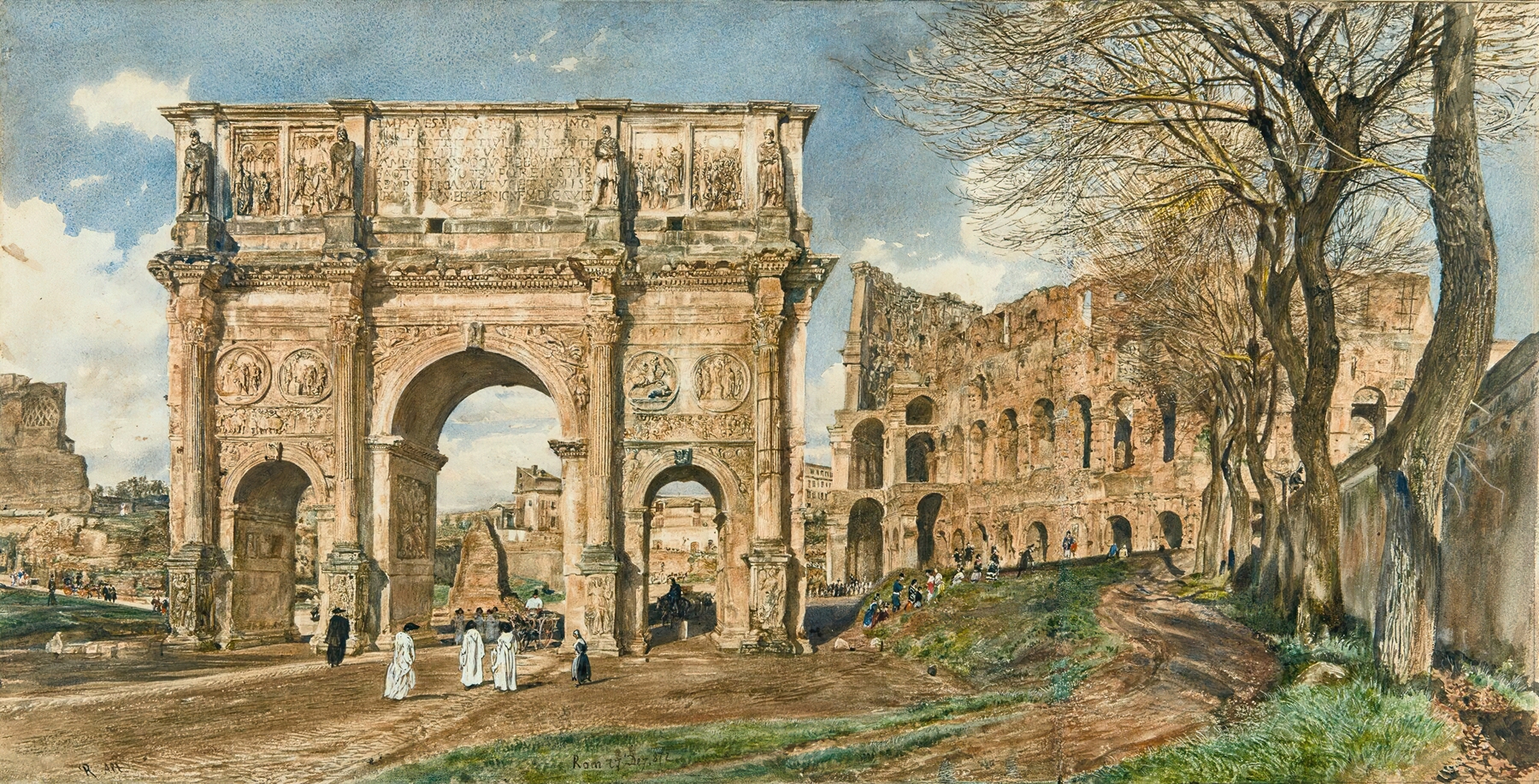
What if beauty was never meant to be finished? In the shadows of ancient grandeur, a striking dialogue unfolds between the past and the present, echoing through time. Look to the left where the imposing Arch of Constantine rises majestically against the sky, its intricate reliefs bathed in a soft, golden light. Notice how the artist skillfully contrasts the vibrant colors of the surrounding architecture with the muted earth tones of the stone, drawing your eyes into a world where history breathes.
The composition invites exploration, with the Colosseum looming in the background, its ancient walls holding stories of glory and despair, while a play of light and shadow reveals the passage of time etched into every surface. The emotional tension in this scene lies in the juxtaposition of vibrancy and decay. The arch, a symbol of triumph, stands resiliently beside the remnants of the Colosseum, which whispers of a once-thriving culture now faded. Small details, such as the people captured in silhouette at the base, highlight humanity’s persistent pilgrimage to witness history, reminding us of our own fleeting existence amid the eternal structures.
This careful interplay of elements evokes awe, prompting a reflection on the relentless march of time and the beauty found in impermanence. In 1872, during a period of renewed interest in classical antiquity, Rudolf von Alt painted this work while exploring Rome, a city rife with artistic inspiration. As an accomplished landscape artist, he captured the essence of his surroundings, blending realism with romanticism. At this time, the world of art was experiencing shifts towards impressionism, yet von Alt remained devoted to portraying the enduring legacy of historical architecture, bridging the gap between past and present.