Der Stephansdom in Wien — History & Analysis
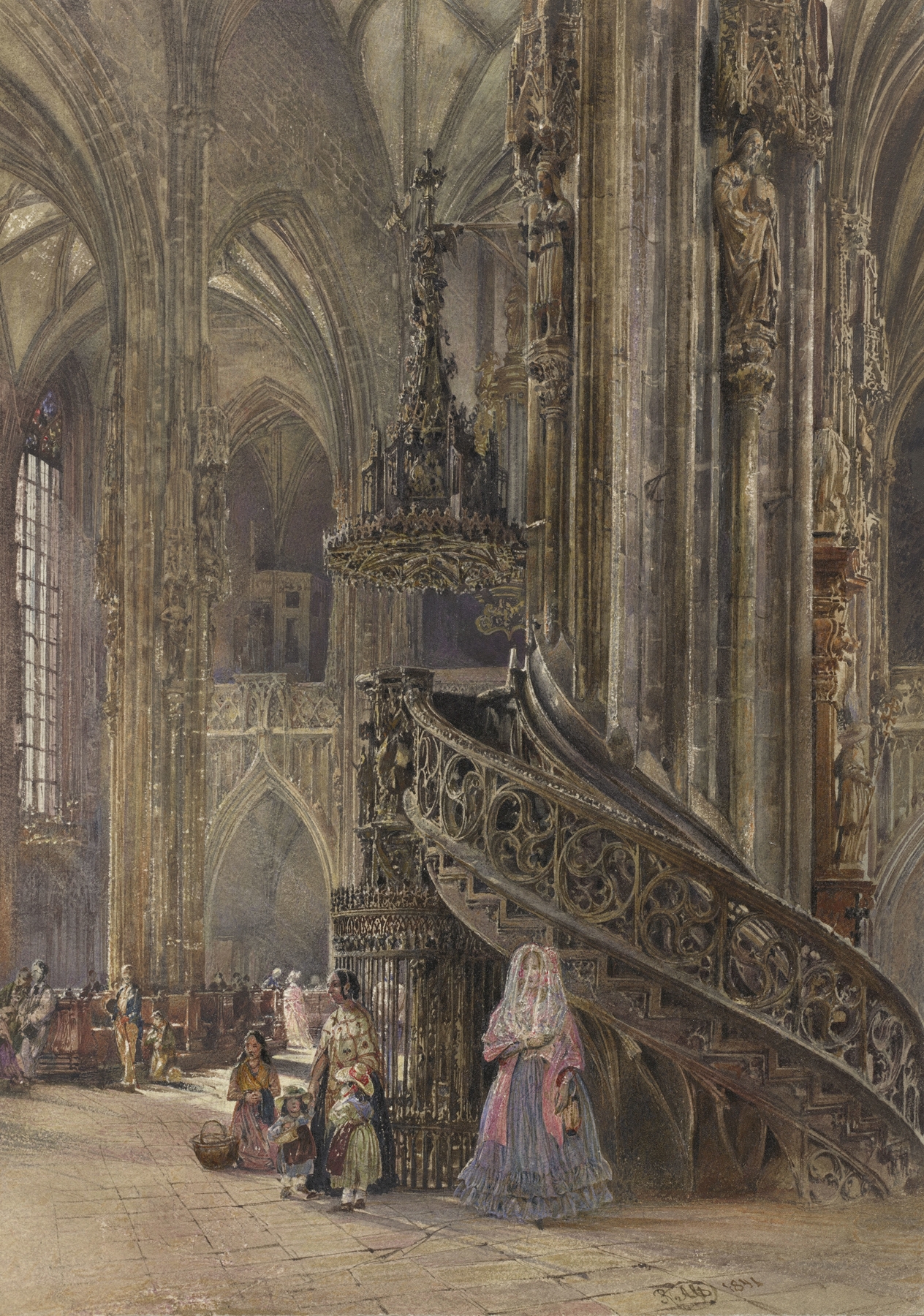
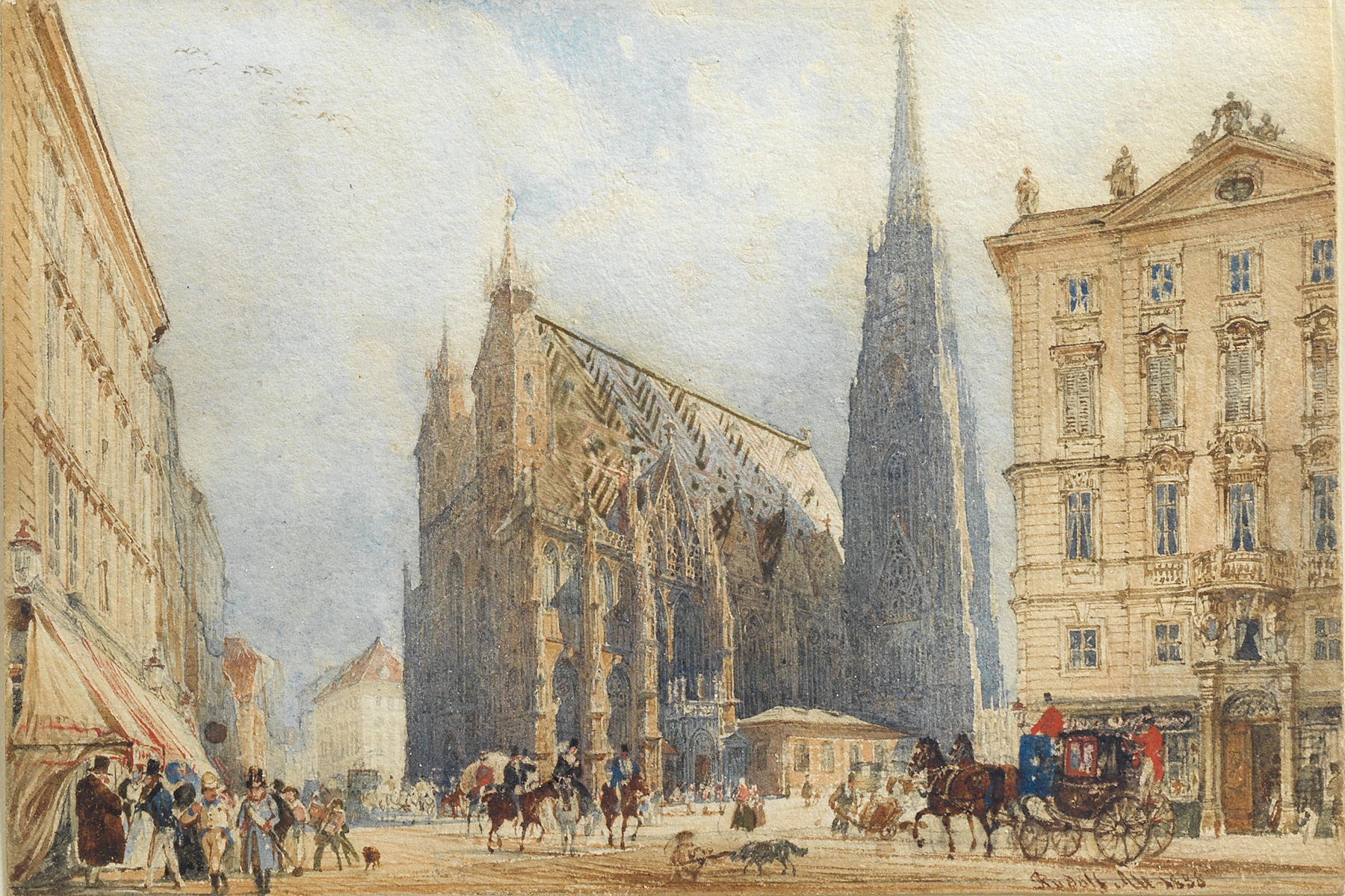
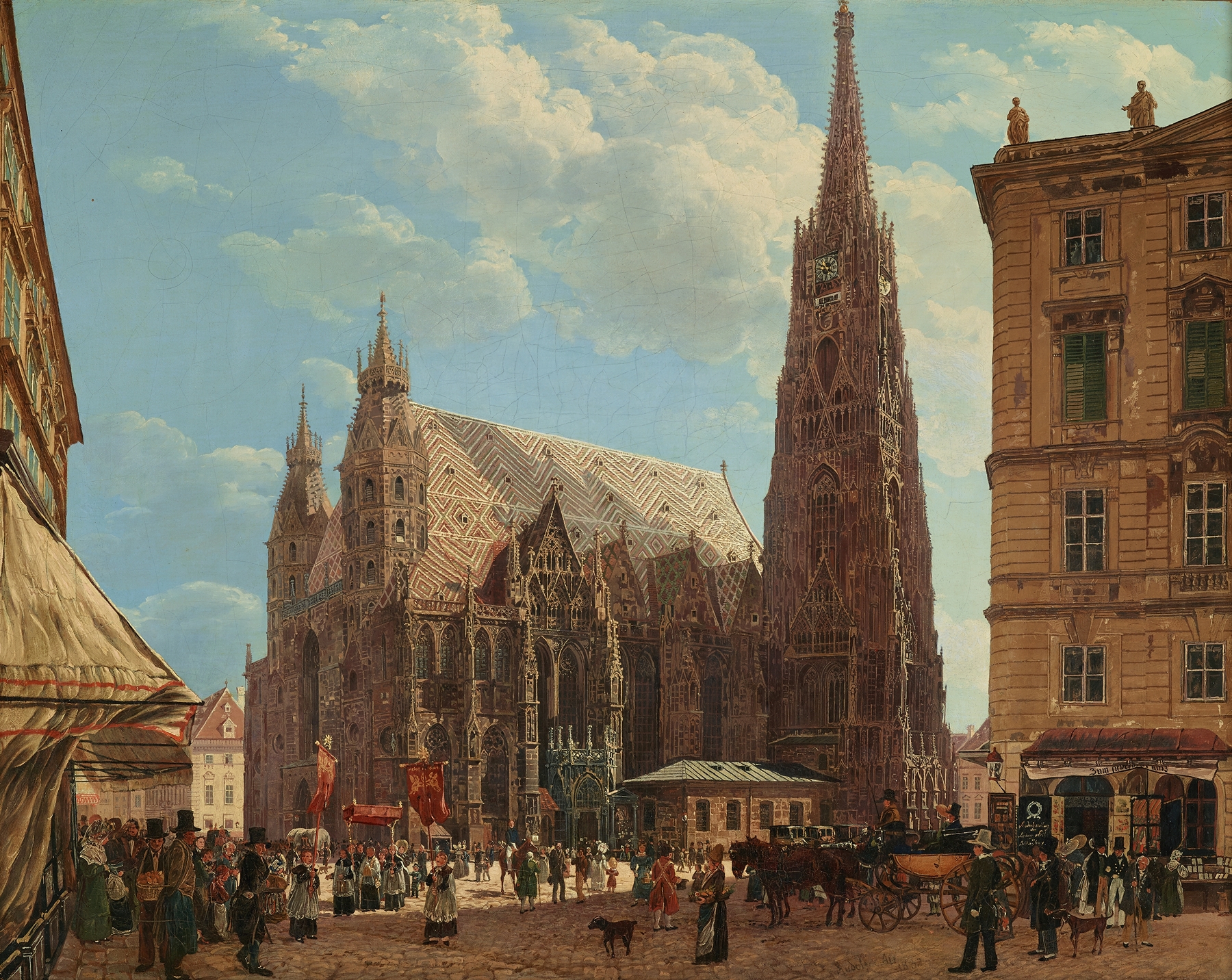
“Art reveals the soul when the world turns away.” In the soft embrace of twilight, shadows dance around the towering spires of an ancient cathedral, weaving stories of faith and perseverance. Each shadow hints at the sublime—an invitation to explore the ethereal balance between light and dark. Within this stillness, a vibrant life pulses, awaiting discovery. Look closely at the center; the grand steeple of the cathedral rises majestically against a fading sky. Notice how the architectonic details are rendered in soft yet decisive strokes, emphasizing the intricate carvings and textures of the stone.
The warm golden hues of the setting sun cast a glow on the façade, while deep blues and purples creep into the corners, creating a mesmerizing contrast that draws the eye. Each brushstroke reveals the artist’s meticulous attention to light and shadow, portraying not just the physical structure, but the very spirit of the city itself. Delve further into the composition, and you'll discover hidden narratives within the shadows. The contrasting warmth and coolness suggest a dialogue between hope and melancholy, reflecting the duality of urban life in 19th-century Vienna. The delicate figures wandering below, though small and seemingly insignificant, embody the human experience, their actions echoing against the magnificent backdrop.
This tension between the grand and the minute evokes a feeling of belonging in the vastness of existence. Rudolf von Alt painted this piece in 1832, a period marked by a burgeoning interest in realism and the Romantic movement in Austria. He found inspiration in his hometown of Vienna, capturing its architectural marvels and vibrant life. At this time, the city was undergoing changes, and artists were increasingly drawn to depicting the interplay of light and form, reflecting both the beauty of their surroundings and the complexities of modern existence.