Driving Down the Cattle from the Alps — History & Analysis
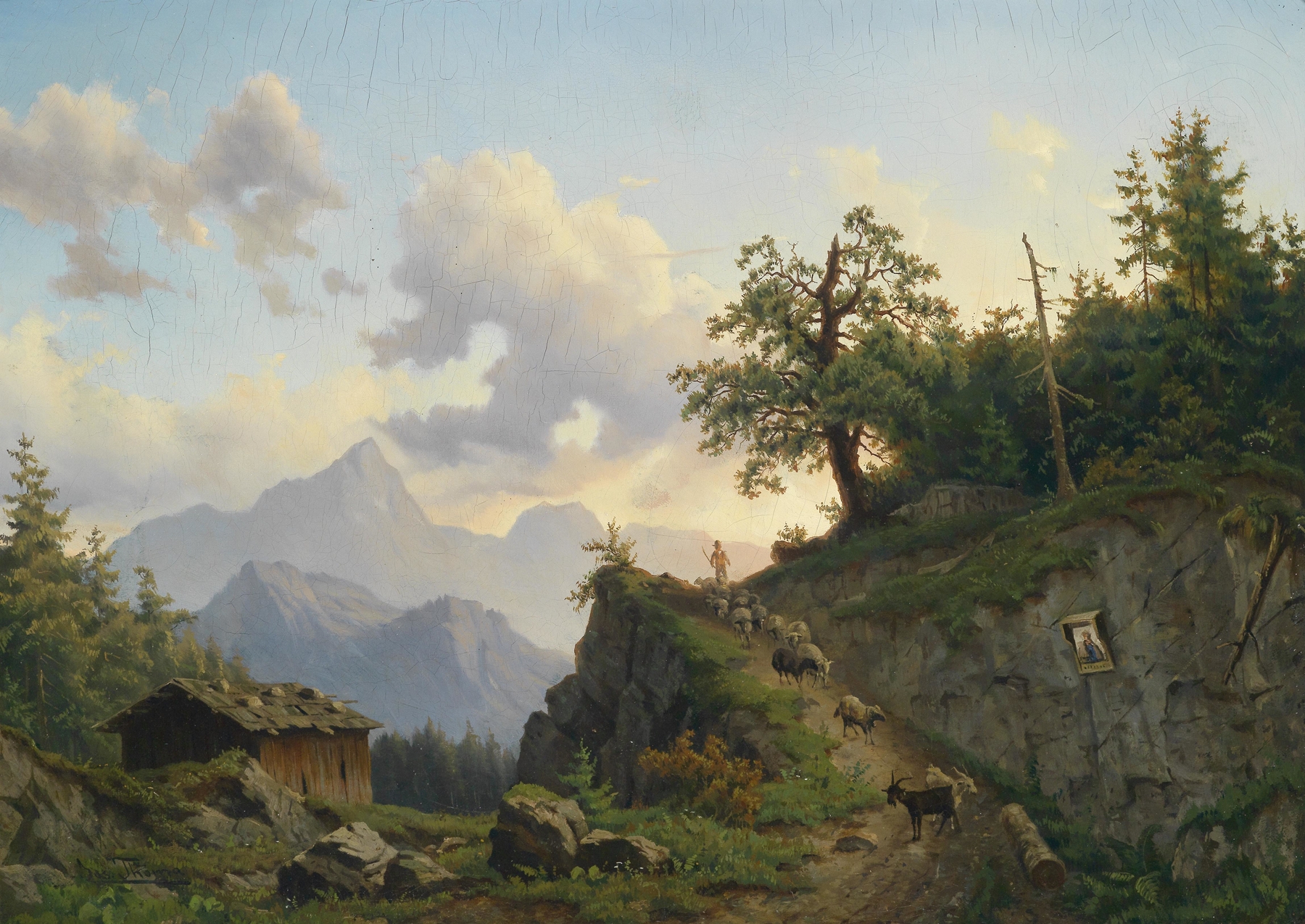
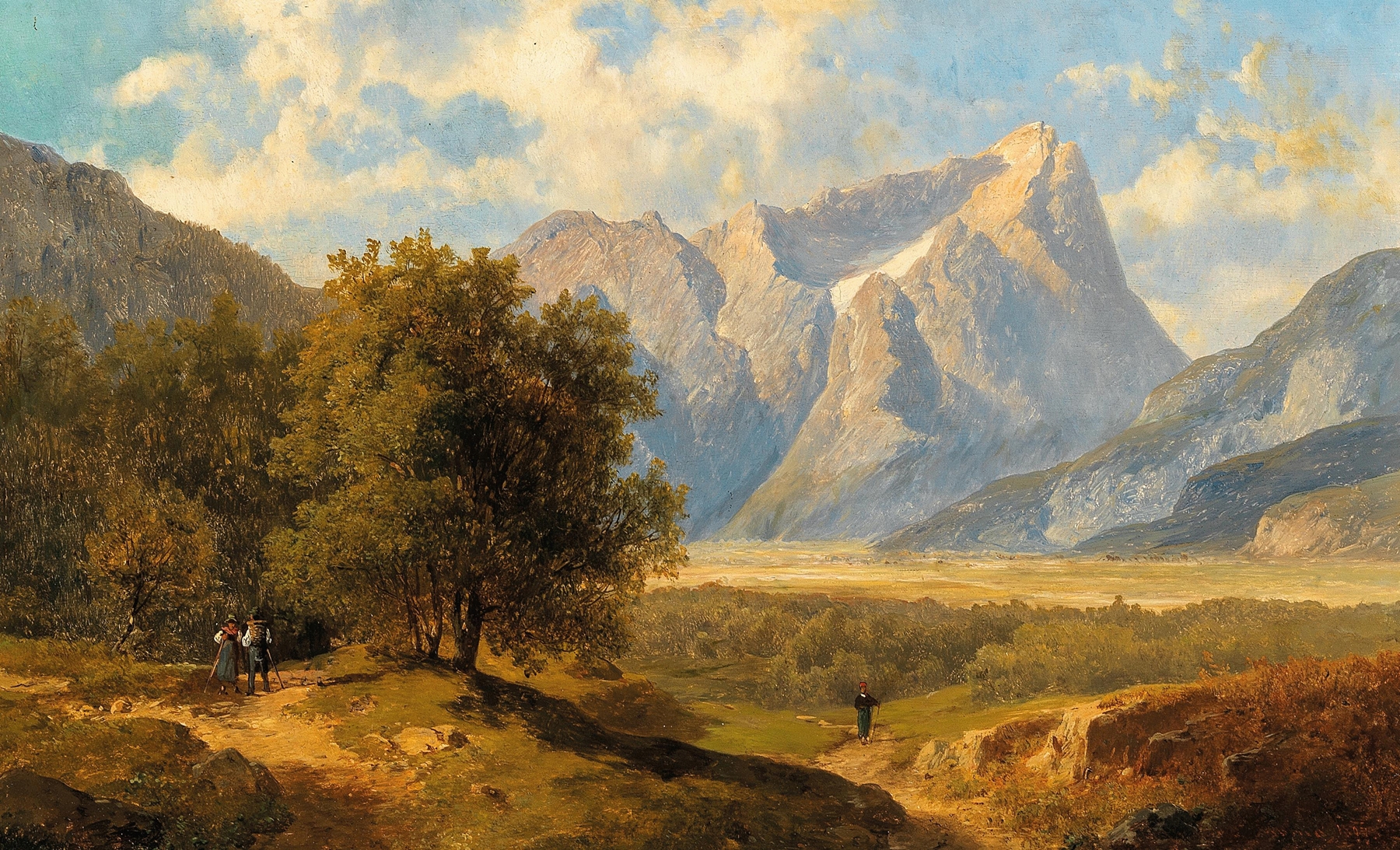
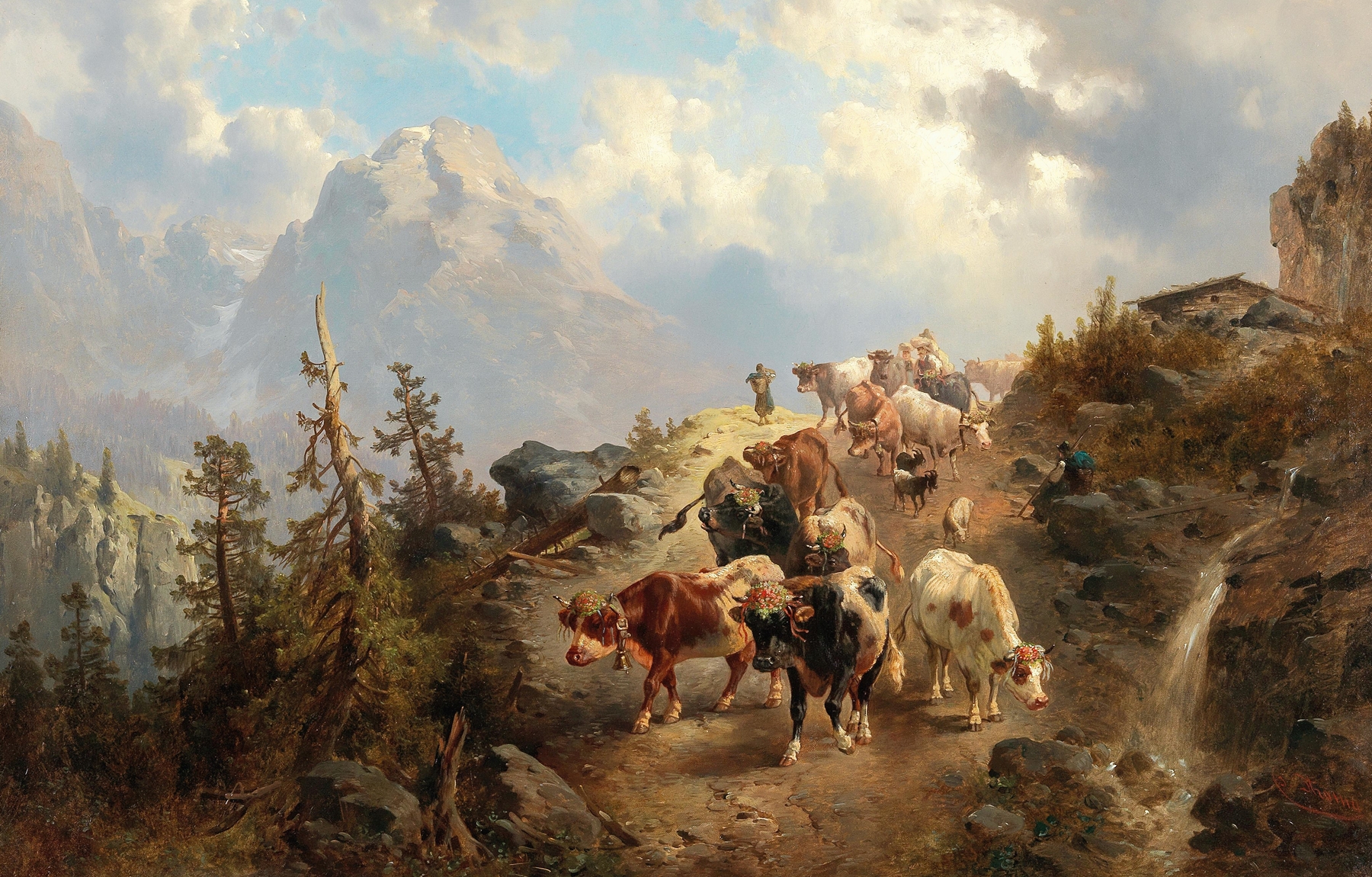
“To paint is to remember what time wants us to forget.” In a world consumed by change, there lies a profound longing for moments that define us, tethering us to the past. Focus first on the rolling hills that sweep across the canvas, their gentle curves painted in soft greens and muted browns. The cattle, depicted with an almost ethereal grace, move as shadows through the landscape, their forms blending into the scenery, suggesting a connection between nature and the lives it sustains. Notice how the sky, a delicate palette of blues and ethereal whites, serves as a backdrop, hinting at the vastness of the world surrounding these humble creatures.
Yet, amidst the serenity, tension whispers through the brushstrokes. The distance between the herder and his cattle evokes a sense of solitude, a longing to bridge the gap between man and nature. Each stroke carries the weight of the moment—the stillness of the afternoon is punctuated by the gentle movements of the herd, invoking reflections on the passage of time and the fleeting nature of existence. The pastoral scene, while tranquil, pulses with an emotional heartbeat.
Created during a period of artistic exploration, the artist crafted this piece at a time when the Romantic spirit was deeply felt, often evoking the nostalgia of simpler times. As changes swept across the art world, this work stands as a testament to a yearning for connection with nature—a connection that resonates even today. This painting encapsulates not only a scene but an enduring memory of life's transience.