Engelen met de zweetdoek en de passiewerktuigen — History & Analysis
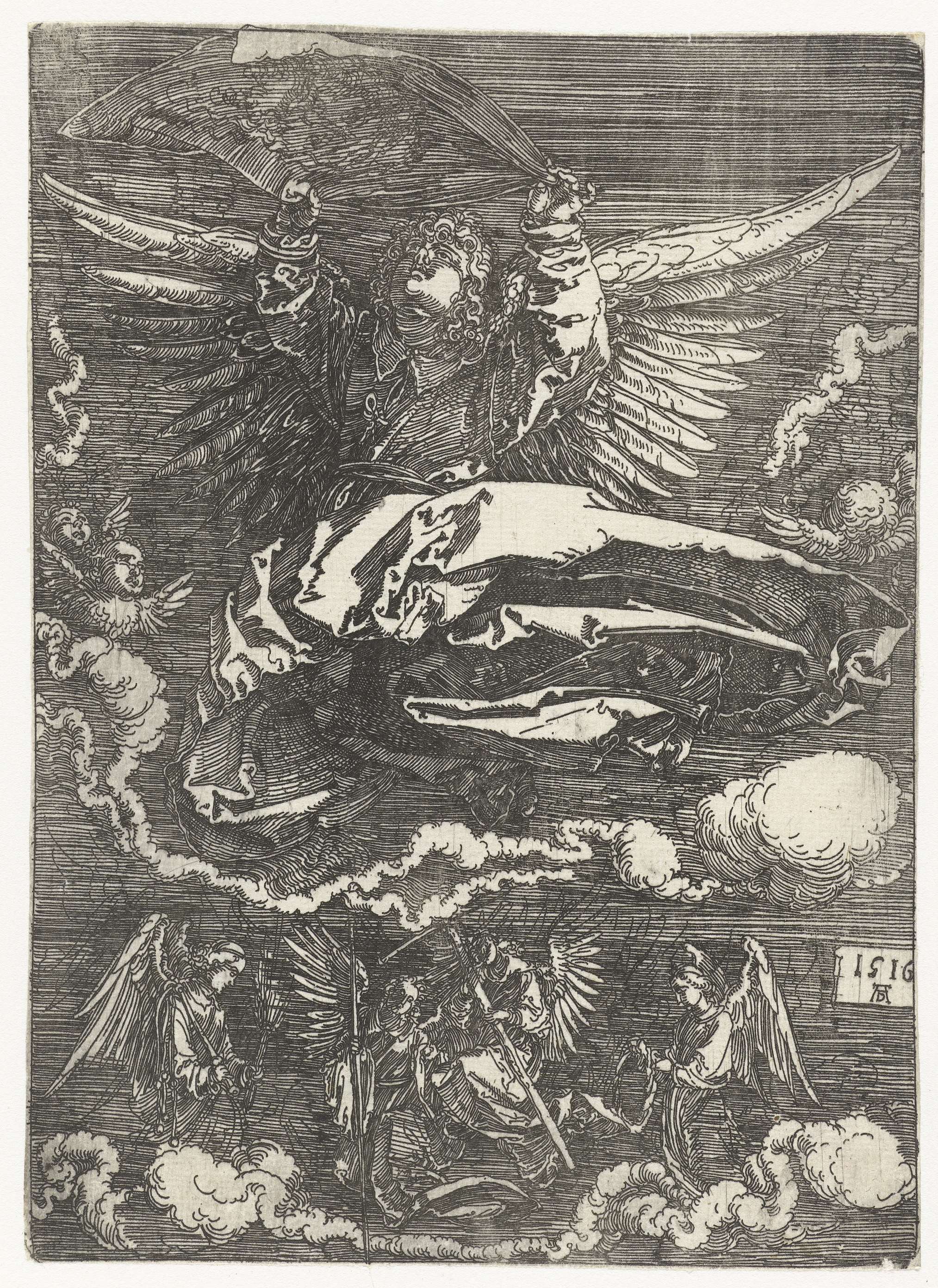
What if beauty was never meant to be finished? In Albrecht Dürer's *Engelen met de zweetdoek en de passiewerktuigen*, the tension between divine grace and the violence of suffering reveals a poignant truth about the fragility of human existence. Look closely at the angel, positioned gracefully to the left, holding the cloth of Veronica — a symbol of empathy and sacrifice. Notice how the delicate brushwork captures the gentle curves of the angel's wings, contrasting sharply with the stark tools of passion that loom in the background. The rich, earthy palette of browns and greens breathes life into the figures, while the brilliant whites of the cloth draw your eye, emphasizing its role as a bridge between reverence and anguish. Within this composition lies an exploration of duality. The angel’s serene expression acts as a counterpoint to the unsettling presence of the instruments of Christ's suffering. Dürer invites the viewer to confront the inherent violence intertwined with beauty, suggesting that the road to understanding often crosses paths with pain. The tension between the divine and the earthly serves as a reminder that aesthetic pleasure can be marred by the harsh realities of existence. In 1516, Dürer was navigating a period of profound transformation in the artistic landscape of Europe, marked by the impact of the Reformation. He was concurrently establishing himself as a master printmaker and painter, expanding his exploration of religious themes while grappling with the complexities of faith and mortality. This work reflects both personal and societal struggles, capturing a moment where beauty and violence coexist, echoing the turbulent era in which it was created.