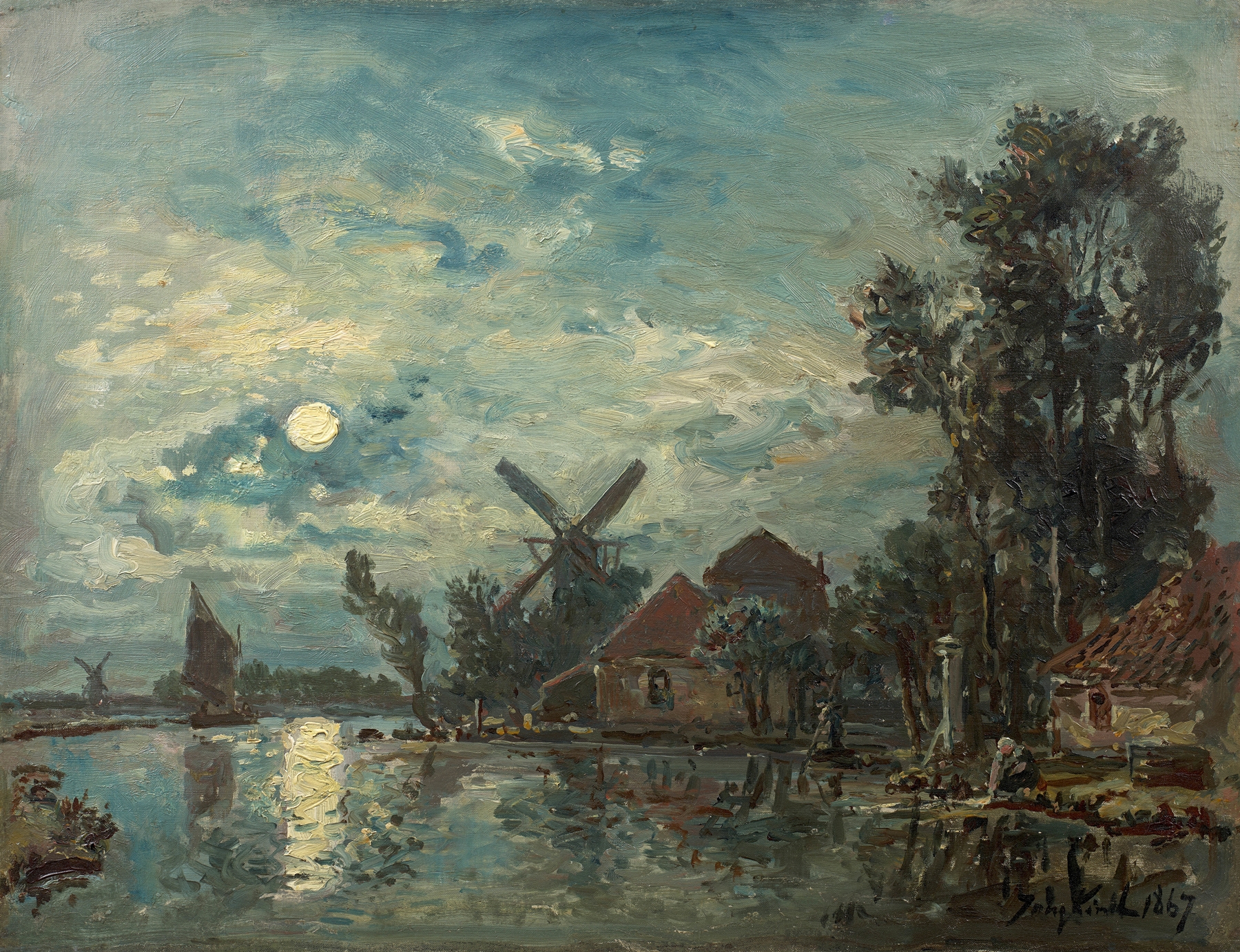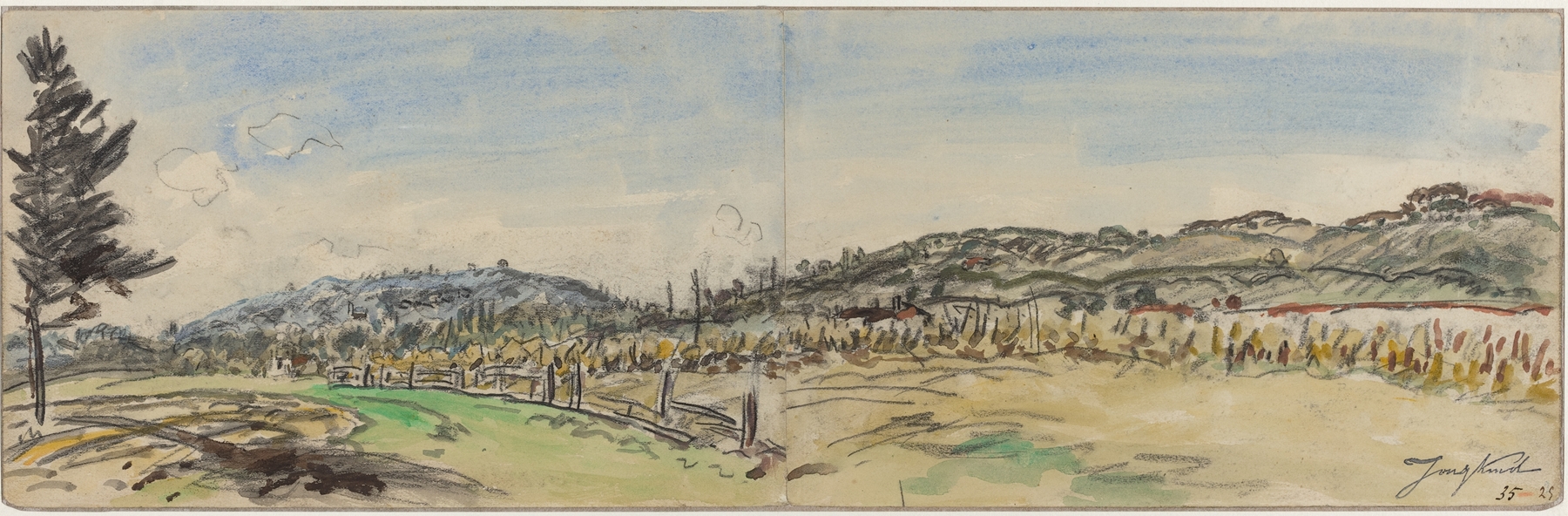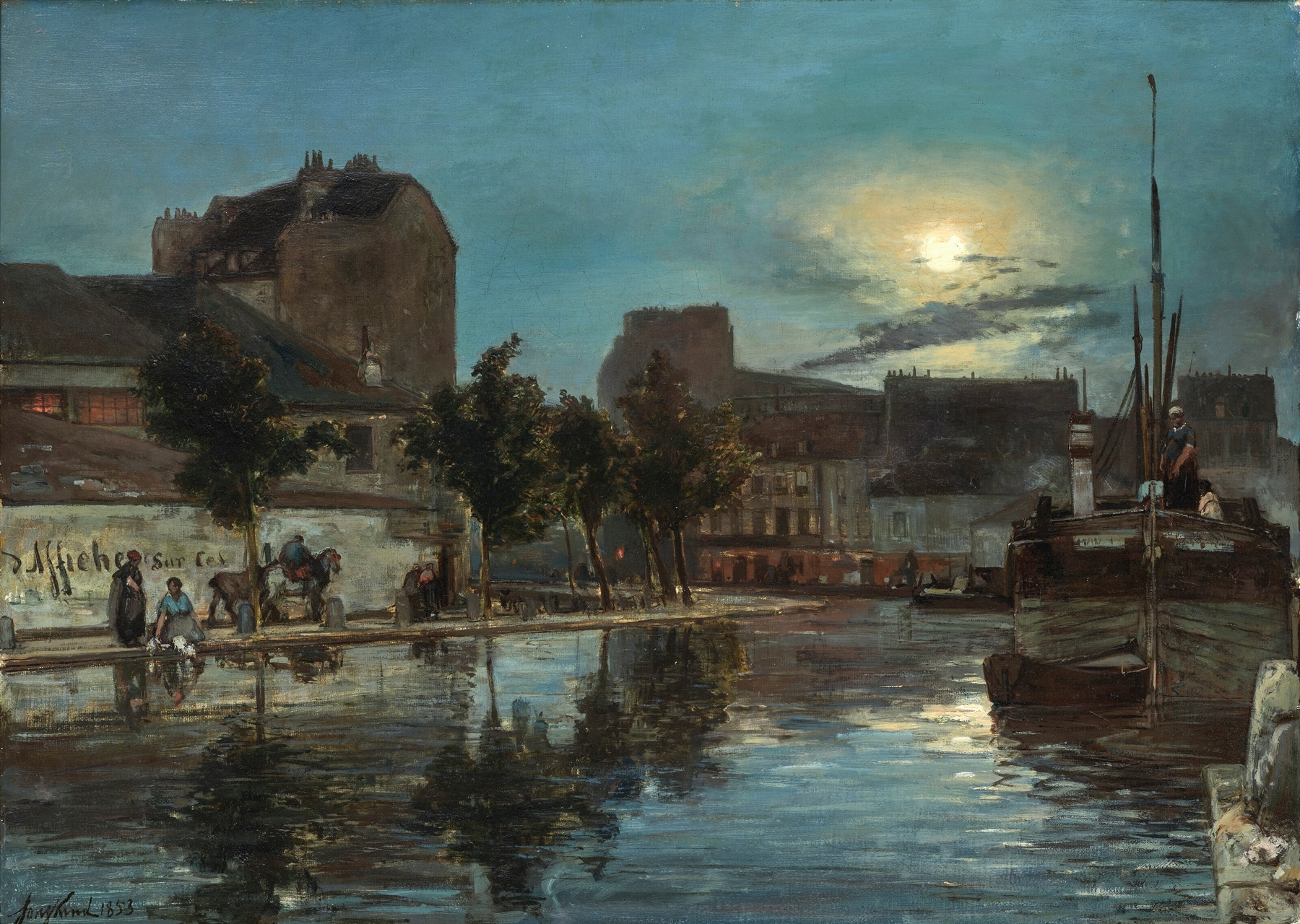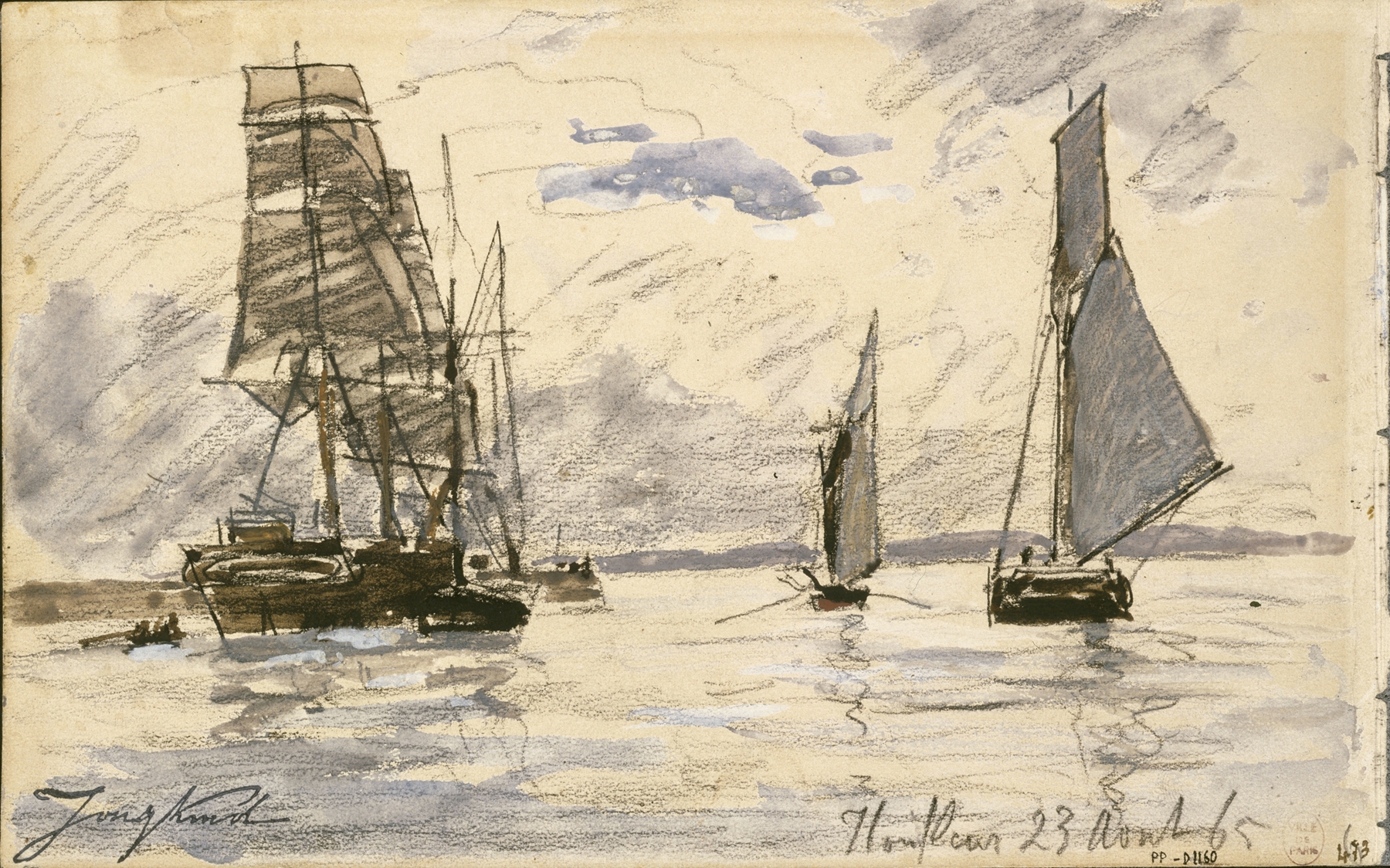
Entrance to the Port of Honfleur — History & Analysis
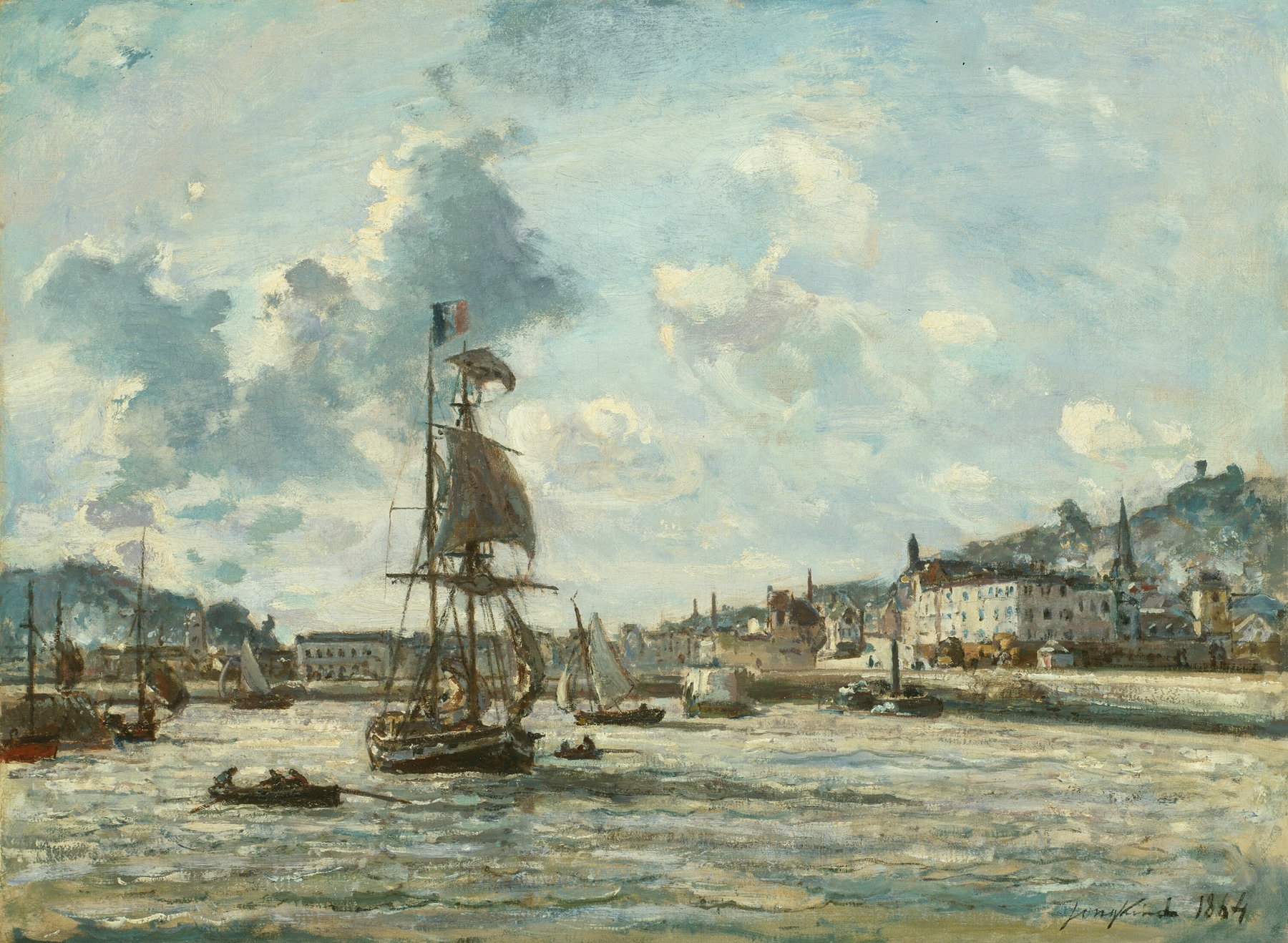
What secret hides in the quiet of the canvas? In *Entrance to the Port of Honfleur*, a delicate silence envelops the scene, inviting contemplation of loss and longing amidst the serene beauty of maritime life. Look to the left at the gentle arch of the horizon, where the soft interplay of blues and grays meets the pastel hues of the sky. The boats, their sails billowing with an unseen breeze, seem to float in an ethereal dance, while the water’s surface glimmers subtly, reflecting not just light but the passage of time. Notice how the brushstrokes are fluid yet precise, creating a sense of movement that breathes life into the stillness, drawing the viewer's eye toward the entrance of the port. As we delve deeper, the emotional tension between the vibrant vitality of the boats and the muted, contemplative atmosphere of the water reveals a poignant narrative of transition. The fog that creeps in from the edges evokes a sense of uncertainty, suggesting an impending change or loss that is barely perceptible yet profoundly felt. Each vessel, while full of potential, also carries the weight of stories untold, reflecting the fragile existence of maritime life and the transient nature of human endeavor. Painted in 1863-64, this work emerged during a transformative period for the artist, who was seeking his voice amidst the shifting tides of Impressionism in France. Jongkind was living in a time of artistic exploration and innovation, challenged by the expectations of traditional landscapes while forging his path. As he captured this intimate moment, he was also grappling with his personal experiences of displacement, which profoundly influenced his artistic expression and the themes of solitude and memory woven throughout his oeuvre.