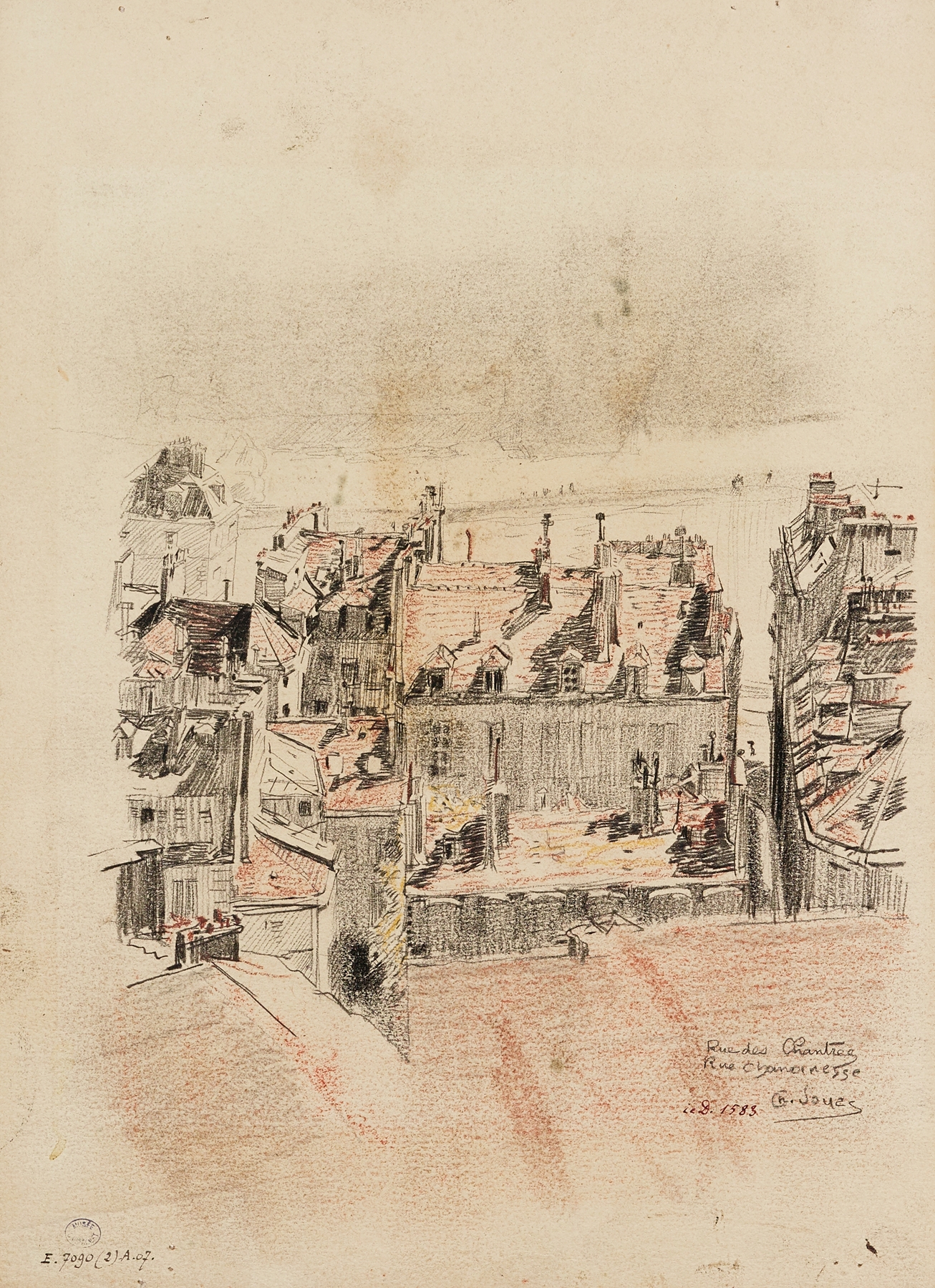
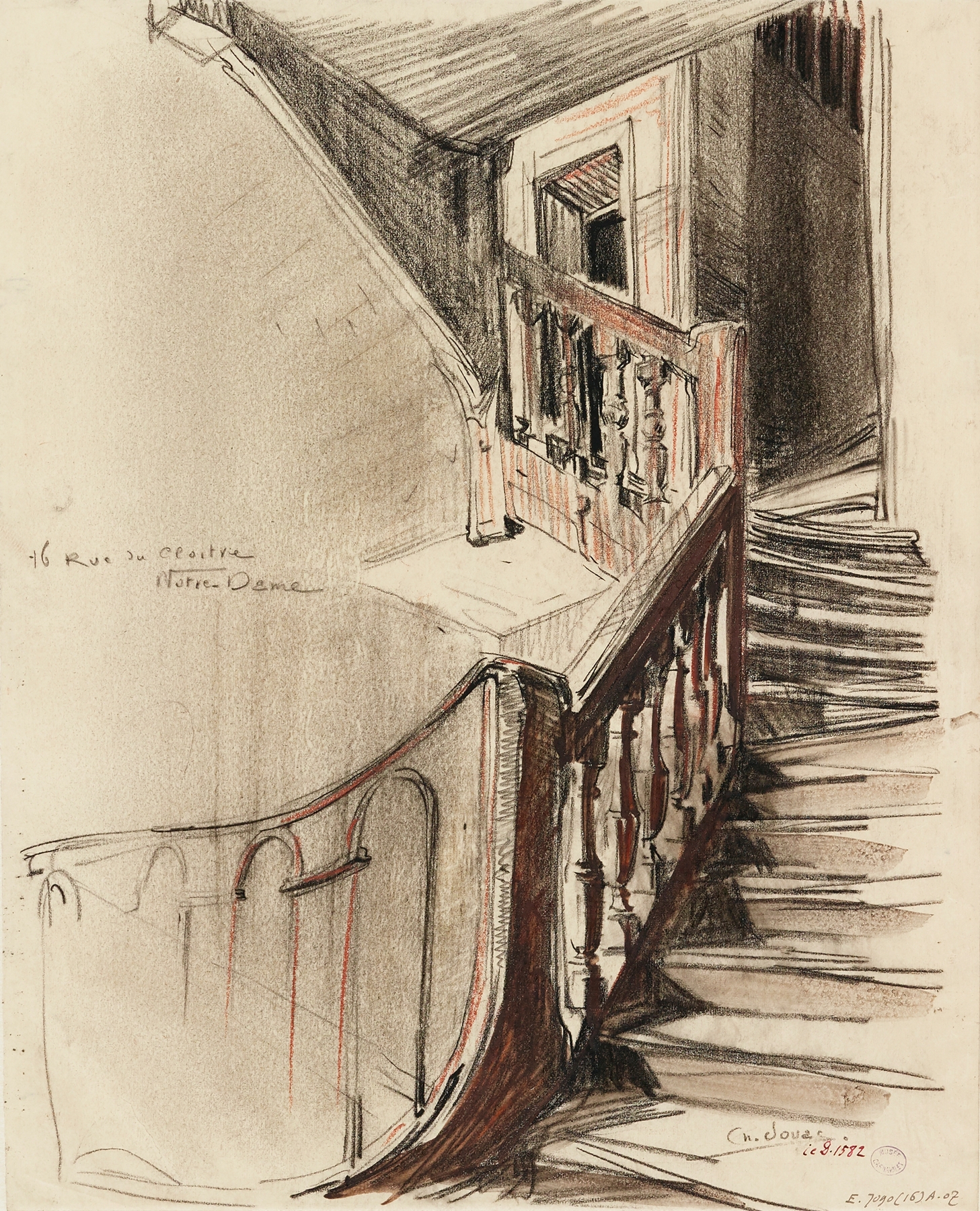
Escalier et cour du 22, rue Chanoinesse — History & Analysis
“Between color and silence, truth hides.” In a world marked by decay, the remnants of life whisper stories of the past, urging us to listen closely. First, let your gaze settle on the sweeping staircase that anchors this composition. Notice how the muted tones of ochre and beige blend, breathing life into the architecture while simultaneously hinting at its weathered state. The play of light filtering through the windows creates a soft glow that caresses the walls, revealing textures of peeling paint and shadows that dance, suggesting time spent and memories faded.
Above all, the vertical lines of the staircase draw your eye upward, leading you into the heart of the structure and the enigmas it conceals. As you explore further, consider the contrasts at play: the solidity of the stairway against the ethereal quality of light, the vibrancy of the colors hinting at life amidst the inevitable decay. Each brushstroke captures a moment suspended in time, where the past collides with the present, evoking feelings of nostalgia and loss. The silent tension between the vertical ascent and the horizontal expanse of the courtyard outside reflects the struggle between movement forward and the weight of history.
During the years 1915 to 1945, when this piece was created, Charles Jouas found himself immersed in the complexities of a world engulfed in turmoil. Living in France amidst World War I and the subsequent rise of surrealism, he sought to capture the quiet truths of urban life. His focus on architectural forms and decay reveals an artist grappling with the passage of time, employing his craft to reflect the fragility of existence in a rapidly changing world.